
If you purchase an item through links on this page, we may earn a commission. Our editorial content is not influenced by commissions. Read full disclosure.
There’s something fresh and summer about a bed of rhubarb growing in the sun. This is one of the first harvests of the season, and the tart, tart taste of the rhubarb perfectly balances all the sweet, sweet flavors of spring.
We can pick rhubarb from late April to early August in the northeast and mix it into every meal as a sweet, slightly bitter summer bite.
But rhubarb problems like pests and disease can put a damper on your meal plans. Let’s talk about 10 of the most common rhubarb growing problems you might encounter.
Overcoming Rhubarb Problems
I can rhubarb every year – adding it to marmalades and jellies, chutneys and syrups. All winter long, rhubarb is there to brighten up my meals and bring a taste of sunshine to dark winter days.
Rhubarb is easy to grow anywhere winter temperatures get cold enough to freeze – it needs a period of deep cold to really thrive. The cold weather forces the rhubarb to sleep and gives it a chance to come back renewed in the spring.
With full sun, cold winters, and plenty of rich, loamy soil, rhubarb is a happy and easy-to-manage vegetable. The stems are delicious and the leaves – although poisonous to eat – make excellent insect repellent. I will often choose one to wear on my head when working in the garden. Sounds pretty silly, but it works.
Although rhubarb is a hardy plant, with few needs, it can fall prey to a few pests and diseases. Fortunately, this tough member of the buckwheat family rarely fails to defeat its attackers. A healthy, well-established stand of rhubarb can withstand a lot.
This does not mean that nothing can harm them. There are several rhubarb problems that can destroy your crop.
In most cases, rhubarb pests are smaller and slower to damage your plants, while a few diseases are downright deadly.
Rhubarb plants will sometimes have problems with fungal diseases. Most of them will not harm the plant significantly, even if one of them is fatal. As with pests, maintaining a healthy garden is one of the best ways to protect your rhubarb plants.
Weed regularly, amend the soil as needed, and keep your garden beds free of clutter and debris. With plenty of air circulation between plants, clean soil, and plenty of sun, your rhubarb plants will be healthy enough to resist most potential diseases.
1. Herbivores
My goats are the only pests I have ever seen on my rhubarb plants. Rhubarb is dangerous to goats and sheep, but they come to my plants every time they come loose and never get sick.
Deer, elk and opossum will also munch on rhubarb when nothing more appealing. A small fence can protect your plants from these rhubarb problems.
2. Slugs and snails
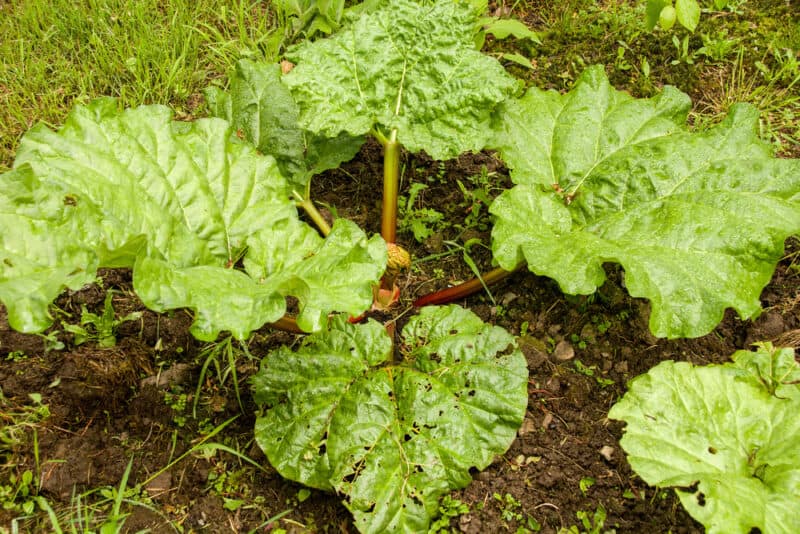
Slugs and snails are the bane of every garden, especially during wet seasons when the ground is such a happy place for these little pests. Last summer we had slugs all over our garden and I had to park the ducks in the garden for weeks to get rid of them.
Slugs and snails primarily eat the leaves of your rhubarb plants. Since you’re not eating the leaves, that’s usually not a major problem. Healthy rhubarb plants can withstand a lot of slug damage without missing a beat.
As the leaves age and become tougher, even the slugs leave them alone. They prefer young, tender leaves, so they will move to your greens and sprouts.
But just because slugs and snails are unlikely to be deadly doesn’t mean you want to feed them all spring. The best way to get rid of slugs and snails is to make the area around your rhubarb inhospitable to them.
Regularly weed the rhubarb bed and sprinkle diatomaceous earth around the plants to protect them from marauding snails and slugs.
3. Weevil

Another pest that can damage your rhubarb is the weevil (Study programme spp.). This half-inch-long, yellowish-brown beetle has a long, sucking snout that it uses to poke tiny holes in rhubarb stalks. The weevils lay their dark eggs in the stems, causing black spots to appear.
Unfortunately, weevils are hardy enough to withstand pesticide sprays. Dispose of these little pests by hand, feed them to your chickens, or place them in a jar of oil or kerosene to kill them.
When it comes to rhubarb problems, this pest is more damaging than the others, but it’s also less common.
4. Aphids

Black bean aphids (Aphis fabae) likes rhubarb. They will cluster on the undersides of leaves and along stems, and they will use their sucking mouthparts to feed on plant sap.
They attract ants and leave behind sticky honeydew, while causing leaves to curl around the edges. Heavy infestation can cause yellowing of leaves and stunted growth.
Our guide will help you understand how to get rid of them so you can move on to other rhubarb problems if they arise.
5. Crown rot
Crown rot (Phytophthora spp.) is the worst disease that rhubarb plants can contract. It’s deadly to the plant, so prevention is the only option here. Crown rot is a fungal disease that causes the crown of the plant to rot.
When the soil around your rhubarb plant remains waterlogged for days or weeks, various fungi proliferate on and around the plant. These fungi thrive in the soggy soil and begin to eat the crown of the rhubarb plant.
Within weeks, the entire plant will be reduced to a mushy, rotten mess. If you see signs of crown rot, uproot the entire plant and burn it to prevent the spread of this disease. Don’t plant rhubarb in the same spot for a few years and solarize your soil to kill any remaining fungus.
Of all the rhubarb problems you might encounter, this is one of the worst.
6. Rust
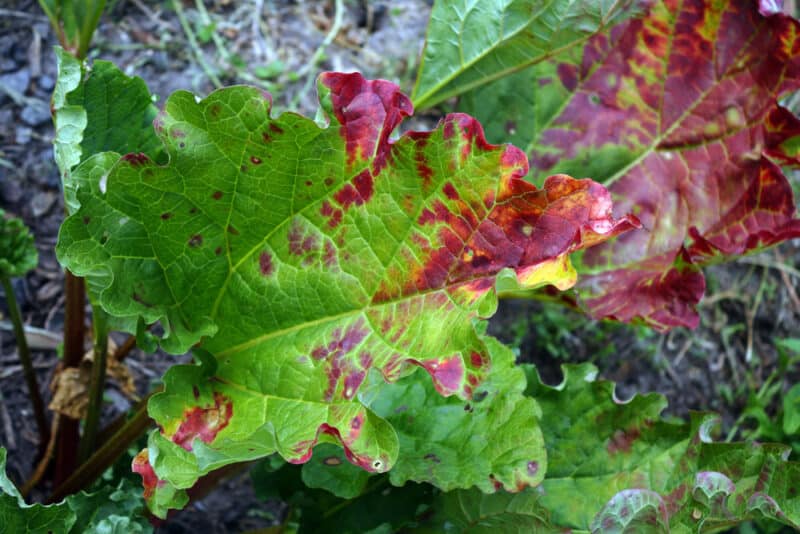
This fungus causes rust-colored orange or red spots on the leaves and sometimes on the stems of rhubarb plants. Like most fungi, rust occurs when your plant receives too much water and not enough air circulation. Rust can damage the crown of the plant, but not to the extreme degree that crown rot will.
Remove all severely affected leaves and stems when you see signs of rust on your rhubarb plant. Do not put them in the compost – burn them if possible or throw them in the trash. Next, remove all weeds and debris from around your rhubarb plant.
If your plant produces a lot of small stems, harvest about half of the healthy stems to increase airflow around the plant and maximize sunlight.
Don’t over-fertilize your rhubarb either. Especially avoid nitrogen-based fertilizers, as they increase the growth of new leaves, which will be easy prey for rust. Improper fertilization can lead to many rhubarb problems.
7. Ascochyta leaf spot
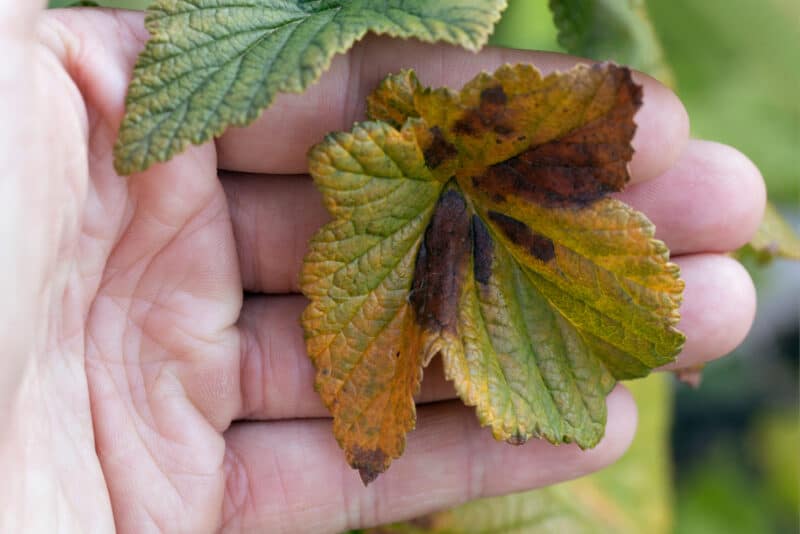 Ascochyta on strawberry
This fungal infection begins as tiny greenish-yellow spots on rhubarb leaves. The spots grow gradually – producing white centers flanked by yellow and brown withered edges. Eventually, the center of the spot rots completely, leaving a ragged-edged hole in the leaf.
Remove infected leaves and improve general garden hygiene. This will also help prevent further rhubarb problems. You can successfully treat this fungus with a copper-based spray for severe infections.
8. Anthracnose stem rot
Stalk rot is one of the most frustrating diseases in your rhubarb bed. This disease begins by producing wilted leaves and large, ugly lesions on the stems. The leaves wilt because the affected stems can no longer support them. As the lesions grow, they turn black and weaken the entire stem, causing them to twist and collapse.
Remove any stems showing signs of stem rot and burn them. Do not eat them or store them, even if you remove the lesion. Anthracnose stem rot usually only affects diseased or stressed plants, so healthy gardening habits are key to preventing this disease.
9. Ramularia leaf spot
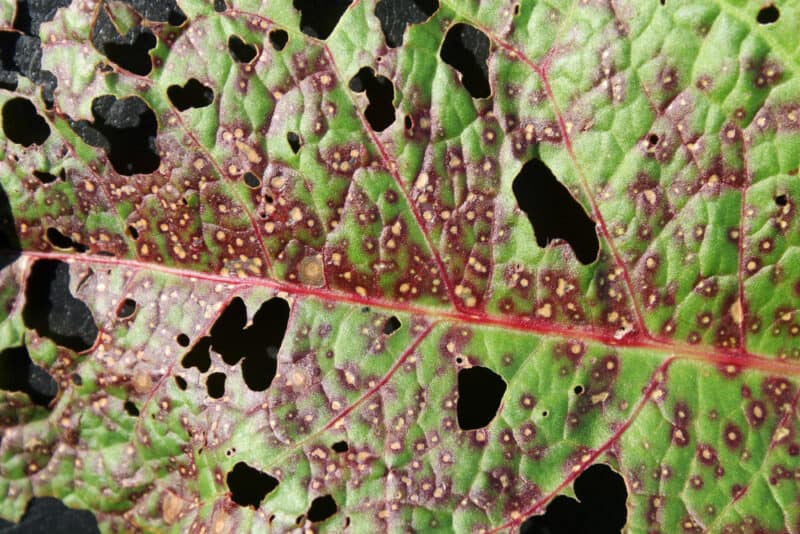
This fungal disease is called “leaf spot” because it begins by affecting the leaves. But ramularia will also quickly spread to the stems. Similar to ascochyta leaf spot, ramularia begins as rapidly growing spots on affected leaves. Ramularia spots are small and red. They turn whitish with purple halos as they grow before burrowing into rotting lesions.
Stem spots elongate and spread across the stem, creating rotten lesions and ruining your stems. Do not eat affected stems and keep any damaged plants out of the compost.
These fungi can be spread by splashing water and wind, so remove affected leaves and stems as soon as possible. Copper sprays can be effective against ramularia leaf spot, so in addition to hygiene practices, don’t be afraid to use a copper fungus spray.
10. Weak Stems
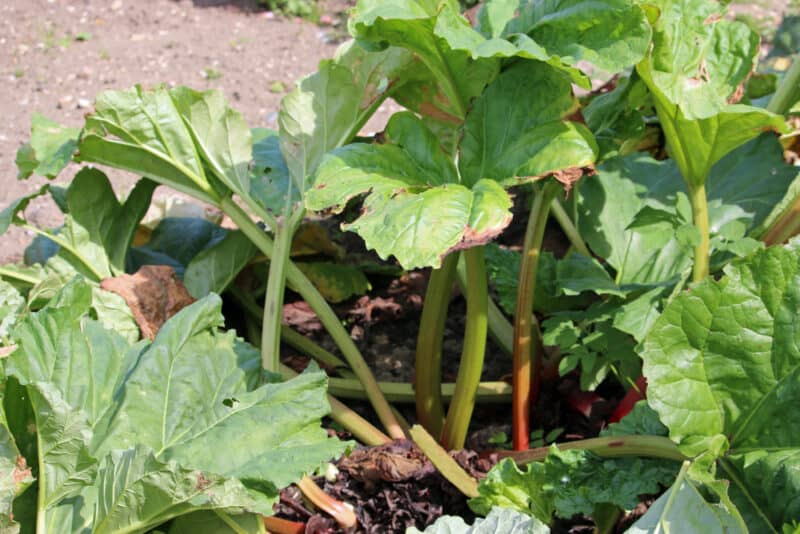
Sometimes a bed of rhubarb just seems weak. It no longer thrives as it used to, but neither is it sick or infested. If your rhubarb is suffering from indefinable discomfort, it may need to be divided.
Rhubarb propagates by roots. A healthy, well-maintained plot of rhubarb should be divided every 3 to 5 years. But often our plants are doing so well that we don’t want to change anything.
I have seen rhubarb plants left alone and undivided for over ten years. They don’t produce well, but there is a huge healthy root under the ground. A plant can fill a new row of healthy plants when dug up and divided.
Suppose your rhubarb gets sick often, despite all your weeding and care. Or, if it looks healthy but only produces small, thin stalks, you may need to divide your rhubarb plant.
Dig up the plant and carefully break the old crown into two or three pieces with a few buds in each section. Then, plant them in rich, well-drained soil. Make sure the crowns are just below the soil surface.
If it’s been a long time since your rhubarb has been divided, it may simply break down into several sections on its own. I once dug up “a” plant that split into six large healthy plants as soon as they were out of the ground.
Divide rhubarb in the spring or fall, but don’t expect a harvest of newly divided plants for at least a year after the move.
Was this article helpful?
Yes No ×
We appreciate your helpful feedback!
Your response will be used to improve our content. The more feedback you give us, the better our pages will be.
Facebook pinterest