
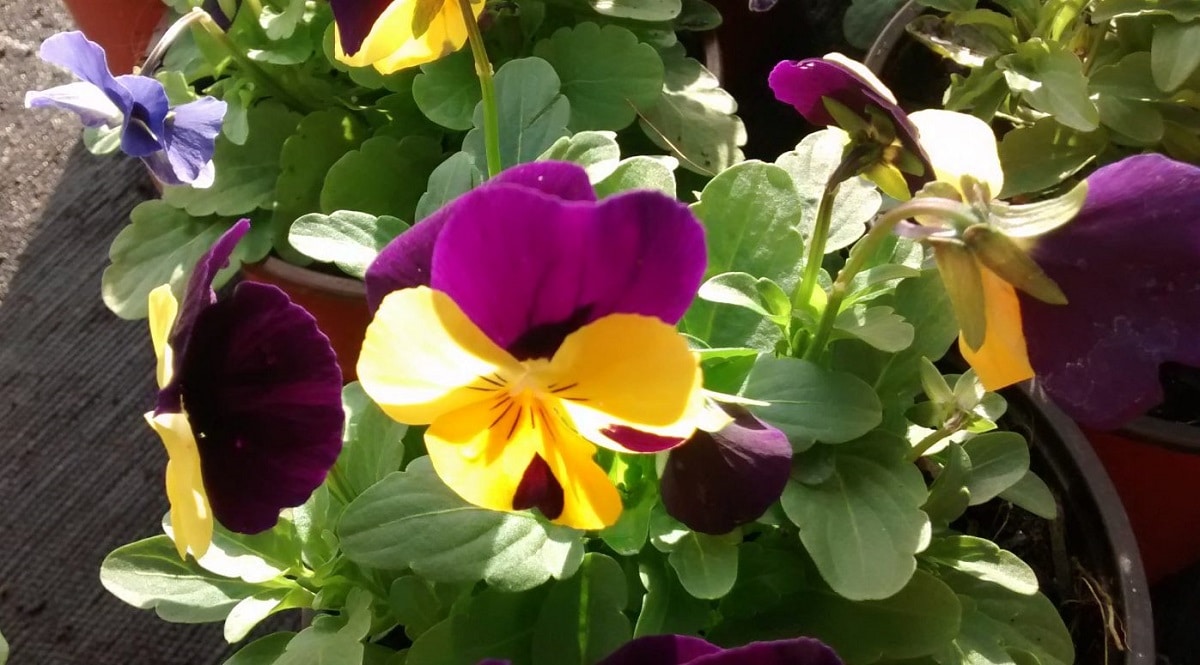
With the arrival of autumn in the northern hemisphere, the first seasonal plants of Viola cornuta begin to appear. They are sisters to the popular Viola x wittrockiana, commonly known as pansy. Its appearance is very similar, although the plant is more compact, with smaller and more prolific flowers. It is generally a plant widely used for the decoration of interiors and gardens. Many people wonder what are the horny viol care and if it is very vulnerable to the weather.
For this reason, we are going to dedicate this article to tell you about the main care of Viola cornuta, its characteristics and its importance.
main Features
Its scientific name is Viola cornuta and it belongs to the Viola family. It is also known by names such as violet, horned violet and Pyrenean violet. It is native to the Mediterranean region of Europe and is considered endemic to the Spanish Pyrenees and Cantabrian Mountains. With curiosity, It is included in the Red List of Threatened Species of Andorra.
Viola cornuta is a perennial plant with dark green leaves. Oblong to round, ovate, with slender stems growing from the base of the plant. It can measure between 10 and 25 cm as a plant.
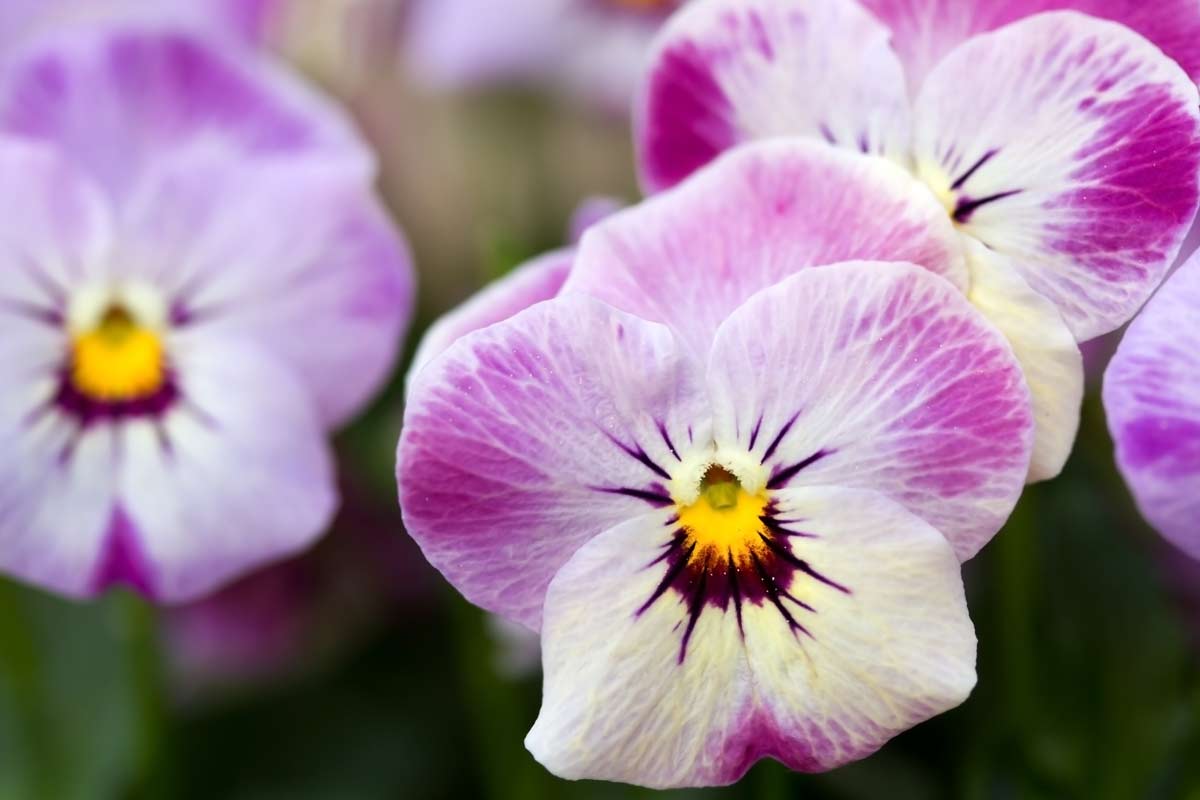
Its flowers are much smaller than Viola x wittrockiana, and are fragrant, used in gourmet and edible garnishes. The purple flowers have a light aroma, and the taste is delicate and sweet in taste, which is suitable for eating with food.
The color of its flowers can be varied, because as an ornamental plant new varieties are constantly appearing, the color of the flowers being the greatest novelty. Timeless tonic, its flowers are two-tone, being the blue, dark purple and yellow are the dominant colors of these combinations. Its flowering period is concentrated from September to early April in the northern hemisphere.
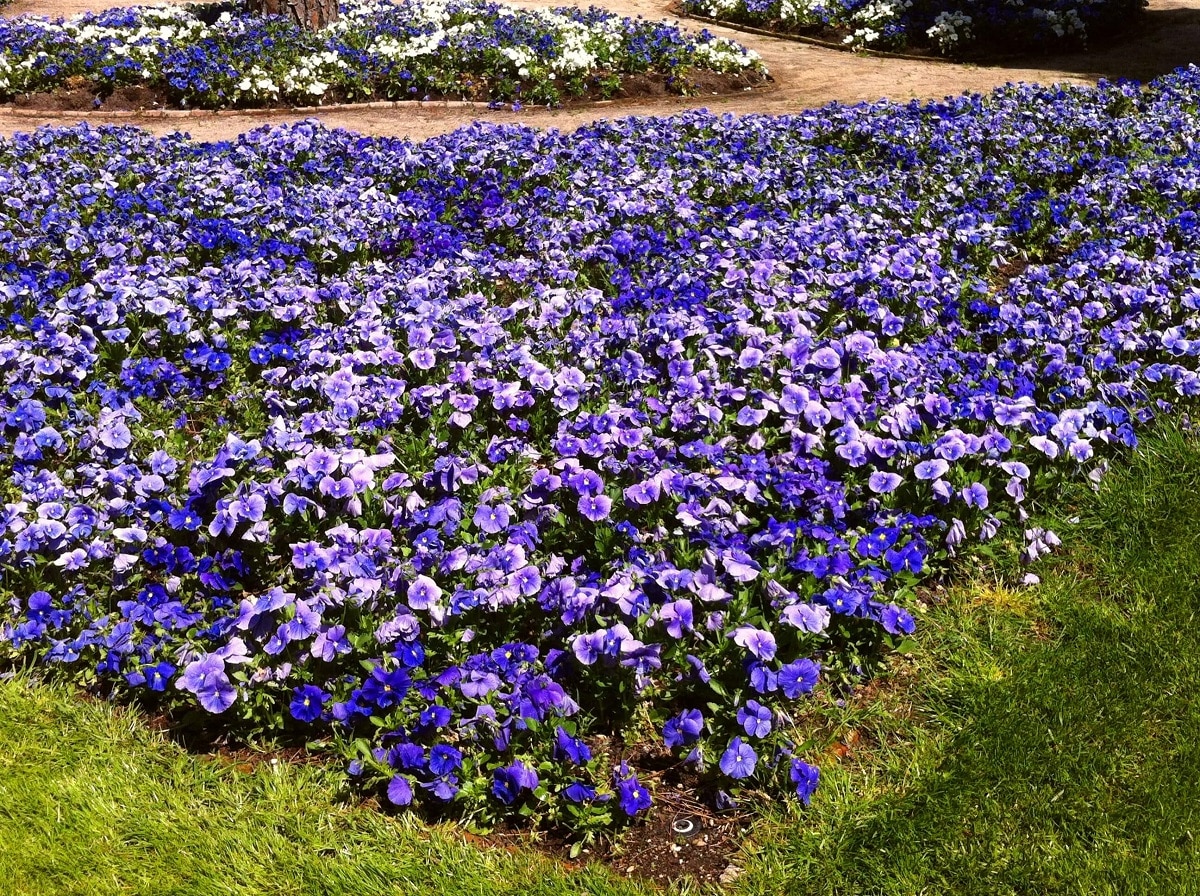
Violet is used as an ornamental potted plant in autumn plants. The most normal is to use them to create rock gardens, flower beds and borders, although it is increasingly common to admire them alone or in groups on terraces, patios, balconies… or even at home. itself as a small floral detail. In this case, it is advisable to place them as close as possible to a light source such as a window.
Detailed description of the Viola cornuta
The relevant characteristics of Viola cornuta plants are as follows:
- It is a perennial plant that is, it lives more than two years.
- It is part of an ideal plant for growing in pots and in direct soil.
- In addition to its excellent aroma, its main attraction is the flowering it offers in winter.
- The leaves of the plant are usually oval.
- They prefer areas of the garden exposed to the sun.
- Its petals are not only used for decoration, but are also widely used in haute cuisine and confectionery. Because they are even edible and have a mild taste.
- Its flowers are usually two-tone.
- It spreads by rhizomes.
- Its ideal climate is between cool and humid.
- The substrate in which it grows must be well drained.rich in organic matter and must remain moist.
- Its ideal pH is neutral to alkaline.
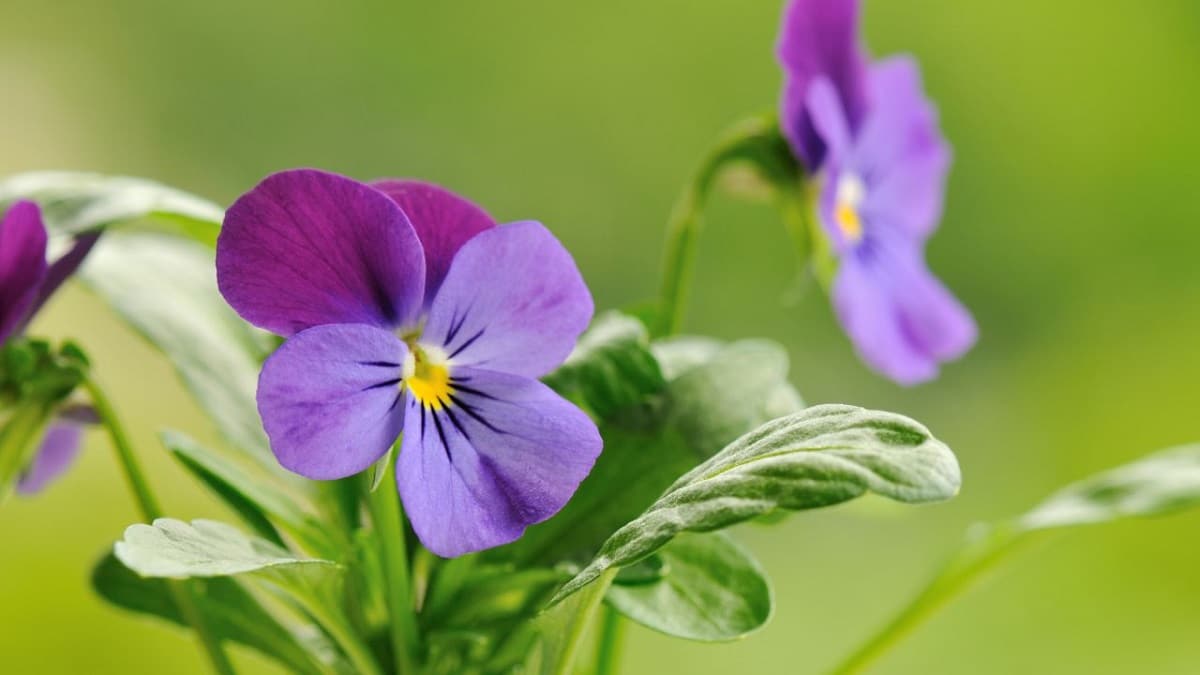
Its flowers are distinguished by their delicate aroma. It usually has dark purple, blue, cream or yellow hues. Two-tone shades are the most striking, in this case the flowers have a primary color combination of yellow, blue and purple.
Typically, yellow is next to dark purple, blue is next to yellow, and yellow is next to lavender. It grows between 2 and 4 cm. Where its petals reach between 1.5 and 1.9 cm.
The leaves of the Viola cornuta plant arise from the base of the plant and are hairy on the back. On the other hand, they are rectangular in shape, which means that they are longer than they are wide. They have a petiole, which corresponds to the appendage which joins the stem.
Viola cornuta treatment
Cultivation of violet viola is very simple, starting from sowing seeds in late summer. Its location in the garden will be in full sun, and the soil should be rich in organic matter.
Do-it-yourself gardeners often purchase horticultural and ornamental seed packets to grow. Knowing or having technical expertise in this area helps a lot. In this context, we present relevant technical data on the cultivation of Viola cornuta. These data should always be used as a guide, as they depend on the crop, the substrate used, the climate, etc. Results may vary significantly.
As plants from the group of seasonal ornamentals and autumn plants, we plant them in pots of about 10 cm in diameter after the seedlings germinate. Once they have reached a reasonable size, we can plant them directly in the garden.
The substrate indicated in this case is a universal substrate or substrate for outdoor plants with a pH between 5.8 and 6. The required Ec (substrate conductivity) should be between 1 and 1.5. The ideal temperatures are between 2 and 5°C at night and 20 to 22°C during the day. Below them their development will slow down, above them they will accelerate, and in no case will their growth be ideal.
The exposure of newly planted plants will be in full sun, since the climate is not very hot at this time of year when Viola is planted. The risk will be moderate, with frequent occurrences during the first week, keeping them at bay during the rest of the crop to promote root development.
Fertilization can be done 4 or 5 weeks after planting with 12-18-24 fertilizer (mixed with irrigation water) at a dose of 1 gram per liter twice a week. The most common pests are aphids and caterpillars.
As for diseases, they are infrequent, but in case of risk, Alternaria, Tielaviopsis and Cercospora are probably the most prone. In these conditions, violas take 8-12 weeks to grow from the waist down (planted in pots) until they are ready for direct sowing in the garden.
Reproduction of the Viola cornuta
Viola cornuta is characterized by seed propagation, especially during the months known as spring or summer. All you have to do is put them in a glass with water and after a few minutes, only sunken seeds will be removed.
They must then be placed on a spaced substrate, previously moistened and which can be easily put into pots or seedling trays. Afterwards, they are covered with more substrate, watered and placed in full sun if it is spring, or in a shady place if it is summer. They usually germinate in less than two weeks. Meanwhile, it is important to check that the substrate is completely moist.
Hopefully, with this information, you can learn more about viola cornuta care.