

If you like calatheas plants, you surely have or Have you seen the Calathea roseopicta. Do you know how it is? And the care you need?
Although they may seem like easy-care plants that can be kept indoors, they are somewhat complicated to maintain. For this reason, here we leave you the Calathea roseopicta file so that you do not have any problem and know everything you need to maintain it. Shall we start?
How is the Calathea roseopicta

Calathea roseopicta is also known as calatea rosa or calatea rosae. It is originally from South America, more precisely from northern Brazil. They live in tropical forests, so this can already indicate that when it comes to having it at home, it will need a lot of humidity and moist soil, but very little sun.
This calatea can reach 50 centimeters high. But maybe that’s not the important thing, but the huge hours you can spend. These will be green with a pink band around the leaf and a line down the middle of them. From behind it will be completely pink. Now, when the leaf is young and growing, it will have a green tint which will darken, until the leaves appear black, when fully grown.
It is true that, in its natural habitat, it could flourish, although it is not as easy as it seems. The problem is that indoors, it’s totally impossible for that to happen. You should still know that it is a plant whose flower is not at all flashy and which takes away a lot of energy, so some prefer that it does not flower so as not to deteriorate health. EITHER they even cut it before the flower stick got very big.
Care Calathea roseopicta
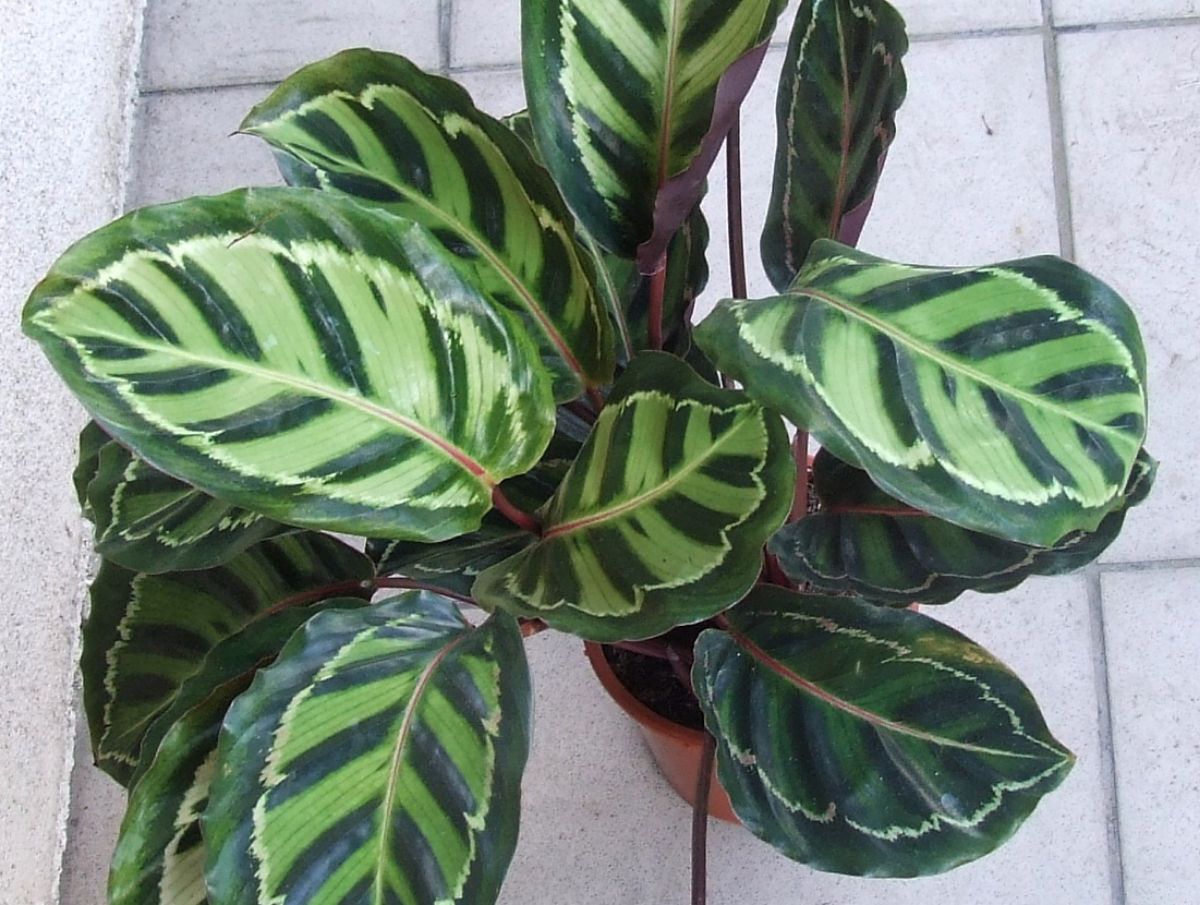
Now that you know more about Calathea roseopicta, What if we told you about the special care you will have to provide? They are not numerous and will be almost the same as with other plants. But knowing and applying them will make the difference between whether the plant is healthy or not.
location and temperature
We start with the best place to keep it and, without a doubt, it will be indoors. We don’t mean you can’t have it outside, yes you can, but you will need to provide it with similar conditions to its natural habitat. That is, high humidity, shade, constant watering, temperature…
For that, Inside the house, it is easier for you to keep all these conditions. Of course, at home, where? Well, you should start by placing it in a place that gets light but no direct sun. In its natural habitat it never receives sun because the tall trees cover it, so here you have to do the same (do not put it in the sun).
In fact, if you do, you’ll notice the leaves burn easily (although they’re almost black).
Regarding the temperature, the Calathea roseopicta cannot go below 16°C because it suffers. In fact, it is usual that if this happens the plant will start to have rolled and burnt leaves, it will stop growing and the leaves will dry out. If this happens, try to find the cause quickly or you will end up losing it.
Although we have already warned you that if this happens and you find a suitable place for it, the best thing to do is to leave it still and wait, because sometimes it can grow back (as long as you don’t have not drowned with water). ).
Substrate
The best soil for Calathea roseopicta is one that provides some moisture. Therefore, you can make a mixture with a universal substrate, peat or coconut fiber and perlite to give it all the nutrients and conditions it needs. Keep in mind that if when watering it comes out of the drainage holes very quickly, then it is better to water it more often (but without overdoing it, of course).
Irrigation
Irrigation is one of the most “special” care for Calathea roseopicta. And this is where you can fail the most, and with it lose the plant. You see, this plant likes to be wet. But he doesn’t like things to be saggy or with too much water.
So, when it comes to watering, you must first look at how the ground is to know if it is going well or not. It is better to be a little thirsty than to spend it because it is very delicate and you will lose it.
Experts recommend watering only when half of the substrate is dry. And do this until the water begins to come out of the holes in the pot. At this point, stop and wait about five minutes for the plant to finish shedding water and/or absorbing water from the dish. Then take it off.
Humidity
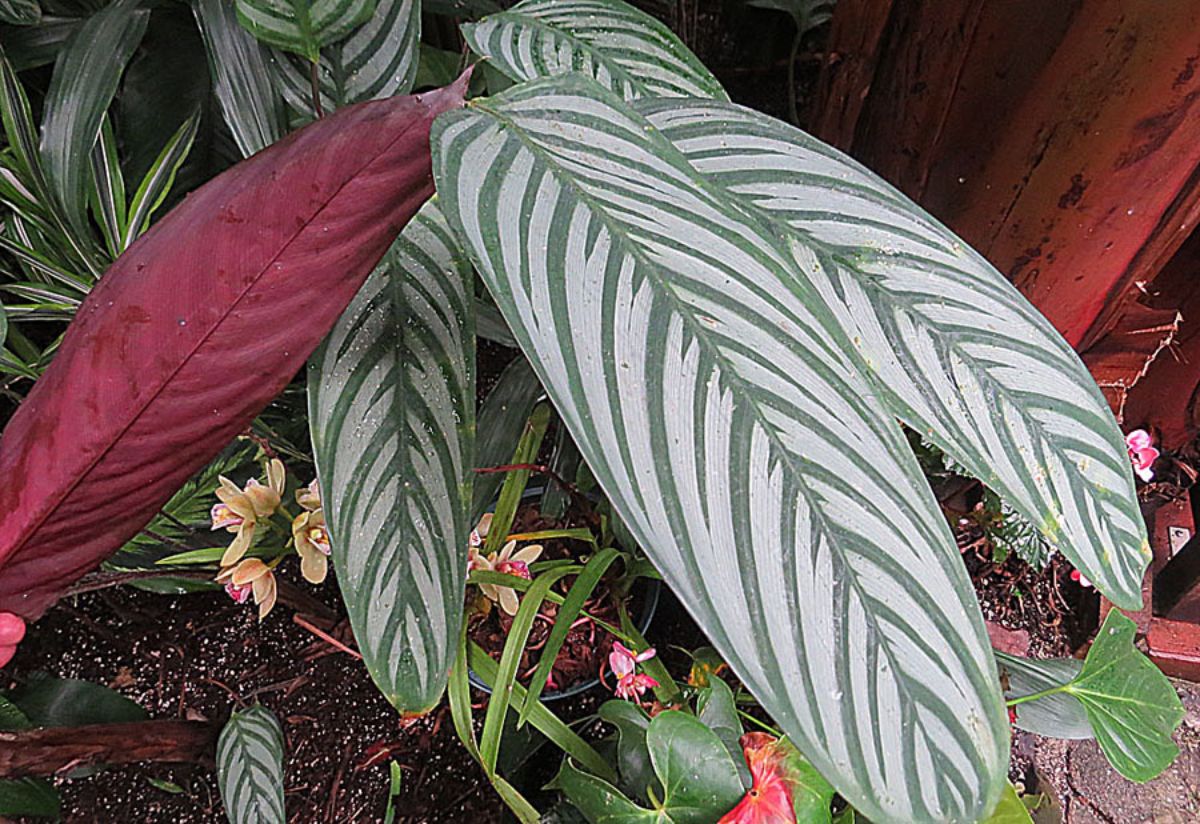
Humidity is almost more important than watering. And it is that this plant needs to maintain constant humidity in the leaves so that they have this beautiful appearance. Typically, the humidity you need will be around 60%.
Subscriber
In spring and summer, it is advisable to add a fertilizer mixed with the irrigation water at least once a month. Of course, do not give the full dose but only half.
Size
Although Calathea roseopicta is not a plant that requires pruningYes, you will need to be aware of removing wilted, diseased or weak leaves before they can attract pests or spoil the appearance of your plant.
Plagues and diseases
Calathea roseopicta, like other Calatheas, can have problems with pests, including aphids, spider mites or scale insects. These will attack it if the ambient humidity is not adequate. Therefore, the increase in it should be eliminated.
As for diseases, the most important is excess water, which will eventually rot the plant.
Multiplication
Propagation of Calathea roseopicta is almost always by plant division, that is, separate several groups so that they come out with roots and are planted individually.
We can tell you a little more about the Calathea roseopicta. If you take good care of it, you will appreciate these particular leaves and it will also grow little by little. Do you dare to have it?