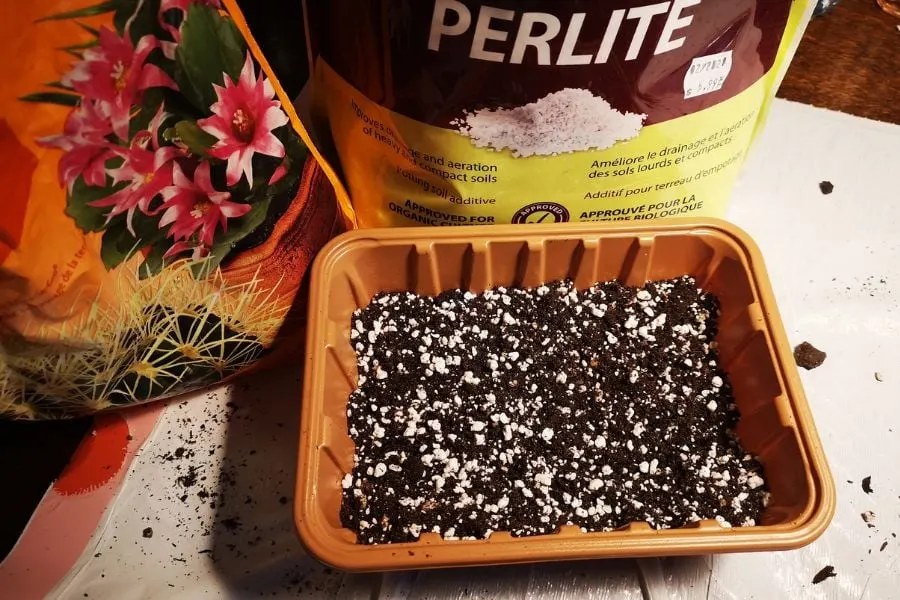
I’ve been a plant parent for a while now and my love for houseplants grows stronger every day. As I gained experience, I constantly experimented and read about different ways to care for my plants.
One ingredient that always comes up in my research is perlite. It is an often recommended additive to potting soil and I have always added it before planting. But is it really as necessary as everyone claims?
Perlite can only hold so much moisture before it becomes saturated, and overwatering can lead to root rot and other problems. So while perlite can be a useful tool for improving soil quality, it’s important to use it sparingly and monitor your plant’s water needs closely.
When caring for your plants, you may have heard that adding perlite to your soil can help it loosen up and retain moisture better.
Think of perlite as a sponge that absorbs and stores moisture in your potting mix. But here’s the point: if you’re like me and tend to overwater your houseplants, adding too much perlite may hurt them rather than help them.
Can you add too much perlite to the soil?

Perlite is a versatile soil additive used for a variety of plants. However, it is important to use it sparingly, as too much perlite can be harmful to your plants.
If you decide to add perlite to your potting soil, be sure to adjust your watering habits accordingly, as the increased moisture capacity of the growing medium can lead to overwatering.
What are the pros and cons of perlite?
Here are some of the benefits I found in my reading:
- The use of perlite as a component of the substrate (up to 40%) can significantly improve the properties of the seed mixture.
- Increases porosity and fragility, facilitating airflow through the roots. This will help prevent the soil from becoming too compact or hard, which will inhibit root growth.
- Perlite is also a natural insulator and protects the roots from outside temperature variations. As a result, substrate with perlite is less likely to get too cold in winter or too hot in summer.
- Another big advantage of perlite is that it absorbs a large amount of water and nutrient solutions. In fact, just 3.5 ounces (100 grams) of perlite can absorb up to just over ½ cup (400 ml) of water! This means that over time the plant can gradually absorb the moisture it needs, reducing the need for frequent watering. prevent root rot.
- Additionally, perlite contains a moderate amount of potassium, a nutrient that many plants need to grow healthy and strong.
I’ve made some good comments about the possible downsides of using perlite in soil mixes. Here is an overview of each concern:
- The moisture-wicking properties of perlite can be both a blessing and a curse. While it can help prevent waterlogging, it can also lead to overwatering if not used sparingly. Additionally, using perlite wick water methods can be particularly risky.
- When used in excess, perlite can make soil heavier and less permeable to water and air. Perlite washing is important to prevent absorption of harmful substances from irrigation water and possible poisoning of plants.
- Perlite dust can damage the respiratory tract and eyes, so it’s important to take proper safety precautions, including wearing eye protection and a respirator.
- The neutral pH of perlite can contribute to a shift in soil pH towards alkalinity, negatively affecting plant growth.
- Pests like powdery mildew and mosquitoes can be harder to diagnose when perlite is used in soil mixes.
- Fine perlite particles contain a lot of dust, so coarse perlite is best used in soil mixes.
Although perlite can be a valuable addition to soil mixes, it’s important to use it sparingly and take proper precautions to avoid potential pitfalls.
How much perlite should I mix into my soil?
Perlite is a soil conditioner that can be used to improve various problems. It is mainly contained in white granules and is very light, which makes it easy to float on water.
Therefore, it is difficult to use perlite alone as a soil conditioner because it floats when watered.
When using it, it should be mixed with 10-20% of the soil. After years of use, only perlite can float to the surface of the soil through repeated watering. Thoroughly mix the soil and perlite when transplanting.
If you’re wondering how much perlite to add to your soil, it’s important to consider factors such as the type of soil and the size of your pot. To help you determine the correct amount, I have prepared this handy chart:
| the type of soil | Amount of perlite to add |
| heavy, dense soil | 30% to 50% pearlite |
| medium bottom | 10% to 30% perlite |
| sand, light soil | 5% to 10% perlite |
| Land of cacti and succulents | 50% to 100% pearlite |
Depending on the size of the pot, the amount of perlite may vary. Pot size refers to the diameter or width of the pot, not the depth.
When adding perlite to potted plants, the amount of perlite to add should be based on the diameter or width of the pot.
It is important to note that the depth of the pot can also affect the amount of perlite needed, as a deeper pot may require more perlite to provide adequate aeration and drainage.
| pot size | Amount of perlite to add |
| 4 inches | 1/4 to 1/2 in. |
| 6 inches | 1/2 to 1 in. |
| 8 inch | 1 to 2 inches |
| 10 inches | 2 to 3 inches |
| 12 inch | 3 to 4 inches |
How To Get The Most From Perlite – How To Use It
1- Germinate seeds
Perlite is an incredibly versatile garden material that can be used in many ways, including for seed germination, as part of soil mixes, for drainage, and as mulch. Here’s how to use perlite to get the most out of it:
You can germinate seeds with a small fraction of perlite soaked in water. Mix wet perlite with dry seeds, cover with plastic wrap and keep warm until seedlings emerge.
Perlite helps maintain optimal humidity and its sterility helps prevent mold growth during germination.
In seedbeds

When preparing soil mixtures for seedlings, the proportion of perlite depends on the composition of the soil. Adding 10-15% perlite increases soil moisture capacity with raised, already breathable bogs.
However, more perlite (up to 30-40%) should be added to topsoil or garden soil to increase friability and breathability. It may also be helpful to mix perlite with vermiculite, diatomaceous earth, or coarse sand.
Add a thin layer of perlite to the bottom of the seedling container to prevent overwatering and standing water, which can be dangerous for slow-growing plants. This acts as a drain and wicks away excess moisture.
Mulch for seedlings
Covering the soil in seedling pots with medium perlite granules can help prevent seedling death from black stem disease.
The granules absorb excess moisture after watering, preventing seedlings from sticking and pathogens from developing in wet soil.
Perlite is a fantastic garden tool that can be used in many ways. Using it properly and in moderation will allow your plants to thrive and achieve the best results.
2- Use of perlite for indoor plants
Growing healthy houseplants requires good soil conditions, and perlite can be helpful in achieving those conditions. Here’s how to use perlite to keep your houseplants happy and healthy:
In soil mixes:
When planting indoor plants, the soil should be loose and air permeable so that the roots can develop in a limited pot volume.
Adding perlite to the soil mix at 10-30% can help address these conditions.
for evacuation:
Good drainage is important for potted plants; a thick layer of perlite about 1-3cm thick at the bottom of the pot can guarantee it.
This layer improves the condition of the pot tray when watering and prevents washing of the earth through the drainage holes.
as mulch:
Using coarse-particle perlite as a mulch can help prevent algae growth and soil compaction. White mulch also reflects light, improving plant lighting conditions.
For humidity:
During the heating season, low humidity can be a problem for houseplants. Perlite trays filled with water can be placed under the plants to increase humidity.
The evaporating moisture creates a favorable microclimate that can benefit plants that cannot tolerate dry conditions.
3- Using perlite for outdoor plants
Perlite is useful for indoor plants; it can also benefit your outdoor garden. Here are some tips for using perlite in your garden:
For ground adaptation:
Adding perlite to your garden soil can have several benefits. A layer of white stones mixed with perlite helps prevent the soil from overheating and retains moisture after watering and rain.
This can be especially useful in hot, dry climates. A thick layer of perlite can also help prevent annual weed growth, reducing the need for weeding and freeing up time for other gardening tasks.
For the spread:
In the propagation of vines, roses, ornamental shrubs and berries, the purity and lightness of the soil are decisive for the success of rooting cuttings.
Perlite is the best choice for cuttings because it is pathogen-free and maintains optimal humidity levels, allowing cuttings to root quickly.
4- Add perlite in planting holes: an effective strategy for greenhouses and orchards
In commercial greenhouses, the use of perlite as a soil substitute is common, especially in hydroponic systems. Its ability to absorb and retain water makes it an excellent medium for growing plants.
If you’re a gardener like me, you know how frustrating it can be to deal with heavy clay soil. It’s like trying to breathe through a straw!
To improve soil aeration, soil loosening components are needed for heavy clay soils in outdoor orchards.
However, purchasing large quantities of arresters can be expensive. A cost effective approach is to apply the loosening component locally in the planting holes.
Adding perlite to planting holes is an effective strategy when transplanting tomato, pepper, eggplant, cucumber and potato plants.
By mixing 1-2 handfuls of perlite with soil and fertilizer, the material promotes better soil aeration and moisture retention, creating a more favorable environment for plant growth.
Sharing is caring!