
On October 24, World Climate Change Day was celebrated. It’s something that goes around our heads, the media repeat it ad nauseam and for one thing or another, it is clear that we are experiencing it little by little in our ecosystems. Already in the 70s of the last century it was warned, but human beings are stubborn, and the socio-economic dynamics of a population of almost 8 billion people are very difficult to change and adjust. Let’s do a little reflection on climate change and our energy demand.
Can’t we generate impact?
From our point of view, eight billion human beings cannot fail to generate an impact, thus accelerating climate change. It’s that it’s impossible. The impact is there, whether more or less severe, but we cannot avoid impacting the environment. Each living being that interacts with the environment generates an impact. Otters hijack entire riverbeds with their palisade prey. Many species invade and displace others, changing the entire ecosystem. In our case, these impacts are even greater. It is not only that we generate an impact on the environment. It’s that our way of life requires absurdly high energy requirements compared to any other living being on the planet. There is something that differentiates us from other living beings:
Living things adapt to the environment. Humans adapt to the environment.
This adaptation of the environment and not of the environment, is what has made us conquer all the confines of this blue bubble in which we live, achieving growth as a species out of orbit. And how did we manage to adapt the support to our needs? Transform and consume energy. And that has a cost.
The energy consequences
This simple phrase encompasses stratospheric energy consequences. We can live in climatic regions of all kinds, because we can hunt, gather, raise, cultivate (in this blog we know something about it…) warm up and cool down according to our needs. All these activities without exception consume energy, a lot of energy. It’s pure thermodynamics and entropy of the universe. If we want to move, eat, warm ourselves, cook, we need energy and above all: we know how.
“Burning things” is the most primitive and easiest way to get energy
The expression may sound a little crude, but the discovery and management of fire and its consequences, well applied from the point of view of science and engineering, is the basis of our energy source. From Neanderthal man to today. We burn wood, gas, coal, oil primarily to obtain the vast majority of our energy demand as a society. We have managed to create machines that take advantage of this thermal energy to generate direct motion and electricity mainly.
Nuclear energies are a step beyond “burning things” and for now they are postulated as a transitional solution until renewables can meet most of our demand.
And why not dream? We still hope that ITER and the entire scientific community around the world will work together to achieve the next “fire discovery”. nuclear fusion. Virtually unlimited energy and no waste generating greenhouse effects and pollution. But let’s be aware that there is still time for that and we have to replace it with something. Climate change is here. It always has been. We know it and we have to slow it down.
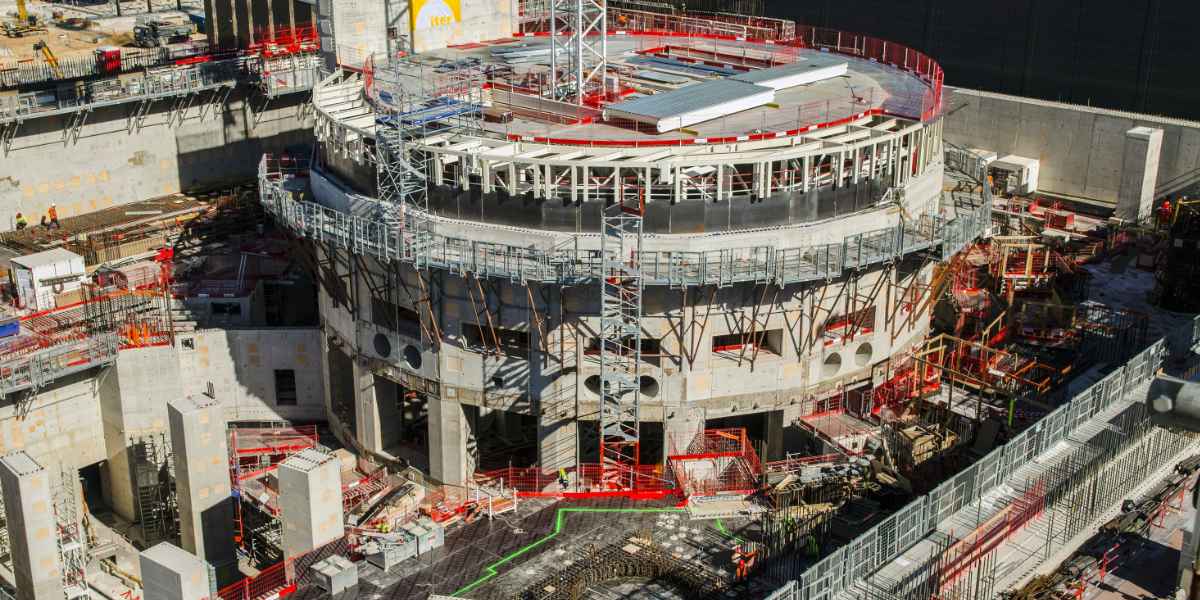 Construction of ITER in Cadaracha (France). The largest experimental nuclear fusion reactor in history.
Solar and wind energy are the queens of renewable energy production
Although this is not happening, renewable alternatives are gaining strength in the world of power generation. In addition to the advantages that they are renewable in terms of the environment and the famous climate change, their use generates less energy dependence in countries which have been “lucky” to have the long-awaited dinosaur juice under their feet and its associated gas bags. . .
This is where these two modes of energy production come in, which do not consist of burning anything. They mainly consist of taking advantage of two almost inexhaustible sources of energy: the sun and the wind; two Greek gods: Helios and Aeolus. Phonetically very similar and closely related.
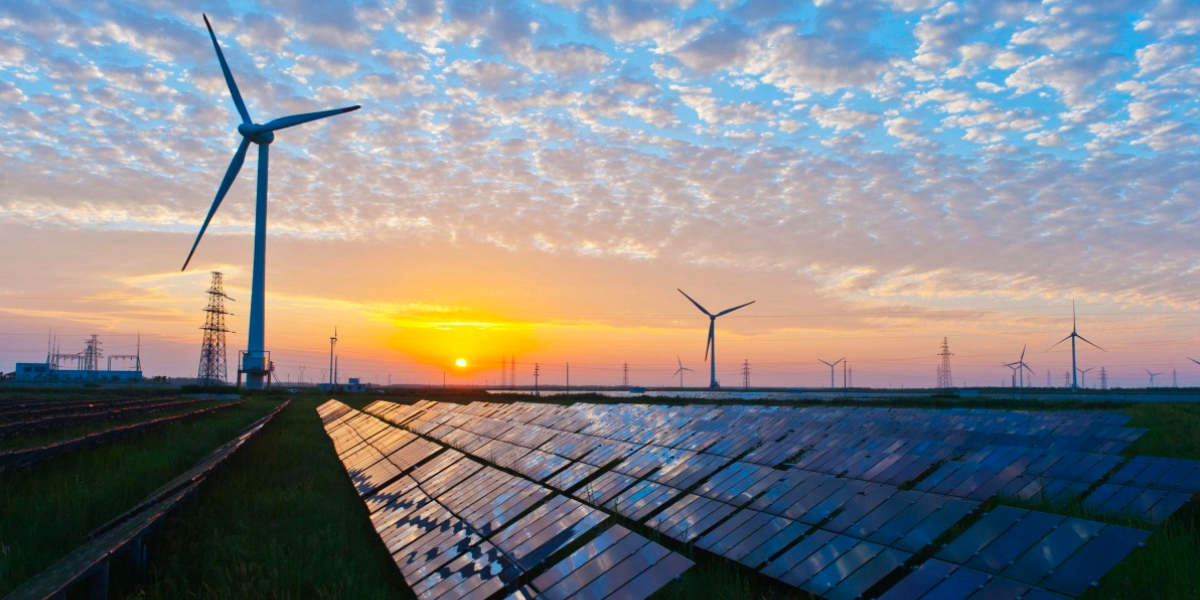
According to the latest report by Red Eléctrica de España, in 2021, 47% of the energy quota produced was renewable, mainly driven by wind and sun, and there is also a 10% increase compared to the year former. Currently there is an installed solar power of 17000 Mw. And it goes “crescendo”. It is difficult for renewable energies to completely replace non-renewable energies, but little by little we are getting there.
Will it prevent climate change? No. Climate change is inherent in the history of the planet. The question is whether we can hold on to some progress or at least delay this change. We do not produce climate change as such. We are accelerating it by forced marches. And it is up to us to mitigate this acceleration.
Self-consumption alternatives for climate change
More and more homes are choosing to disconnect from the grid, or at least to supply part of their consumption with solar panels installed on the roof of the house. Spain is a country which, due to space, culture and demography, tends to organize its housing lands into large blocks, unlike countries like England or the United States, but anyone who owns a single or semi-detached home has ever considered the option of solar panels. Until recently, the amortization periods of an installation were very long and whether we like it or not, having a complete fleet of solar panels requires maintenance on our part that we must assume.
Once this obstacle has been overcome, it’s time to do some numbers, see roof meters, hours of sunshine, latitude of our home, climate in which we find ourselves, and see if this compensates for an installation of this type. Have you ever thought about installing solar panels in your home? Here we leave you the first step. First, request your solar study from Solfy. Feasibility studies are essential to know if it is profitable to carry out the installation. We remind you that these types of equipment are also subsidized.
Your garden may also need solar panels.
We are at Agromática and of course we have to bring these renewable energies to our field. A vegetable garden also consumes energy, however small it may be. If we have programmed drip irrigation, we have solenoid valves and a programmer that must be supplied with electricity. And if we don’t have a grid connection nearby… the solution is a small solar panel that powers that. If we also have to pump the water, then the consumption rises a bit and we will have to size something larger. Here we are entering what we ourselves call an agrovoltaic garden. It may sound silly to you, but we like the idea.
Have you ever thought about installing solar panels in your house or garden? Tell us in the comments!