Houseplants are attractive, can help improve air quality, and have many other health benefits. But just because they’re indoors doesn’t mean they aren’t prone to pests. Below, we’ve rounded up 9 of the most common houseplant pests, how you can spot them, get rid of them, and protect your plants from future infestations.
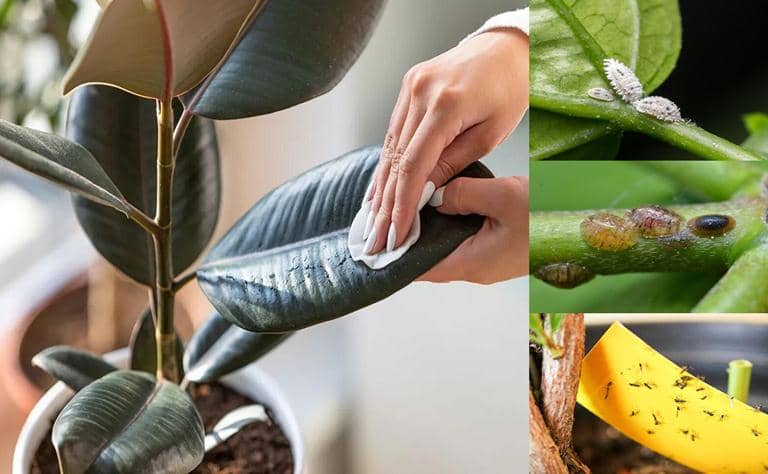
1. Cochineals
Mealybugs commonly affect garden plants, but they are also one of the most common pests of houseplants, they are soft-bodied white insects usually found in warm climates.

Due to their white, fluffy appearance, you may notice them right away. Once they are ready to feed, they tend to stay in one place, nesting in the stem joints or sometimes along the stem.
Because mealybugs are slow feeders and suck sap, this can make the plant dry, even if you persisted in watering. If the leaves start to curl and turn yellow, it could mean you have a heavy infestation.
If you catch them early, scale insects can be fairly easy to kill. If there is no sign of a large population, simply cut off the affected branches.
You can also get rid of light infestations by rubbing the mealy bug with a cotton swab dipped in rubbing alcohol.
Avoid overwatering and over-fertilizing even if your plant seems to be drying out, as scale insects are attracted to soft growth.
Be sure to keep ants under control when dealing with these infestations. Ants are attracted to honeydew and will guard these pests to ensure their food supply does not run out.
2. Aphids
Aphids are small, soft-bodied insects that are usually green or yellow in color and are often found in clusters on any new growth.
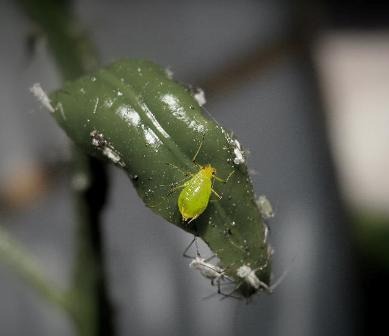
Aphids appear in large groups, so they can usually be spotted right away. They are usually seen along the stem of plants or under the leaves.
Since they produce honeydew, you may also notice sticky drops on the leaves. If you have a heavy infestation of aphids, it can stunt plant growth and cause leaves to turn yellow.
For light to moderate infestations, simply crush or remove the aphids yourself, spray them with water using a high-spray garden hose, or spray with insecticidal soap or water with a squirt of kitchen detergent on the infested area. You will need to repeat this process several times until you no longer see any signs of aphids.
3. Red Spider
An important sign of these parasites is their webs. However, do not confuse the webs of red spiders with those of common spiders. They only weave when there is a heavy infestation.
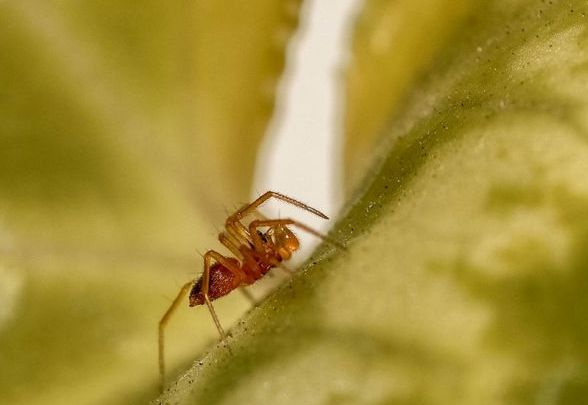
Their webs are very thin and sticky and you can probably spot them easily. Other spiders tend to slither only on the tops of plants to catch their prey, while the red spider mite forms its webs around leaves, stems and branches.
During their feeding, these pests leave pale spots due to the loss of plant cells, which can lead to yellowing and leaf drop.
Start by pruning the leaves or stems where the webs are visible or if you see signs of spider mites. Throw the clippings in the trash and avoid putting them in the compost, as they can quickly spread to other plants in the area.
You can also forcefully spray the infested area with a strong stream of water to break down tissue, followed by heavy sprays of insecticidal soap or neem oil.
As they like dry conditions, a strong current of water will throw them off. Spray at least once a week to ensure you get rid of these pests.
4. The whitefly
Whiteflies are small, white moth-like insects that, like many other indoor plant pests, weaken plants by feeding on their leaves and stems.
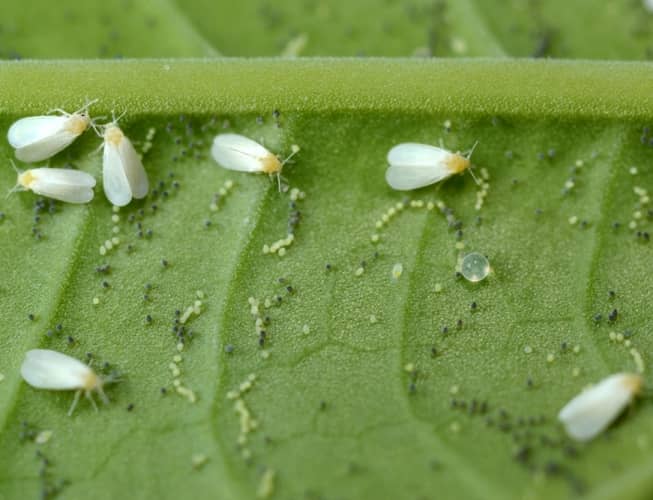
Whiteflies are easy to spot due to their small, powdery white bodies. They are found on the tops of plants and on the undersides of leaves.
Whitefly damage is similar to that of aphids and scale insects, and you may notice discoloration and distortion on your plant’s leaves.
Spray the plant with strong streams of water to disturb the whiteflies and reduce their population.
They are also attracted to the color yellow, so using yellow sticky traps to catch adult flies can help. If there are still lingering pests, spray the leaves with neem oil or insecticidal soap.
5. Leaf miner
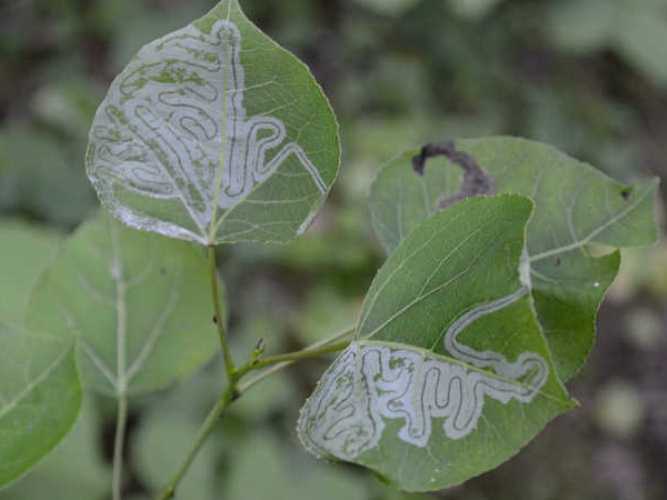
Leaf miners are small black flies that leave larvae on plants. The flies do not directly cause the damage, but the larvae are the main culprits.
Although they usually affect outdoor plants, leaf miners can also enter indoor plants.
The damage usually looks like wavy yellow lines, but can also appear as pale yellow spots on the leaves. This damage is the result of the path the pests have created by tunneling through the leaves.
Fortunately for houseplants, most leafminer damage is cosmetic, so simply removing damaged leaves will prevent adult flies from emerging.
6. Fungus Gnat
Fungus gnats can cause significant damage to your larval stage plants if left unattended. These houseplant pests thrive in moist environments and begin their life cycle in the soil. Most of the time, they are the result of excess water.

You may be able to see them flying around your plant. Don’t worry: they don’t sting, but they can be quite annoying. Since fungus gnats reproduce and start feeding at the root of the plant, this can lead to poor plant growth.
If you’ve noticed signs of poor growth (leaves wilting, yellowing, or falling off), examine the soil carefully and look for bright, pale larvae or adult midges flying out of the soil.
Since fungus gnats thrive in rich, moist environments, it’s a good idea to dry out the soil. Not only will this help kill the larvae, but it will also keep adult mosquitoes away, as they are attracted to moist soil.
Once the soil dries, the fungus gnats should disappear. You can also use sticky fly traps to get rid of adult mosquitoes and prevent them from laying more eggs.
If you don’t want to dry out the soil for your plants or if your plants can’t tolerate it, you can treat it with a neem oil or peroxide bath.
7. Thrips
Thrips are small spindly insects ranging in color from translucent white or yellow to dark brown or black. Because they are so small and are often confused with the color of plants, they can be harder to spot.

Thrips are one of the houseplant pests that can even infest furniture and bedding in your home.
Thrips are easier to spot when interrupted, as they are likely to start jumping or flying. Blowing lightly on the leaves or shaking them gently can help disturb them so they are more visible.
Check the leaves of your houseplants for small black spots where thrips have collected and left droppings.
Also check for indentations in the leaves or stems: this is a sign that the plant was cut down to lay eggs. Your plant may begin to show signs of infestation if the leaves are wilting, spotted, or developing silvery streaks.
You can eliminate them by rinsing the leaves of the plant with water to remove the larvae and eggs, or by spraying the plants with insecticidal soap or neem oil.
You can also use sticky traps to capture adult thrips. Be sure to spray all the leaves thoroughly to prevent unwanted worms from lingering there.
8. Scales
Scales are small insects with a hard exterior, oval in shape and brown in color. They feed on the stems or their unions, weakening the plant by sucking the sap.
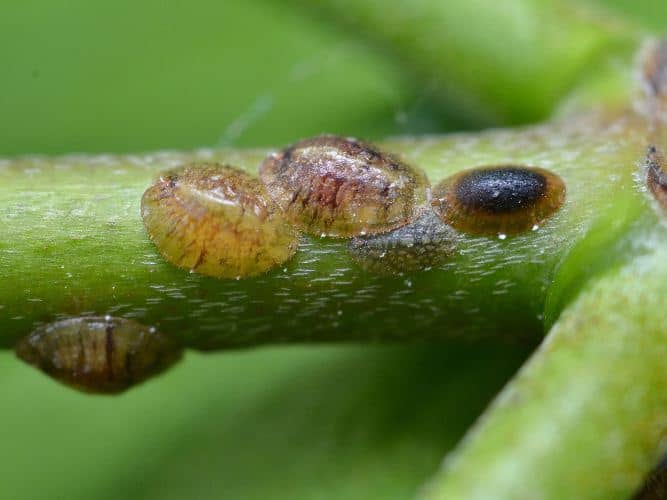
Scales are usually identified as raised, scab-like bumps. They can also secrete honeydew and leave a sticky, mold-like substance on infested areas.
Examine the underside of the leaves for any signs of these pests: round brown or black spots. Leaves often turn yellow and may begin to drop.
Due to their tough exterior, flakes are immune to most pesticides and chemical solutions, so organic methods are best used.
If the infestation is small, you can pick or scrape off the scales by hand. It can also be cleaned with a cotton swab dipped in alcohol.
Trimming infested leaves and stems is also an option. Once you’ve gotten rid of these houseplant pests, continue spraying with neem oil, insecticidal soap, or a solution of kitchen detergent and water.
9. Springtails

Springtails are small white or gray insects that live in the soil of plants. They look like a flea and can be seen jumping when the soil is watered.
Although they can feed on the roots of plants, they do not cause much damage. But since they like moist environments, if the ground gets too dry, they may seek out moist places in your home, such as floors or under sinks.
When the water reaches the bottom of your plant, you will likely see the springtails jumping or moving around. If there isn’t a large infestation, it may be more difficult to detect.
Since springtails do not cause much damage to houseplants, treatment is not always necessary.
If there are a lot of them and they are getting quite a nuisance, the best thing to do to get rid of them is to put your plant outside and let the soil dry out.
Share it on the networks: