
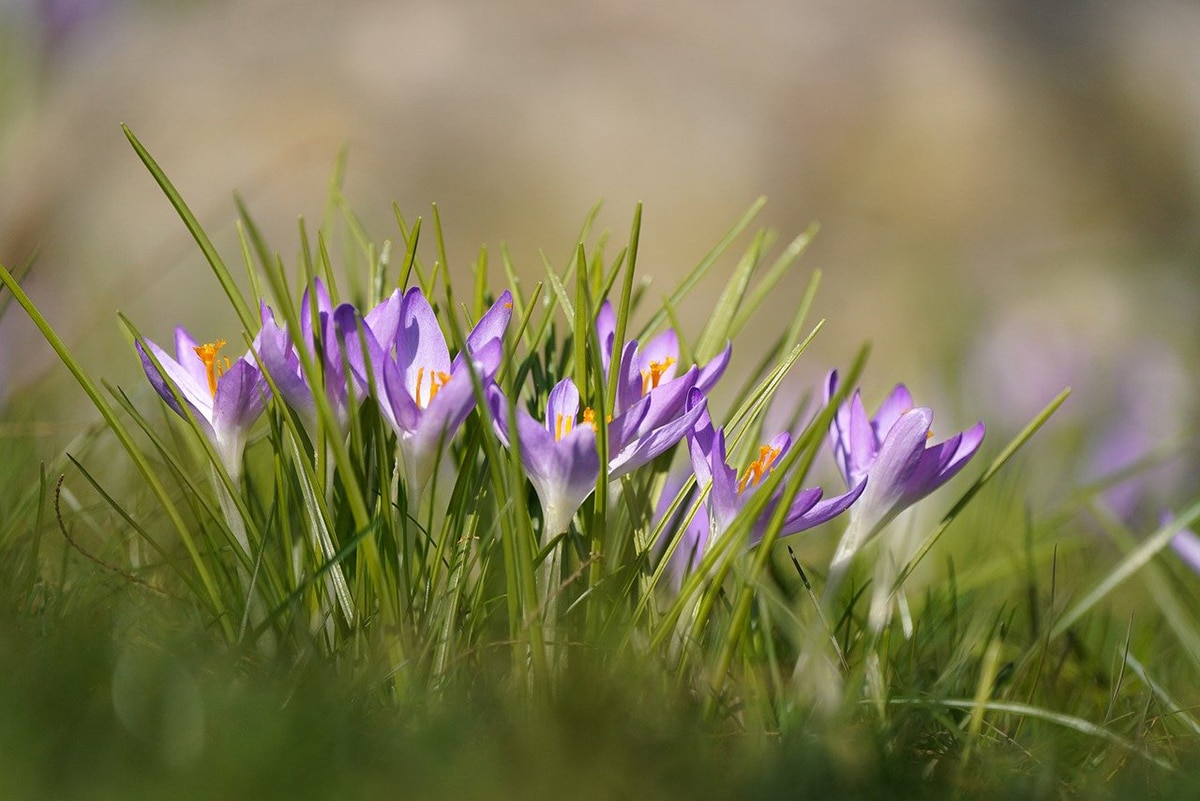
If you like lilac flowers, the plant called Crocus tommasinianus. Thanks to its color it is very striking. Besides, It is an easy-care and very decorative vegetable for the garden. which pleases the eyes of anyone. If you want to know more about this beautiful flora, I recommend that you keep reading.
In this article we will explain what is it and what are the concerns that Crocus tommasinianus requires. So don’t hesitate to take a look if you are interested in this beautiful plant.
what is it Crocus tommasinianus?
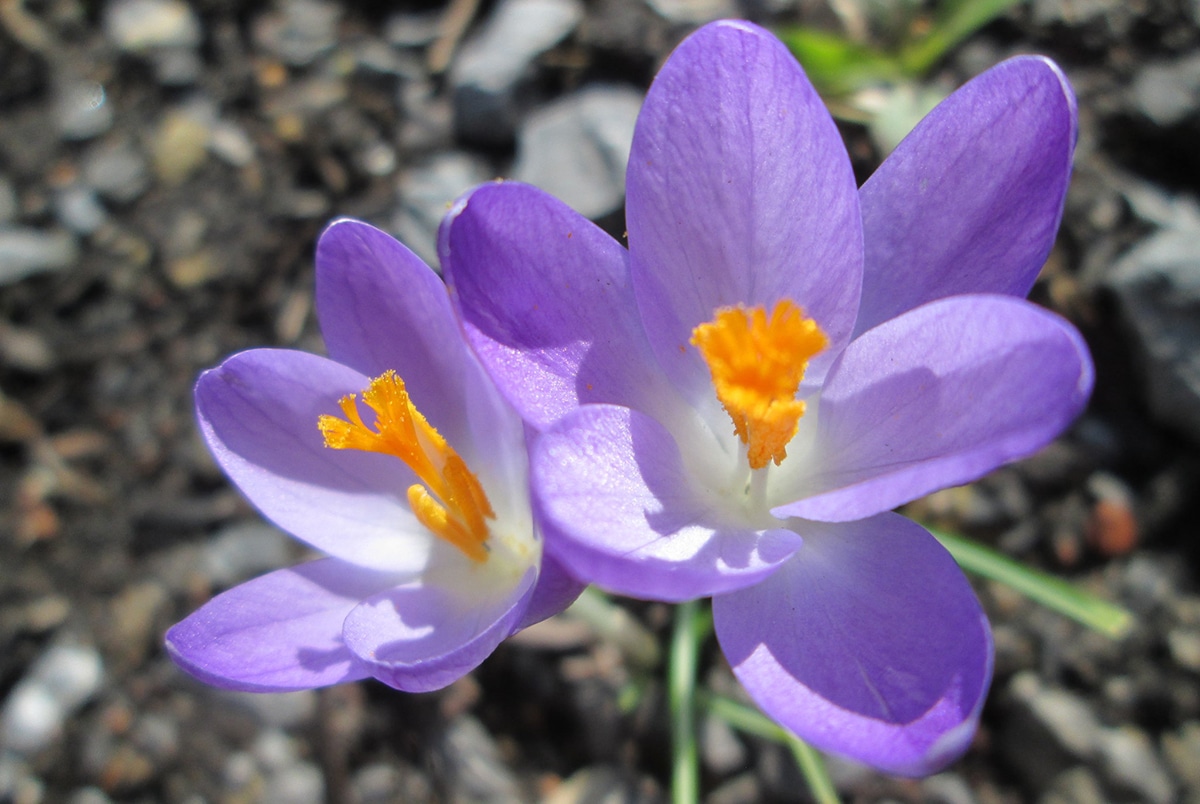
When we talk about Crocus tommasinianus, also called early saffron or false saffron, we refer to a bulbous and perennial plant for ornamental use. it’s part of the genre crocuswho in turn is a member of the family iridaceae. This beautiful plant with lilac flowers is native to Europe, specifically the countries of Bosnia, Bulgaria, Croatia, Hungary, Montenegro, Poland and Serbia. In addition, it is possible to come across this apartment in southern Germany. It normally grows in forests and on shady slopes.
within the species Crocus tommasinianus there are a large number of varieties which serve above all to beautify the garden. Some have pink flowers, others white, and others in various shades of purple, lilac, and violet. Note that they have a saffron scent and generally bloom at the end of winter. One of the best-known varieties is perhaps the Crocus tommasinianus ‘Giant Ruby’. It stands out because it is a very vigorous plant, much more so than the wild ones, and its flowers are generally larger with a rather dark lilac color. A beauty, no doubt.
Early Crocus Description
We already know a little more about what it is Crocus tommasinianus and what is its distribution and habitat, but what does it look like physically? Let’s see: This plant has a rounded chromium, which in turn has fibrous tunics while the fibers run parallel. The leaves of this vegetable are linear and have a midrib. It usually has between two and four, which are fully developed at the start of flowering.
Regarding the flowers, they usually have a star-like shape when they are open. Their color is usually lavender or lilac, but they have a white tube. The tepals are usually darker inside than outside.
Care and cultivation of Crocus tommasinianus

If you love faux saffron and are considering growing it, I have some really good news: It is quite easy to maintain. However, it should be noted that it does not usually survive long periods of drought, just as it does not tolerate excess water well, as it is very susceptible to the appearance of fungi. The ideal is to plant these flowers in autumn, forming groups located in a place with partial shade. The optimal distance between each specimen is eight to ten centimeters. As for the depth, the ideal would be five centimeters.
When it comes to propagating this vegetable, it also tends to be done in the fall through new bulbs that usually sprout around the original one. Another way to reproduce it is through seeds. However, it should be noted that they can take three to four years to flower. Considering these aspects, let’s see what they are the basic care of this plant:
- Light: False saffron tolerates full sun very well, although it also likes partial shade. Generally, it tends to flower earlier when it is in places better protected from the sun.
- Floor: Crocus tommasinianus requires well-drained soil rich in nutrients and organic matter. As for the pH, it should ideally be between 6 and 7. Of course, the humidity should be kept as low as possible. To do this, it is strongly recommended to add coconut fiber or compost to the soil. It also promotes plant growth.
- Temperature: Early saffron prefers temperatures below 15 degrees Celsius for its growth and development. However, for the flowers to form, the ideal is that the temperature is around 22 degrees Celsius.
- Irrigation: It is best to water this vegetable once a week when it grows. It is very important that the soil does not dry out in autumn or spring. In winter, it may need some water if it’s not snowing. In summer, even if it is going to rest, it may need a little watering, but not much. It is important to avoid excess water to avoid the development of mold.
- Fertilizer: In case we want to get the stigma and the petals of Crocus tommasinianus are taller, adding fertilizer is a good option. This plant can be fertilized twice when it is growing. Once would be in the fall, and once in the early spring.
Plagues and diseases
Like most plants, also the early crocus It is susceptible to certain pests and diseases. Next, we will comment on the most common ones that usually appear in the cultivation of these vegetables:
- Leaf beetles: This type of insect feeds on the leaves of many plants. If not controlled in time, they can cause serious crop damage.
- Leaf rot: This is a bacterial infection that causes the leaves of the affected plant to rot.
- Root rot: Roots can rot from pathogen infection or from overwatering.
- Plant wilting: This can happen due to some normal process related to the season of the year that causes leaf loss. It can also be caused by acronecrosis.
- Mold in the ground: It normally appears on the soil surface when the environment is very humid.
The best thing to do to prevent fungus from appearing is Avoid excess water, promote good ventilation and keep the plant clean. By following these growing tips, you will surely get beautiful flowers.