Are you curious about what type of fruit weeping cherry trees bear or if they produce fruit, but are they edible? So, in this blog, you will learn about weeping cherry trees and their fruit characteristics.
Do weeping cherry trees produce fruit?
Weeping cherry trees produce fruits that are inedible to humans due to their bitter taste. These fruits are small, non-toxic fruits that are fed to birds and also make good organic matter. When they fall from the trees to the ground, the soil becomes more fertile and alive. These bays are also mess-free and easy to clean.
Now let’s know more about the weeping cherry tree and its types and a mysterious question about what would happen if it takes 2 cherry trees to bear fruit! Let’s learn keep reading.
| TREE | weeping cherry |
| Fruit | It produces small inedible fruits. |
| Edibility | Not edible for humans due to its bitter taste. |
| birds | eaten by birds |
| organic material | Provides good organic matter for the soil. |
| Fertility | Helps make the soil more fertile and vibrant. |
| mess | Not messy and easy to clean. |
| Toxicity | Nontoxic |
| Fountain | Weeping cherry trees produce fruit that is inedible to humans, according to hunker.com. The fruits provide good organic matter for the soil and are not dirty. |
Introduction to weeping cherry trees
Weeping cherry trees, commonly known as “Pendula”, have been used in gardens and landscapes for generations. Weeping trees get their name from their lower branches. At the beginning of April, they are covered with fragrant clusters of small white flowers. Weeping cherry trees are excellent for large gardens and patios due to their height of 8 to 25 feet and their width of 30 feet. Weeping cherry trees prefer full, light, well-drained acidic soil. Winter pruning keeps drooping branches down. These trees will last for years if properly cared for.
Do weeping cherry trees produce fruit?
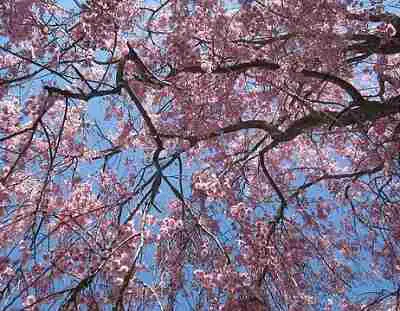
Weeping cherry trees produce fruits that are inedible to humans due to their bitter taste. These fruits are small, non-toxic fruits that are fed to birds and also make good organic matter. When they fall from the trees to the ground, the soil becomes more fertile and alive. These bays are also mess-free and easy to clean.
Characteristics of weeping cherry trees
Gardeners love weeping cherry trees for their unusual appearance and beautiful blooms. These trees can survive in many climates and soil types. Here we will discuss the characteristics of the weeping cherry tree.
Weeping cherry trees have unique shapes. Weeping cherry trees have drooping branches that often touch the ground, unlike other cherry trees. This makes them elegant and attractive, making them popular ornamental trees in gardens and parks.
The weeping cherry trees bloom brilliantly. These trees bloom in April with beautiful pink and white flowers. These aromatic flowers attract pollinators.
Hardy weeping cherry trees. These trees can survive harsh winters and hot summers. They are drought tolerant and low maintenance. These trees are pest and disease resistant, making them low maintenance for gardeners.
Weeping cherry trees are beautiful, long-lasting garden trees. They are beautiful and low maintenance.
Types of Weeping Cherry Trees
- Yoshino Cherry: The beautiful arching branches of the Yoshino cherry tree make it a favorite weeping cherry tree. The Japanese Yoshino cherry has star-shaped white flowers with a pink-red core. Bright green leaves turn yellow in fall.
- Higan’s Weeping Cherry: Higan’s Weeping Cherry is a Yoshino-Higan hybrid. Unlike the Yoshino cherry, it has larger, more dramatic white flowers with a pinkish-red center. In the fall, the leaves of the Higan’s weeping cherry turn bright yellow.
- Weeping Cherry Snow Fountain: This beautiful weeping cherry tree has drooping branches and large bell-shaped white flowers. The snow fountain weeping cherry tree has dark green leaves and fragrant flowers. Japanese ornamental cherry trees include this species.
- kwanzan cherry: The Kwanzan cherry tree is a beautiful weeping cherry tree with double flowers. Clusters of pink-red flowers with white centers. In autumn, the thick crown of the Kwanzan cherry turns golden yellow.
people also ask
Can you eat the fruit of a weeping cherry tree?
No, you should not eat weeping cherry berries because of their bitter taste and only birds eat these small berries and can digest them.
Does a weeping cherry tree produce cherries?
Yes, the weeping cherry tree produces cherries of different colors like yellow, red, white in spring and fall.
Do Japanese weeping cherry trees produce fruit?
Yes, the Japanese weeping cherry tree bears fruit, but it is not meant to be eaten by humans and only eaten by birds.
Do you need 2 cherry trees to produce fruit?
You don’t need 2 trees, just one cherry tree can bear fruit, pollinate and do it every year without the other tree.
Do cherry trees bear fruit every year?
Yes, cherry fruits grow every year and are cultivated by many to make fertilizer for other gardening purposes.
How often do cherry trees bear fruit?
Most cherry trees bear fruit after 4 years of maturity. Dwarf varieties can fruit early, but it all depends on soil quality and environmental factors.
What time of year do cherry trees produce fruit?
Most cherry trees bear fruit during the months of May, June and July and can then begin to drop cherry blossoms to the ground in the fall.
In Japan and elsewhere, cherry blossoms or sakura symbolize spring and new beginnings. Cherry blossoms are beautiful, but are their fruits edible?
Cherry blossom fruit is inedible. It is poisonous and can cause vomiting, stomach upset and dizziness if swallowed. The apple tonsil is converted to cyanide in the body. Cherry blossom fruit is poisonous, although the cyanide content is low.
Cherry trees do not always bear edible fruit. Sweet and sour cherry trees produce fruit. Cherry blossoms are planted for their beauty, not for their fruit.
Journal of Agricultural and Food Chemistry article on cherry blossom fruit toxicity:
https://pubs.acs.org/doi/abs/10.1021/jf9806168
In short, eating cherry blossom fruit is dangerous. Leave the fruit to the birds and enjoy the flowers!
conclusion
Weeping cherry trees, Prunus subhirtella, are attractive ornamental trees with graceful undulating branches and pink or white flowers. Many wonder if weeping cherry trees bear fruit.
Weeping cherry trees can bear fruit, although this is usually undesirable. Weeping cherry trees are usually grafted onto the rootstock of other cherry trees, resulting in small, tart, and unsightly fruit. The fruit is messy and attracts animals which damage the tree.
Weeping cherry trees do not always bear fruit. Some cultivars are decorative only. Research the variety to be sure of the edible fruit of a weeping cherry tree.
Here are some weeping cherry trees and fruitful resources:
Planting and caring for the weeping cherry tree as explained by the Arbor Day Foundation:
https://www.arborday.org/trees/treeguide/TreeDetail.cfm?ItemID=889
Weeping cherry trees are covered in a fact sheet on cherry production from the University of Florida:
https://edis.ifas.ufl.edu/publication/HS100
another source from North Carolina State University Extension:
https://content.ces.ncsu.edu/selecting-fruit-trees-for-the-home-garden
Weeping cherry trees can bear fruit, but they are usually small, sour, and unattractive. Research the species to make sure a weeping cherry tree can produce edible fruit.
Weeping cherry trees produce fruit, but they are not intended for human consumption. The spring flowers of ornamental trees are white or pink. Their beauty makes them popular garden decorations. Due to their thin branches and sparse leaves, these beautiful trees cannot bear fruit.
Size of the weeping cherry tree: how big is it? (Growth, influencing factors)
Weeping Cherry Tree Problems: 25 Causes and Solutions Explained