
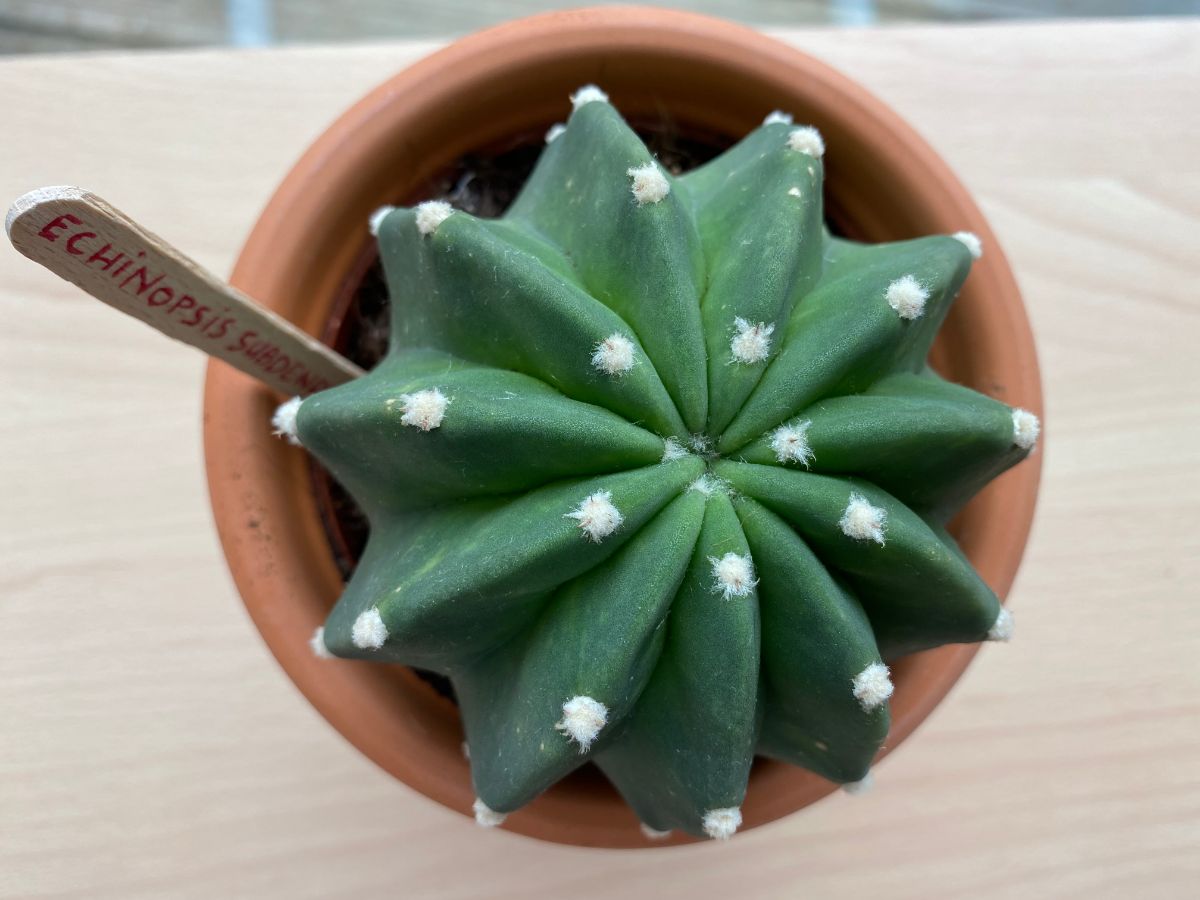
If you like cacti, but not those with thorns, Echinopsis subdenudata can be an interesting addition to your plant collection. In addition, we are talking about one that hardly requires care.
Do you want to know what this cactus looks like? And what do you need for it to flourish in your home? So take a look at what we have prepared to guide you.
How is Echinopsis subdenudata
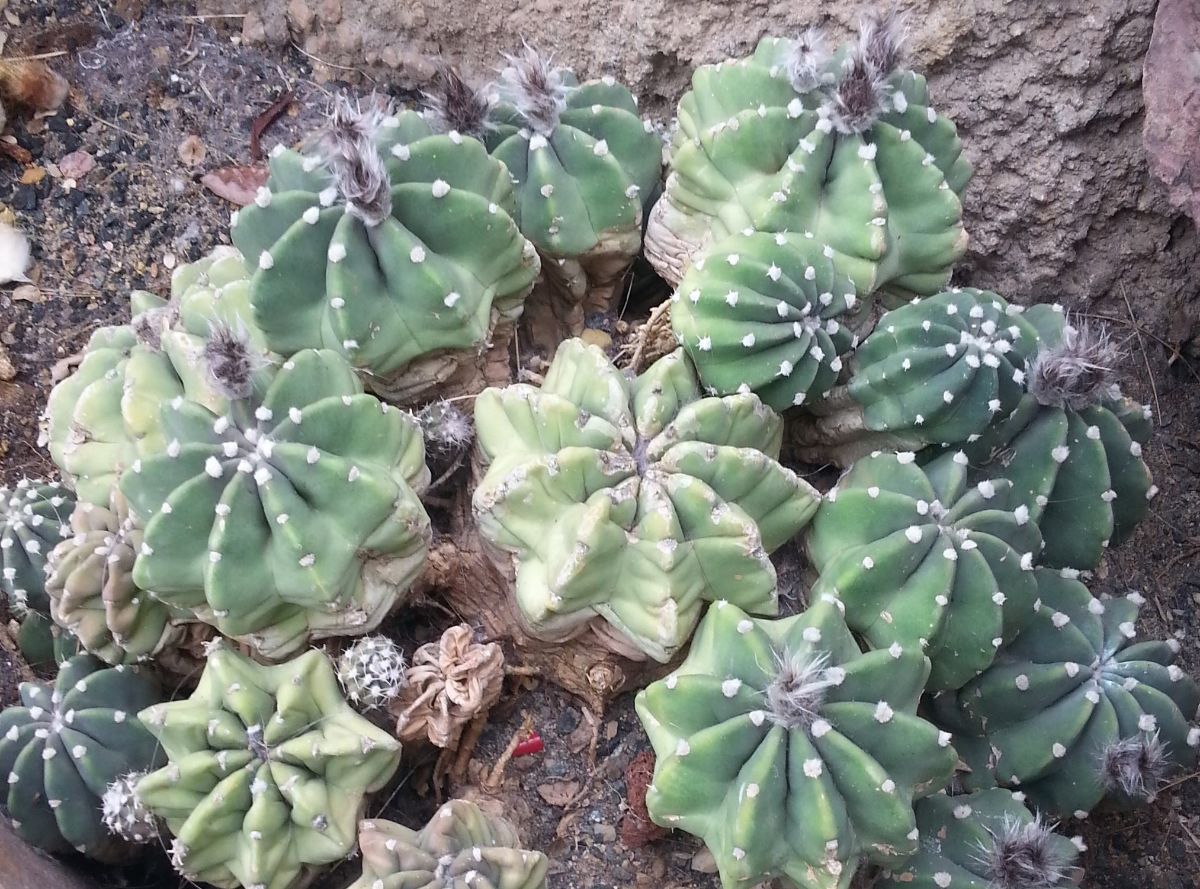
We must start by telling you that Echinopsis subdenudata is not a rare species of cactus, it’s not hard to find. It is one of the most common and the truth is that its price is not high, quite the contrary.
It is also known as Easter lily and is native to Tarija, which is found in Bolivia and Paraguay, although today it is cultivated all over the world due to the ease with which it adapts to the environment in which it is located. In its natural habitat, it is usually found on slopes or mountainous areas.
Physically, we are talking about a round cactus that has no thorns. Although this is not true at all. Yes, very small and barely noticeable to the eye. Moreover, she has hairy areolas which attract a lot of attention. At first it grows solitary but it is easy for it to create suckers that grow from the base (to the point that they are able to create a colony).
The cactus, although round, has ribs. They can range from 8 to 12 and it is on the edges of these that you will have the hairy areoles (and the spines on them, although sometimes they do not have any).
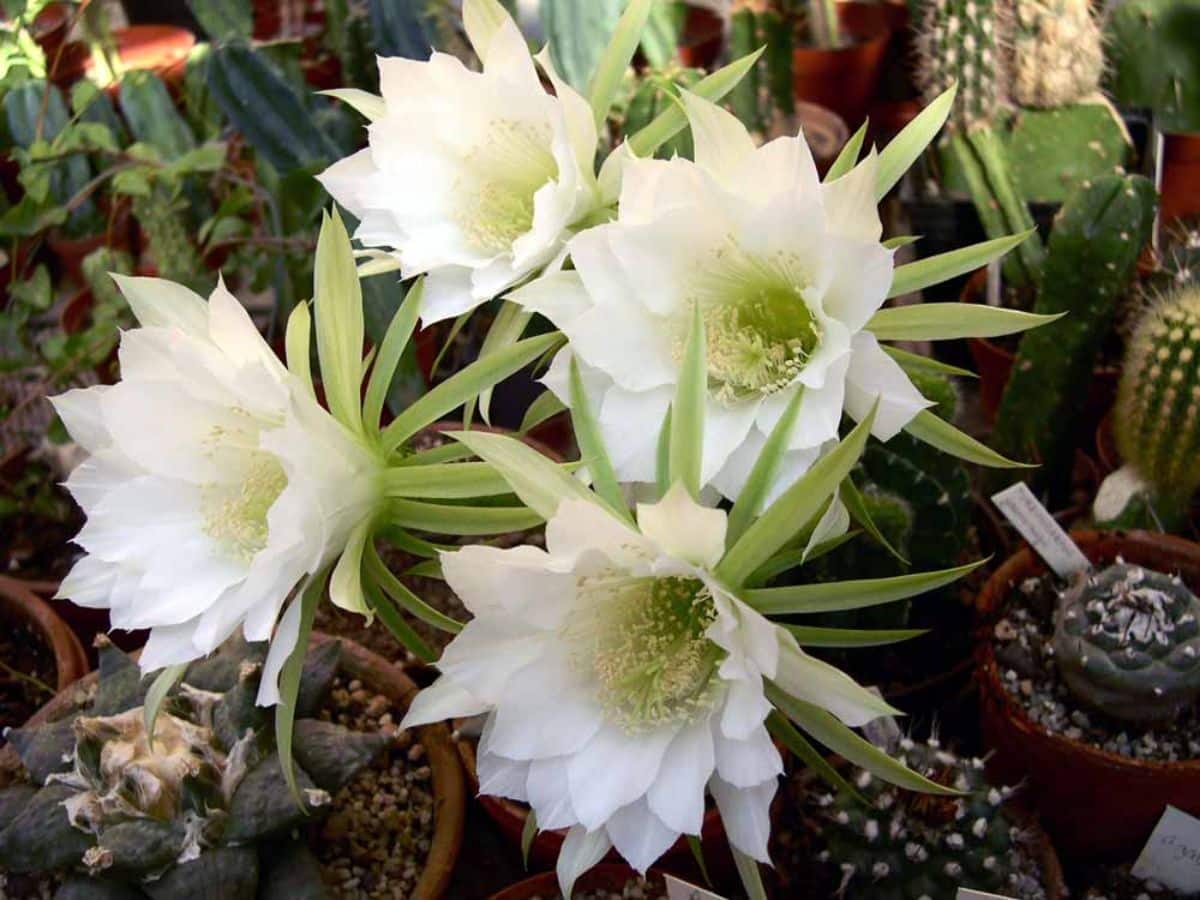
Besides, you should know that it flowers between spring and summer. And it’s worth the trip, especially since the flowers only last a day. Then they wither. These flowers, which can be pink or white, are tubular and can easily measure between 15 and 22 centimeters.
Echinopsis subdenudata care
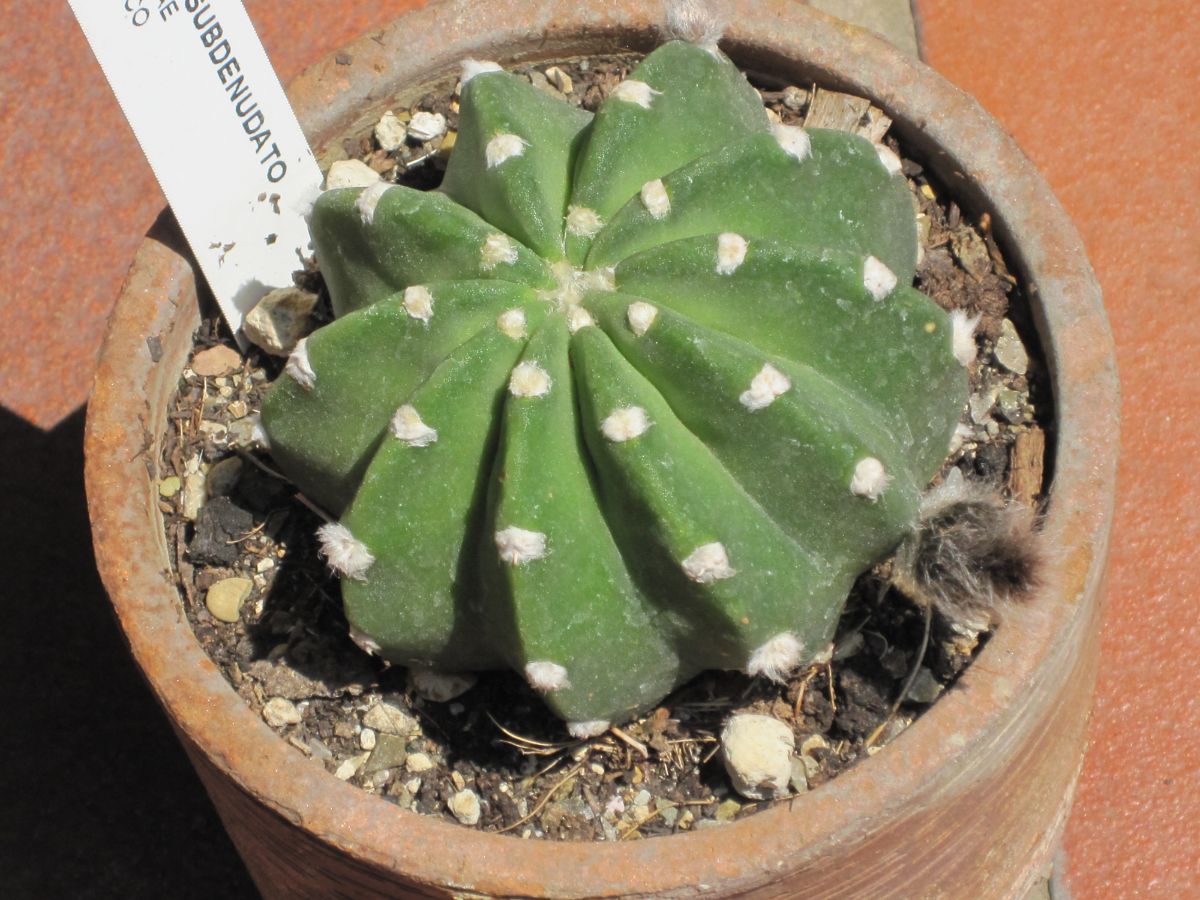
As you can see, Echinopsis subdenudata is a curious, but very basic cactus.great for beginners or those who can’t spend much time with plants and still want to have some.
If you want to know what care you need, about which we have already warned you, we have summarized you very little, we have summarized everything in the following points.
location and temperature
We start with the best place to have Echinopsis subdenudata. In this case, in its natural habitat, it grows where it receives plenty of sunlight. Therefore, at home we advise you to have it in full sun and outdoors.
Inside the house, in a very bright place, you could have it, but you will not be able to make it bloom and it will also weaken a lot, making it difficult to resist.
Concretely, this cactus needs the sun to live. This is why it is not recommended to place it in the shade or partial shade (or indoors). Now, that doesn’t mean you have it inside and it’s going to die. As they say, it can last but like many other plants, it needs to be outdoors.
As for the temperature, the Echinopsis subdenudata is not a demanding plant. As you have seen, the heat supports it perfectly. In cold weather, it can withstand temperatures down to less than 5°C as long as the soil is dry.
Keep in mind that this cactus hibernates, which means it doesn’t need watering and cold temperatures are good for it to regulate itself and know when to go into a dormant state and when to come out of it. .
Substrate
We are talking about a cactus, which implies that the soil cannot be one that gives it a lot of moisture. Not if you want it to live and its roots not rot. Therefore, it is recommended that it be a light substrate mixture with good drainage.
A mixture could be cactus soil (or, failing that, universal soil) and perlite. (although you can also use pumice).
Usually the Echinopsis subdenudata is in a pot; it is rarely planted directly in the garden, so you need to make sure it has drainage holes and that the pot is neither too big nor too small for the specimen you have.
Irrigation
Echinopsis subdenudata is a cactus. Which implies that, at the level of irrigation, it should not take much. But the truth is, with this one in particular, you’re going to have to give it a bit more water.
To give you an idea, the guideline is usually to water it in the summer once a week (or every two weeks, depending on the weather). In winter, once a month is enough.
Both in spring and summer, which are the two growing seasons, care must be taken with irrigation because that is when it will require the most. Of course, make sure that between watering and watering the plant has a dry ground.
Subscriber
We could start by telling you that it is not necessary, that as a cactus it does not need it… But precisely Echinopsis subdenudata appreciates, and a lot, a little fertilizer in spring and summer.
As for the fertilizer to use, some opt for one rich in phosphorus and potassium, which promotes flowering. But if you don’t have one on hand, you can take advantage of those that specialize in cacti.
Size
Prune Echinopsis subdenudata It basically consists of removing the flower when it has faded. For the rest, you will in no case have to cut it.
Plagues and diseases
The truth is that Echinopsis subdenudata is quite hardy. But you should be aware in case of appearance of mites, scale insects or fungi, which are the ones that can harm your health the most.
Multiplication
And we come to the end the propagation of Echinopsis subdenudata. As we have already told you, this cactus produces shoots that come out of the base of the pot. So all you would have to do is prune them, let the cutting dry (in both specimens) and replant them in another pot. In a few weeks they should be rooting and moving forward.
You now have all the keys to a successful Echinopsis subdenudata. Do you dare to have this almost spineless cactus in your home?