Image – Wikimedia/Karl Thomas Moore
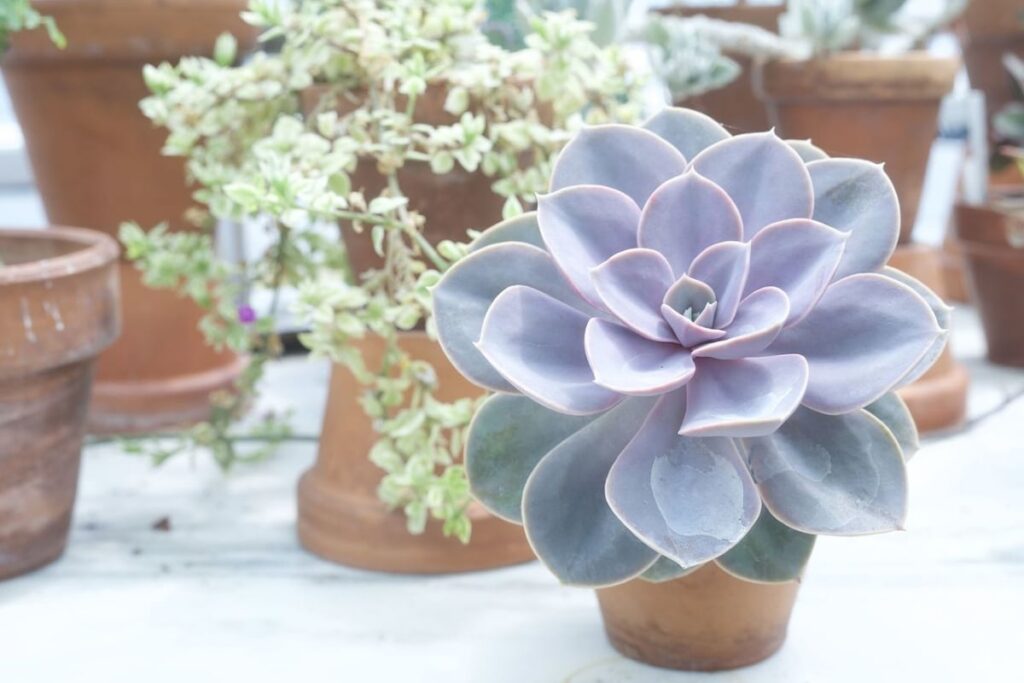
Echeverias are magnificent succulents that, with very basic care, will be in perfect condition. They are so beautiful and attract so much attention that many hybrids and cultivars have been created, such as the Echeveria ‘Perle von Nürnberg’. This is sold relatively easily in cactus and succulent nurseries, as well as in those where all kinds of species are sold; sometimes you can even find them in supermarkets like Lidl or Aldi, where they renew their catalog of plants every week.
Because? For several reasons. Not only are we talking about an easy-care and beautiful plant, but it is also easy to propagate by leaf cuttings., much more than by seeds. So, if you want to get new specimens of your own, you will only have to take a leaf and put it to take root in a pot. But if you want to know how it is done, then we will talk about this and other topics so that your succulent always looks good.
How is it ?
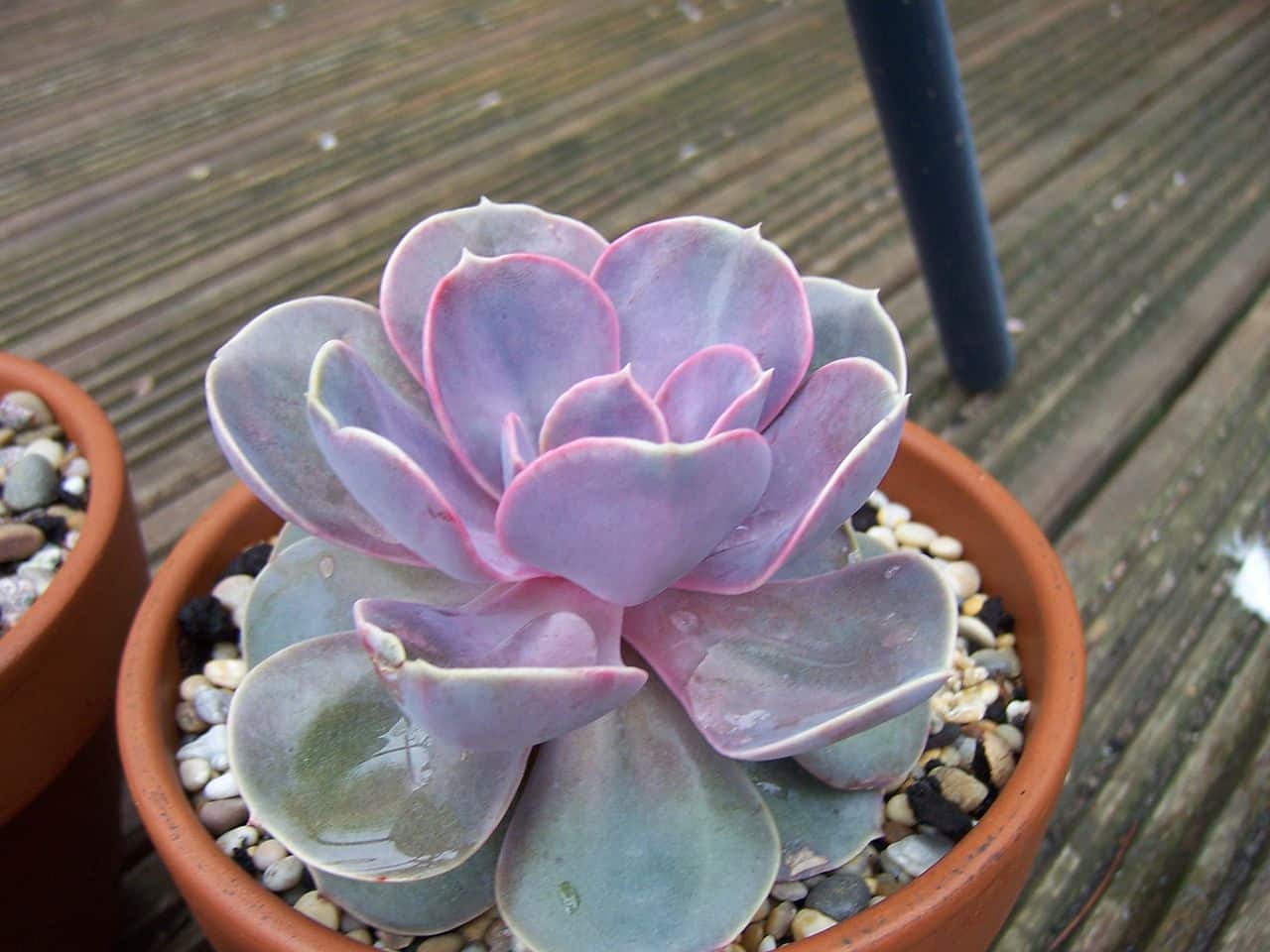
Image – Wikimedia/stephen boisvert
The Echeveria ‘Perle von Nürnberg’ is a succulent that you will not find in nature, since It’s a man-made hybridmore precisely the German gardener Alfred Gräser did it around 1930. His parents are the Echeveria gibbiflora ‘Metallica’ and the Echeveria elegans. The scientific name is: Echeveria x pearl von Nuremberg.
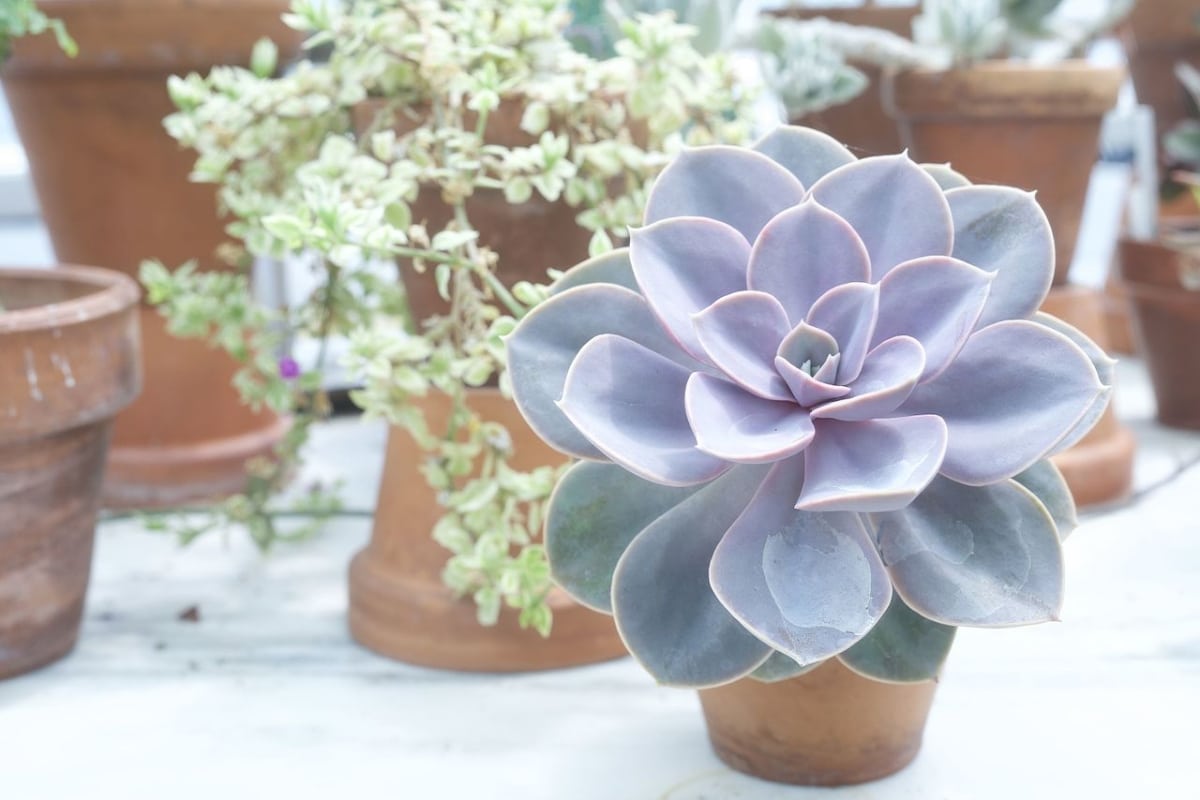
It is a plant that grows in a rosette of lilac-pink fleshy leaves. This one can measure about 30 centimeters in diameter by about seven or eight centimeters high more or less. It tends to produce a few offspring throughout its life. The flowers come from a stem that grows in the center of the rosette and are pink. It blooms in the spring.
of this hybrid other cultivars have been obtainedFor example:
- Echeveria ‘Green Pearl’: As its name suggests, its leaves are green (green is green in English).
- Echeveria ‘Purple Pearl’: it has leaves of a darker, more reddish color.
- Echeveria ‘Rainbow’: it is similar, but with variegated leaves. It has lilac leaves, but with a greenish line that runs from the center of the rosette to the tip of each leaf.
- Echeveria ‘Son of Pearl‘: the leaves are a little bluish.
What is the care of the Echeveria ‘Perle von Nürnberg’?
Now that we know more about it, we need to know what care should be given to it. So if you have acquired one, we recommend that you take care of it in the following ways:
Is it indoor or outdoor?
This echeveria is a plant that supports coolness well, but frost, even frost, damages its leaves because they are very delicate and easily damaged. For this reason, It should only be kept outdoors all year round if the temperatures in autumn and winter are above 5°C.
Now, from my own experience, I also tell you that if you are in an area where the thermometer drops to 0 degrees, or even if there is a very weak frost down to -1ºC and punctually, if you have it outside but under a roof or somewhat sheltered, it will most likely hold up well.
Sun or shade?
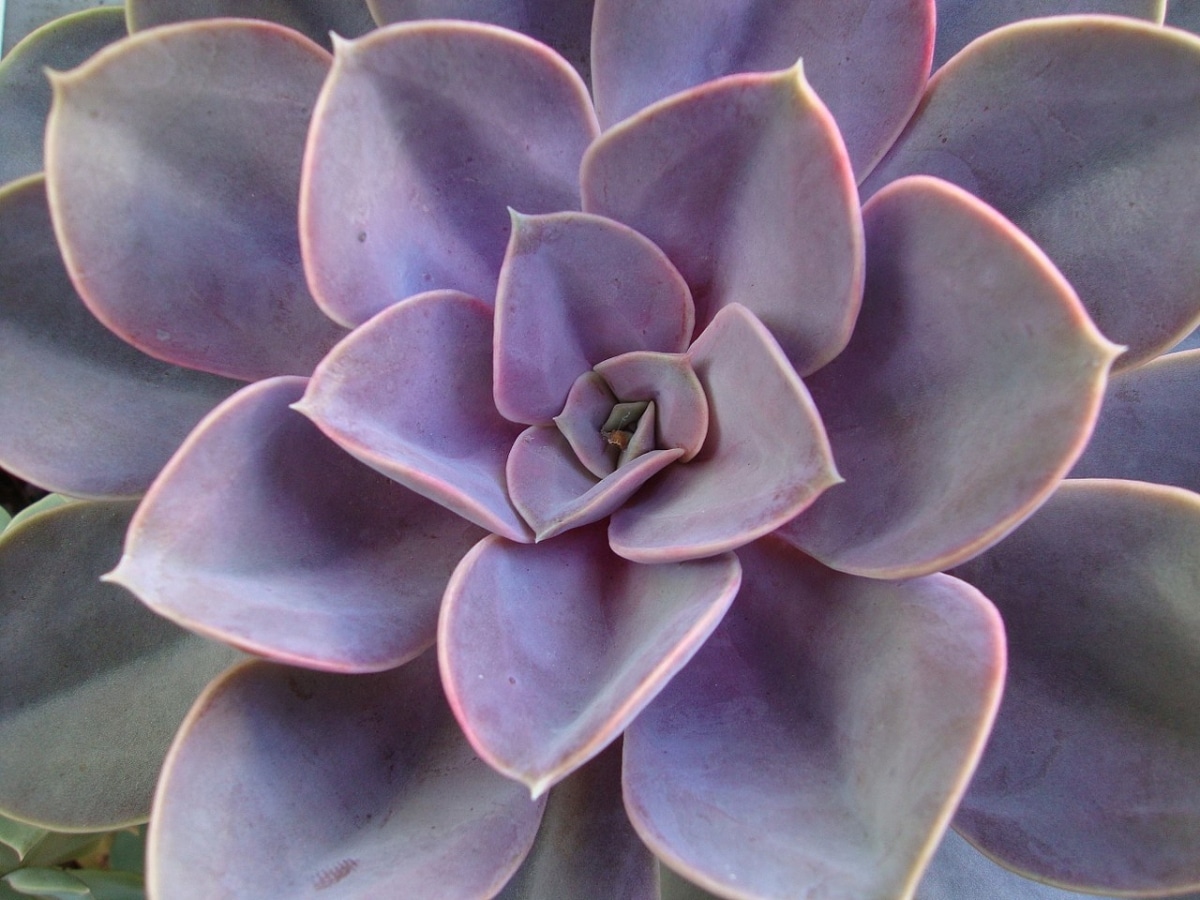
Image – Wikimedia/Mauronarf
Our protagonist is a rude who needs lots and lots of light. Ideally, it should be accustomed to direct sun from an early age, but it can also grow well in filtered light. But, I insist, you always have to be in an area where there is clarity. If it is to be inside the house, we will have to place it in the room where there are windows through which the sun’s rays enter directly; and if we are going to keep it outside, it can either be in the sun or in an area where the light is filtered, for example by a shade net.
Pot or soil?
This it will depend above all on youof your preferences. The climate too, but less because even if there is frost in your area, if you have a hot spring and summer, with temperatures above 20ºC, you have the possibility of planting your echeveria in the garden with its pot . Then, when the weather starts to get bad, just take it out and bring it back into the house.
Now yeah It is important that you keep in mind that the ground must have very good drainage., because it is a plant that does not like waterlogging. Therefore, if you want to plant it in a pot, you should put, for example, a substrate for succulents like this, or a mixture of peat with perlite in equal parts.
If the soil in the garden becomes waterlogged quickly, make a hole of about 50 x 50 centimeters and then fill it with some of the substrate just mentioned.
When to water Echeveria ‘Perle von Nürnberg’?
It should only be watered when the soil is dry.. As we said, it does not like excess water at all, so try to water too much. If in doubt, we advise you to use the stick method to see if the soil is wet or if, on the contrary, it has already dried. Here we explain how to do it:
When do you have to pay it?
You can pay in from spring to late summer. This way we will make sure that it grows well and is strong. But it is advisable to add fertilizer intended for succulents like this one, as they contain the nutrients they need to grow without problems.
How is it multiplied?
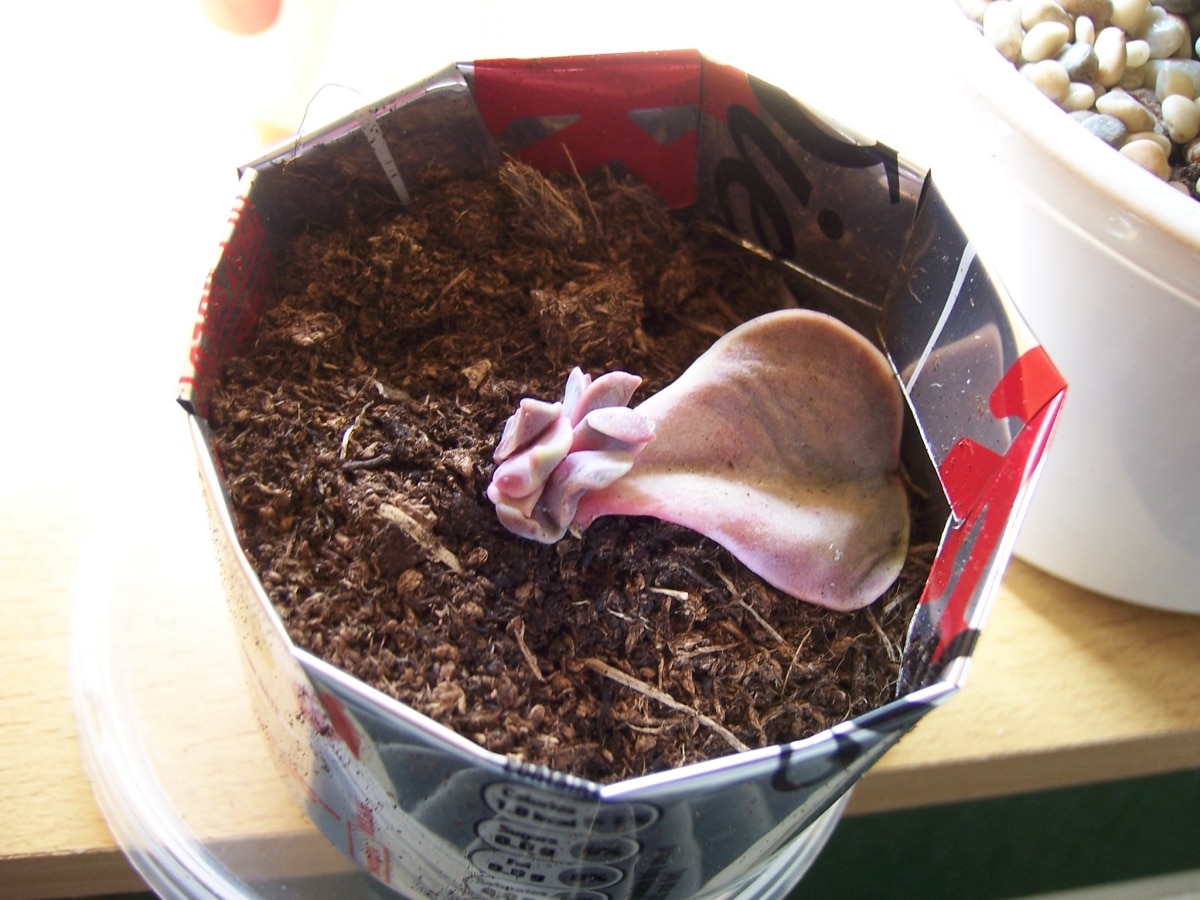
Image – Flickr/stephen boisvert
The easiest and fastest way is to take leaf cuttings throughout the spring.. Just take a few that are neither very recent nor very old, and place them on a pot with substrate for this type of plant. Cover the cut area of each leaf with some of this soil, as this is where the roots will sprout and it is strongly recommended that they find some soil to develop well.
Do you have any pests or diseases?
Unfortunately, it can be affected by several pests, such as mealybugs or the snails. The first will be seen especially in summer, between the leaves; these appear after a rainy episode, and what they do is eat the plant.
In order to avoid it, it is advisable to treat it with diatomaceous earth if it has mealybugs, or with snail repellent if these animals are nearby.
And you, do you have any Echeveria ‘Pearl of Nürnberg‘?