Blanching endives is essential for grow endives in the garden. There are many reasons, as we will see below, but the main reason they are blanched is so that the taste is not excessively bitter.


Why blanch endive
Although one of the main reasons for blanching escarole is to prevent its bitterness from being excessive, which, although it is one of the main characteristics of this variety, one of types of lettuce more bitter next to lollo rosa and radicchio, sometimes it can be too bitter.
Another reason this method of blanching endives is used is to make the leaves more tender. Sometimes its texture and thickness, as well as the serrated shapes of its leaves, can be too rough for some palates, which we manage to soften with bleaching.
How to blanch endives and when
How I explain in the video, the methods I use are simple. The time to do this is just 2 weeks before harvest, when the endives are already of a good size, between 50 and 60 days after planting them. The ideal time of day to do this is in the afternoon and always on a sunny day.
Blanch endives: first method
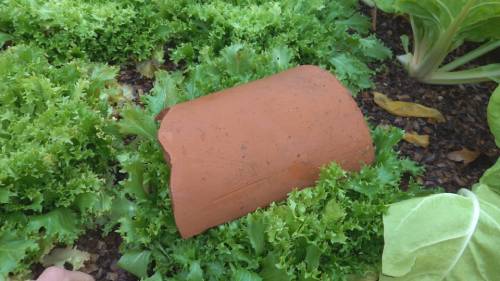
The first method I use, perhaps the most traditional, is to cover the heart of the endive with a tile or a split pot. It’s simple, it prevents the sun from reaching the center and also, being heavy, it does not fly away.
Blanch the endives: second method
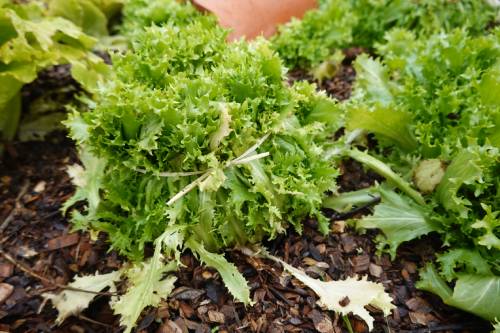
The second method is to tie the plant, as seen in the video. It can be made with any material, but I prefer raffia, which is a natural fiber that comes from a type of palm tree, and is therefore degradable. Close the endive leaves tightly in the center to prevent them from breaking and forming a sort of bundle. It is important not to tie it too much so that it does not get damaged and sweat.
Blanch endives: third method
The following method is a variation of the previous one, but instead of using a rope, we do it with a rubber band. The disadvantage is that we will not always find a rubber of the necessary size.
Blanch endives: fourth method
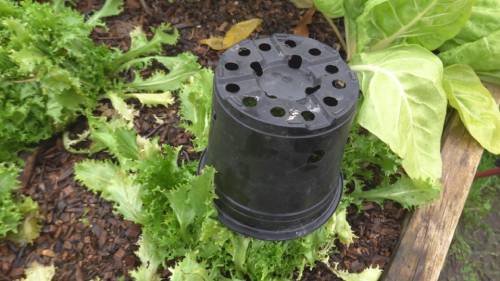
The last method is to use a plastic pot, like the ones we have left when we buy a plant or tree for transplanting, making holes in the sides, so that moisture does not accumulate. In this case, we do the same thing as with the rope or the rubber band, but instead of tying it, we put the pot on it. In this method, to prevent it from blowing away with the wind, we can put a rod or a stone on top.
Other methods
Another method that I don’t use but know it can be done is to put the leaves together and make a mountain with dirt around it, to achieve the same effect as rope or rubber. And I haven’t tried it either, but I know it helps, it’s to put a cabbage leaf on it, as we did with the tile, but in this case with a stone to prevent the leaf of cabbage to fly away.
With these methods, the plant is prevented from carrying out photosynthesis and the result is that in addition to being whiter, it is more tender and less bitter.
risks
Irrigation on the terrace, on the ground or in potted garden They will be made at the base of the vegetable, avoiding wetting the leaves to prevent the endive from rotting.
Is bleaching a mandatory step?
In the case of endives, blanching is optional. It is not essential and it is to taste. But if you want to reduce its bitterness and sweeten the leaves, it is necessary to do this.
It is important to point out that this process can be done in stages, so that we harvest them at different times and thus always have debitter and fresh cabbage.
What do you think ? Was this article helpful to you? If you have any questions or want to leave a comment, you can enter the forum and if it works for you, you can still support the channel with a donation or help me spread it by sharing it on social media. If you want to follow me, here are some of the social networks I use Facebook , instagram , pinterest That is subscribe to my youtube channel
HERE I LEAVE YOU A POSTER IN CASE YOU WANT TO SAVE IT ON PINTEREST