
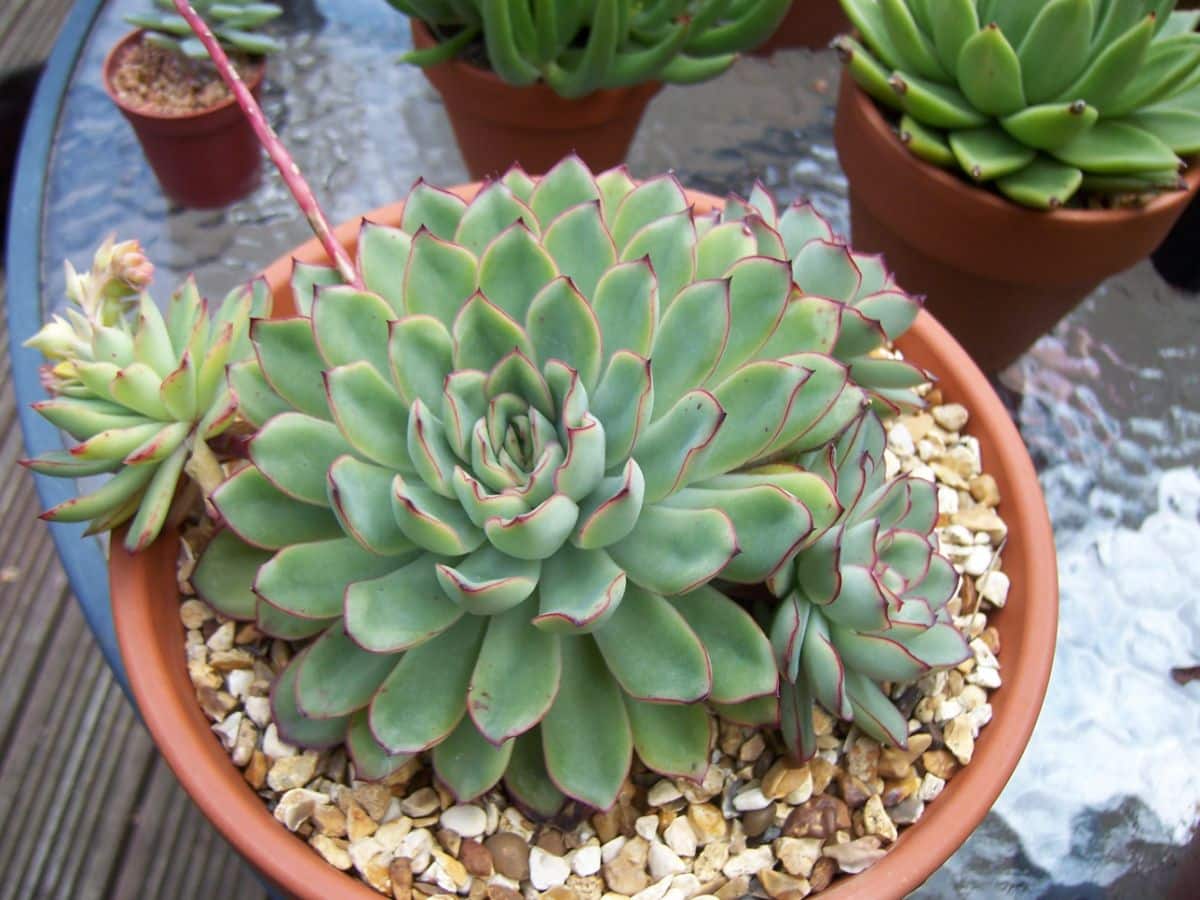
Within the genus echeveria, there are more than 154 different varieties, many more even if you count the hybrids. One of the many that exist is Echeveria puloninis. Do you know how it is?
Below we are going to leave you a practical guide so that you can physically identify them (and differentiate them from others), as well as the care they need to stay healthy. Go for it?
How is Echeveria puloninis
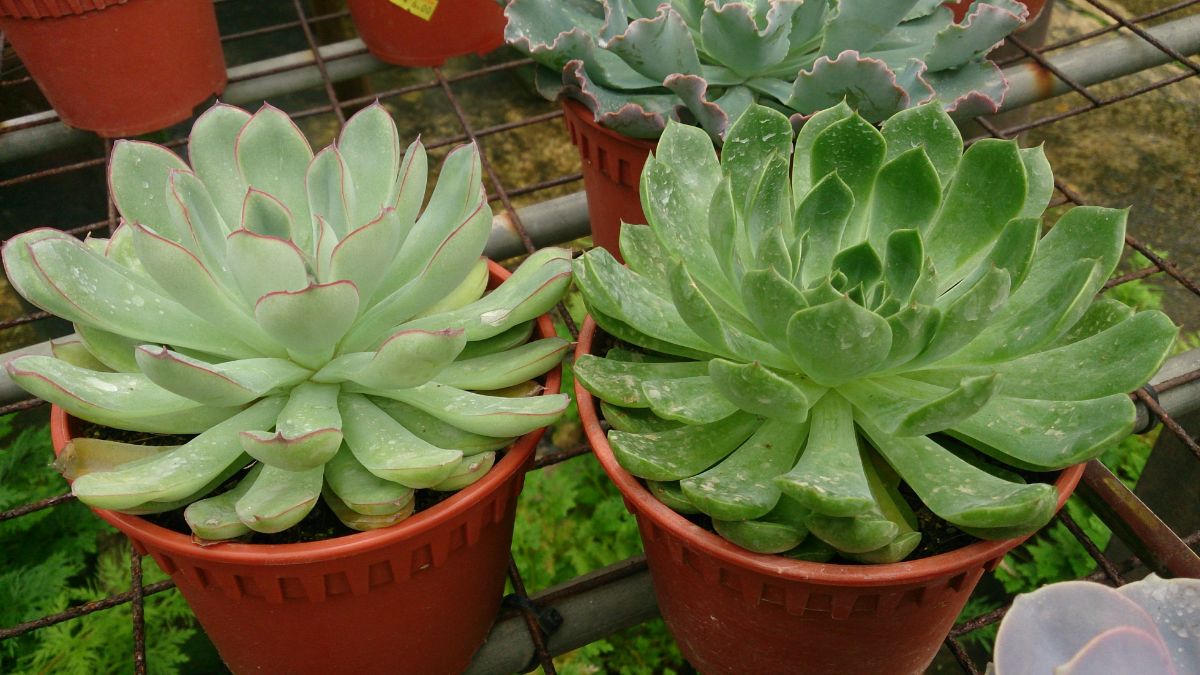
Echeveria pulidonis, like many other echeverias, is from Mexico. Specifically, this plant has its natural habitat in Jalisco.
It is one of the most beautiful echeverias that exists due to the color pattern on its leaves. Even if you have to be patient because it grows very, very slowly.
Physically, It is a rosette, like many echeverias, but the most beautiful are the leaves, fleshy (symbol of the succulent), but a little concave and bluish green in color, although in the part of the edges it has more of a blue-white or green-white tone. And best of all, a reddish edge forms on the silhouette of the leaves.
These colors (minus the red) may change a bit. For example, if you keep it for a long time in partial shade, it will lose its bluish color and will be greener with those red edges. AND if you put it more in the sun it will have a more intense bluesometimes reaching white, bordered with red.
It can easily reach 12 centimeters in diameter and, in terms of height, it does not create a stem, so it always grows at ground level (you won’t have a problem if it grows very vertically).
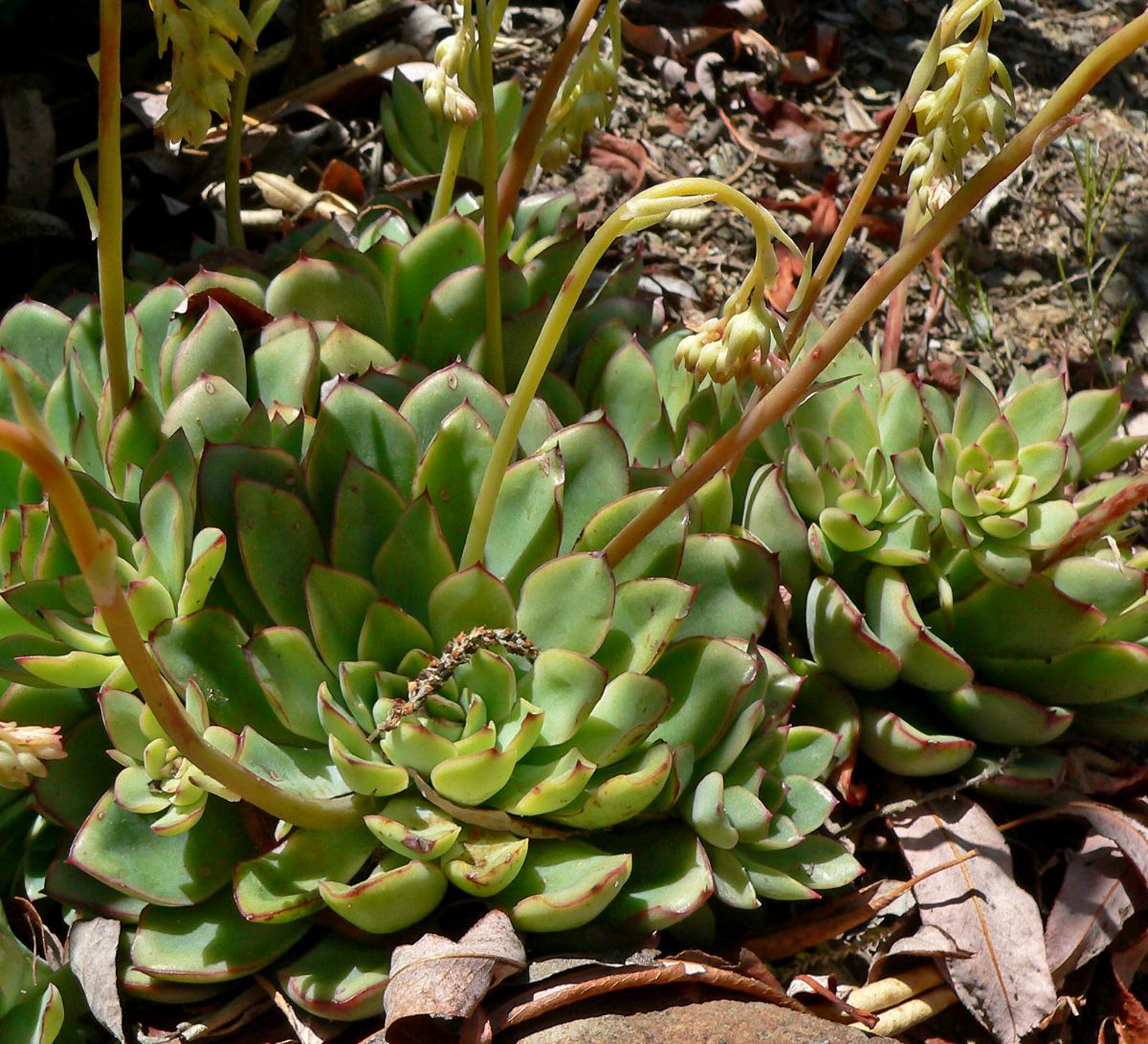
Regarding the flowers, these are also of a different color than the leaves. To begin with, it develops long stems, which can reach 20 cm. Flowers will come out of it, yellow in color, but with a red base.
Echeveria puloninis treatment
Now that you have a better idea of what Echeveria pulidonis looks like, how about we help you take care of it? Here you will have all the needs of this echeveria. Even if We already tell you that this will not be a problem for you.
location and temperature
The best place for Echeveria pulidonis is, without a doubt, outdoors. And that’s because it needs many hours of direct sunlight. In fact, it is one of the most necessary, reaching 5-8 hours. The rest, it is better to be in partial shade so that it does not burn (thus you avoid the hottest hours).
That doesn’t mean you can’t have it inside. You can, but always next to a window and which gives it the most hours of light. Another option is to put it on a balcony or terrace.
As for the temperatures, for it to be very healthy, it is best that it is between 16 and 28ºC. But in fact, it tolerates both cold and heat. As for the drops, can withstand down to -4°C (if not for several days), and at the other extreme, above 40°C as well.
In principle, the cold is more problematic (it should be protected) than the heat.
Substrate
Echeveria pulidonis is not a plant that requires a particular soil. The truth is that it adapts to everything. But if you really want to give it a good mix, try to contain a universal substrate, earthworm humus, gravel, perlite and river sand. In this way, it will be very light and will serve to drain the water so that it does not accumulate.
Irrigation
This echeveria is one of those that retain the most water in its leaves, so you should not water it more than once in a while. In general, you can water every 7-10 days in summer and every 3-4 weeks in winter. But the best thing is that you do it according to what you need according to your climate, orientation, location, heat, etc. Always water when you notice the soil is completely and utterly dry.
When watering, as it is possible that the rosette will occupy the entire pot, it will have to be done from below so that it sucks up the water it needs. It is not recommended that the water touches the leaves because the only thing that will generate is that mushrooms appear.
Now, did you know that there is a little trick with Echeveria pulidonis?
If you want it to have a more intense red color, you have to leave it a little thirsty (instead of watering every 7 days, water every 9 days for example).
Subscriber
Like the rest of the echeverias, it is not a plant that you need to fertilize. In fact, he lives just fine without it, but if you want to give him some fertilizer, choose one that is slow absorbing and always half the manufacturer’s dose.
As for when to put it, let it be in the middle of spring.
Size
The pruning of echeverias is based above all on the removal of dry leaves or which have become useless, as well as the floral stem when the flowers have already faded. But You won’t have much else to do with it.
Plagues and diseases
In general, all echeverias are resistant to pests and diseases. Until a certain point. They are affected, but can be treated and have a good prognosis for recovery. But they are not immortal.
For that, In the case of pests, care should be taken with mealybugs and mites, especially. In the hottest season, also the red spider. All of them can be easily dealt with, so if you catch it in time, you won’t have a problem.
Regarding diseases, the main one will be root rot, due to poor watering or humidity, as well as the proliferation of fungi. To solve it: fungicides and some changes in care.
Multiplication
Propagation of Echeveria pulidonis is quite easy, as it can be done by three different methods:
by seedsa long process, but which makes it possible to have several at the same time.
by the leaves, where from every leaf you remove from your echeveria, you can grow a new plant. It’s very easy to move it forward, and it’s the most used method.
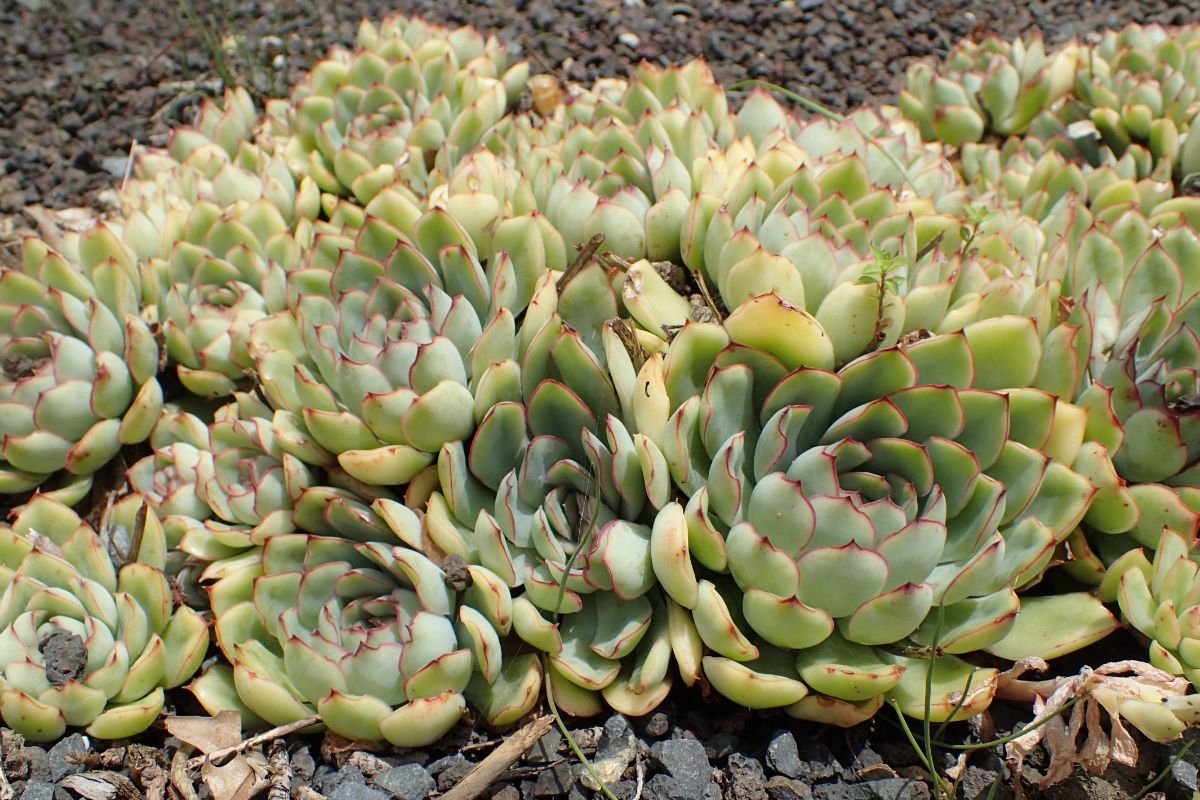
By the shoots, or suckers, cCut them when they already have roots, from the mother plant to sow them independently.
With all this information I am sure you will bring your Echeveria puloninis forward. Do you have one at home or would you like?