
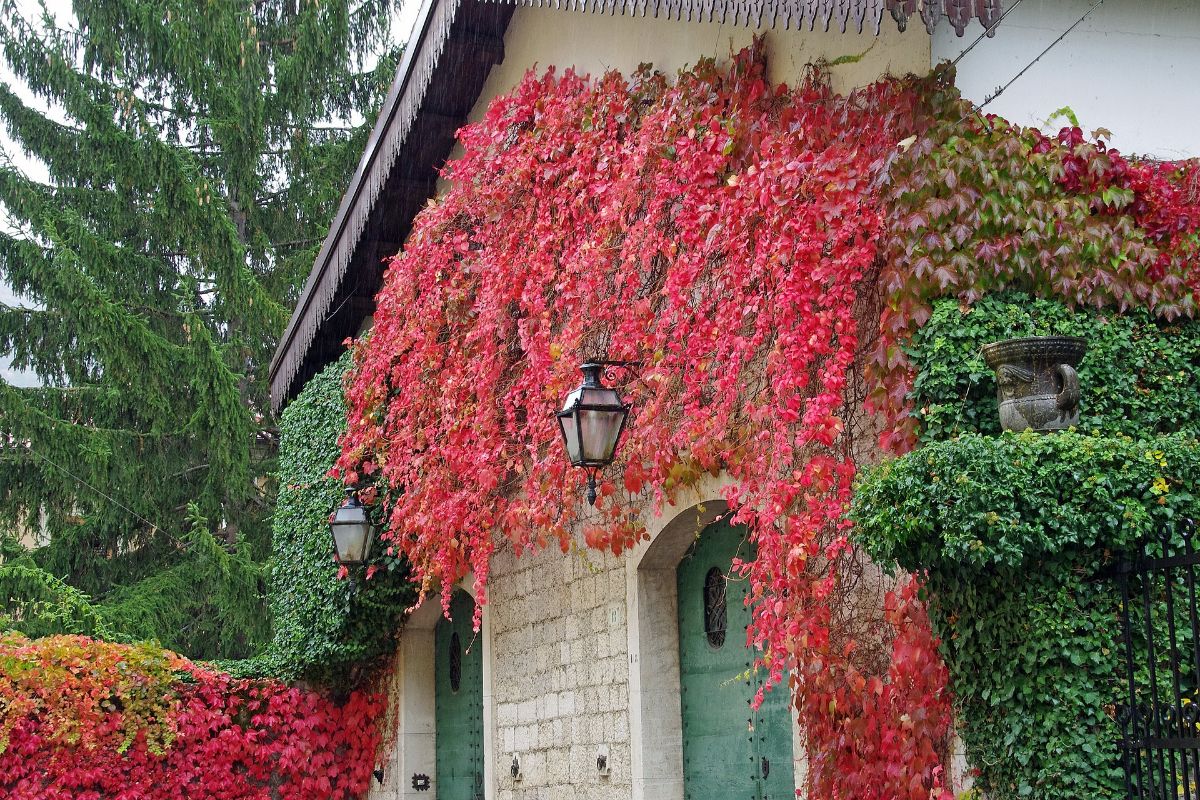
The Virginia creeper, with the scientific name Parthenocissus, is one of the most characteristic climbers of autumn, where its leaves take on autumn colors in the garden. But do you know how to take care of potted Virginia creeper?
Yes OK its needs may be the same as if it were planted in the garden, the truth is that it has some peculiarities that must be taken into account. We tell you.
How is Virginia creeper
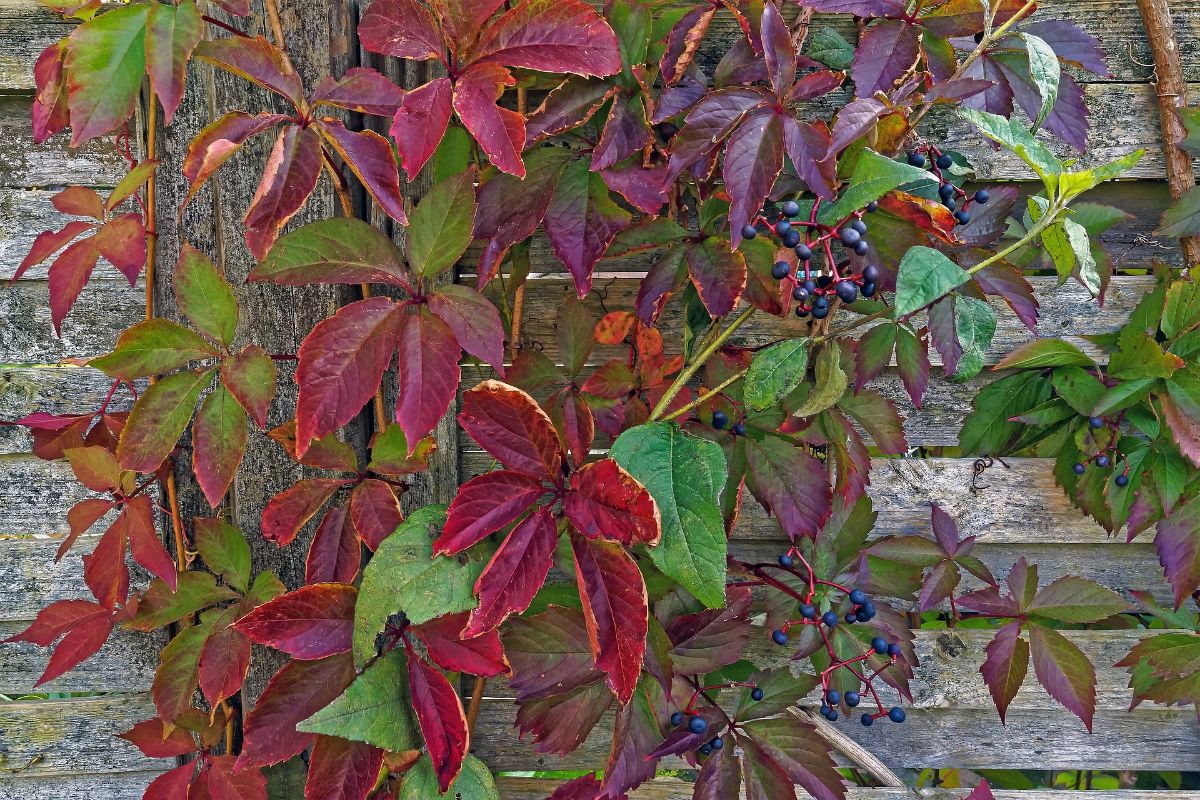
First of all, you need to know exactly what this climber looks like. It is characterized by being quite leafy and grow in such a way that it envelopes the place where it stands. In other words, it can serve as a barrier against prying eyes.
It receives other names than Virginia creeper, such as Virginia creeper or Virginia creeper.
It’s the vine family, but really The most appreciable of this plant is not its fruits but the color of its leaves. And it is that over the seasons, the leaves change color. For example, in spring, they are of a very intense green; in summer, a dark green. In autumn the leaves turn red, and in winter it loses them.
The two most common species of Virginia creeper are Parthenocissus quinquefolia, with five leaflets per leaf and native to North America; and the Parthenocissus tricuspidatawhich comes from Japan and has only three leaflets.
Potted Virginia creeper care
Before you ask us, we’ll tell you no. Potted Virginia creeper has different and more special care when kept in a pot to when grown directly in the ground. Therefore, below we are going to give you all the keys that you must follow to avoid problems.
location and lighting
We start with the location, that is, where to place your pot of Virginia creeper. And in this sense, you have to know that it adapts to everything. But he has a favorite place.
Specifically, a north or east orientation is best for this plant. He likes direct sunlight very much, but not that it affects him for long. So place it in these areas in partial shade because you will get more intense colors in its leaves.
Being a climbing plant, you must bear in mind that You need a trellis or element to be able to climb. If you leave it on the wall, you might have a problem. And it is that the sheets have a kind of glue to adhere to and when you remove it, it can leave stains that are very difficult to remove. Therefore, when you put it on, pay attention to that if you don’t want it to leave marks on the wall.
Temperature
Just as we told you that it is a plant that adapts to everything, so it is with the temperature. It tolerates high temperatures, but also low temperatures and some frosts. Keep in mind that in winter it drops leaves and somehow “hibernates” to cope with those temperatures.
substrate and pot
We are talking about Virginia creeper in pots and that means that the substrate and the pot are important. As far as the substrate is concerned, we recommend a mixture of enriched universal soil and perlite, clay or similar so that the soil does not compact too much.
As for the pot, ideally it should be 30x30cm and you have to change it every 2-3 years to renew the substrate. Make sure it has drainage holes but be careful not to put a plate under it as it doesn’t like water (if the roots are continuously wet the plant will die).
Irrigation
Irrigation is one of the most important treatments, and also the one that usually causes the most headaches among plant lovers. For this reason, in the case of Virginia creepers, it is a sensitive issue.
You will see, You must have moist but not waterlogged soil.Not too wet. It is therefore necessary to water often, but without abusing it.
And what happens in a jar? Potted Virginia creeper has the problem that water can sit there, keeping the soil moist. Therefore, if you go too far, it will be too much water and the roots will rot.
Our recommendation is that water less, but more times. In this way, you give the plant time to adapt to this irrigation, and also so that the soil does not get too wet. The leaves themselves can tell you if there is a lack of water or not because they will get thinner and thinner when they run out of water.

Subscriber
Apart from irrigation and a good substrate, it cannot lack nutrients. And these you have to provide through the subscriber.
Specifically, they are given two a year, one in autumn and one at the end of winter, when he starts to wake up
The best is organic fertilizer. For example, hummus, which will provide you with additional protection to face the winter. In the spring, you can reapply the hummus, but a slow-release mineral fertilizer is best provided during the spring and summer months.
Cut
In general Virginia creeper does not need to be pruned, but it is true that if you want it to be leafy or to control its growth, you will need to have a pair of scissors handy.
The pruning itself would be done at the end of winter, before it begins to have buds, so as to give new life to the plant. Later, with scissors, you can cut as it grows to shape it.
Plagues and diseases
Virginia creeper is not a plant affected by many pests. But it is true that, especially the potted Virginia creeper, it can have mealybug or spider mite problems.
As for diseases, in addition to those caused by excessive watering, they can also be affected by fungi such as powdery mildew.
Does Virginia creeper in pots bear fruit?
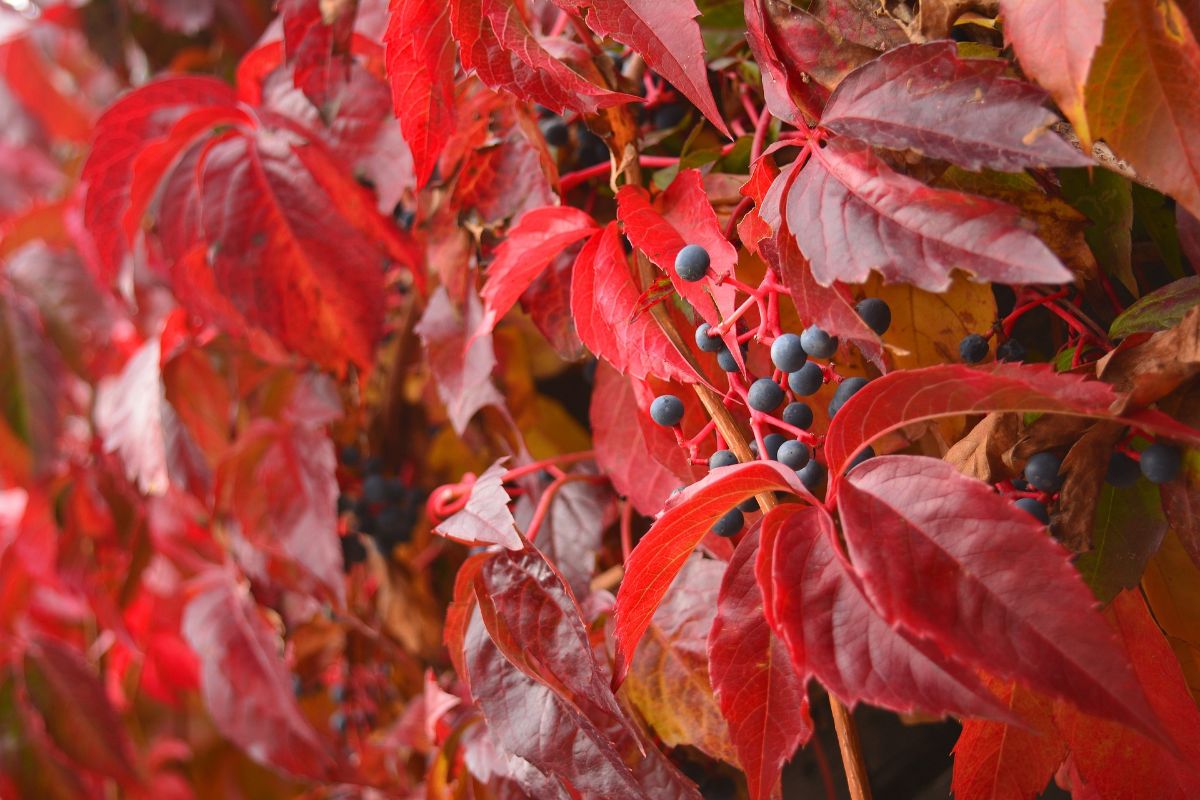
If you’re wondering if this vine will give you fruit, even in a pot, the answer is yes. But be careful, because they are not edible. They’re actually like dark blue or black berries that birds love, but humans don’t; in fact, they are poisonous because it contains oxalic acid, which makes them coarse.
As you can see, caring for potted Virginia creeper is not complicated. With the exception of watering, which is something you will need to learn with your plant, everything else is easy to manage. Do you have any questions about caring for this vine?