
Black spots on the leaves of lemon trees can indicate various diseases, all of which are very dangerous. It is essential to quickly identify the condition attacking your garden and take emergency action.
Unfortunately, there is so much work in the garden and orchard during the summer that few gardeners regularly inspect their lemon trees.
They live, flower and produce leaves, and that’s fine. This is the reason why the first signs of the disease often go unnoticed.
In order to detect problems in time, it is necessary to walk around your garden at least once every two weeks and inspect not only the trunk and main branches, but also leaves, flowers and fruits.
Black spots on the leaves of lemon trees

While the black spots on the bark are obvious, the leaves of lemon trees can be affected by many other diseases.
In addition to black cancer, these effects are usually caused by various fungal or bacterial diseases.
However, the buds and flowers of lemon trees turn black only during severe spring frosts.
All bud-eating pests leave brown or reddish spores. You must protect the garden from recurring frosts to prevent the flowers from being damaged by frost.
Scabies
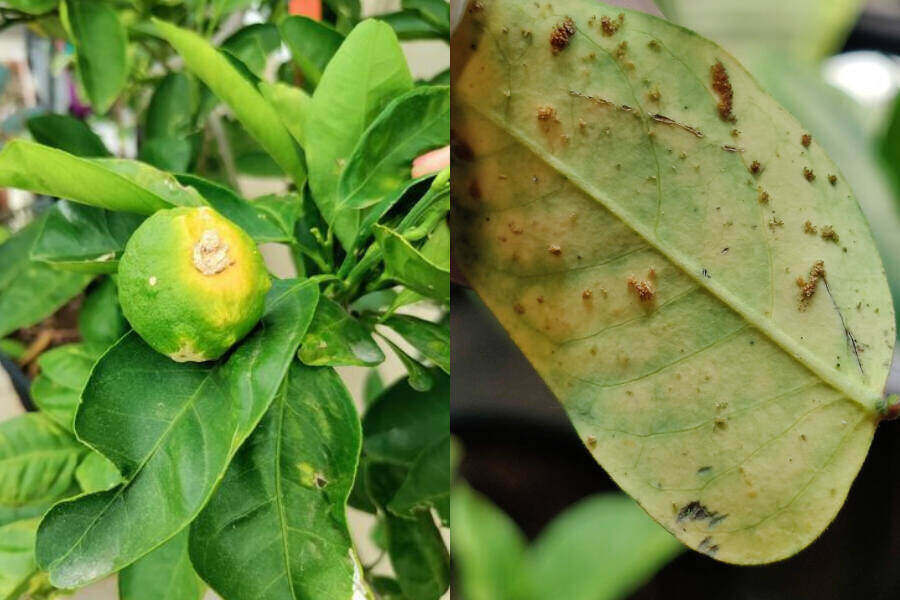
Recognizing scabs is quite simple, as almost every gardener has seen fruit or leaves affected by this disease at least once.
Additionally, lemon, apple and pear trees are most affected by scab, and there are cases where a seedling has been infected while still in the nursery.
So you can recognize the scabs by the dark, brown and blackening spots that cover the leaves already in spring and multiply every week.
The fruits of an infected lemon tree stop developing, turn black and become unsuitable for consumption or composting.
Treat the lemon trees with Bordeaux mixture as soon as the first brown spots are discovered. The first treatment is carried out with a 3% solution at the beginning of germination.
Spray trees with a 1% solution immediately after flowering, and 2-3 weeks after flowering lemon trees spray with copper fungicide (amazon link) according to directions.
Bacterial blight (bacterial cancer)
It is quite easy to recognize powdery mildew, since almost all gardeners have seen fruits or leaves affected by this disease at least once.
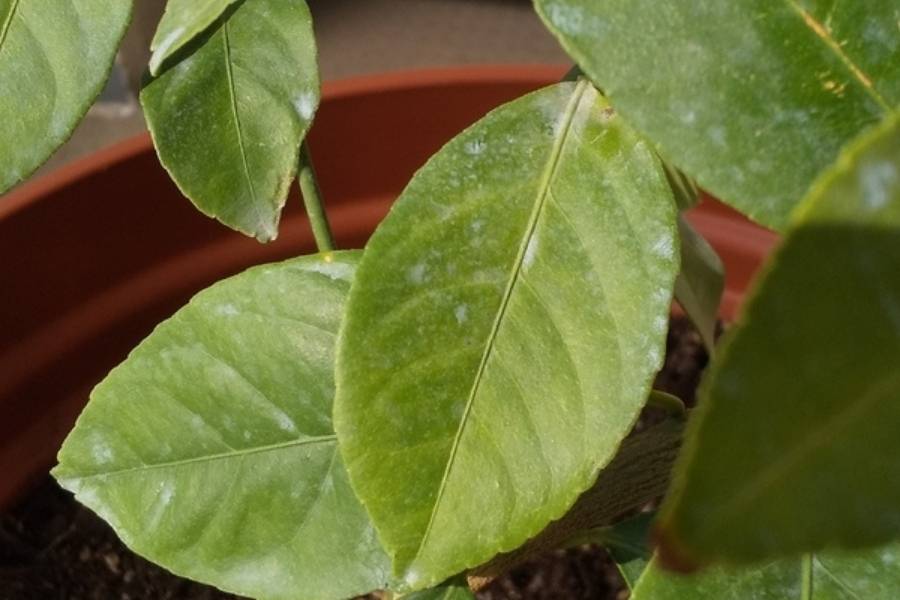
By the way, lemon, apple and pear trees are the most common victims of powdery mildew, and cases when a seedling was infected while still in the nursery are quite common.
So, you can tell a lemon tree has powdery mildew by the dark brownish-black spots that gradually darken and cover the leaves in the spring and only get worse with each passing week.
The fruits of an infected lemon tree stop growing, turn black and become unfit for consumption or compost.
To treat your lemon trees against powdery mildew, apply Bordeaux mixture as soon as the first brown spots appear. Use a 3% solution of the preparation at the start of germination.
Once lemon trees begin to flower, spray with a 1% solution and treat 2-3 weeks after trees bloom with copper-containing products at 3-week intervals between April and July to control lemon canker. However, there is no cure for the disease.
Bacterial leaf blight (bacteriosis)

When bacteriosis affects the lemon tree, the whole plant is burned: leaves, branches, trunk and fruit.
At first, the whole lemon tree is covered with black spots, then the leaves curl up and fall off. The fruits turn black, stop developing and spoil.
If the lemon tree is completely infested, it is best to uproot and burn it immediately.
However, if the disease is just beginning to spread, there is still hope to beat it. Start by cutting off the affected parts of the lemon tree.
Treat the cut area with a 1% solution of copper sulfate, then apply a 5% solution of AzoFos to the lemon tree twice a month.
ring stain
If you see a sticky black coating covering all the leaves and fruit on your tree, that’s a sign that aphids have taken over and brought with them spores of the ringspot fungus.
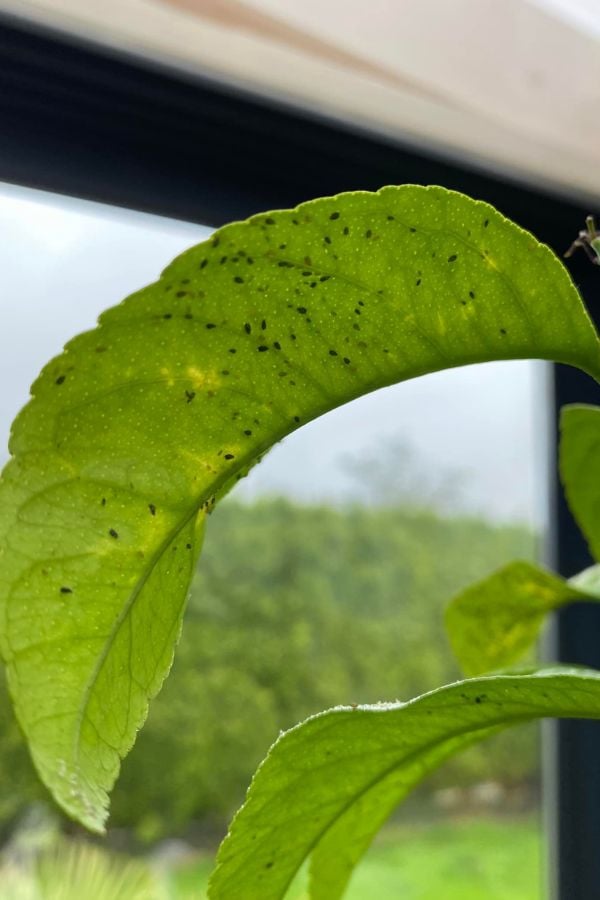 Aphids on lemon trees create black spots when they secrete honeydew, which promotes the growth of sooty mold
This disease usually affects seedlings, young trees or weakened specimens.
But do not despair, because you can quickly treat this disease. Apply Fertilome Broad Spectrum Fungicide (amazon link) twice to the lemon tree.
Remember that it is essential to act quickly to prevent the disease from spreading and further damaging your lemon trees.
Black spots on lemons.
In addition to the diseases mentioned above that affect both leaves and fruits, one disease can only be detected on the fruits themselves: sooty mold.
Of course, this has nothing to do with theft; is a typical fungus named for its resemblance to insect droppings. No matter how hard you try, you won’t be able to clean the affected lemons.
Clusters of blackheads appear on fruit growing in old, over-watered, shaded and poorly ventilated gardens. Heavy dew or prolonged rain can also cause infection.
This disease is not dangerous for humans; the affected fruits lose neither their flavor nor their shelf life; only his appearance deteriorates.
Timely pruning is usually enough to protect the garden. However, if the infection is widespread, you should treat lemon trees with strobilurins according to the instructions.
1% Bordeaux mixture and colloidal sulfur are slightly less effective, but you can apply them if necessary.
Black spots on lemon tree bark
The saddest thing that can happen to fruit trees in a garden is black spots appearing on the trunk or main branches.
At first they are small (up to 0.4 inches in diameter), slightly concave, and have a purple tint. Over time, they gradually spread and affect a wider area. This symptom indicates a disease called black cancer.
At the site of infection, the crust first turns black, and then the disease penetrates deeper layers. The bark begins to crack and fall apart.
The branches or trunk die, leaving wounds on the lemon tree. At this stage, the leaves and fruits also turn black, if present.
Although black canker is considered a disease of weakened lemon trees, the fungus can infect any plant in the garden.
Sometimes a lemon tree has healed itself from canker wounds, but they are rare, so it is unwise to rely on a miracle.
You should begin treatment immediately at the first signs of black canker on a lemon tree.
Scrape the affected areas with a knife down to sound wood. Disinfect the wound with a 5% solution of iron sulfate.
Don’t cover the lemon tree wound with anything, as it will do more harm than good.
The lemon tree will naturally produce calluses to heal itself. Treat the lemon tree twice with a 1% Bordeaux mixture one month apart.
Remember that whatever is causing the black spots on your lemon tree in your garden, it will not “go away” on its own. By delaying it, you are only endangering all your plants.
Do you find yellow spots on the leaves of your lemon tree? Discover solutions in our article: How to fix yellow spots on lemon tree leaves
Sharing is caring!