
If you purchase an item through links on this page, we may earn a commission. Our editorial content is not influenced by commissions. Read full disclosure.
Providing vibrant, cheerful blooms during the holidays, Christmas cactus plants are a classic choice for growing at home.
When you hear the word cactus, you probably imagine a large succulent that needs dry conditions, right? Not these plants. They grow in forests and need similar conditions as other houseplants.
If you’re looking for something easy to maintain and a bit different, this is the perfect plant to grow at home.
All about the Christmas cactus
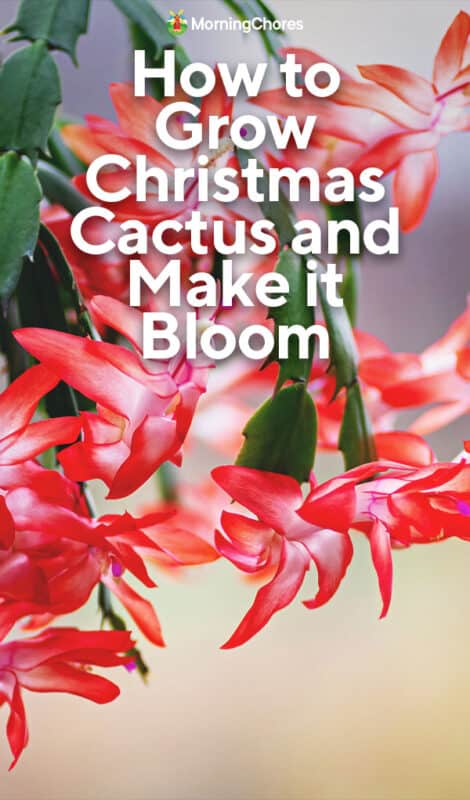
Christmas cacti (Schlumbergera russelliana, S.bridgesiiand S.boucleyilisten)) is also known as holiday cactus and crab cactus. This plant’s name crab refers to its long, curved leaves with pointed ends, which look like crab claws.
This plant is part of the Schlumbergera species native to tropical Brazil. They’re covered in tube-shaped flowers that bloom in neon pink, red, cream, orange, white, or yellow, so they’re easy to spot in any room.
Christmas cacti can be grown outdoors in USDA hardiness zones 9-11.
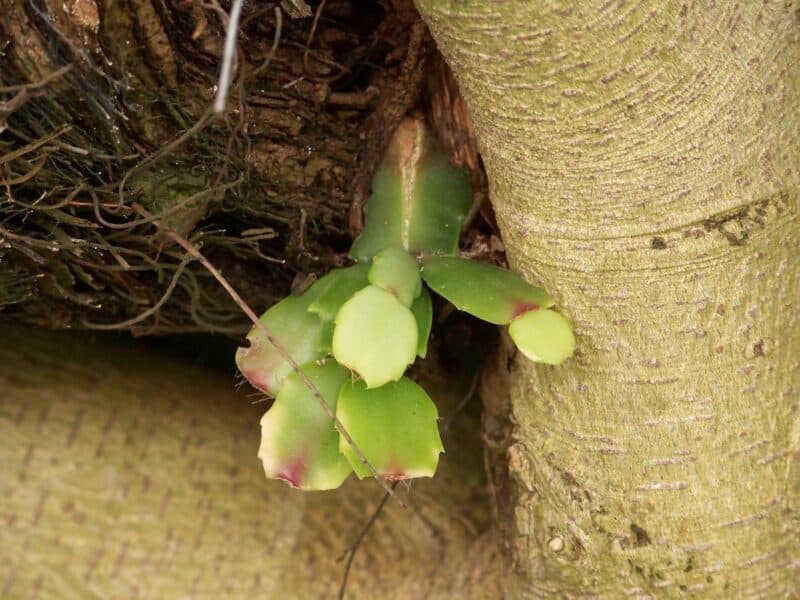
These plants are epiphytes, which means that instead of growing in the ground, they grow on trees and obtain moisture and nutrients from the air and dirt that fall into the crevices of host trees.
Easter, Thanksgiving or Christmas Cactus?
It can be a little tricky to tell the closely related holiday plants apart. Remember that they are named after the time of year when they bloom. Flowers and leaves look similar, so it can be hard to tell them apart that way.
The Christmas cactus flowers in December, while the Easter cactus (Rhipsalidopsis gaertnerrii) begins to flower in February. Thanksgiving Cacti (S. truncata) bloom in late November when Americans celebrate Thanksgiving.
If you look closely at the leaves, Thanksgiving leaves are extremely claw-like with protrusions on the sides. Christmas leaves have scalloped leaf projections and Easter has rounded leaves.
Another difference between these plants is that Easter cacti need warm temperatures around 70-85°F, and Christmas cacti need cooler temperatures in the 60s. Thanksgiving cacti prefer something between of them.
Grow a Christmas cactus
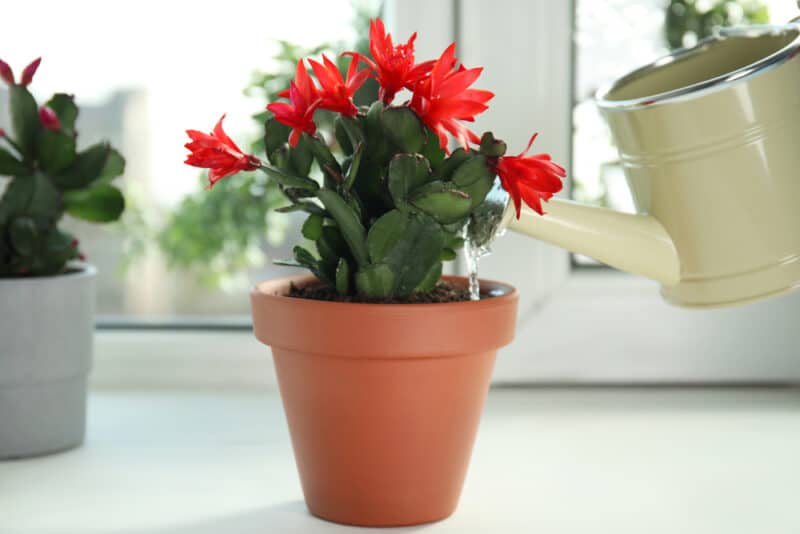
You’ll want to find the right pot before gathering other materials like potting mix for your Christmas cactus. The best options for this plant are terracotta or clay pots.
Pots made from these materials are excellent because they are porous and allow water to evaporate better, reducing the risk of root damage or overwatering. You can choose a pot with several drainage holes or a large drainage hole. Either option is excellent for this plant.
Choose a pot that is 1 or 2 inches larger than the root ball so that there is room for growth and to retain moisture.
Lighting conditions
Good lighting conditions for Christmas cacti are bright, indirect light. Although this plant is adaptable to other light levels, the best climate is partial shade, so a windowsill or similar would be ideal.
In winter, when temperatures are lower and light is lower, you can place them in full sun, but never leave them in full sun on hot summer days, as this will cause the leaves to turn pale and yellow.
Christmas cactus soil
The soil for a Christmas cactus should be loamy, water-retaining and light. You can use standard cactus potting soil for your plant, but you will need to water more often.
A general-purpose potting mix is also good for Christmas cacti, but work in plenty of perlite to improve drainage.
pH levels should be 5.5 to 6.2 if you want optimal growth and bright flowers. Most potting soils are close to this.
Temperature and humidity
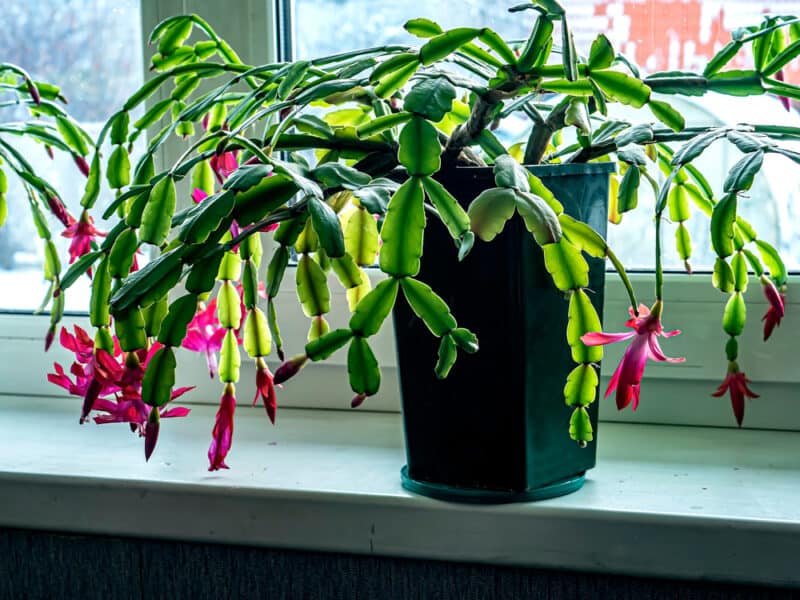
Christmas cacti need cool temperatures and moderate humidity, so it’s a good idea to leave a pebble tray with water under the pot during the growing season. Alternatively, you can mist the plant frequently during the winter to ensure it receives enough moisture.
The best temperatures for this plant are around 70°F during the day, with low nighttime temperatures of 65°F. To encourage flowering, lower the temperature to around 10 degrees cooler during the day and night.
To ensure that the plant does not receive too much heat, avoid placing it near air vents or radiators. Keep the plant away from drafty areas like frequently opened doors or air vents, as this can shock the plant and impact its growth.
Propagate a Christmas Cactus
The easiest way to propagate a Christmas cactus is by seed, but most people simply choose to purchase a seedling. Look for high quality seeds from a reputable grower to ensure they are fresh.
Here is a simple step-by-step guide to propagating Christmas cacti by seed:
- Plant the seeds in potting soil and cover them with a thin layer of soil
- Cover the pot with plastic wrap to increase humidity
- Place the pot in a location with bright, indirect light
- Mist the soil daily to keep the top layer moist
- After two or three weeks, the seeds should come out
- Transplant the seedlings into their new pot when they are three inches tall.
Caring for Christmas Cacti
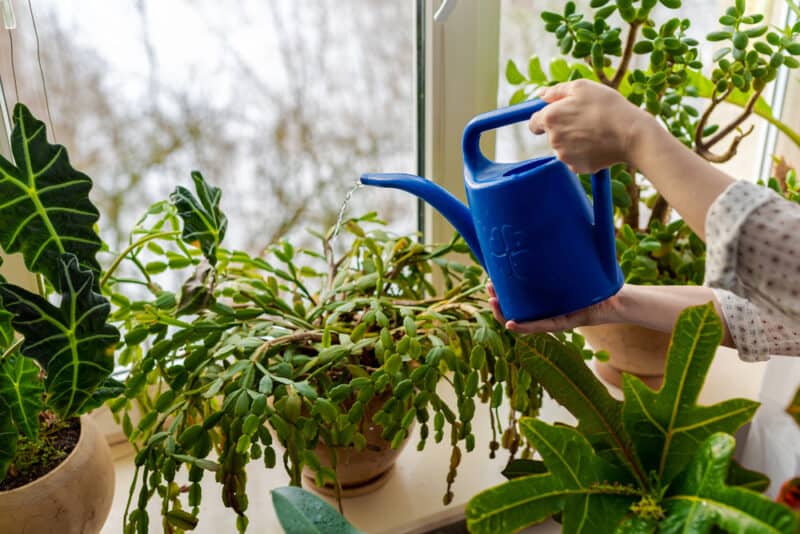
Due to the tropical nature of this plant, you will need to water Christmas cacti frequently to keep them happy. When the top of the soil seems dry, you should grab your watering can and water thoroughly.
The watering routine will depend on the environment, but you should always check the topsoil at least every few days.
Fertilizer
You can feed your Christmas cactus with a half diluted fertilizer solution. Stop feeding the plant fertilizer when the flowers begin to bloom.
When the flowers have faded and the flowering phase has passed, you can continue to fertilize to provide your plant with the energy it needs to produce new flowers.
Repotting
Consider repotting your Christmas cactus if the roots get too big for the pot. This plant likes to be attached to the roots, so you don’t have to worry about roots twisting around the base, but once there isn’t much soil left, you have to take action.
Repot if you notice the roots blocking the drainage holes. Otherwise, leave your plant as is because too much movement and transplanting will disrupt its growth and prevent it from flowering.
Remember never to repot this plant when it is flowering and wait until the flowering season is over.
Common pests and diseases
There are a few pests that can be found on Christmas cactus plants which are:
- aphids
- mealybugs
- Mites
- fungus gnats
Let’s break down the signs and symptoms of these pests so you’re fully prepared to care for your plants.
pests

Aphids can often be spotted by their sticky substance left behind as they feed on the plant. This honeydew also attracts sooty mold. Check out our guide to learn more about aphid control.
Scale insects are sap-sucking insects that feed on plants in the same way as aphids. But, you can see these insects better than aphids because they are larger and have white, powdery coatings. Our guide can help you eliminate them.
Mites are also difficult to spot because they are tiny. You can tell if there are spider mites by the web they leave behind. Our article on dust mites can help you fight them.
Finally, fungus gnats are common on Christmas cacti. They fly around the plant when disturbed, such as when you water. They can fly, and although they look like tiny mosquitoes, they are not. You can usually get rid of them by reducing the amount of water you give and with yellow sticky traps.
Diseases
The most common disease that infects Christmas cactus is stem rot. You can prevent stem rot by watering carefully and making sure the plants have good air circulation.
Stem rot is caused by oomycete Phytophthora capsic and mushrooms Rhizoctonia spp. and Fusarium spp. If your plant begins to rot with mushy brown lumps on the stem, use a copper fungicide.
Make your Christmas cactus bloom
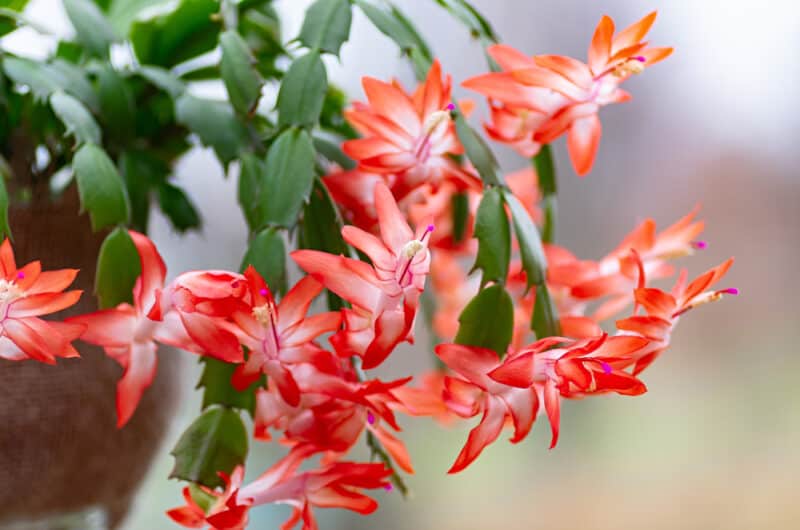
People sometimes have trouble getting their Christmas cactus to flower, so if you’re having flowering problems, this section will give you some tips.
The key elements for healthy flower growth are light and temperature. Prioritize giving your plant the right conditions if you want it to produce vibrant, eye-catching petals.
Christmas cacti need at least 8 days of 16 hours of sunshine followed by eight hours of darkness if you want them to bloom. The plant should also be in an area of around 60°F.
To achieve even flower growth throughout the plant, you need to rotate the pot regularly. If you let your Christmas cactus grow in the same position, it will be uneven.
Was this article helpful?
Yes No ×
We appreciate your helpful feedback!
Your response will be used to improve our content. The more feedback you give us, the better our pages will be.
Facebook pinterest