
the ordinary sheet bigger that was identified was part of a specimen of alocasia macrorrhiza, discovered in 1966 in Sabah, Malaysia. He also acquires the name “Elephant Ears”.
How does the Alocasia multiply? you can play the alocasia macrorrhiza very easily through the suction cups at the base. With a hoe, try to extract them with all their roots. Once you have obtained the small shoots, place some substrate in a container. You introduce the marquise and water hijuelo.
How to propagate the elephant ear plant? The most common propagation method elephant ears is the division. Remember that the elephant ears they can grow runners and you can divide them to start new plants. However, it is important to emphasize the importance of wearing gloves when handling elephant ears to divide them.
When can Alocasia be transplanted? The most ideal time to transplant elephant ear plants are in spring, when The last frost has passed. Once established, these plants grow easily and spread into the surrounding soil.
How to revive the Alocasia?
- A lot of light, essential in the care of alocasia pollie.
- Abundant watering during the hot months.
- Ambient humidity, a key aspect for her.
- Transplant only in spring.
- The hot temperature, another vital point in the care of the alocasia pollie.
- Regular fertilization during the growing season.
- Clean leaves, healthy plant.
How to root an elephant ear?
Where to put an Alocasia? alocasia It is a plant that can reach 5 m in height. It is grown both indoors and outdoors (warm climates) for its large green leaves. Dislikes full sun, discolors or burns; plant in shade or partial shade. You can go under the trees, where the shade does not allow the growth of other species.
What is the difference between Alocasia and Colocasia? The shape of its leaves alocasia It has a stiff spike-shaped leaf while that of the colocasia looks down. That is to say, if you observe that the leaf of the plant points towards the ground, it is surely a colocasia.
How to prune Alocasia? The alocasia they are not pruned Leaves that turn yellow over time or are damaged are simply removed to prevent them from becoming a vector of parasitic diseases.
Why is the elegant leaf crying? they are crying to heal their wounds and make us understand that the season is starting of harvests. The first to feel the symptoms is the root, which gradually notices how the ground warms up and warns others of the plant so that they wake up and open their sheets.
How long does it take to grow an Alocasia? It belongs to the Araceae family like the zamioculca, it has a thick, fleshy stem, which grows for three years and can reach up to five meters in height.
What is the best substrate for Alocasia? This plant is not too demanding with the type of substrate that you provide. A mix of substrate organic universal, with a little peat and a little sand for facilitating drainage will be helpful.
How often is the Alocasia watered? In summer you can water more frequently (up to two time per week) and in winter reduced to once a week or every ten days. It is also advisable to spray water on its leaves, stem and surface layer of soil.
Why is my Alocasia not growing? The main causes of than a plant by Alocasia are not growing are: excessive or insufficient watering, overexposure to the sun, stress caused by for temperature or level of humidity too low.
Why is my Alocasia turning yellow?

Excess of humidity, the main reason for the one that the alocasia polly has leaves yellow. The basic reason for which alocasia polly has the sheets yellow. As we have explained, it is a plant extremely sensitive to excess of watering or of moisture in the substrate.
How to care for Alocasia in winter? temperature for alocasia It should be stored at rather warm temperatures and let’s not be afraid if Winter it loses the leaves, since they will come out in the spring. It must be protected from the wind, so as not to damage the foliage.
How do you get a plant to root in water?

The technique involves immersing the base of a shoot or the petiole of a leaf in Water develop domain. What time of year to do it? Cutting is usually done between April and September, depending on the species, but with some houseplants it can also be successful at other times of the year.
How come the elephant ear plant turns out to be poisonous? The floors called elephant ears are floors for indoors or outdoors with very large arrow-shaped leaves. Poisoning can occur if the person eats parts of this plant. This article is only informative. DO NOT use to treat or manage actual exposure to a toxic.
What is the largest Alocasia? – Related issues
What is the significance of the Alocasia plant?
alocasia (Schott) G. Don it is a kind of floors with rhizome or perennial bulb of the Araceae family. They are native to tropical and subtropical regions of Asia and Australia, although today they are cultivated all over the world. Distribution of alocasia.
What Benefits Does Elephant Ear Plant Have?

one of his Properties is that plant It is very effective at capturing solar energy in shady conditions, making it ideal for interior and exterior decoration.
What Kind of Soil Does Elephant Ear Need?
If you want to plant it directly in your garden, its soil must be moist and well drained and it does not matter if you do it at the foot of other large trees, as these will serve to provide the necessary shade for the plant. elephant ear.
How to clean the leaves of the Alocasia?
Wipe a cloth, cotton if possible, moistened by the bundle and the underside of each sheet, placing them between the palm of your hand and the cloth, taking care not to damage them. This remedy is ideal for plants like Adam’s rib, alocasiadracenas, aspidistras u sheets living room
What happens if you bite into the fancy leaf?
Among the most popular decorative plants is the diefenbaquia, much appreciated for its large and fancy leaves. The sap of this plant, present in the stems and in the sheetsit’s irritating Yes suck or chew. Yes If ingested, it can cause vomiting, diarrhea and nervous system damage.
What to do with the yellow leaves of Alocasia?
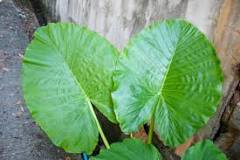
Fortunately, the solution is very simple: just water. We have to pour water on the ground until we see that it is wet; that is, until it comes out of the pot’s drainage holes if there is one, or until the soil looks very moist.
How many types of Alocasia are there?

varieties of alocasia
- alocasia u Elephant ear (common) alocasia the most typical and best known is characterized by rounded leaves but also by the there is with more compact leaves. …
- Mini elephant ear. …
- Black beauty elephant ear. …
- Tiger elephant ear.
How to reproduce the Amazonian Alocasia?
How to prune Alocasia?
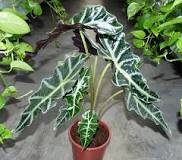
The alocasia they are not pruned Leaves that turn yellow over time or are damaged are simply removed to prevent them from becoming a vector of parasitic diseases.
How long does it take to grow an Alocasia?
The alocasia, also known as Elephant Ear, originated in India and Sri Lanka. It belongs to the Araceae family like the zamioculca, it has a thick, fleshy stem, which grows for three years and can reach up to five meters in height.
How to multiply Peperomia?
Peperomias can reproduce simply by planting a leaf. Choose a sheet of peperomy heal and bury it to limbo.