Aloe nobilis (Aloe perfoliata) is an evergreen, low-growing variety of Aloe that has characteristic serrated leaves. It is a short, prickly and interesting succulent, perfect for warm, dry gardens. In this article we will see how to propagate, cultivate Aloe nobilis and its care.

Characteristics of Aloe nobilis
- Common name: Aloe nobilis, Aloe mitra, Aloe mitriformis, Rock Aloe
- Botanical name: Aloe perfoliata
- Family: Asphodelaceae
- Plant type: Succulent
- adult size: 75cm at 1m height
- Sun exposure: complete, partial
- Soil type: Clay, sandy, well-drained
- Soil pH: acid, neutral, alkaline
- Flowering period: Summer
- Flower color: yellow, orange, red
- Native region: South Africa
The succulent, waxy foliage can change from bluish-green to shades of pink and purple depending on the amount of sunlight it receives.
The tubular flowers that bloom in shades of yellow, orange and red will add an interesting splash of color to your garden in summer, and their nectar is attractive to pollinators.
Aloes nobilis grows well as a decorative ground cover in dry climates. Mature specimens can reach up to a meter in height.
Some gardeners use it for a mass ground cover, and others keep it as beds that can be mixed with cacti and other drought-tolerant species.
How to propagate Aloe nobilis
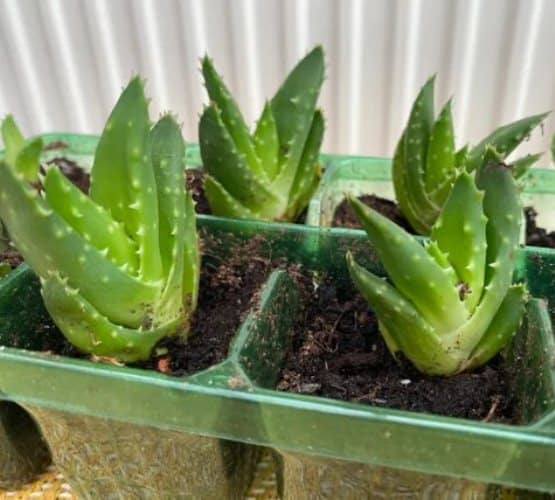
There are three ways to propagate aloe nobilis: by separating the little ones growing on the side of the plant, by means of leaf cuttings, and by sowing its seeds. Let’s see each of them.
Propagate from offspring
The easiest way to grow aloe nobilis from another plant is propagation through pups or offshoots that grow from the bottom of a mature plant.
First, wet the soil well for some time before doing this so that the roots can come out easily.
Remove the pup from the parent plant by gently tugging on it. Be sure to keep the roots of each as intact as possible.
Keep the puppy in the shade for a day so that a callus forms. Next, take a small pot and fill it with a mixture of soil and sand.
Plant it not too deep but try to cover all the roots with soil, keep the pot in a place that gets a good amount of indirect sunlight and water it whenever the soil dries out.
When it grows a bit and you see new leaves, you can transplant it into a bigger pot or straight outside.
Propagate from leaves
It is also possible to root the leaves to obtain new aloe nobilis plants. For this, look for healthy leaves measuring between 5 and 10 cm.
Cut them with a knife or scissors and let them sit in the shade for two or three days, this helps a callus to form on the cut and they don’t suffer from rotting problems once in the ground.
After this time, plant the cuttings with the cut side down in a mixture of soil and sand about 3 cm deep. Water a little and leave them in a bright place but not in direct sunlight.
Don’t water them often, let the soil dry out a bit before starting again, and once you see new growth you can repot and care for them as usual.
Sowing seeds
The key when sowing Aloe nobilis seeds is to do so in the spring and in well-drained soil.
You can grow Aloe perfoliata from seed outdoors if you live in an area where the temperature does not drop below -1°C. If you live in a cooler area, grow it indoors under a grow light.
We do not recommend growing Aloe nobilis from seed as it is too slow.
Aloe nobilis treatment
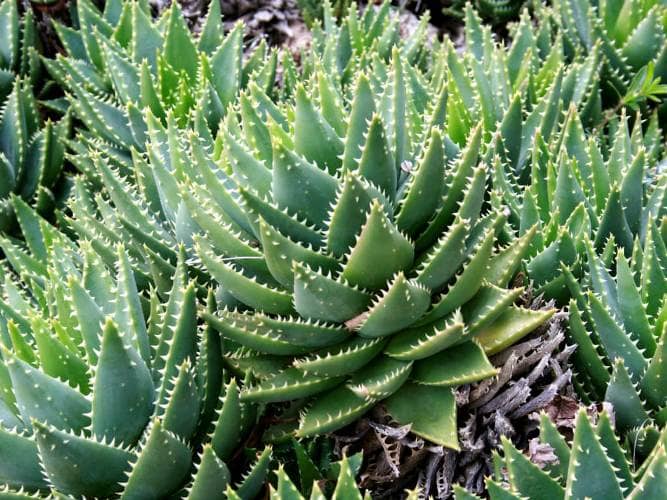
Provided the right conditions are offered, Aloe Nobilis is an easy-to-grow, low-maintenance succulent. It is a hardy, tolerant plant that is resistant to most diseases and does not require much maintenance.
The main requirement for their care, as with all succulents, is to make sure you don’t overwater them. If the climate in your area is dry and hot, the soil is well-drained, and the plant gets plenty of sun, it should thrive easily.
Light
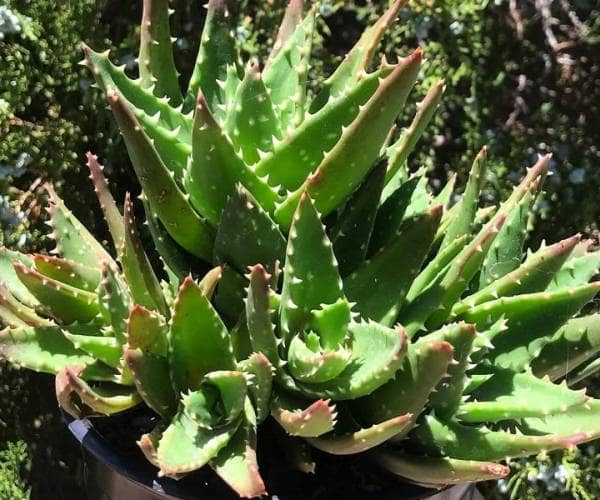
Your aloe nobilis should be planted in a location where it receives plenty of sunlight. Although it can survive partial shade, the constant light conditions ensure that the leaves remain in their most interesting and colorful state.
Shade makes teeth whiter and foliage greener. In full sun, the cloves take on a bright yellow color and the leaves take on beige and purple hues.
Usually I
Sandy, rocky soils and some common garden soils are best for aloe nobilis plants. They do not need soil that is too rich in nutrients. The important thing is that it drains well and the water does not form a puddle.
They have a preference for alkaline pH levels, but neutral soils do well too.
Water
Like other succulent varieties, they do not tolerate standing water. You have to be careful not to overwater them or they will develop root rot.
Once established, the plant is drought tolerant, but during its growing season moderate watering is beneficial, just make sure the soil has a chance to dry out completely between periods.
When the plant is dormant, watering should be very moderate, once every two months is usually more than enough.
temperature and humidity
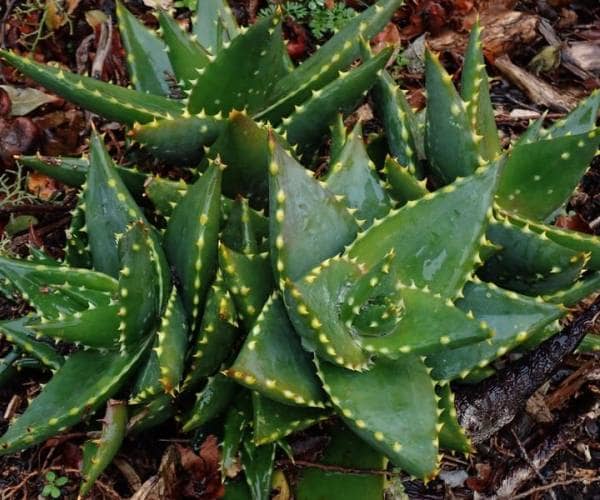
Although Aloe nobilis does best in warm, coastal climates (around 21 to 30 degrees Celsius) that are not humid or excessively rainy, it is known to be surprisingly frost hardy.
Many growers of Aloe nobilis have reported that it can withstand temperatures as low as -10 degrees Celsius. On the other hand, it will not behave very well in humid and temperate environments.
Fertilizer
During the summer months, when it grows, it will appreciate being fed with a fertilizer specially designed for cacti.
However, it will not need additional feeding during its winter dormancy. To look at: Fertilize Succulents with Organic and Homemade Methods
Share it on the networks: