
If you purchase an item through links on this page, we may earn a commission. Our editorial content is not influenced by commissions. Read full disclosure.
When the weather starts to warm up and the birds start to chirp, spring has arrived. It’s time to think about planting flowers in your garden. Cosmos are the perfect flower to add cheerful, long-lasting color to your space.
Cosmos are easy to maintain and you fill in a large area as a mass planting option. It only takes a few months for these flowers to bloom from seed, so you can plant spring seeds and have flowers in time for summer.
The best thing about cosmos besides their laid back nature is that you can find them in a range of beautiful colors. Let’s get to everything you need to know about the growth of the cosmos:
Get to know Cosmos

There are over 20 species of cosmos, but only a few are common in gardens. These are Cosmos atrosanguineus, C. bipinnatusAnd C. sulphureus.
Cosmos garden (C. bipinnatus) mainly come in white, orange and light pastel like pink and red. Depending on the cultivar, the plant can grow up to six feet tall with large flowers. These plants can escape from the garden and become naturalized in certain areas.
Sulfur Cosmos (C. sulphureus) is the best species if you live in warm regions. This species can grow in warm climates with little rainfall. It can reach six feet and blooms in double or semi-double flowers. They bloom in a bright, golden yellow color.
This species is considered invasive in parts of the southwest.
Chocolate cosmos (C. atrosanguineus) is a unique plant with dark red flowers that smell of chocolate. These are a little harder to find, but worth the search. They will grow about three feet tall.
Since the cosmos can grow up to six feet tall, although many are much shorter, they can make quite a statement. Many gardeners place tall types in the back areas of their garden and use the smaller ones to create a border.
Another reason to grow cosmos is that they can grow low to the ground or in raised beds. Cosmos is the perfect choice for people who live in warm climates but want to keep bright blooms on their property.
Cosmos grow well as annuals in USDA plant hardiness zones 2-11.
Cosmos planting

You can successfully grow cosmos in both containers or directly in the ground. Start seeds indoors in March or April, aiming for about six weeks before the last frost date. Start seeds outdoors after the last expected frost date.
Indoors, use seed trays filled with seed starting medium. Outside, amend the soil to six inches deep with well-rotted compost.
Place the seeds an inch deep and two or three inches apart. The tubers should be twice as deep as their length. Water the soil well. Place the pots near a bright, south-facing window or under grow lights for about six hours a day.
For seeds started indoors, wait until the last expected frost date and harden off the seedlings for a week before planting them in their permanent location.
Care for the Growing Cosmos

Growing cosmos is easier if you plant them in full sun, but they can flower in partial shade. They just won’t be as floriferous. Besides light, you will also need suitable soil for the cosmos.
The ideal soil is well-drained but retains water. You should aim for a pH level of 6.0 to 6.8, although Cosmos is adaptable.
Cosmos will also grow in dry, depleted soil, but rich soil will result in plants that cannot stand upright.
Larger cosmoses, especially those with large flowers, may need support as they grow. Flower cages or tomato cages are perfect.
Cosmos do best in warm climates. They do not like cool climates. Whatever humidity you have is fine because these plants are not picky about humidity levels.
Fertilizer and water
Fertilizer helps plants bloom, but you need to be careful about how much fertilizer you give your growing cosmos. Apply fertilizer only if your soil is deficient. If you need to feed your soil, use a liquid fertilizer that contains whatever your soil is deficient in.
The cosmos does not need a lot of water unless there are high temperatures and prolonged drought. If you experience prolonged drought, check your plants once in a while. Give them water if they seem to sag in the heat.
Don’t worry, most other plants in your garden will need water long before your cosmos.
Size
The main maintenance of cosmos flowers is the occasional dead head, which ensures that your flowers bloom repeatedly until frost.
You can trim your cosmos by cutting off the heads with garden shears. Cut to a nearby leaf bud to encourage bushier growth and additional blooms.
The plants produce a lot of flowers, so if you want to pick a few to arrange them, hang the longer stems and leave the shorter ones behind. You should also leave a few flowers to seed for the plant to reseed in the garden.
Common pests and diseases
Pests are more common problems for the cosmos than diseases.
aphids
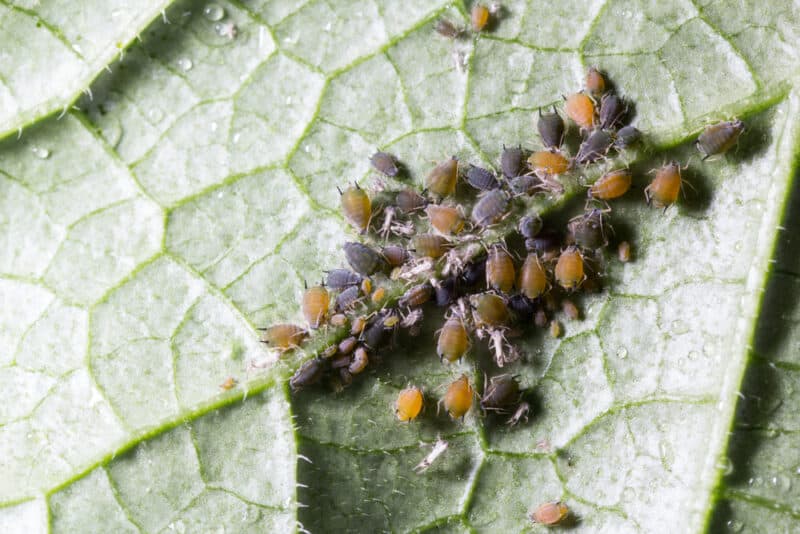
Melon aphids (Aphis gossypii) regularly feed on cosmos, causing yellowing leaves, stunted growth, and the spread of disease. See our guide to learn more about identifying and treating aphids.
Earwigs
Earwigs (Forficula auricularia) like to destroy cosmos flowers on some species. You will walk into the garden one day and notice ragged edges on the petals. It can be difficult to see the pests themselves on your plant as they hide during the day and nibble at night.
Don’t bother with pesticides. They are more of a nuisance than a real pest. You can trap them by placing cardboard on the ground near the plants and picking it up in the morning. Shake any earwigs you find in soapy water.
Fusarium wilt
Fusarium wilt is a fungal disease that can attack the cosmos. You can spot this disease by the discoloration and wilting of the leaves. The root is the main area affected by this disease, but you can’t tell by looking at your plant.
If you dig up the plant, you will see pink masses on the roots.
If your plant is infected, it’s best to pull it up and throw it away.
harvest cosmos

You can harvest both seeds and flowers from cosmos plants. Seeds can be harvested at the end of the growing season after the flowers have faded and formed seed heads. Or you can remove them from the flowers as they individually fade throughout the growing season.
Normally the seeds will also spread by wind and animals, they will disperse on their own in your garden unless you collect them or cut the plants.
When collecting the seeds, wait until the weather is dry.
Once the seeds have turned brown, it will be easy to remove the seeds. All you have to do is gently shake the petals and the seeds will fall out.
If it’s the flowers and not the seeds that you’re looking for, you can cut and harvest the flowers to create bouquets in your home. Choose flowers with a long stem if you want to place them in a tall vase. To create a small bouquet, opt for flowers with short stems.

Avoid picking flowers at the hottest time of day, so morning or early evening is an excellent time to harvest.
If you want to save money on buying seeds, growing cosmos is a great way to harvest your own seeds and have a fresh bouquet in your home. In addition, cosmos are ideal plants for novice gardeners who do not have much experience in growing flowers.
Remember to top regularly, save seeds, and plant in well-drained soil, and you’ll have a great collection of cosmos plants!
Was this article helpful?
Yes No ×
We appreciate your helpful feedback!
Your response will be used to improve our content. The more feedback you give us, the better our pages will be.
Facebook pinterest