Growing Cinta or Lazo de amor (Chlorophytum) at home or in the office is easy, but you should know some basic care tips included in this article. Read these tips and learn how to grow Cinta indoors to improve the air quality and appearance of your home or office.

Grow ribbon inside
Location
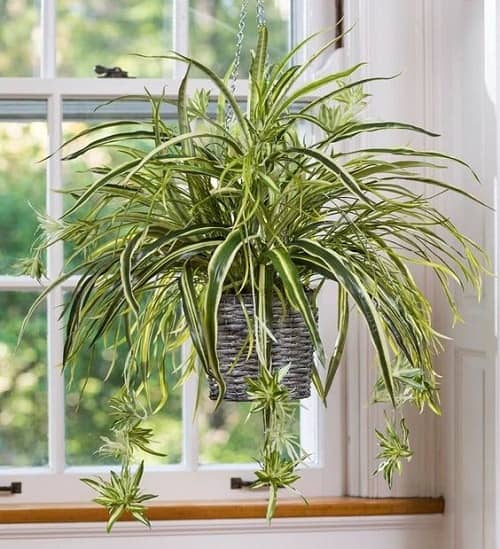
Place it in a location that receives direct sunlight, away from heating or cooling ducts.
Regular direct sunlight burns the leaves of the plant, so keep it at least 20-30cm from windows.
It works well in low-light environments, making it an ideal choice for an office building, where lights may be turned off during off-hours.
Cinta plants can also be placed in bedrooms, bathrooms or kitchens, as they do not need a lot of light to survive.
Usually I
When growing Cinta indoors, make sure the soil is well-drained.
Add a handful of perlite or peat moss to improve drainage, but if you don’t have any, you can mix in small stones or pebbles.
It grows well in somewhat poor soil without much organic matter, but if you want it to grow better, mix 1 part garden soil, 1 part peat, 1 part perlite and 4 parts pine bark .
This will ensure that the plant remains healthy for a long time.
Irrigation
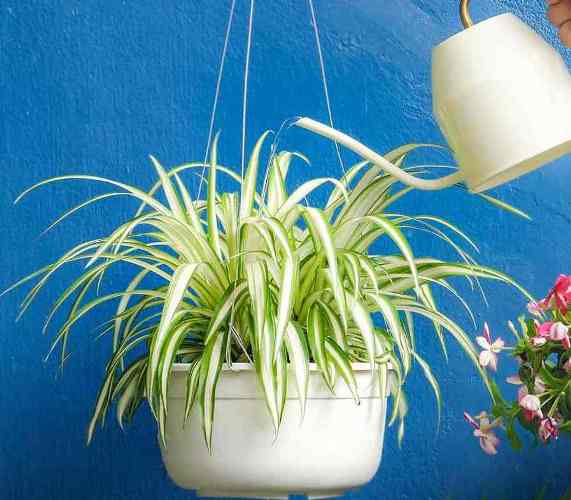
Cintas plants can survive with little watering, but on the other hand, you should avoid overwatering them.
To be on the safe side, let the soil dry out a bit between waterings. Too wet or soggy soil tends to cause root rot.
Adjust watering based on weather and planting location.
Keep the plant slightly moist during hot weather or if you’ve kept the pot in a very light, dry place with lots of air circulation. On average, the ideal at this time is to water it every two or three days.
In winter and autumn, when the temperature drops, reduce watering and do it only when the soil seems dry. Generally one or two weekly waterings are more than enough.
If possible, use only rain or distilled water, as it is very sensitive to the fluoride and chlorine found in tap water. Also, if used for a long time, tap water leaves mineral residues that can harm the plant in the long run.
Advice: The water should be neither too hot nor too cold, as it could weaken the plant by thermal shock. Keep it at an average room temperature.
Temperature
Excessive temperature fluctuation is not good for a Cinta plant.
The optimum growth temperature is 21 to 32 degrees C. However, it can tolerate temperatures as low as 1 to 38 degrees C.
Fertilizer
For proper maintenance, remember that the Cinta plant needs fertilization in spring and summer, as it is a time of flowering and growth.
It is not necessary to fertilize it if it is planted in a soil very rich in organic matter.
Fertilize your Cinta plant with a 3:1:2 mix, after diluting it halfway, and feed it once every 5-6 weeks, usually in spring, summer and early fall.
Strip plant grafting
The Cinta plant grows quickly and needs to be transplanted often. This is to prevent it from getting stuck in the pot.
However, this should only be done when it is actually attached to the pot, which can be easily seen by the visible roots in the topsoil.
Always choose a slightly larger pot than the previous one, but avoid using pots that are too big to avoid overwatering problems.
Do not forget to carry out the transplant at times of the day when there is not much heat, if you transplant it in the summer, do it in the afternoon, when the sun goes down. Do not forget to water immediately, it is important for the recovery of the plant.
Plagues and diseases
Be careful with mites and mealybugs if you want to do the proper care. You can get rid of both with a neem oil solution or an insecticidal soap.
Mealybugs spread easily from plant to plant, so keep an infected plant away from other houseplants.
Small brown discs may appear on the leaves, indicating mealybug infestation. Use your fingernail to scrape off those brown discs and dispose of them properly.
Ribbons are prone to tipburn, which causes the tips of the leaves to turn brown.
This can be due to over-fertilization, dry soil, low humidity, or a buildup of salt and minerals found in tap water.
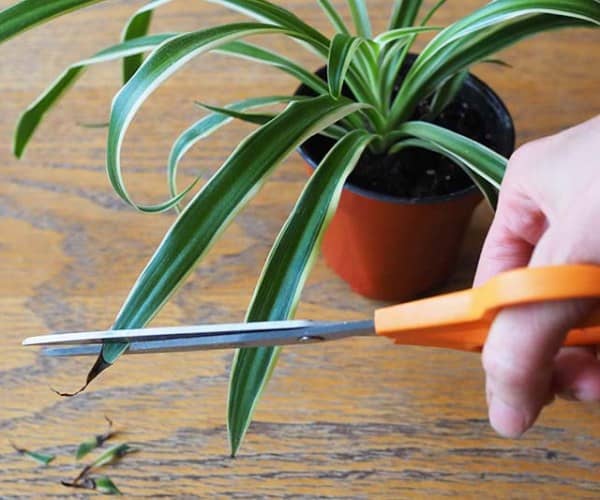
You should cut off the brown tips of the leaves as well as the dead leaves with sharp scissors. This way, the plant will invest its energy in healthy foliage.
Important: To avoid the appearance of brown ends, remove mineral buildup every two to three months. Use filtered or distilled water for washing and let the water drain completely to the bottom of the pot.
Benefits of growing Cinta indoors
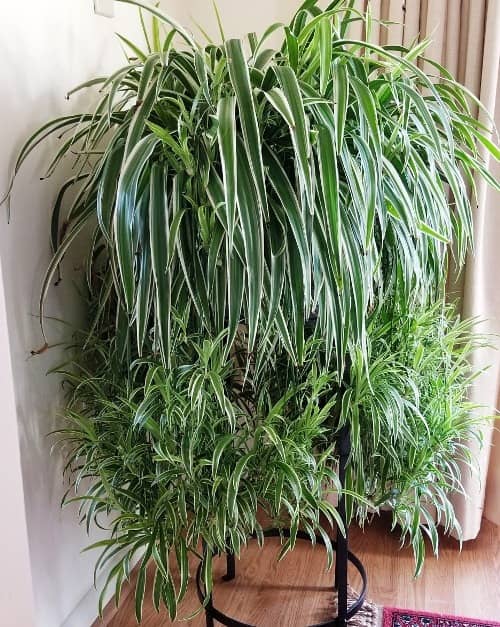
Absorbs carbon monoxide, formaldehyde and xylene. They are commonly found in homes and office buildings.
It is safe for children and pets. The whole plant is non-toxic.
Cinta plants are said to improve overall well-being by reducing stress and increasing productivity. So now you know that growing Cinta indoors is very beneficial.
Article to complete this reading:
Share it on the networks: