If you purchase an item through links on this page, we may earn a commission. Our editorial content is not influenced by commissions. Read full disclosure.
Apple scab is one of the most common diseases on apple trees and other plants in the apple family. This disease appears wherever plants of the apple family grow.
Most commonly, apple scab affects apple, hawthorn and crabapple trees. But it can also affect mountain ash, cotoneaster, loquat and firethorn.
If you are growing one of these trees, understanding apple scab is essential. You need to know what to look for and how to treat this common and destructive disease to maintain a healthy orchard.
Recognizing apple scab
Venturia inequalis is a fungal pathogen that causes apple scab. It is much more common in areas where the springs are cool and moist. It also tends to spread quickly in orchards where last season’s dead leaves are left to rot at the base of the trees.
Apple scab attacks both the leaves and the fruit of the tree. It produces lesions on leaves, buds, flowers and fruits. These lesions can eventually weaken the health of the entire plant, and they can also destroy your apple crop for the year.
Many people believe that apple scab can also affect pear trees. Pear trees are infested with the closely related fungus V. pirinaknown as pear scab.
Pear scab and apple scab, although technically different pathogens, behave similarly and respond to similar treatments. But they cannot contaminate each other. So your apple trees are safe from pear scab and your pears are safe from apple scab.
Apple scab on leaves and blossoms
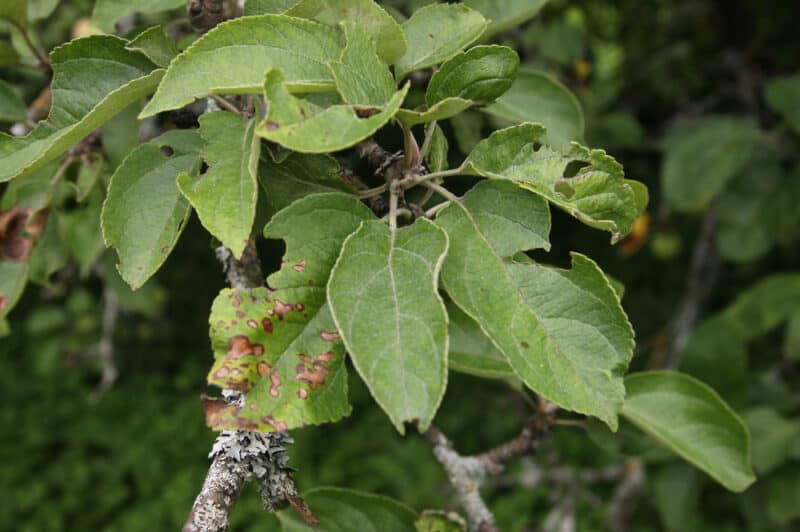
Usually you will start to see signs of apple scab in the spring, especially after a period of rainy weather. You will notice small round dark olive green or tan spots with fringed, light green or dark brown borders.
If you smell them, you will notice a soft, almost velvety texture to the spots. Then, as the disease progresses, the spots turn almost black. They grow together and spread over most leaves. Finally, the leaves turn yellow, die and fall to the ground.
The infection is similar on flowers and buds.
Apple scab on fruit

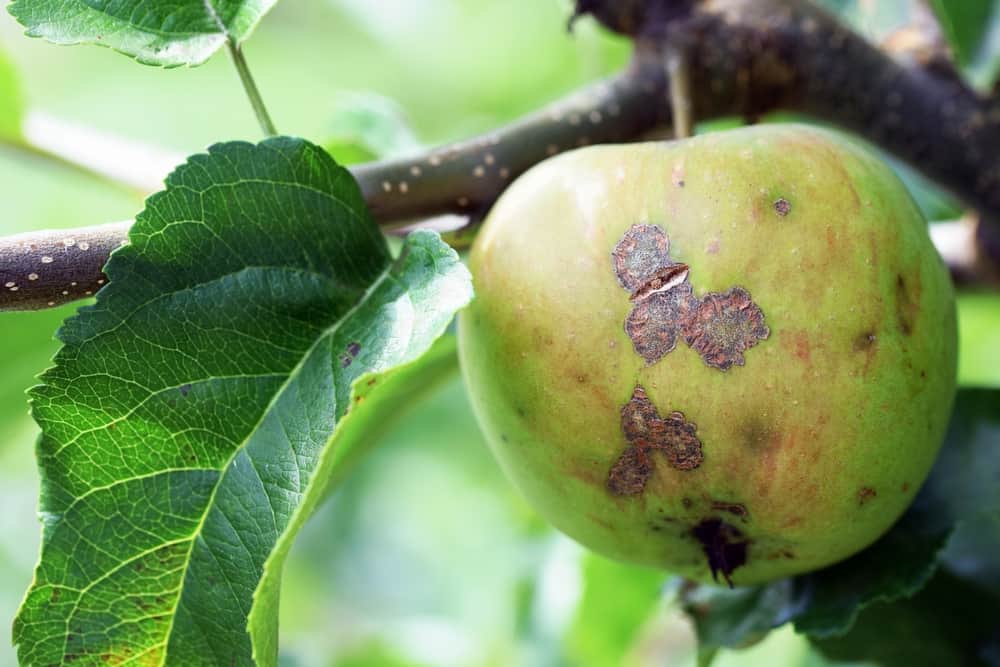
On fruit, the infection sounds a lot like its name: a nasty scab on your apples. The condition begins similarly to the leaves, with small olive-colored spots on the fruit.
As the disease progresses, the spots turn into a brown, crusty patch with raised cracks and a corky texture. Eventually, the fruit may even split along the rind.
When fruits are affected early, they may become deformed as they grow. The scab will cause the fruit to deform as it ripens. Severely infected fruits often fall to the ground and rot, giving the fungus a chance to overwinter.
The Life Cycle of Apple Scab Fungus
Apple scab overwinters in these rotten leaves and apples. A mild, unnoticed infection from the previous year can wait in the orchard waste until the conditions are right for a true outbreak.
At some point in the growing season, when temperatures are between 55 and 70°F and constant humidity blankets the orchard for at least 3 hours, this latent fungus produces spores.
Then the fungal spores are carried by wind or splashing mud to the tree – where they land on leaves, fruit or flowers. A new infection is born.
The longer the leaves and fruits remain moist in cooler temperatures, the more severe the infection can become. This long-term humidity allows the V. inequalities spores to establish themselves firmly in their new surroundings.

Once the infection takes hold on one leaf, it can quickly spread to other leaves and fruit. Then, if rainy and cool conditions persist, your trees can be repeatedly re-infected. The infected leaves and fruit then fall from the tree and wait in the ground for the next opportunity to infect the tree.
Preventing Apple Scab
During rainy seasons, dealing with apple scab can seem like a full-time job. When there is an ongoing risk of infection, you should monitor your trees closely. But there are a few steps you can take to minimize the chances of apple scab impacting your trees.
Resistant varieties
Start by choosing apple and crabapple cultivars that are resistant to apple scab. Make sure some or all of your apple trees will be a dead end for V. inequalities spores to reduce its impact on your entire orchard.
Hardy apple varieties like ‘Honeycrisp’, ‘Liberty’, ‘Freedom’, ‘William’s Pride’ and ‘Redfree’ are a great addition to any orchard. There are also resistant crabapples. Try “Silver Moon”, “Prairie Maid”, “Bob White”, and “Indian Summer”.
Remember that many of our best candy apple varieties, such as MacIntosh and Cortland, are susceptible to apple scab. That doesn’t mean you can’t grow them alongside these hardier varieties, but it does mean you need to take extra care to keep these trees safe.
Environmental safeguards
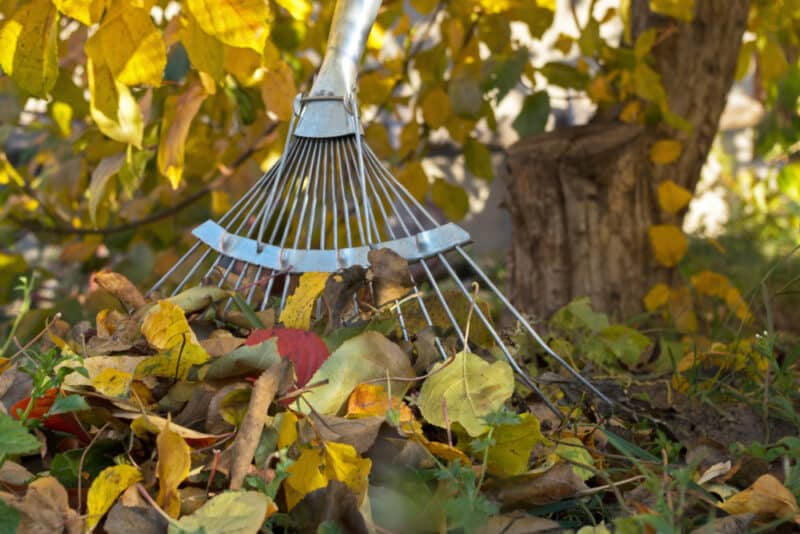
To keep your trees as free as possible from apple scab (and a host of other diseases), keep the orchard clean. Pick up dead leaves, fallen fruit and other debris. Keep the base of each tree well maintained so that apple scab spores have nowhere to overwinter.
Make sure each tree has enough space around it to grow comfortably. If you are planting a new orchard, space your trees generously – so they are in full sun, with plenty of air circulation around each tree. Cool, moving air is one of the best ways to shorten the lifespan of fungal spores.
Of course, if you’re working with an established orchard, you can’t exactly move the trees to a sunnier location. However, you may be able to remove one or two less productive trees to open up space between healthy ones.
The cleaner and more open your orchard is, the less likely apple scab is to infect trees.
If you water your trees, water them early in the morning and focus on the base of the tree. Do not spray water all over the plant. Avoid wetting the leaves as much as possible. The less water there is on the plant itself, the less chance there is of infection.
Some people like to use compost as extra protection against apple scab. Once you’ve raked the debris from the base of the tree, spread a 3 to 6 inch layer of clean compost on the ground.
Compost gives your tree a nutritional boost and provides an additional barrier between soil spores and the tree.
Treat an infection
It’s time to act when you see signs of apple scab infection. If you see one or two infected leaves, flowers or fruit, prune them immediately to avoid continued infection. Burn or discard these infected parts; never compost them.
Vaporizers

Once you have an active infection, fungicide sprays are your best bet. There are a few successful organic options on the market. Most are copper-based sprays, but sulfur-based sprays are also effective on apple scab.
On apple trees, a copper-based spray can cause discoloration known as scorch on your fruit. You may want to be very careful with the amount of copper spray you use and stop using it around mid-summer to avoid this scorching effect.
Most sprays can be used to treat an active infection and prevent infections. If you’re concerned about a potential resurgence of apple scab in your orchard, don’t wait until you see signs of infection.
Preventive spraying can start early in the year. If repeated every two weeks (as recommended by the manufacturer), a good spray, like Organocide Plant Doctor or even a simple neem oil solution, can prevent infection.
When not to spray
If your infection is already very advanced, it is too late for most commercial sprays. Instead of spraying, do your best to minimize the spread. Then prepare for next year by cleaning up the environment and nourishing your trees.
Light neem oil treatments – especially at the base of the tree – are the exception here. Neem oil won’t do much to stop a full-fledged infection, but it will damage the spores’ ability to overwinter successfully.
A few light treatments of neem oil in the soil can help reduce apple scab spores.
All purpose vaporizers
A few all-purpose fruit sprays claim to be effective against apple scab. But these sprays have a few problems. More importantly, they contain not only fungicides but also insecticides.
This means that while they kill apple scab spores, they also kill pollinators.
If you use all-purpose sprays before or during bloom, you will slaughter your pollinators before they can pollinate your trees. You’ll also kill a host of other beneficial insects.
Some all-purpose sprays are not at all safe for use on edible fruit. If you choose to use an all-purpose spray, confirm that it can be used on edible foods and avoid using it when pollinators are absent. Spray late at night.
Was this article helpful?
Yes No ×
We appreciate your helpful feedback!
Your response will be used to improve our content. The more feedback you give us, the better our pages will be.
Facebook pinterest