
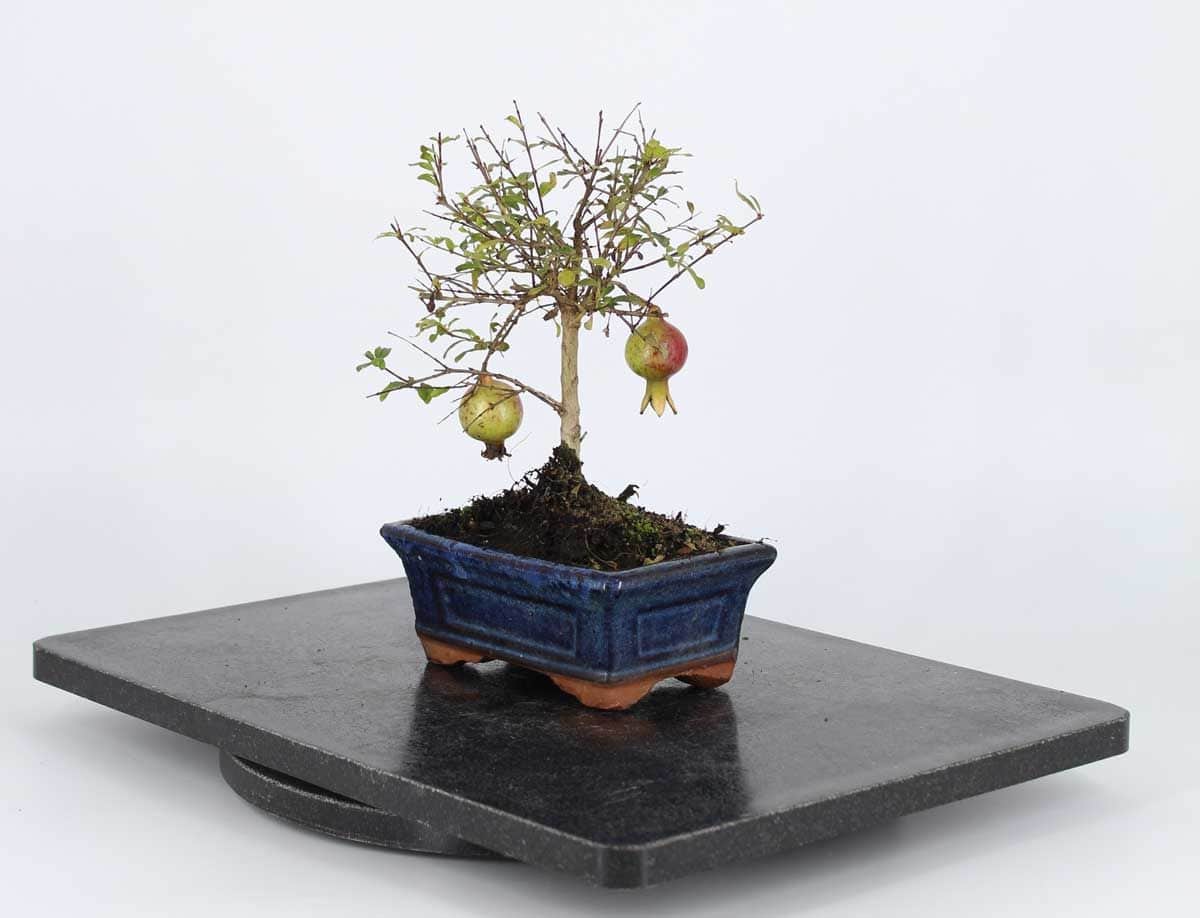
Pomegranate Bonsai Source: saybonsai
Although the types of bonsai you will find are more limited in stores and supermarkets, in terms of fruit bonsai, one of the most common, and not outrageously expensive, is pomegranate bonsai.
It is a dwarf tree which, if well cared for, is capable of throwing mini-grenades, some even edible. But how to maintain a pomegranate bonsai? If you fancy having a fruity one without having to spend a fortune, we’ll give you a hand so you know everything you’ll need to be healthy.
The Best Care for Pomegranate Bonsai
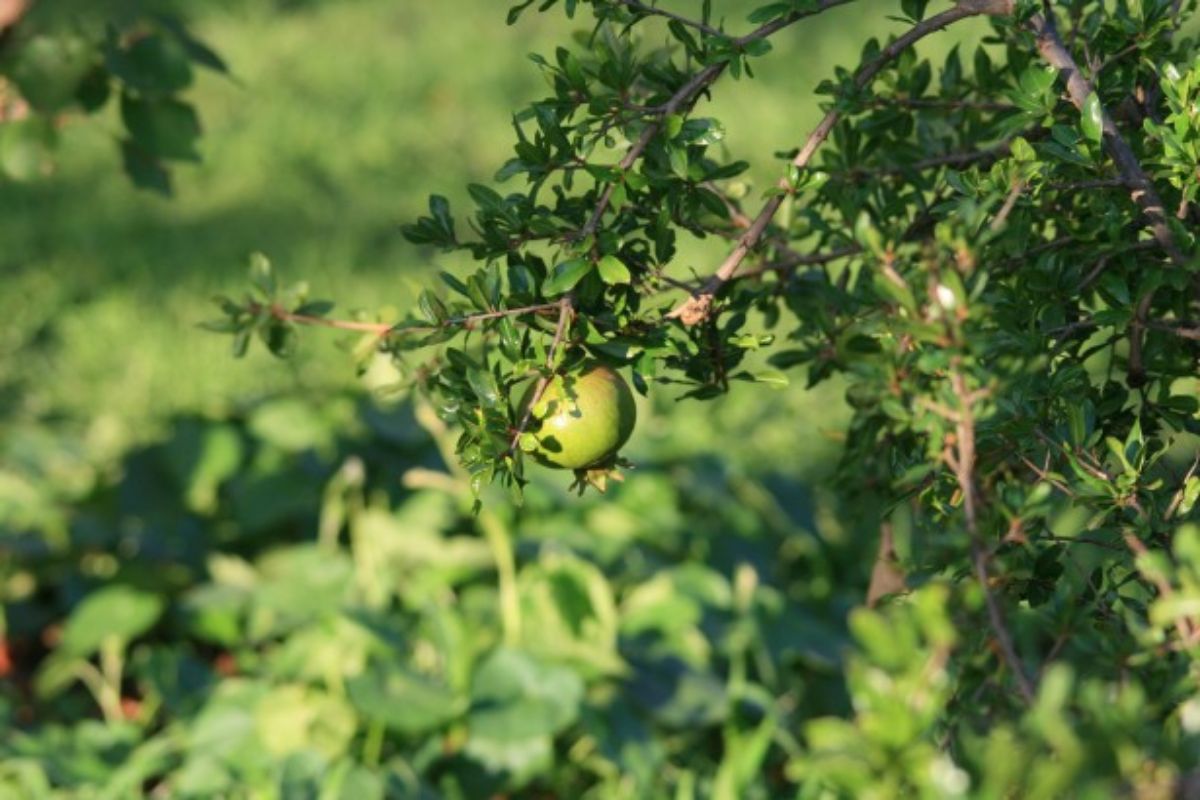
Let’s start by telling you that the Caring for a pomegranate bonsai is not difficult at all, completely the opposite! Of course, it has its peculiarities which are those which, if you respect them, will allow you to have a beautiful bonsai all year round; and if not, you can get sick.
But since we don’t want that to happen to you, it’s time to tell you about the best thing you can do for pomegranate bonsai. Go for it?
Location
If you have bonsai trees or have asked about them, one of the first premises they give you is that they should not move from their place. And that’s how a tree doesn’t grow legs and it moves from place to place. That’s why they tell you to leave them quietly for a few weeks in the right place for them to adapt.
The same thing happens with the pomegranate, it needs to be put in a suitable place. And what is that? It depends… Its ideal would be outside, but you can put it inside the house (although if possible we do not recommend it).
In summer, the best place for a pomegranate bonsai is in full sun. Don’t worry about temperatures as it tolerates them quite well (the big ones).
In winter, you may need to move it to a place where there are not so many drafts and at the same time there is a lot of light, as much as possible.
Temperature
In relation to the above, as we have told you, it is a bonsai that tolerates high temperatures very well, and also low ones, but not so much frost. You will see, its minimum would be 4-8ºC. If the temperature drops further, you may need to put it in a greenhouse or throw a blanket over it to protect it from the cold.
Substrate
For pomegranate bonsai country, we recommend one that has a pH neutral. Additionally, you must mix it with akadama to keep the soil loose and unhardened.
Another option you have is calcareous soil. Of course, what you should never add is peat or acidic soil. They can’t stand it!
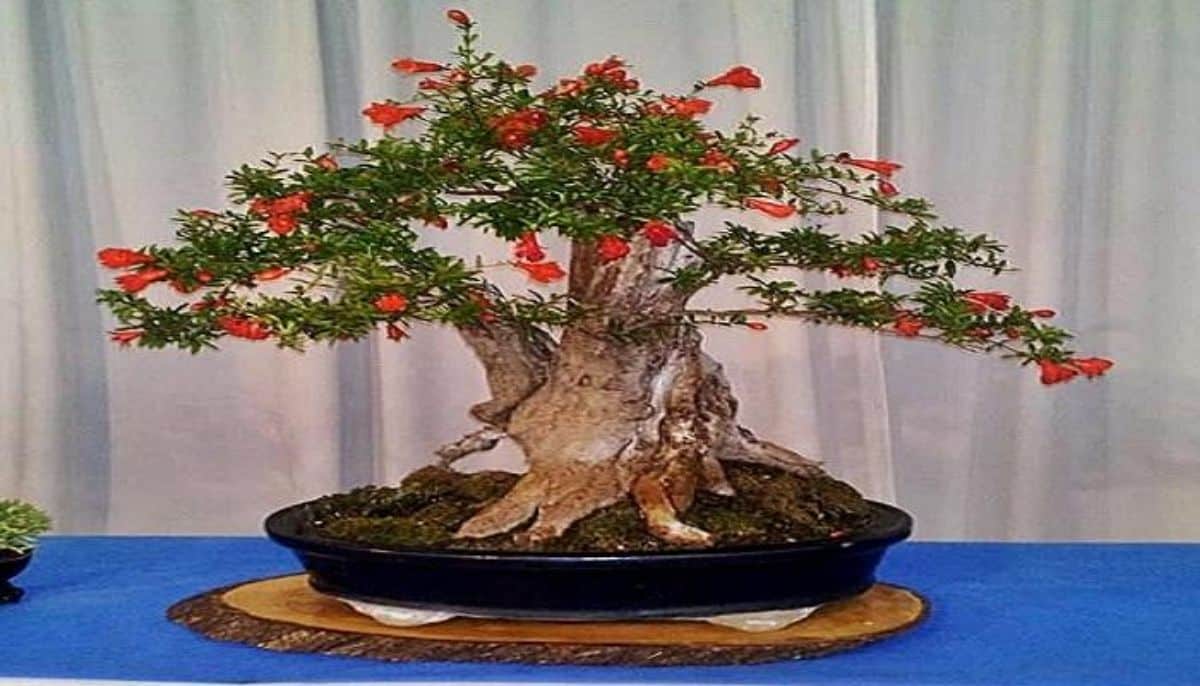
okbonsai fountain
Irrigation
Regarding irrigation, you should know that it will need a lot of water, because It takes a lot, but between watering and watering it is important that the soil dries outotherwise the roots may rot.
So what we recommend is that in summer you water almost daily (this will depend on the heat and the nature of the soil, of course); while in winter, if the temperature is low, it is better to water very little. And no, it is not better to stop watering because if this bonsai suffers from drought it can be damaged very easily.
Subscriber
If you want your pomegranate bonsai to flourish abundantly, and also to make the pomegranates it bears bear fruit, then you need, yes or no, a fertilizer for that.
The best is one rich in phosphorus and potassium because it will help you meet all your needs. It must be brought to him from spring to late summer, and even in autumn, so that he has sufficient reserves.
When to give fertilizer exactly? Well, from the moment the flowers start to come out. In addition, we recommend that you do it little by little, first with a lower dose and gradually increasing until, in mid-summer, you are fertilizing with all the necessary dose for one or two months. , then go back down.
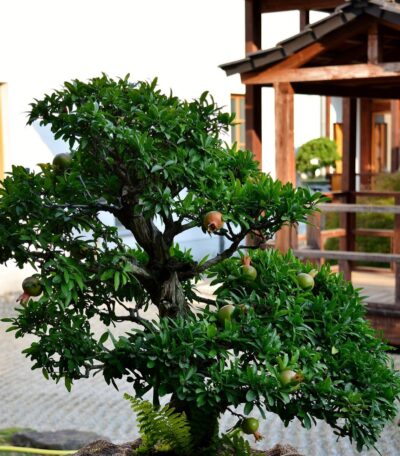
pruning and transplanting
Since these are two different things, we will first tell you about the size. Pomegranate bonsai must be pruned, yes. Not only to keep it in shape, but also to clean it and help it bloom.
You can prune it all year round but above all, it will need pruning in early spring. Also, you should know that if a branch throws a lot of pomegranates, the following year it will dry up, because it has worn out. That’s why you have to make sure he doesn’t throw you more to one side than the other if you want to keep him fit.
Assoon as at the transplant, it is done every 2-3 years when he is young (those you buy in stores) and, when it is old, every 3 years. Of course, unlike others who tell you to do this before they sprout, in this case it needs to have been done and have some leaves.
When transplanting, a few fine roots should be cut. Be careful, we said thin because if they are thick it will dry out the tree. You may not see it right away, but you will be doomed.
Plagues and diseases
Here you have to be “keep an eye out”. And it is that it is a tree that receives many pests and diseases. As for the former, you must have pay particular attention to aphids, cottony scales, spider mites and whiteflies.
If he already has so many unwanted critters that can attack him, plus you’re told that chemical treatments don’t tolerate them well, you may panic, but don’t worry. First, you should eliminate the pest by hand, with cotton and alcohol, and check every few days to see if it has proliferated again. Usually that’s enough to keep her at bay.
Now well, in terms of diseases, those that affect it the most are rust, powdery mildew and chlorosis (the latter due to a lack of iron and manganese which you could solve with a fertilizer rich in these elements).
Multiplication
And we come to the reproduction of pomegranate bonsai. You should know that you have two ways:
- Thanks to the seeds, They are planted in the spring and allowed to grow little by little.
- Thanks to the cuttings, which are collected in summer and kept until the end of winter to be planted. These are faster but do not always give good results.
Has it become clearer to you now how to care for a pomegranate bonsai?