Some of the links in the post are affiliate links and I receive a commission for purchases made through some of the links in the post.
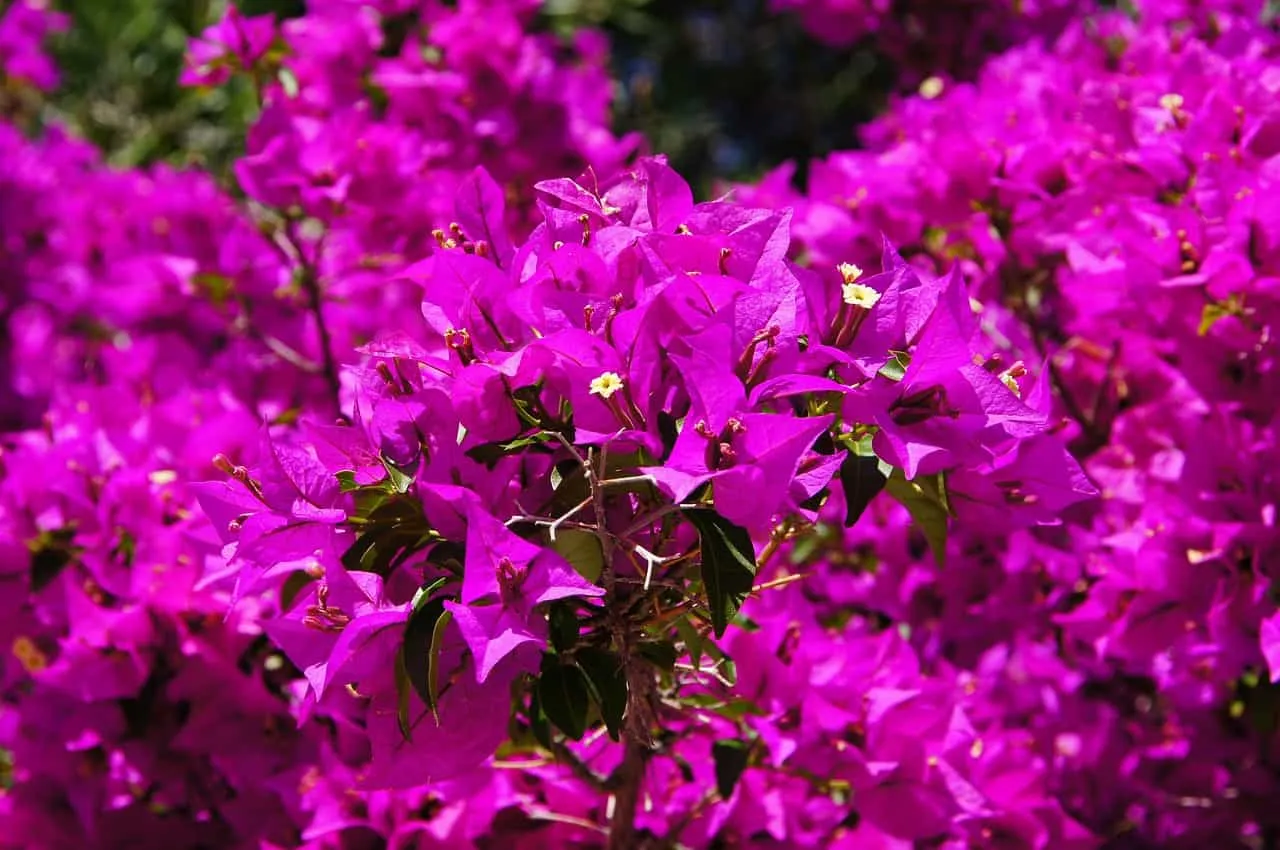
Most people, even if they are not avid gardeners, will have seen flowering bougainvillea somewhere.
Bougainvilleas not only look beautiful when in full bloom, but they also continue to bloom for quite some time.
bougainvillea make beautiful hedges. They are classified as perennial vines and can grow up to 30′ depending on the type.
Unfortunately, as many gardeners have discovered for themselves, these beautiful plants have long, sharp thorns that will make you pay the price for pruning.
After you’ve brought home your new bougainvillea from the garden center and planted it, you may be worried about a lack of flowers.
Many new gardeners wonder how to keep their bougainvillea in bloom, and you might be surprised at the answers.
Some Factors That Affect Your Bougainvillea
light and wind
Your bougainvillea loves the sun! In fact, they almost call on the sun to reward you with flowers.
Direct sunlight is where you need to place them for maximum flowering and the minimum they will be happy with is five hours a day.
The general rule with these plants is that the more sun they receive, the more they will flower.
Less sun and more shade gives you a plant with only green leaves.
Just as they like the sun, they like the wind less. They don’t like frost or cold, so if you want flowers, be very careful where you plant them.
control drought
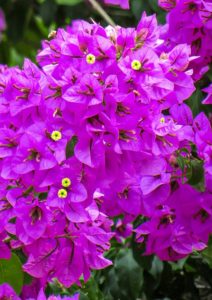 The best conditions for bougainvilleas to thrive are dry conditions.
That’s why they’re so popular in places like Mexico and where I live in southern Spain. We can guarantee a hot, dry summer, and they love it.
If your plant has very few flowers, look at your watering schedule. This is especially important if the rest of your garden has an irrigation system.
You may want to eliminate watering the bougainvillea and water by hand if necessary.
If you want to stimulate flowering, you can withhold water until the leaves begin to wilt, then water thoroughly.
For regular watering, water only when the soil is dry and before the leaves begin to wilt.
If you’ve moved into a new home and have one of these plants, it’s probably well established and therefore needs little water.
see the bottom
Bougainvillea likes soil that few plants tolerate. A soil with few nutrients will do them good, thank you very much. If you give them too much fertilizer, you will see more leaves than flowers.
Preferred soil is slightly acidic, although they will appreciate a mixture of peat and soil when first planting.
Once you’ve planted your new bougainvilleas, you can just leave them alone. They will need to rest for a while after planting, but it won’t take long for them to adapt well.
Check your size
Another reason for bougainvillea not flowering could be due to improper pruning. While vigorous pruning will increase blooms, doing it at the wrong time will reduce them.
Never prune too much in the spring, as the flowers form on the new wood. Pruning in fall or winter is best to encourage new growth.
After doing your heavy pruning in the fall or winter, limit your pruning to a few unwanted spikes here and there.
A word of advice: wear sturdy gloves when pruning, as the thorns can be unsightly. We have an article on the best gardening gloves for women where you can find the best thorn resistant gloves to protect your hands. here.
What works as a bougainvillea bloom activator?
There are several ways to boost your bougainvillea and encourage more blooms.
fertilizer
Do this during the growing season if you want it to work properly. Preferably use a good quality slow release fertilizer. For potted bougainvilleas, feed them at half strength.
A balanced mix of nitrogen, phosphorus and potassium in a 5/5/5 ratio will promote flowering. A mixture that is too high in nitrogen will promote growth, but there will be far fewer flowers.
Epsom salts
Here’s another way to give your bougainvillea a boost. Dissolve a tablespoon of Epsom salts in a gallon of water and water deeply.
coffee beans
Since bougainvillea likes acidic soil, adding coffee grounds to the surrounding soil promotes flowering. Coffee grounds contain nitrogen which keeps the plant thriving.
If you are not a coffee drinker, you can order used ground coffee from a local coffee shop.
How to increase bougainvillea flowering?
The proven way to increase the flowering of your bougainvillea is to limit the water you give it.
Your bougainvillea will look its best if left without water for an extended period.
Once the leaves start to wilt, water your plant thoroughly and it will reward you with plenty of blooms.
When to bloom bougainvillea?
Your bougainvillea should bloom between November and May.
If you planted in a sunny location that receives no less than 5 hours of full sun per day, your plant will bloom profusely.
If you like this article, check out our article on whose flowers bloom only once a year and once every 100 years
Why isn’t your bougainvillea blooming?
Too much water
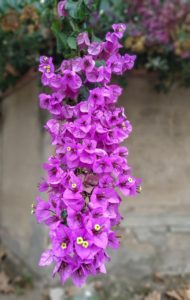 The main reason bougainvillea does not bloom is that it receives too much water.
All the plants grown to supply the garden centers are literally without water, so when we visit the centers we see them at their best: in full bloom.
Unfortunately, many people are too nice to their new bougainvillea and may even kill it out of kindness if they bring it home.
There is not enough sun
Once you’ve chosen the location (full sun) and transplanted your new plant, resist the urge to tend to it and leave it alone.
Partial shade can also be a reason for a lack of flowers. You should be able to provide your plant with at least 5 hours of full sun each day.
Less, and while you will still have a lush, green plant, you will have fewer flowers.
overeating
Overfeeding will also play a role in lack of flowers. Excess nitrogen will promote good root growth, but will do nothing to encourage the bougainvillea to flower.
heavy waist
If you must do some heavy pruning, be sure to do it after the plant has finished flowering. Pruning during the flowering period will reduce the number of flowers on the plant.
If your plant is out of control and you need to prune it, do so carefully and only remove what you can.
If you can’t keep a large bougainvillea nearby, consider replacing it with a dwarf variety.
replant
It may seem strange at first, but your bougainvillea doesn’t like to be spoiled! In fact, he thrives on abandonment!
If you put it in a new pot, you are probably adding new potting soil.
Not only did you improve the soil, but you also gave the roots more room to grow, which your bougainvillea doesn’t like!
As with any other potted plant, you will eventually need to repot, but keep in mind that if you do this with your bougainvillea, there will be fewer flowers until it stabilizes.
Common problems and how to fix them
As with all other plants, there are a number of things that are recognized as problems. Bougainvilleas are no different.
aphids
Although bougainvillea can withstand a minor infestation, if it gets too large it can damage the plant as the aphids suck up plant fluids.
Insecticidal soap and neem oil can contain and control the infestation.
Leaf spots caused by fungi and bacteria
For this to happen, the conditions must be right and the leaves must have excess moisture for long periods of time.
In addition to limiting watering and not watering plants with a garden hose, you can also remove destroyed foliage.
You will notice that some leaves turn gray and become papery. Remove the infected parts and destroy them so as not to spread the infection.
If this does not improve the conditions, you can resort to chemical sprays from your garden center.
spider mite
These look like very small dots that slowly move up and down the plant.
They normally live under leaves and cause damage by sucking up cells. There is often more damage if the plant receives too much water.
Dusty conditions often lead to an infestation because spider mites like dusty conditions. Sometimes it is the application of insecticide dust to kill other insects that triggers a mite attack.
If you leave them alone, you will find that other insects pick them up naturally.
slugs and snails
These feed on both living plants and decaying matter. They prefer succulent leaves, seedlings and herbaceous plants.
You should remove areas that attract them, such as areas of weeds at the base of the plant and dense ground covers.
Make a habit of checking them out and catching them – you’ll know they’re close to the slime trail they leave behind.
caterpillar
There is a type of caterpillar that loves bougainvillea, bougainvillea. It is about 1″ long and usually feeds at night.
Your garden center can sell you Bacillus thuringiensis, which works well in the early larval stage. It is not harmful to birds, insects or people.
We recommend that you only use it as a last resort, as we don’t like to harm animals.
The caterpillar stops feeding a few hours after application and dies two days later.
You want to completely cover the plant so there is no safe place to stay. Normally you only need one application.
Final Thoughts: How to Get Your Bougainvillea to Bloom
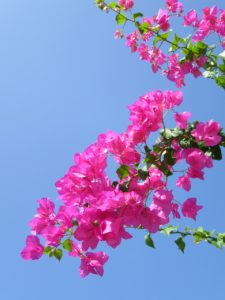 So, the secret to a profusely blooming bougainvillea is not to care for it.
Keep an eye out for insects and fungus, then let your plant fend for itself.
Unlike how you would care for other plants, bougainvillea – if you neglect it – it will reward you with beautiful flowers for many months to come.
Before you go, here are some more related articles that I encourage you to read below to solve more of your gardening problems:
What to do with amaryllis bulbs after they bloom?
Lavender vs Russian sage
Is Celosia Dragon’s Breath annual or perennial?
Written by: Valerie Holyoak