Some of the links in the post are affiliate links and I receive a commission for purchases made through some of the links in the post.
If you are new to gardening, it is often advisable to start with hardy plants that require minimal care.
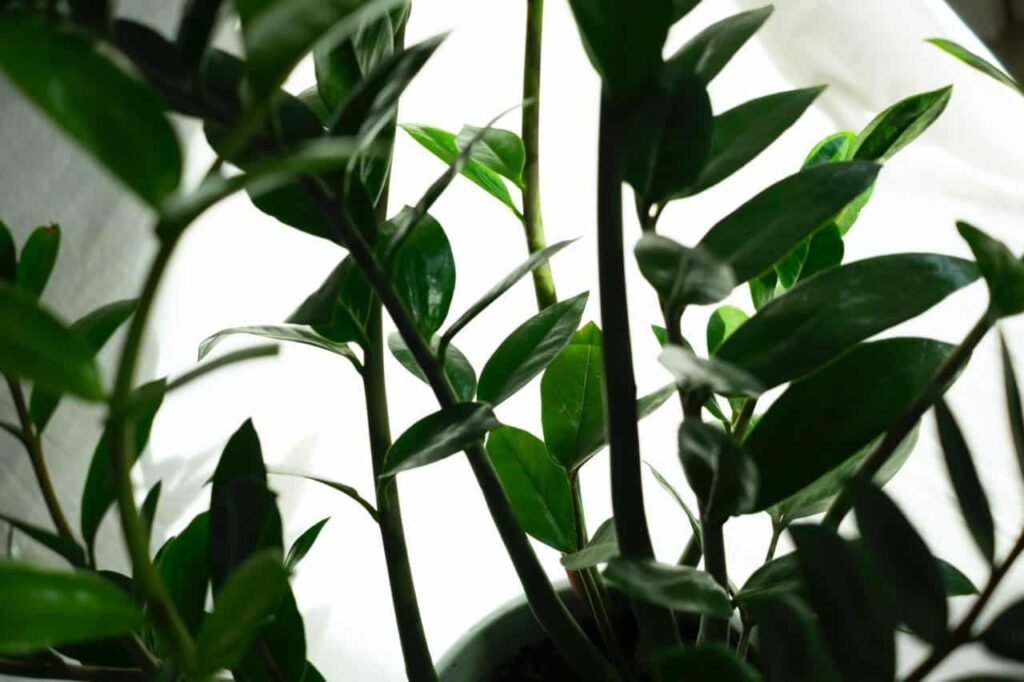
The ZZ factory (full name) zamioculcas zamiifolia) This would be a great option for you as it ticks both of these boxes.
It also works for people who would rather spend their time admiring their plants than caring for them.
Whatever your reason for wanting to be hardy, this East African plant will serve you well.
he’s fine in areas 9 and 10 and it should be easy to steer clear of some potential problems.
Today we’ll look at why your ZZ plant may fail and what you can do to fix it:
Why is your ZZ plant hanging?
For a plant known to survive with minimal care, it would be a shock to see its ZZ fail and crash.
However, you will find that some people have had to deal with the hanging for one reason or another.
The best way to deal with this problem is to understand its cause and provide a solution to the causative factor. Here are the probable causes:
give too much water
Watering your plant seems like a natural process without which the plant would not survive.
Nevertheless, you need to understand what the best conditions are for the plant in question.
ZZ is native to East Africa, where tropical climates predominate. Moreover, it is a succulent plant with a well-developed root system that can store enough water for times of drought.
As such, it can withstand long periods of drought without dying. Watering more than necessary would make the soil constantly wet, as the plant does not absorb more water than it needs.
If your plant appears to be drooping, the soil is probably holding more water than it needs.
Water has a negative influence on aeration, which leads to the development of unhealthy roots that lack oxygen.
Anaerobic bacteria and fungi also thrive in these environments, setting the stage for root rot.
Unfortunately, root rot is usually not easy to diagnose until it has seriously affected the plant.
Ideally, it’s best to check for root rot when the leaves begin to turn yellow.
When it gets to the point where it falls and crashes, it can be quite difficult to save the ZZ factory. That doesn’t mean it’s impossible.
Submarine
This reason may seem odd, especially for a succulent that grows best in dry conditions. However, your plant can also topple due to lack of water.
The longer your plant stays in this submerged state, the easier it is for it to become dehydrated.
The cells will begin to lose water and the leaves will appear soft, dry and droopy. Stems will follow and begin to fall.
The nice thing about this cause is that flipping it is much easier than overwatering.
lighting problems
A ZZ plant does best in indirect light, which ranges from moderate to bright.
However, you can deviate from it to some extent without adversely affecting the plant.
For example, the ZZ plant can stay in a place that receives direct sunlight for a while without wilting or dying.
However, if the grade is too high, your plant may start to show signs of drooping.
too much light
While plants are generally light leaning, the ZZ tends to be more light averse.
So if you put it in bright light, you can start moving its stems away from the light.
Leaves may also respond by falling off and showing a yellow tint. Over time, they may curl up and loosen.
Dim lighting
While too much light is not good, keeping the plant in a dimly lit area won’t help either.
Under these conditions, the plant will begin to move towards the light, creating an arc. The stems will then appear drooping, which detracts from the beauty of the plant.
fertilization problems
If you notice your plants turning yellow when the stems drop, the nutrient profile of the soil may be the cause.
As much as ZZ Plants may do well without much fertilization, nutrients may not be sufficient to support plant growth.
Also keep in mind that fertilization issues can be a two-way street.
Your plant may have more fertilizer than it needs or may be low on it. Be sure to check the frequency of fertilization to understand what applies to your plant.
temperature variations
Temperatures affect your plant’s performance. Anything in the 65°F range should be fine and the plant should thrive in such conditions.
However, once the range drops below 45°F, the plant may experience stunted growth.
As temperatures drop, leaves may shrivel and drop, accompanied by stem breakage.
When such changes occur, act quickly to prevent the plant from suffering a shock that could kill it.
transplant stress
As your plant grows, it will outgrow its containers, eliminating the need for: bigger pots. The transplant should be easy.
However, there may be instances where the plant shows signs of shock due to root disturbances.
One of these signs is sagging stems. This may be due to lack of water, root damage, or another reason.
How to stop the fall of your ZZ plant?
The best way to stop hanging depends on the cause as follows:
give too much water
When the cause is too much water, remove the plant from its original pot after inspecting the roots.
These roots will be brittle and soft and will need to be removed with pruning tools.
Take what’s left of the plant and move it to another pot of well-drained soil.
The pot should have adequate drainage holes and the soil should be well aerated to allow healthy roots to develop.
It should be similar to the original pot unless the plant has outgrown the original container. From now on, only water the soil when it is almost dry and not when it is damp or wet.
Submarine
If you suspect a lack of water is the cause of the plant’s appearance, start by checking the soil.
If it seems dry and the plant has started to sag, water the soil enough. The plant must absorb water, fill its cells and give life to fallen leaves and stems.
Be sure to soak the soil so that excess water runs out of the drainage holes. Also, drain excess water from the pot before placing the plant in a well-lit area.
To ensure you get the right watering, you need to assess the growing conditions. In some places it is so hot that weekly watering is necessary.
In others, you can water the soil once a month and the plant will be fine. Instead of using a universal standard, you work with what applies to your plant.
lighting problems
With light, you have to know if the lighting is too much or not enough. Where the light is too much, move the plant to an area with less access to direct sunlight.
Alternatively, you can prevent direct access to the installation by means of shutters or other measures.
For low light, consider moving the plant to a window or other area of the house that receives moderate to bright indirect light.
You can also choose to supplement your light sources with LED grow lights and fluorescent lights.
fertilization problems
For the most part your ZZ should work fine even if there are no entries. However, depending on the potting soil, you may need to fertilize the soil.
Before fertilizing it, make sure you have ruled out all other possible causes. Only then can you trust this method as a means of tackling dropped moves.
Fertilization should be done periodically, ideally every six months, with a water-soluble mixture.
Assuming the drop continues even after using the mix, you may be using the wrong input type or amount.
Be aware that using too strong a fertilizer can also burn the roots. When you suspect the formula is affecting the plant, it’s a good idea to transplant it.
temperature variations
The best way to handle a plant that has been exposed to cold temperatures below 45°F is to check for damage.
Remove damaged areas before moving the plant to a warm location.
The plant should stay here with access to bright, indirect light while it recovers from stress.
Within a few weeks, the results of the change should be evident, with the plant getting stronger and upright.
transplant stress
 The best way to avoid such damage to the plant is to move it to larger containers during the humid months.
This way the roots won’t dry out quickly if the plant is moved to another container. Also, give the plant time to recover and it should be fine soon.
Sometimes the damage can be due to physical damage to the plant caused by rough handling of the stems and leaves.
If this happens, the stems may break, hang or fall off. Unfortunately, not much can be done to reverse this situation other than pruning the damaged areas.
Therefore, it is best to handle these plants with great care, no matter how hardy they are.
Before you go, here are some more related articles that I encourage you to read below to solve more of your gardening problems:
Why is my Monstera suspended?
How to Fix a Leggy Pilea?
Why are your Bird of Paradise’s leaves hanging down?
Happy gardening!
Written by: Daisy Njeric