Scientifically known as Crassula ovalJade plants are quickly becoming one of the most popular garden and indoor plants.
Native to South Africa, these succulents are incredibly hardy and nearly impossible to kill (as long as you don’t overwater them). With so many great features, it’s easy to see why so many gardeners love propagating these beauties.
The process of propagating these plants is incredibly simple. From spring it can be propagated from stem cuttings or leaf cuttings.

Stem cuttings can root and grow into full plants faster, but leaf cuttings are an excellent choice for those with smaller plants that don’t have large branches suitable for rooting.
Whichever route you take, you’ll find these few steps simple and easy to accomplish indoors and out. And with a little patience, you’ll have a new Jade plant (also free) in no time.
Propagate jade from stem cuttings.
Choose the right stem

To increase your chances of rooting, start with a healthy plant that is free of any disease or damage. It is also best to determine the ideal place on the plant to make a cut, not only to ensure that the roots are cut quickly, but also to keep the mother plant tidy.
Look for areas where the leaves join the main stem. You will need a piece of rod about four inches long between one of these points and the end of the rod. For younger jade plants whose cuttings are not as tall, you can try taking smaller ones or propagating them from the leaves.
make a cut

Then take your shears or a knife. They must be completely free of dirt and disease to prevent harmful bacteria from being transferred to your cuttings and the mother plant. They should also be sharp enough to cut through thick stems without causing too much damage. The cleaner the cut, the faster it will heal.
Cut the stem 4 inches down in one smooth motion, avoid cutting or cutting which will take longer to heal. You can cut directly below a node if you’re removing an entire branch, or above a node if you want to promote plant growth. If you choose the latter, simply cut off the excess stem at the base so that the remaining node is at the bottom of the cutting.

Remove all the leaves from the bottom half of the cutting, leaving just a few on top. This exposes more nodes and helps the plant anchor itself more in the ground as it takes root. It also diverts the energy that would be spent keeping the leaves alive to produce new roots.
Departure to Callous
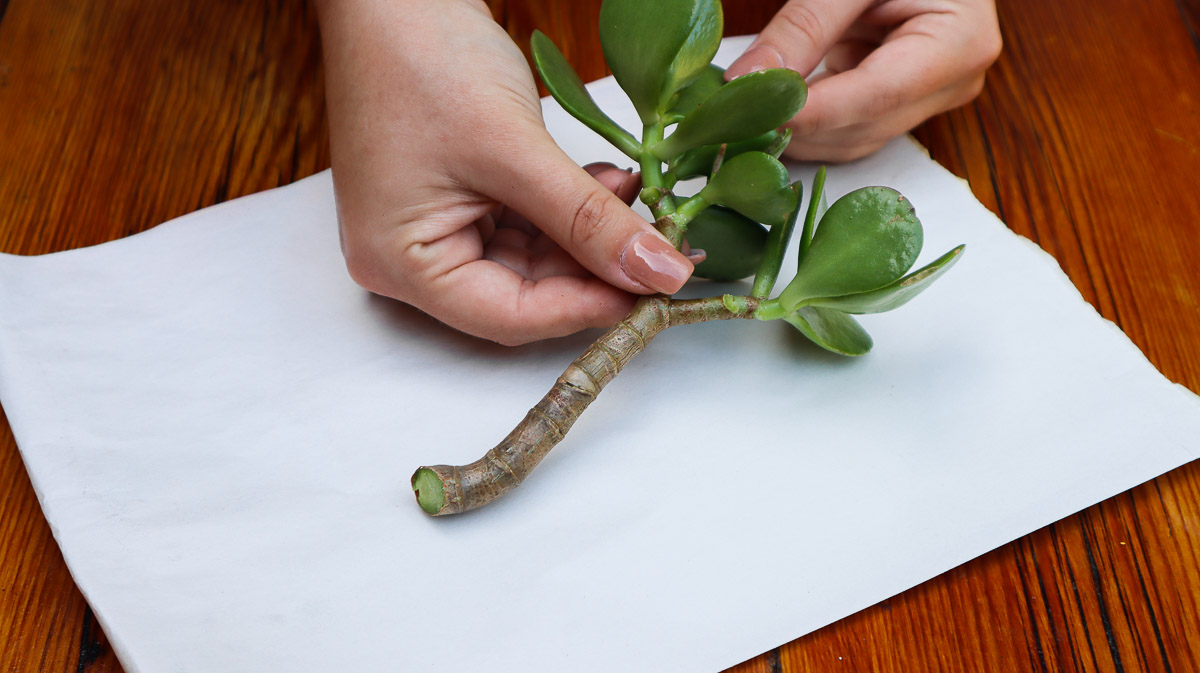
The next step is one that may be unfamiliar to those used to propagating tropical houseplants. Unfortunately for impatient gardeners, you can’t root your cutting right away. Well, you can, but it’s much more likely to succumb to rot and disease than roots.
Like other succulents, Jade needs time to harden off at the cutting site before planting. They are incredibly sensitive to excess water and will rot quickly without that extra protective barrier.
Fortunately, the process is simple. Lay the cut on a piece of newspaper and let it sit for at least a few days, but preferably less than a week. Once the cuttings begin to seal, you can prepare to root.
ground carrot

When rooting, you have several options for soil. If you already have some on hand, you can use a well-draining potting mix designed for succulents. Alternatively, you can create your own succulent growing mix by combining equal parts coconut fiber and perlite or river sand.
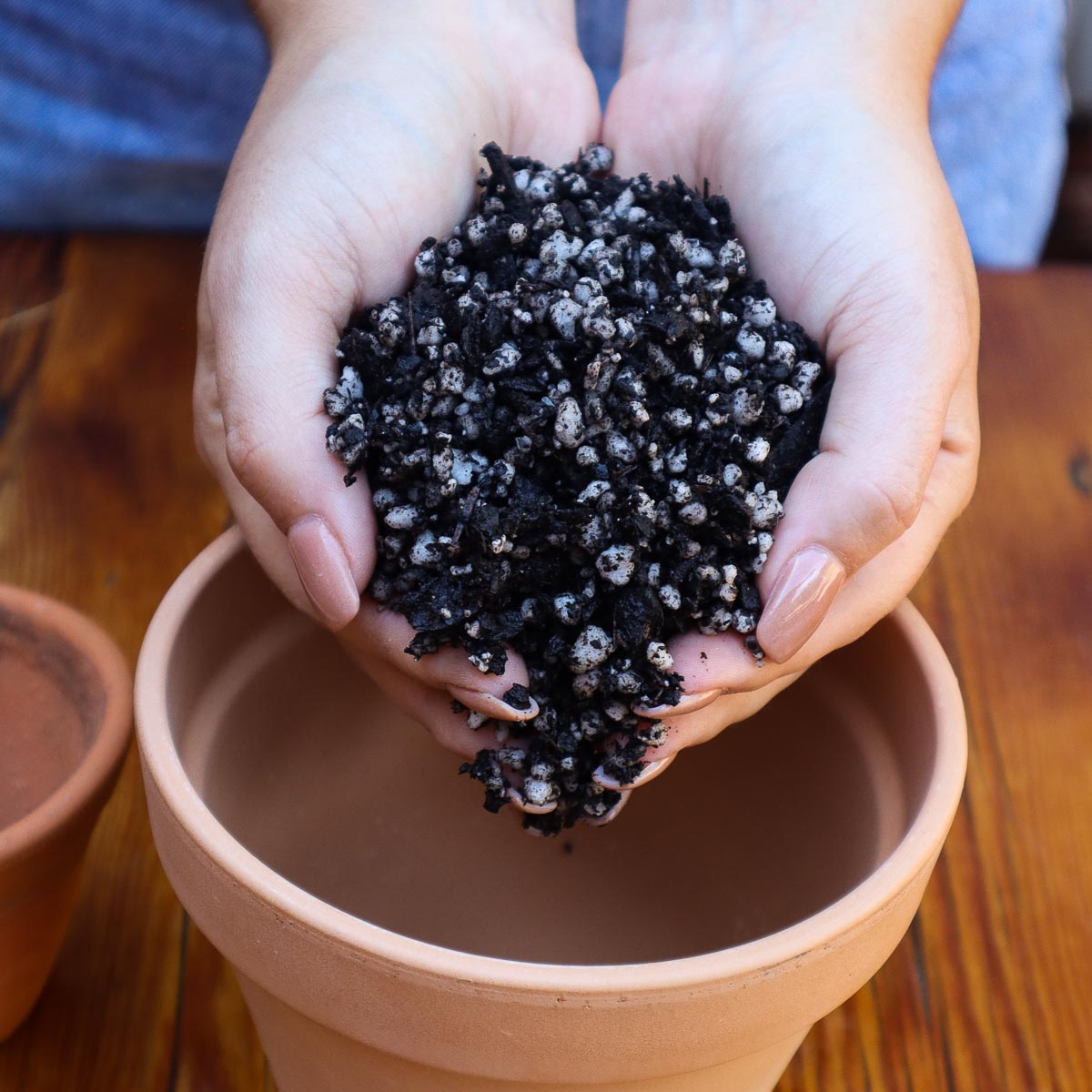
Fill a pot with the mix of your choice and water well until water runs out of the drainage hole in the bottom. This prevents waterlogging and hardens the soil mixture for easier planting.
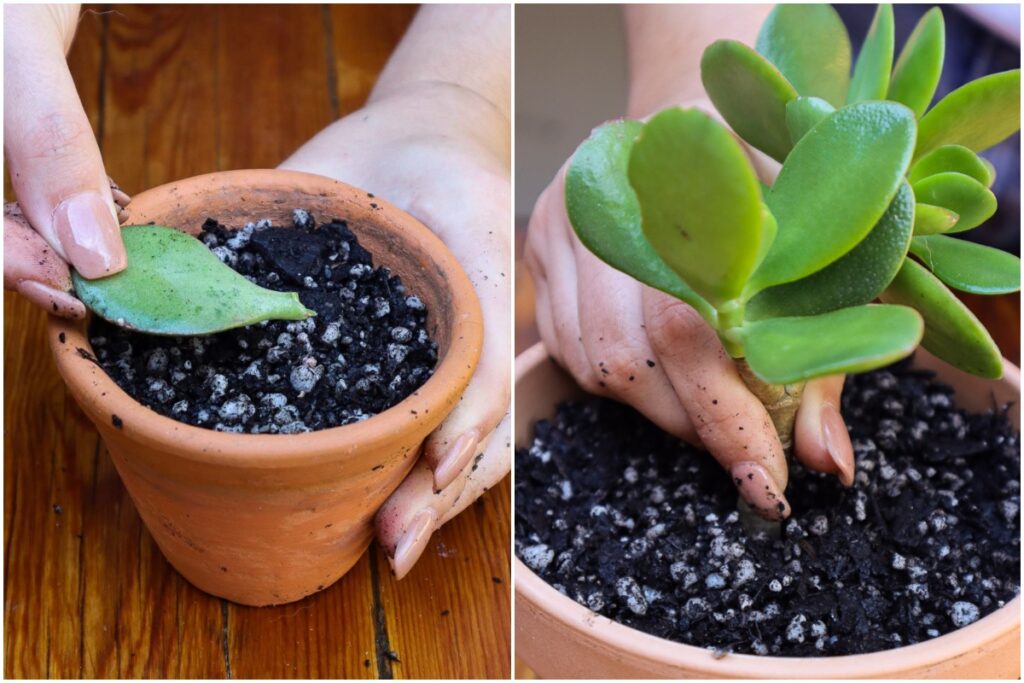
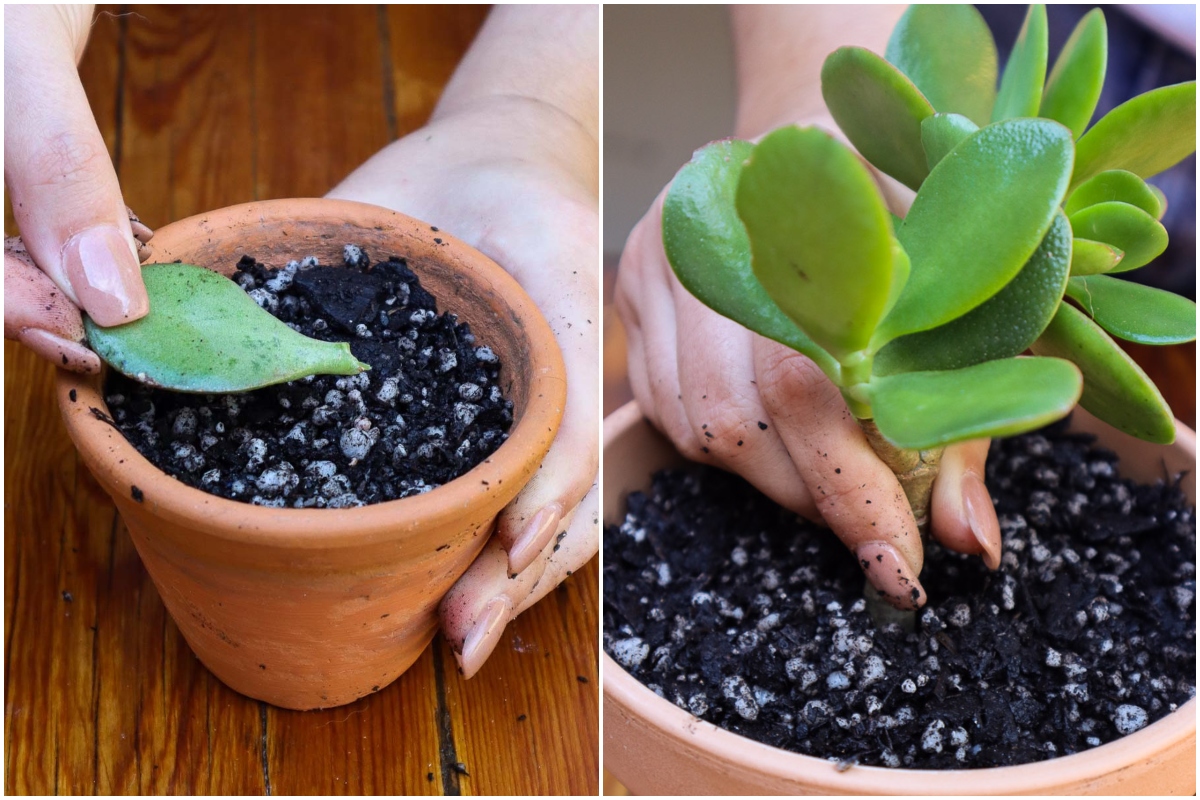
Take the cutting and poke a hole in the center of the pot with your finger. Plant the cutting until the bottom half is buried and press around the ground to anchor it in place.
after care

Move the pot to a warm location to encourage new root growth. Keep the soil evenly moist but never soggy until roots begin to develop. Once the roots are a few inches long, you can water them more slowly to prevent rotting, treating the cutting as you would other jade plants.
Propagate jade from leaf cuttings.
Choose the right sheet

Again, as with rods, a good cut starts with a good blade. Look for leaves that are plump, bright green and show no signs of pest or disease damage. Choosing one from a healthy stem will also give it the best chance of rooting.
delete sheet

The next step may seem the simplest, but it does have some finesse. In order for the leaf cutting to produce roots and seedlings, it must contain part of the stem node. Simply cutting a leaf at any time does not guarantee that your cutting can actually produce roots.
When removing a leaf, be sure to grab it from the bottom of the base, while pulling back part of the knot. You can twist the leaf with your fingers or cut it at the stem. In doing so, do not damage the structure of the leaf, as this can hinder its chances of rooting.
Departure to Callous

Like the stems, the leaves also need a few days to heal before they can be planted. This prevents the base of the leaf from rotting, ruining any chance of rooting. Simply let them dry out on a piece of newspaper for a day or two before planting them.
ground carrot

Leaf cuttings can be planted in the same potting soil as stem cuttings. You can even plant leaf cuttings around your stem cuttings in the same pot to greatly increase your jade supply. Keep an eye on the moisture level in the soil, as the leaves can quickly rot if left damp for long periods.
Do not push the leaf too deep into the ground to avoid rotting. Simply bury the bottom of the cutting where the roots will grow. You can also place the tray in the ground and cover it with a little more potting soil to encourage root growth.
after care

In a warm location with evenly moist soil, the foliage will develop new growth at the base within a month or two. You can grow this seedling in the same pot until it reaches several inches in height before transplanting it into succulent potting soil.
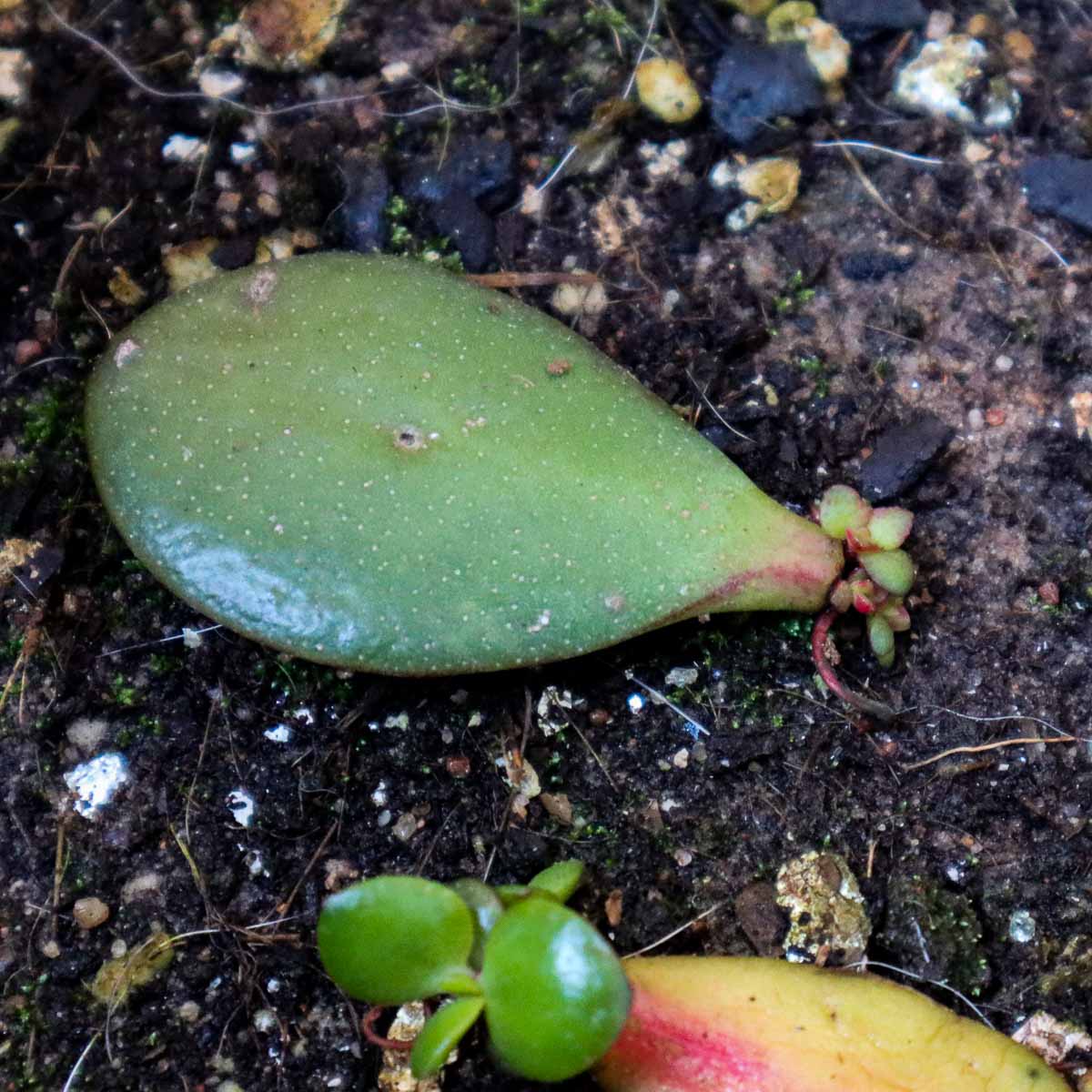
These plants grow slowly from leaf cuttings (and even smaller stem cuttings), but the wait is worth it.