
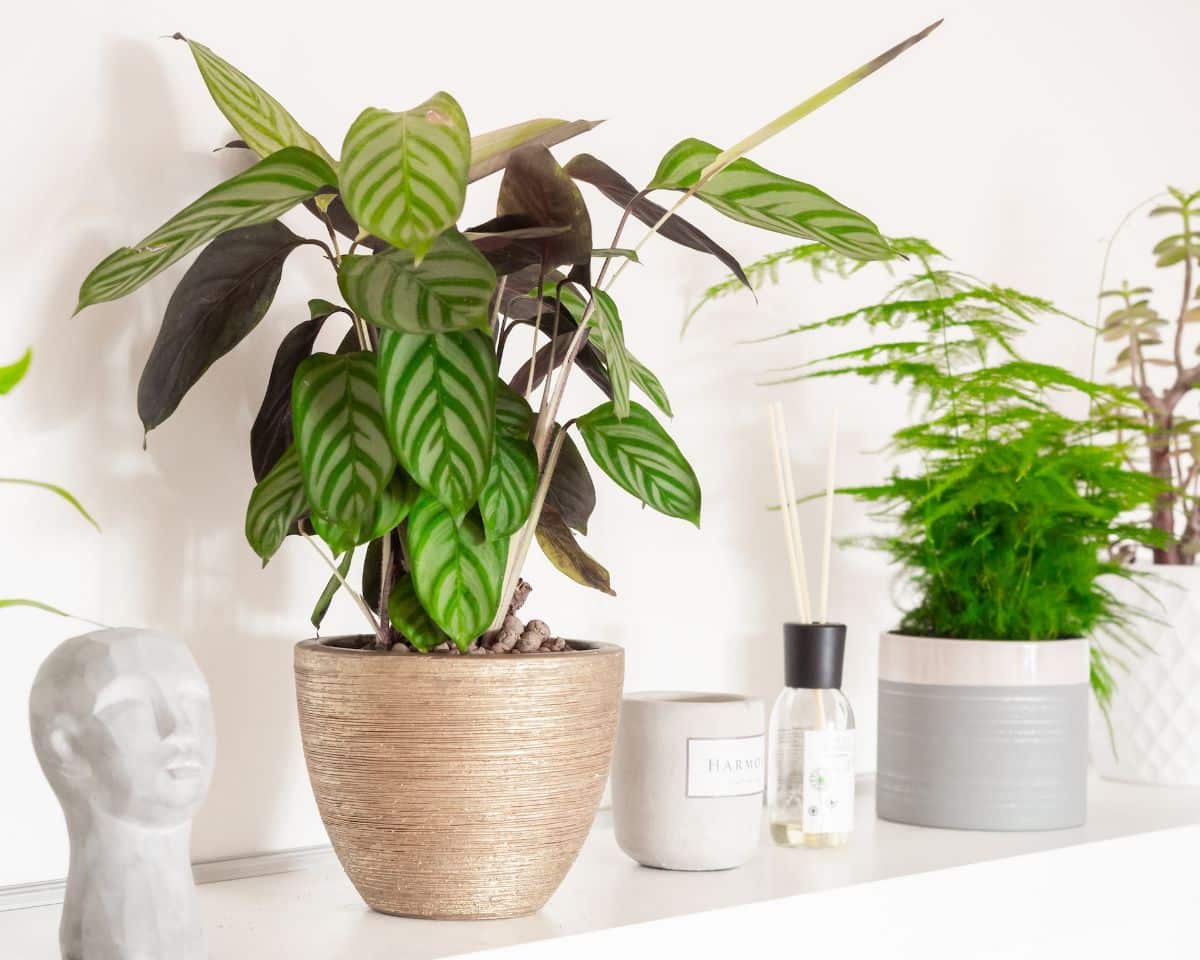
Imagine that you have bought a calathea. They are very beautiful plants that attract attention with their leaves, the designs they have and their habit. But, what if all of a sudden you have a calathea with falling leaves? What happens to him?
If you have also encountered this problem and you are not sure what it could be causing, we are going to show you the reasons why it can occur and the possible solutions to try to recover it.
Reasons why you have droopy leaf calathea
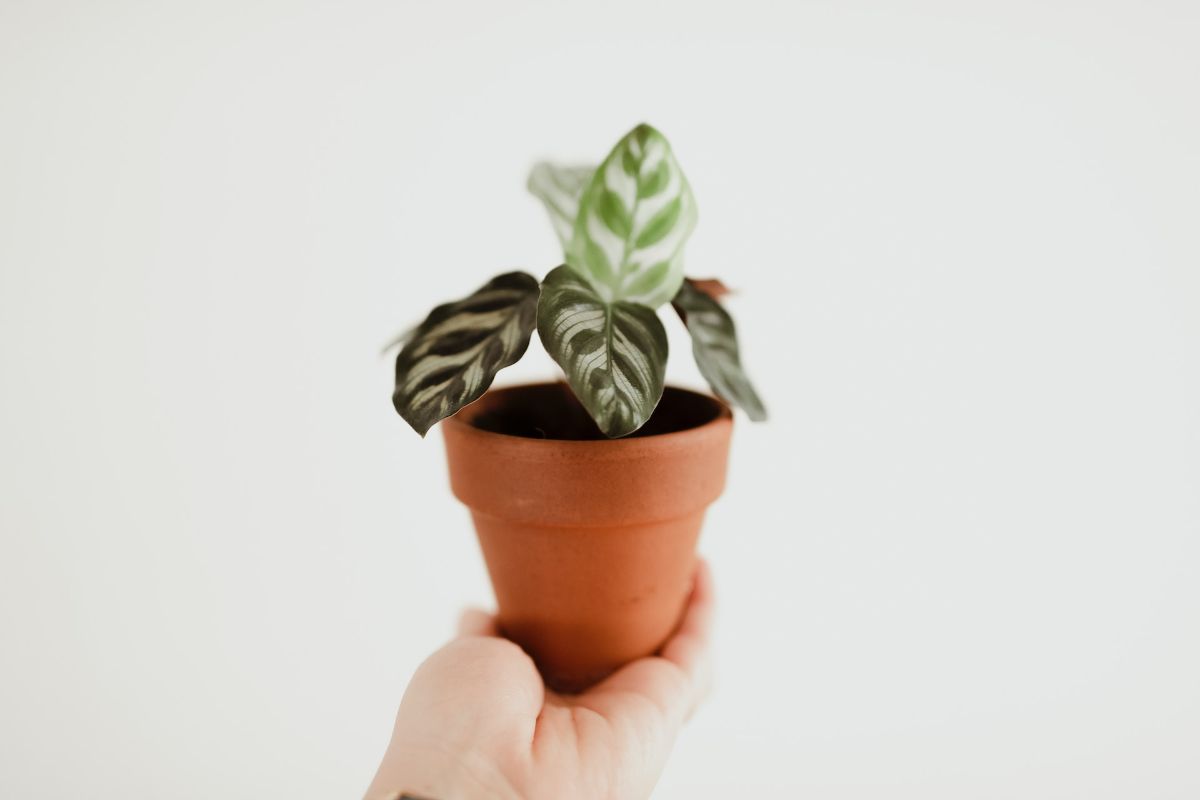
Going from a beautiful bushy calathea to one with drooping leaves can be quite quick. We are not going to tell you that it is overnight. But almost.
And it is that They are very sensitive plants and they also need you to know them in order for them to do well. This does not mean that they are difficult to maintain. Once they adjust and you know what their needs are, it will be easy for you and you will even forget about it. But for that to happen before you have to go through some trouble.
One of them is to have the calathea with dead leaves. When this happens, the reasons are usually as follows:
Stress
When you bring a plant (or it arrives by mail) home, you completely change its location. Even if you bought it in your own city, the simple change or transport to another place stresses them out.
AND these plants are characterized by physically showing that stresscausing leaf fall.
Usually you don’t have to do much more than wait and place it in its permanent location. Don’t move them anymore. Let it be there and time flies. This way, you can observe it and give it time to adapt. In about two weeks he should change his appearance.
over watering
Another reason you may find your calathea with dead leaves is that you have gone too far with the irrigation water. They are very dramatic and when you over water the plant suffers and causes its leaves to drop and remain so for several days. If this happens, you have two options:
The first is to see if the earth is too wet and waterlogged. If so, it is best to take it out of the pot, remove as much soil as possible, and plant it in another pot with dry soil. Do you remember stress? So you’re going to stress her out more? But it can save your life.
The second option would be to leave it and wait for the soil water to dry out before watering again. We already tell you that if the soil is too watery, the best, although more dangerous, is the first, because at least you will have an opportunity so that the roots do not rot.
Low temperature
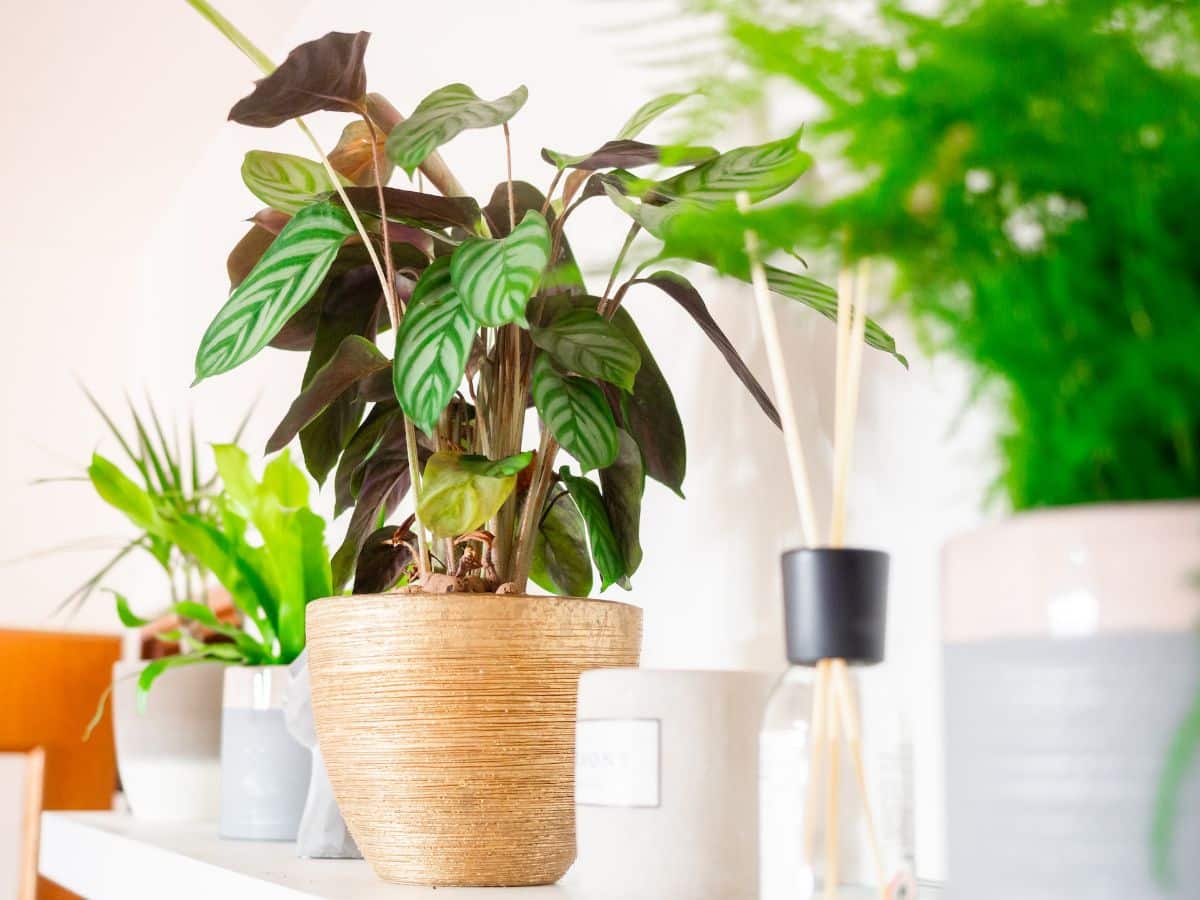
Calatheas are plants that, although they tolerate mild temperatures, suffer when they are very cold. They need a temperature above 16ºC and when it is not given, or it was constantly low (or it stays below 12ºC) then the plant suffers, hence the falling leaves .
In this case, you can either increase the temperature where you have it, or change its location.
Raise the temperature? Yes, for example, with humidifiers that heat water and distribute it. They are not common, but they exist.
Lack or excess of light
Let’s move on to another cause why your calathea has fallen leaves. And that can be somewhat problematic because sometimes you give it a lot of light or a little light.
These plants are a bit finicky and need a balance between light and dark. For this reason, if you notice that the leaves are drooping and it may be due to the light, one day observe the amount of light it gives. It may be that it spends too many hours in the shade, or on the contrary, many with direct light on it.
Generally if it is the latter you will notice that the leaves are somewhat scorched, whereas if it is due to shade the leaves will be thin but weak and gradually lose color.
Lack or excess of humidity
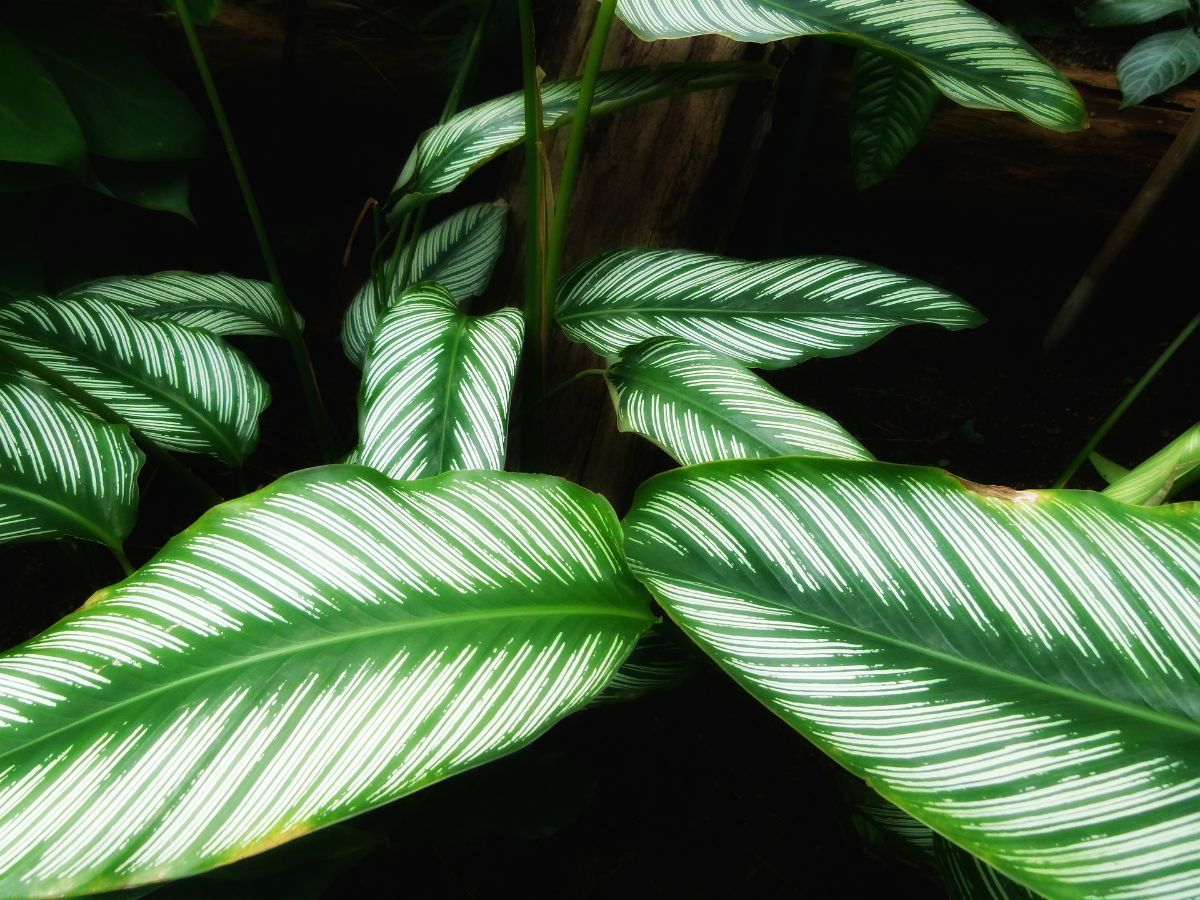
Finally, we come to the issue of humidity. As you know, calatheas need good humidity. Now it depends on what species you have. For example, white calatheas are very delicate because they need ambient humidity and this is above 60-70%. On the other hand, there are others who do not need it as much.
If your plant lacks moisture, it is normal for the leaves to curl up and also appear to have dried out.
On the other hand, if there is too much, you will notice that the leaves are covered with a thin damp layer which can cause the leaves and stems to rot.
To control it, it is best to have a thermometer with a hygrometer at hand. since this way you will see what percentage of humidity there is and you can activate or deactivate a humidifier (or spray water in more or less proportion).
Suffers from parasites or diseases
Finally, we want to talk about pests and diseases. Yes, we know, everywhere they say that they are one of the plants least likely to suffer from it. And therefore, you will think that this cannot be a reason for having fallen leaves. But actually yes.
When necessary and proper care is not provided to the plant, it becomes a good lure for pests and diseases.. There are two that affect them in high (or low) humidity, or high or low light: white scale insects and red spider mites.
Scale insects mainly hide at the beginning of the leaves, on the stems. Regarding the spiders, you will have to follow the cobwebs that this will create. In any case, keep in mind that it is better to apply an insecticide against these pests and to do it several times, since they are generally resistant.
In extreme cases, you will even have to cut the plant to avoid greater evils.
Now that you know the reasons why you may have droopy leaf calathea, you will be able to act faster in case it happens to you. You will not always be able to save her, because as we have told you, she is very delicate, but at least you’ll manage to give it a chance. Has this ever happened to you? How did you solve it? We read you in the comments.