If you are lucky enough to have a hydrangea or a rhododendron in your garden, you know they are both beautiful plants.
Together in a garden, these two elements bring a special beauty and grace to any area in which they are planted.
Hydrangeas are native to eastern regions of Asia and the Americas while rhododendrons are native to different regions such as the Pacific Northwest, Europe, Asia, and North America.
You can also find them in the tropical regions of Southeast Asia and the Himalayas.
Hydrangeas vs rhododendrons: what are the similarities?
the reproduction
 Hydrangeas and rhododendrons are easy to propagate by the stem cutting method. You should try to start propagation before the growing season.
Fall or early spring are good times, as this allows time for roots to form before the flowering season begins.
Look for a sturdy stem with only 2-3 sets of leaves. Make a clean cut and remove the lower blade assemblies.
You can choose to use a root compound: Cinnamon is a natural root compound. Now simply place your cutting in new potting soil and keep the soil moist. You will see new growth within a few weeks.
Floor
Hydrangeas and rhododendrons are sensitive to the pH of the soil in which they are planted.
They both prefer acidic soil, so you need to make sure the pH is between 5 and 5.5. Hydrangeas, which are slightly less sensitive to it, tolerate a slightly higher pH.
Hydrangea flowers will be bluer if the soil is acidic. You will get pink flowers if the soil is more alkaline.
Rhododendron flowers are unaffected by soil pH, but they grow best in more acidic soil.
No plant likes poorly drained soil. Hydrangeas can suffer from waterlogged conditions more than rhododendrons, but neither plant will do well, and both can develop root rot if the roots are still in waterlogged soil.
fertilizer
Hydrangeas and rhododendrons prefer soil enriched with good organic matter. Both plants need soil that retains moisture but does not leave them soggy.
Hydrangeas appreciate a dose of fertilizer in early spring. This accumulates nutrients that have been used up during the winter months.
Adding a layer of compost or mulch will greatly improve the quality of flowers next season.
Rhododendrons don’t need fertilizing if they look healthy and are growing well.
They will appreciate a dose of fertilizer to adjust the acidity of the soil in the spring. Add a 2″ mulch around your plant and you will see a marked difference in blooms.
We have an article about it. How to make a natural fertilizer for your hydrangea.
Height
Hydrangeas can grow up to 15 feet tall. They are classed as fast growing and can spread up to 10′ under the right conditions.
Rhododendrons are also fast growing and can grow very tall under favorable conditions. You can easily watch them grow to a height of 20 feet if they are in a happy place.
sun and shade
Although both plants prefer full sun to partial shade, neither will do well in a fully shaded area. They will not grow well or flower in full shade.
If you like this article, check out our article on hydrangea tree vs shrub.
Hydrangeas vs Rhododendrons – What are the differences?
Hardness
Hydrangeas do best in zones 9 and 10, while rhododendrons also do well in zone 8.
Although it is the more common of the two plants, there are a few varieties of both species that can survive in low areas.
He florida pinxter it will grow well in zones 6-9 and Pleasant White will grow in zones 5-8.
French hydrangea does well in zones 6 through 10 and oakleaf hydrangea does well in zones 5 through 9.
Appearance
 Hydrangeas and rhododendrons make stunning displays when in bloom.
Rhododendrons have their flowers scattered among the leaves, while hydrangea appears to appear as a mass of hairy flowers at the end of the stems.
The hydrangea bush in full bloom will appear as a mass of fuzzy-colored flowers, with barely visible leaves. The rhododendron has flowers scattered over the leaves.
Hydrangea leaves are generally a less dark green than rhododendrons, which can be dark green.
Both grow quickly and can reach enormous heights and widths when the conditions are right.
floors
Hydrangeas should be spaced 36 to 60 inches apart so the plants can spread out and not crowd. The planting hole should be 2′ wider than the root ball.
Rhododendrons should be planted no more than 120 cm apart and at a depth of about 45 cm.
If drainage is an issue, both plants benefit from being planted in a raised bed.
irrigation needs
Hydrangeas need about an inch of water per plant per week during the growing season. You need to water them deeply to encourage root growth.
Try to keep water off the leaves, as this can cause sunburn. In hot weather, it’s best to water them in the morning so they don’t wilt later in the day.
Rhododendrons should be watered on cool mornings. They just prefer a trickle from the pipe to the base of the plant. Although they do need water, they don’t need it as much as hydrangeas.
No plant likes soggy soil, so make sure it drains well. If hydrangeas get stuck, they can die from root rot.
For rhododendrons, you can reduce the water to 1 in. (2.5 cm) every two weeks when the plant is mature, although they will need more frequent waterings during very dry periods.
For hydrangeas, the best way to know if they need it water is to look at the leaves. If they fall, it is a clear sign that the plant needs water.
diseases and pests
You will find that pests rarely bother both plants. You will sometimes find aphids and spider mites on your hydrangeas. They can also suffer from root rot if the soil is soggy.
Rhododendrons that don’t get enough water in the fall can look scalded from the sun in the winter. They will also show yellow leaves as a sign of iron deficiency or poor drainage.
flowers
Hydrangeas bloom in spring or late fall. The flowers are easily recognized as large round spheres or flower heads. They look fluffy and are located at the end of the stems.
Hydrangea flowers and stems are easy to dry to add to dried bouquets.
Rhododendron flowers are bell-shaped and have an average of ten stamens each. The flowers are brightly colored and bloom from late winter to early summer.
Although it is not recommended to ingest any part of a flower unless you absolutely know it is safe, it is worth knowing that rhododendron flowers have long been used in Nepal for their properties. healing in the treatment of headaches, inflammation and diarrhoea.
flower colors
Hydrangeas are known for the diversity of colors in their flowers. Depending on the pH of the soil, the flowers can vary from pale yellow and white to pink, purple, violet and blue. You also see them in orange and red.
Hydrangea flowers are often used as cut flowers and added to flower arrangements. In fact, with their variety of colors, they suit any color scheme they are placed in.
Rhododendrons are also available in a wide range of colors and you will find them in bloom in everything from orange, orange/red, red, dark red, purple, yellow, cream, white and gold/white.
Can rhododendrons and hydrangeas be planted together?
While hydrangeas and rhododendrons prefer a tart soul, they differ in their need for sunlight.
Hydrangeas do best in morning sun and afternoon shade, sheltered from the wind, while rhododendrons do well in full sun and even partial shade, although they prefer direct sunlight.
However, they will grow in dappled sunlight, but only for part of the day.
Neither plant will do well in shade, and neither likes soggy soil.
Check out our article to help you with hydrangea landscaping. here.
final thoughts
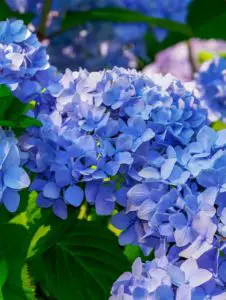 Hydrangeas and rhododendrons are beautiful plants and will adorn and beautify any garden, provided they are in the right places.
When grown together they make a wonderful pair, and even when grown in separate areas they are sure to brighten up the area they are growing in.
Because they are so easy to propagate, you can always take a cutting from your favorite plant and put it in your garden.
Depending on where you want to plant them, it is best to plant them separately due to the need for partial sun/shade. One thing is certain: none of the plants like full shade, so avoid areas where the sun never reaches.
Depending on your garden, you may be able to grow them close together, but rest assured, with a little thought into location and growing conditions, there’s no reason you can’t have multiple of these beautiful plants in your garden.
Before you go, here are some other related articles that I encourage you to read below to solve more of your gardening problems:
Hydrangeas vs Lilacs
How to Make Natural Fertilizer for Hydrangeas
How to Get Rid of Black Spots on Hydrangea Leaves?
Why are the leaves of my hydrangea curling?
Why are my hydrangeas turning green?
Snowball shrub against hydrangea