
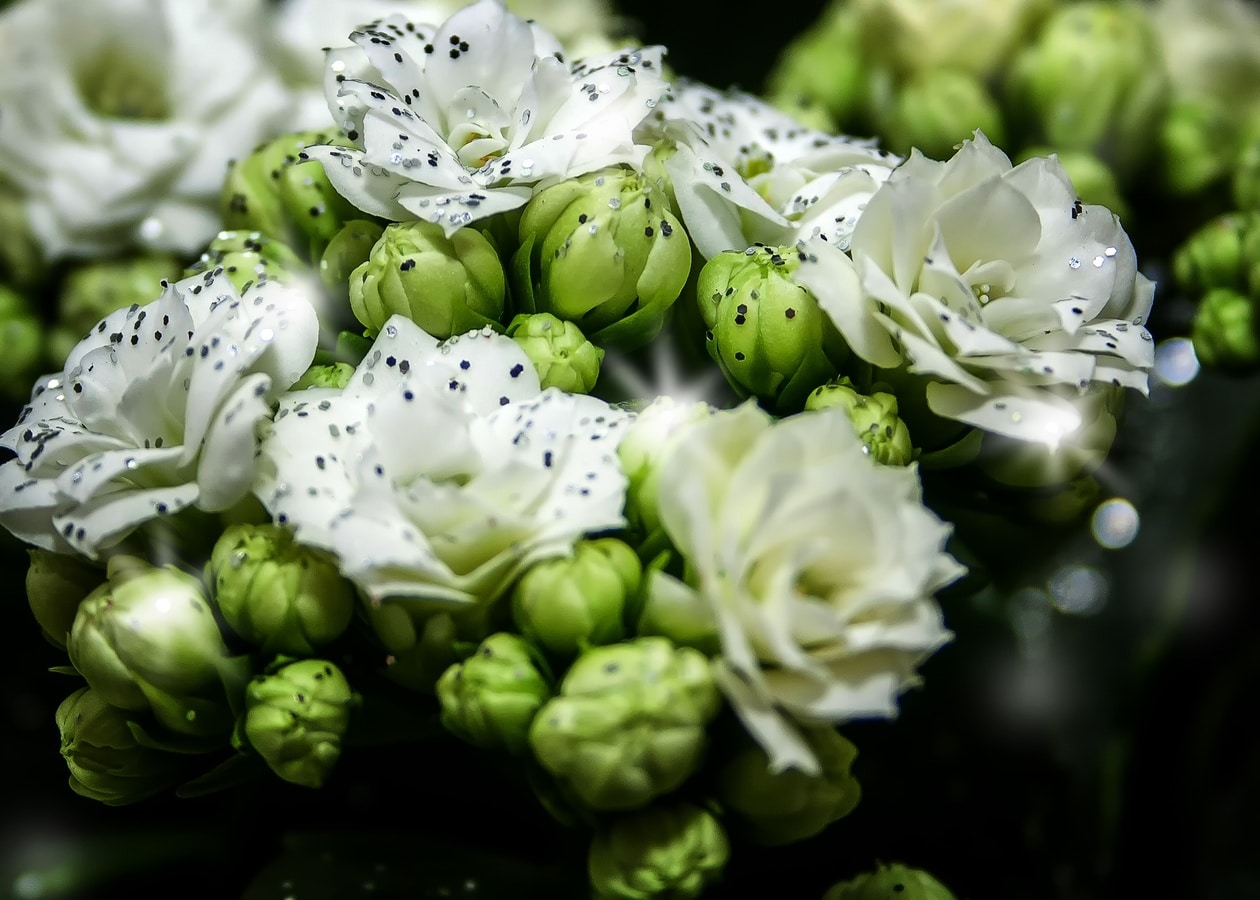
The kalanchoe is one of the succulent plants that we can enjoy the most in our patios, balconies and even in the gardens. There are many different varieties, the vast majority of them suitable for keeping in pots; in fact, only a few become shrubs with a great need to grow in the ground.
For this reason, it is very interesting to have a large collection. But Even if you only have one specimen, it is important to consider whether the kalanchoe is in the sun or in the shadeand that is that depending on where you have it, it will get better or worse.
Where to place a kalanchoe?

The different pure species of kalanchoe (i.e. those that will be found in nature) are mainly native to Africa. They inhabit semi-arid regions, where the soil is sandy and therefore quickly absorbs and filters water, and where temperatures are also very high during the day.
They are perfectly adapted to places with very low annual rainfall, which is why they are excellent plants to grow in a garden without irrigation, especially in areas where droughts are frequent, as is the case in the whole Mediterranean region.
Subscribe to our Youtube channel
Where do they grow: in the sun or in the shade? Well, these plants are generally sun lovers.. In fact, you can verify this yourself by placing one in a room where there is only one light source (this could be the reflection of the sun on a piece of furniture, or a window). The plant will soon move towards this light. Even if he was in a place where he is very, very bright, if he detects a stronger light, he will move towards him.
And that can be a problem for you, because the stems get longer, but they also thin and lose strength. So, in the end, they end up “hanging” or worse, breaking because they no longer have the strength to support themselves. Recovering a calanchoe that lacks light is difficult and time-consumingsince you have to move it, taking it to an area where it receives a lot more light, but being careful not to expose it to direct sunlight, otherwise it will burn because it is not used to it.
Once you see it growing healthy, you need to gradually expose it to morning sunlight (early hours). So for a few weeks. With patience and perseverance, you can get him to adapt.
Can the kalanchoe be in shade or partial shade?

Taking into account that it is a plant that usually needs a sunny place to grow, is there a possibility that it grows equally well in the shade or in the middle? shadow ? The answer is: It depends. Much depends on the type of kalanchoe, as well as the brightness of the area where you want to put it.
For example, he Kalanchoe blossfediana, which is the species that is usually sold especially during the winter -and more precisely at Christmas- is the one that can be kept indoors since it does not require direct exposure to the sun. But just because he may be home doesn’t mean we can put him in a dark room. In fact, all calanchoes, without exception, need light, and there are several that also need direct light, such as these:
- Kalanchoe beharensis
- Kalanchoe daigremontiana
- Kalanchoe thyrsiflora
The rest could be in partial shade. In full shade, I don’t recommend putting any on unless there’s a lot of light there. Indoors with low light, none would survive.
How do you know if a kalanchoe is sunburnt?

Image – Wikimedia/CrazyD
Sunburn is a common problem with plants, both indoors and outdoors. In both cases, they burn because they are not suitable for said exposure; but one thing also happens inside: the magnifying effect (when the sun’s rays pass through the glass, they are amplified and burn the leaves, which are quite tender).
For this reason, we will have to be a little vigilant and keep our kalanchoes sheltered from the sun -during the strongest hours of the day-. If they are inside the house, it is better not to place them right in front of the windows.
But, what are the symptoms or damage? They are really easy to identify because these are normally reddish or brown spots that appear on the most exposed leaves (i.e. the rest of the plant will be intact) that appear after a few hours. Unfortunately, these damaged leaves will no longer be healthy, but if moved, the new ones will be fine.
Where do you keep your kalanchoe?