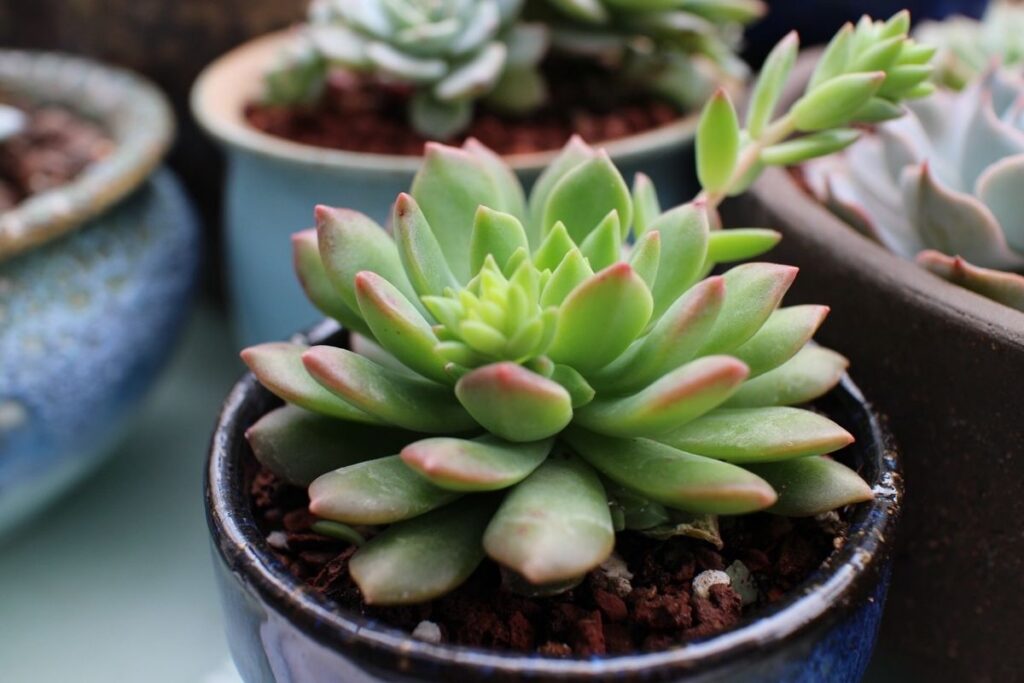
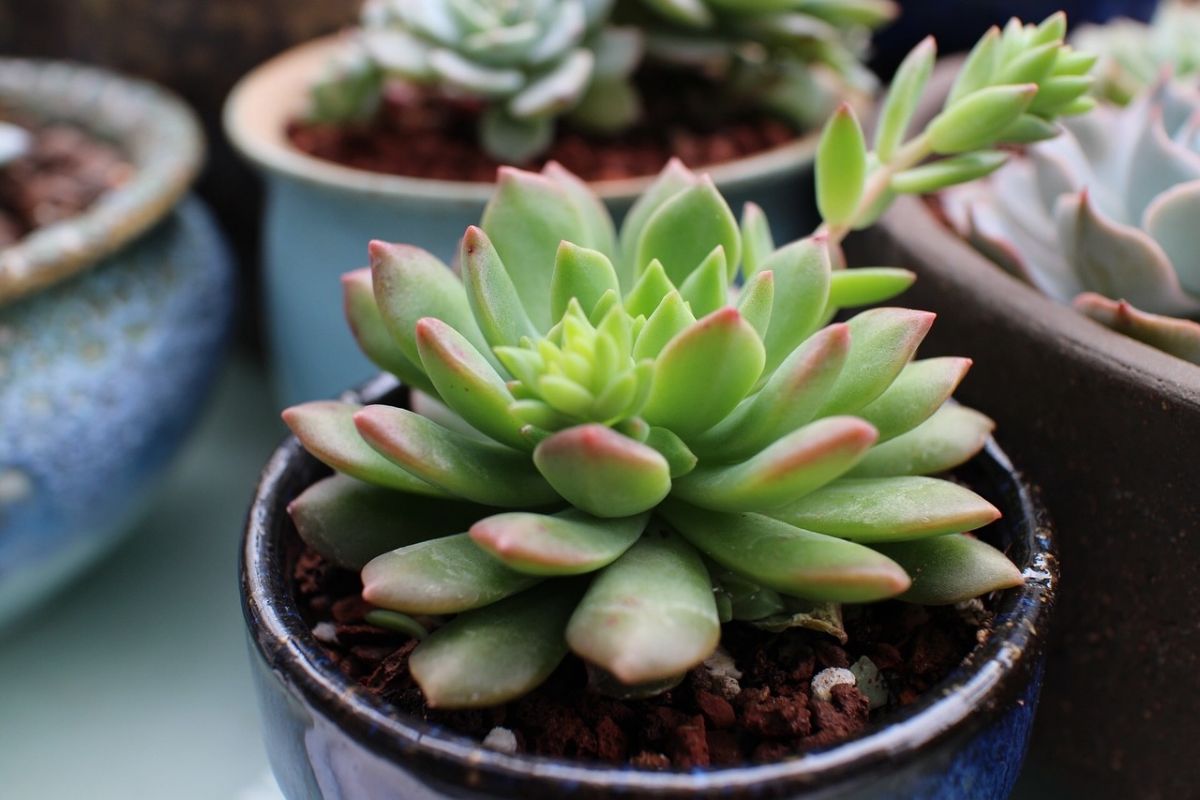
Do you like succulents? These are plants that have so many varieties and types that it is practically impossible for you to have them all. One that is not well known, but may be a good choice, is pachyphytum hookeri.
Find out what are the characteristics of this plant as well as the care you should give it. Do you want us to talk about her? Well, keep reading and you will know how it is.
How is pachyphytum hookeri
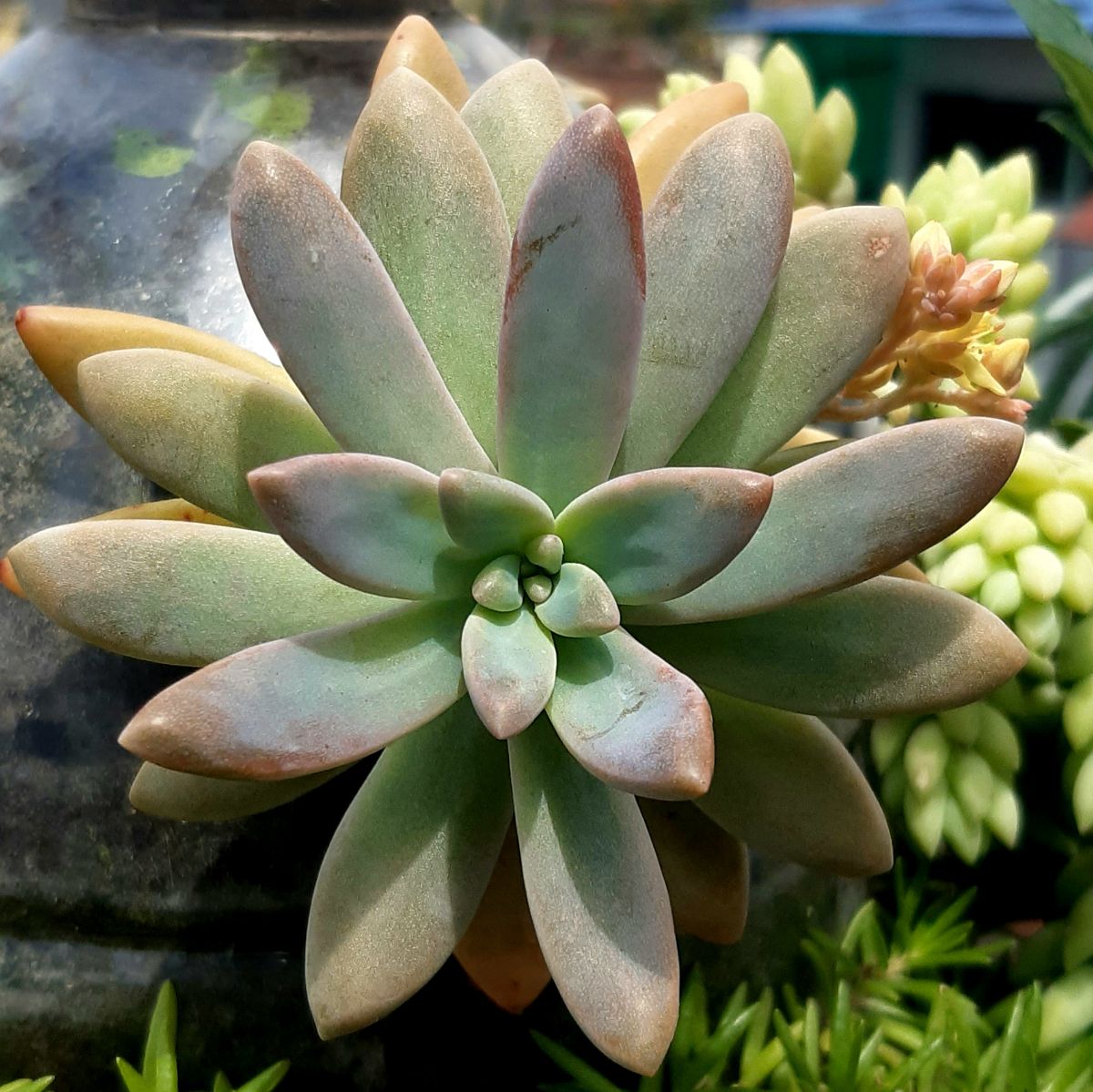
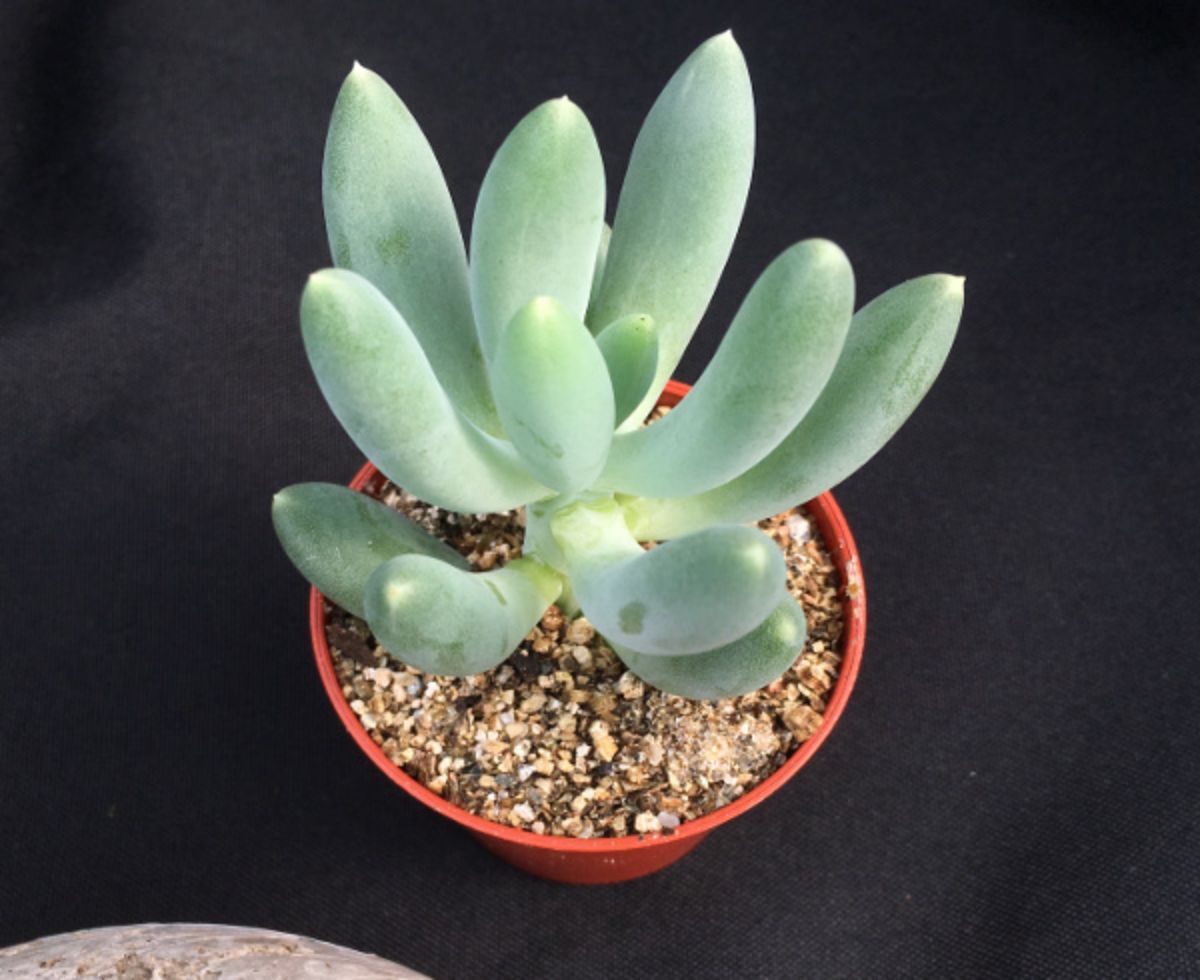
The first thing you need to know about pachyphytum hookeri is that sometimes stores don’t sell it as such, but as echeveria. It is a plant that is characterized by its bluish green leaves. But don’t be fooled; and it is that when the sun hits them, the tips of these leaves turn red (more or less intense depending on the solar exposure to which you subject them). That is why it is so striking, due to its combination between bluish green and red. As for these leaves, you should know that they are tubular (not typical of echeverias), and which also end in a dot.
In addition, this plant blooms. It is not difficult to achieve this, we have already warned you. You’ll be able to tell this is the case when you see a protruding flower stalk that grows taller than the plant itself. From there will come the small flowers, which will be pink and have a bell shape. These almost always appear in April and May, but in already established and adult specimens, you may find that they bloom several times a year if you take good care of them.
It can easily reach a size between 40 and 60 centimeters in height. Plus, being a perennial, it will brighten your eyes any time of the year (provided you take good care of it, of course).
Pachyphytum hookeri care
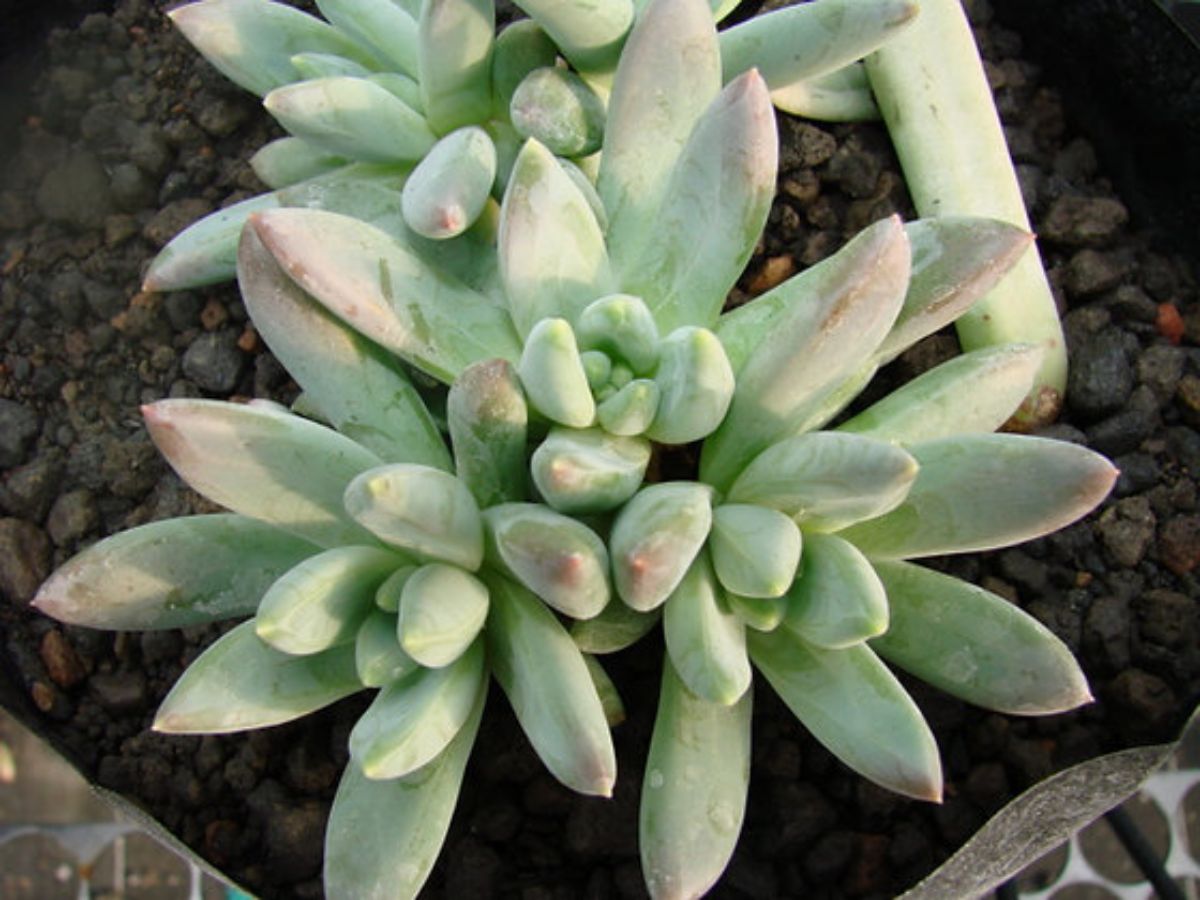
Now that you know the pachyphytum hookeri a little better, how about leaving yourself a guide with the most important cares to take into account? Being a succulent, you can be sure you won’t have to be very over the top.but it does not hurt to know its needs to adapt the environment to it.
location and temperature
Pachyphytum hookeri is a plant that requires full sun. The more hours of sunshine the better, as it will grow better. For this reason, we recommend that you place it outside (on the terrace, garden, balcony…). If you must have it inside the house, look for one of the sunniest windows.
However, unlike other succulents, this plant does not tolerate low temperatures very well. In fact, if it falls below 10°C, it can deteriorate, although in some cases it can tolerate up to 1°C. But if where you live it is usual for the temperatures to drop a lot at the end of the summer, it is better to protect it, either in a greenhouse or indoors.
Substrate
The ideal substrate for this plant should be light and well drained. Therefore it is recommended to mix the Universal Substrate (or soil for cacti and succulents) with some drainage like perlite, clay or 50% akadama either way to give you what you need.
This mixture will serve you both for having it in a pot and for the garden itself.
Irrigation
Source: Surreal Succulents
Watering the pachyphytum hookeri will not cause you any problems. For starters, it will be consistent with where you’ve placed it such that if it gets a lot of sun, you’ll need to water it once or twice a week in the spring and summer. In autumn, once every two weeks will suffice.
And in winter ? Many recommend not watering it if there is enough moisture in the environment because it could feed on it. If you water it, you run the risk of rotting easily.
Subscriber
Although succulents are not plants that need to be fertilized, in the case of pachyphytum hookeri, they appreciate it. Of course, you only need a subscriber every two months in spring and summer.
You can provide liquid fertilizer with irrigation water. Of course, make sure it is high in nitrogen.
Plagues and diseases
Usually, Pachyphytum hookeri is not a plant that has many pests or diseases to worry about. But we’re not telling you that he doesn’t have them either.
When it comes to diseases, the most worrisome can come from poor irrigation, almost always due to an excess rather than a lack. When this happens, the leaves are flooded inside and are released from the plant, in addition to rotting..
Another problem you may find is that it loses color. This may be due to a lack of sunlight. So if you change location it should get better.
In the case of pests, snails, as well as scale insects, will be the most problematic, although in some cases the aphids also do their job. In both cases, a good manual cleaning of the blades to remove them (with a cloth soaked in soapy water and alcohol) can get rid of them.
Multiplication
Finally, about propagation, you should not worry too much because pachyphytum hookeri reproduces easily. To do this, you can do it in different ways:
Use sheets: you can tear off a leaf (always from the base), let it heal and, finally, plant it so that a new plant grows from it. This should be done in the spring or summer, because that’s when you can make sure it gets through (and does it quickly).
With suction cups: When the plant is well adapted to the medium and a few years old, if the care has been adequate, it is easy to get suckers out of it, that is, smaller plants that will be ready to “cut”. Just do it, let the cut heal and plant them so they will develop roots and thus have a new plant.
As you can see, the pachyphytum hookeri is not difficult to maintain, and we are talking about a succulent that is not very well known. Would you dare to have some in your garden?