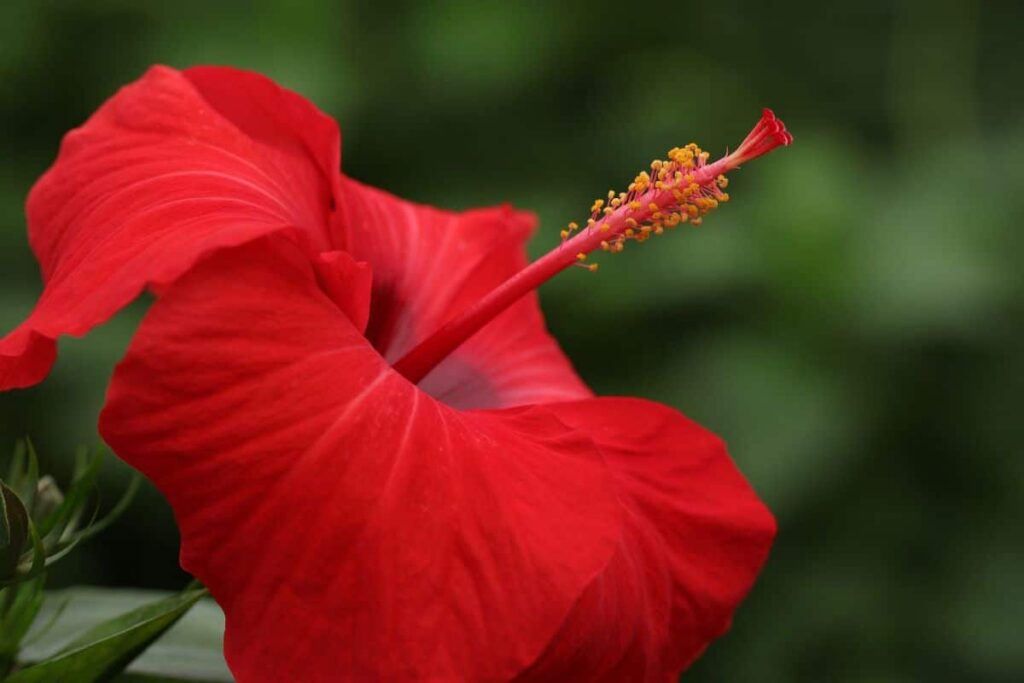

The red hibiscus is one of the most beautiful plants in the world. The beauty of its flowers makes many want to have it at home, although the care it needs is not easy for everyone.
Therefore, this time we are going to give you the keys for you to know what all red hibiscus care is and, in this way, you can have it at home and enjoy impressive flowers. Do you dare?
How is the red hibiscus
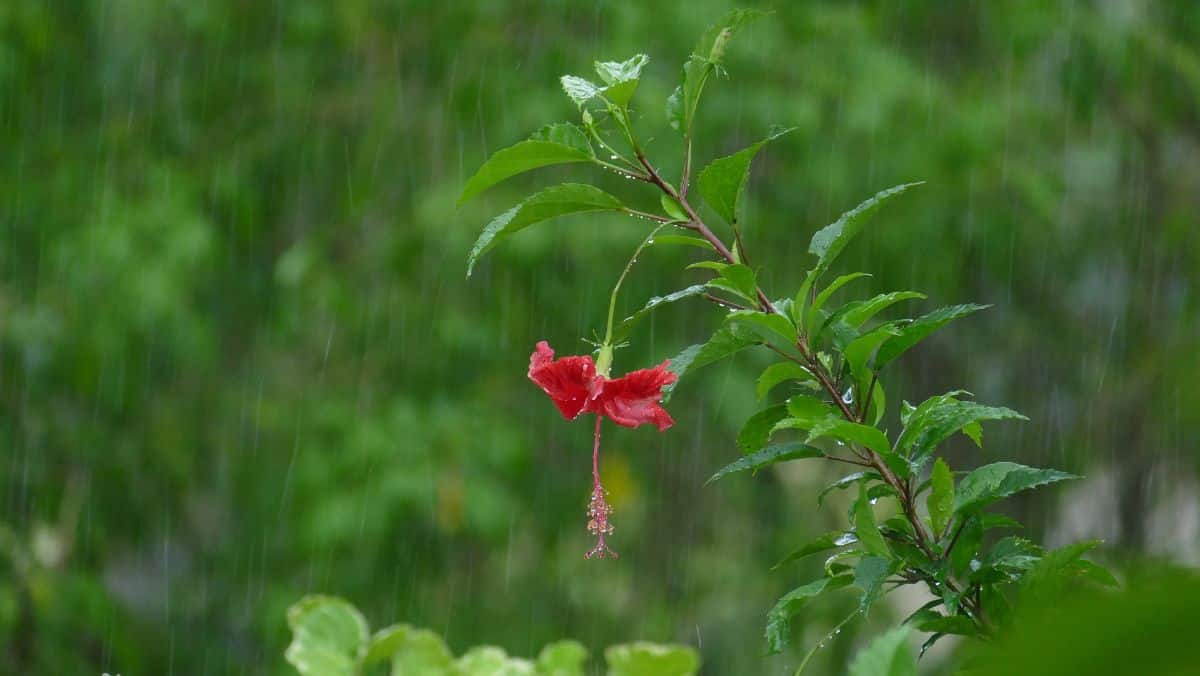
Before knowing what the basic and necessary care for the red hibiscus is, we want you to know what its characteristics are.
This plant reaches reach 2 meters in height, being perennial and with fairly large, oval-shaped, dark green leaves. However, the most characteristic are its flowers, with a diameter between 7 and 15 centimeters, cup-shaped and in clusters. These can be red, but there are also pink, white, purple or orange.
Its origin is in Asia and Africa., where they are used for decorative purposes, especially in gardens and parks, but also have medicinal properties. For example, it is used to treat skin, heart or digestive system problems. It is even used as a diuretic, or to lower fever.
Red Hibiscus Care

If you want to have a red hibiscus at home, before going out to buy it, we recommend that you read the maintenance guide that we have prepared for you because, in this way, you’ll know exactly what you need and you’ll be more likely to succeed and don’t die.
Be careful because these are the most important treatments.
location and temperature
We must start by telling you that the red hibiscus is a hardy plant and needs at least 6 hours of sun exposure a day flourish optimally. Therefore, we do not recommend putting it in the shade, as this will only harm the plant and cause it to wither and not bloom. Always place it in a semi-shaded place or in full sun (unless the temperature is very high or the sun is very scorching, this is its best location).
As for the temperature, it is relatively Frost resistant and can tolerate fairly low temperatures. However, it is important to avoid exposing the plant to too low temperatures, as this can affect its growth and flowering. The best thing is that it is in an area where there are no wind currents, let alone if it is cold. If you are outside and it is very cold, it is better to cover it to avoid problems.
Keep in mind that the red hibiscus needs a warm temperature to bloom optimally. It is generally recommended to keep the plant at a temperature around 20 to 25 degrees all year round (You can get it, for example, in a greenhouse, or if you are in a temperate climate). If the plant is exposed to very low temperatures for an extended period of time, it may stop flowering or even die.
Irrigation
Although the red hibiscus is relatively drought resistant, the truth is that you will have to worry about watering it regularly, because if it lacks water, the plant will dry out very quickly.
In general, you can water it once or twice a week. But everything depends on its location, the climate, the season, the type of substrate… since all this can make it need more water or not. Start by watering little and observing the plant since each one will have its needs and so you can find the right point for your plant.
This, yes, also take into account the humidity of the environment to make sure you don’t over water it if the humidity is high.
Cut
It is important to prune the red hibiscus regularly to maintain the shape of the plant and encourage flowering. We recommend you prune faded flowers and overgrown shoots or protrude from the desired shape of the plant.
Substrate
The red hibiscus adapts to different types of soils, but prefers those that are well drained and rich in nutrients. Make sure you add compost or organic fertilizer when you plant it (if you do it in the garden) and give it a little fertilizer each year for its flowering. This way you will always replenish your nutrients.

Plagues and diseases
The first thing to know is that the red hibiscus is relatively resistant to diseases and pests, but it can be attacked by aphids, aphids and scale insects.
In the case of aphids and aphids, you will have to use specific insecticides to eliminate them from the plant, or do it manually (or a combination of both). Whereas with scale insects, it’s best to start manually, removing any insects you see, then applying a treatment.
As for diseases, mold must be taken into account, a fungus that thrives in damp areas and can affect you. It can be prevented by controlling humidity and adequate ventilation, and it can be treated by the use of fungicides.
Another disease is the rotting, which occurs when the red hibiscus receives too much water or is exposed to too low temperatures. To prevent it, it is necessary to control the irrigation as well as the temperatures and to treat it with a fungicide.
Multiplication
There are several ways to multiply the red hibiscus such as for example:
- Seeds: this method is quite difficult and does not always produce plants with the same characteristics as the mother plant. To propagate red hibiscus from seed, sow the seeds in a pot with moist soil and cover it with clear plastic to create a warm, humid environment. The seeds need to be at 20-25 degrees for them to germinate.
- Cuttings: more reliable to multiply. To do this, a young shoot is cut from the mother plant and planted in a pot with moist soil. This cutting should have 2-3 pairs of leaves, and make sure you cut below a node or bud so the seeds will come from there.
- Division: Finally, you have division, that is, separating the mother plant. To do this, you must extract the plant from its pot or from the ground and divide it into several parts using a knife or a spade. Each of the divided parts is planted in a pot or in the ground with enough room for each to have its own root system.
As you see, the cRed hibiscus care is special but not too difficult to give.. Would you dare to have one in your home?