
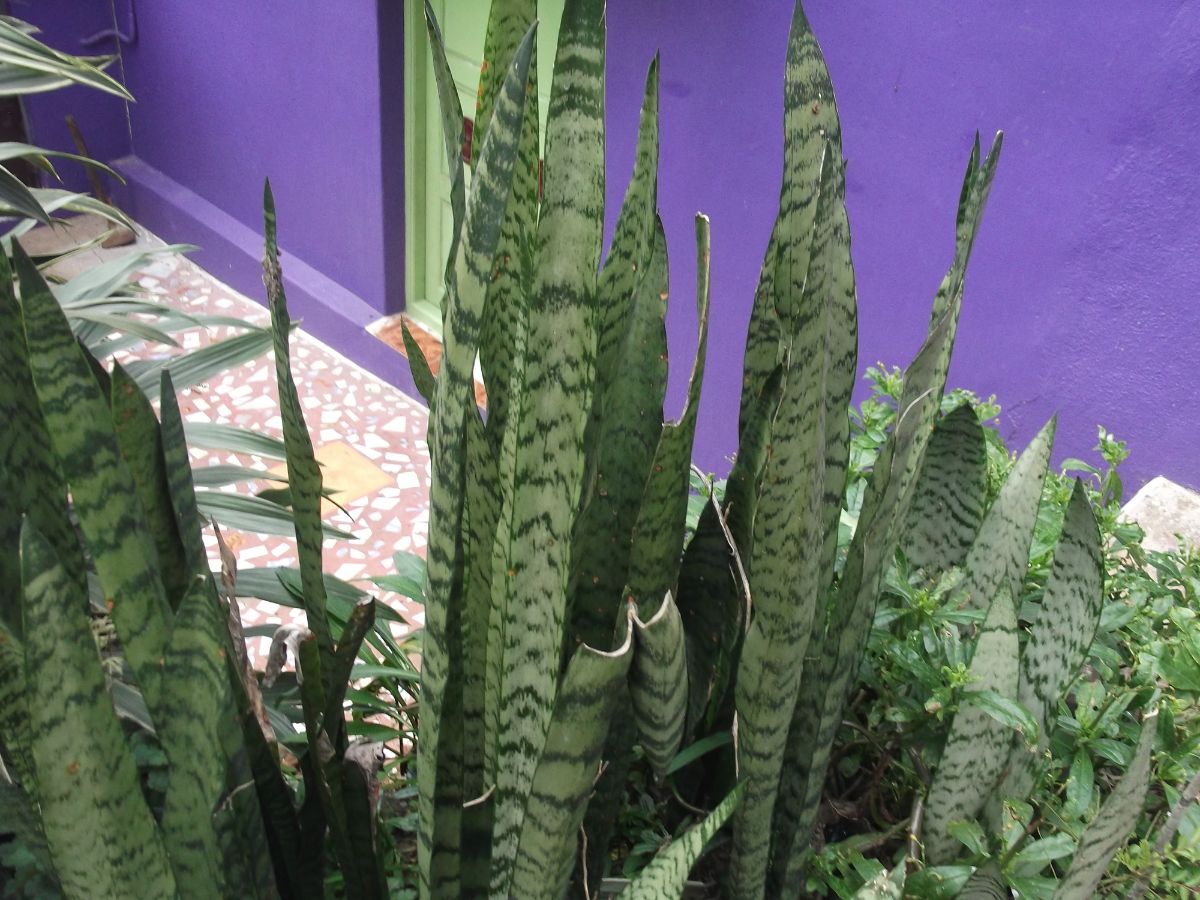
Sansevieria zeylanica, also known as Dracaena zeylanica, or devil’s tongue, is one of the most widely used plants for interior decoration. We see it in homes, restaurants, hotels… because of its great resistance.
But, what does Sansevieria zeylanica look like? What care do you need? Are there any curiosities about the plant? Next, we are going to give you all the information you need to know about it.
How is Sansevieria zeylanica
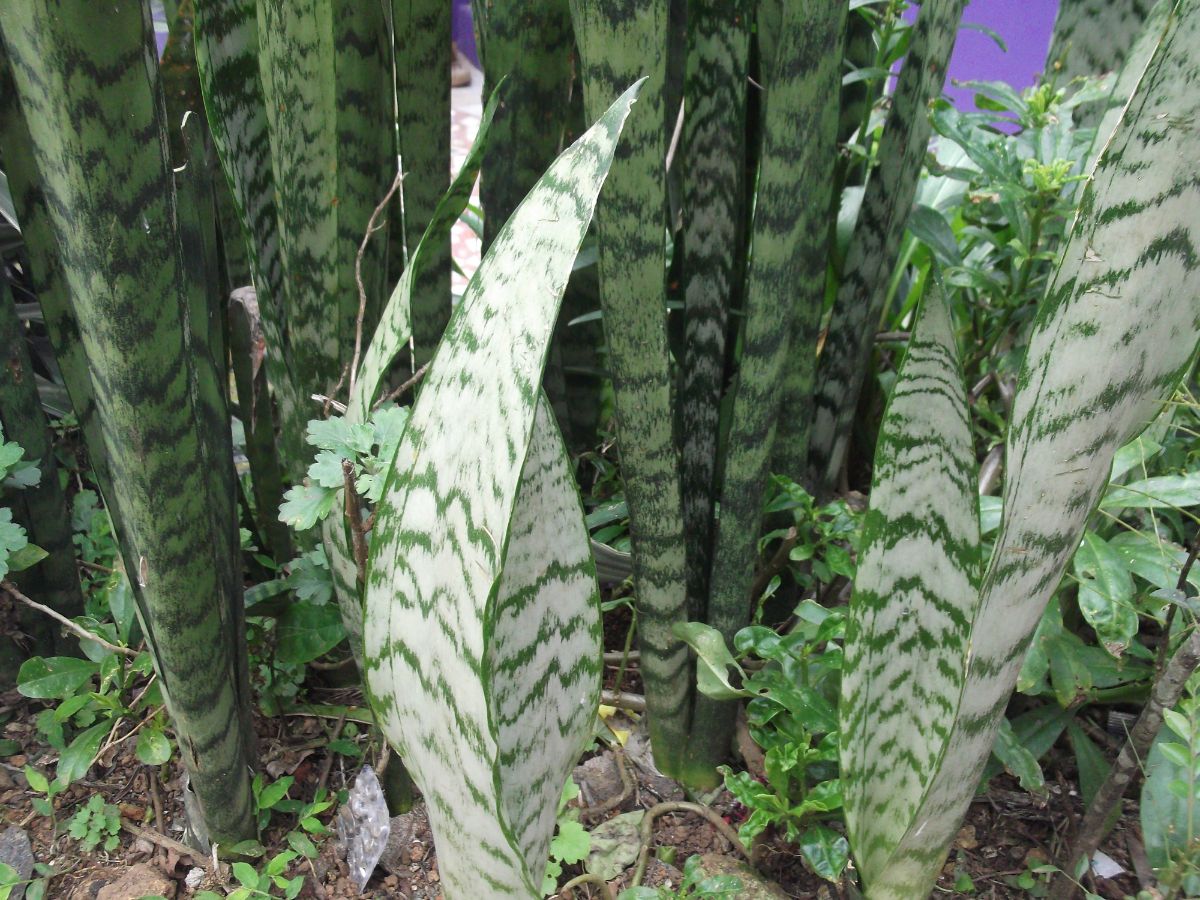
Devil’s tongue, dracaena zeylanica, sansevieria trifasciata zeylanica, mother-in-law’s tongue, snake plant or Saint George’s sword. All of these names refer to the same plant, Sansevieria zeylanica.
It’s a plant native to tropical Africa but can also be found in Sri Lanka and India.
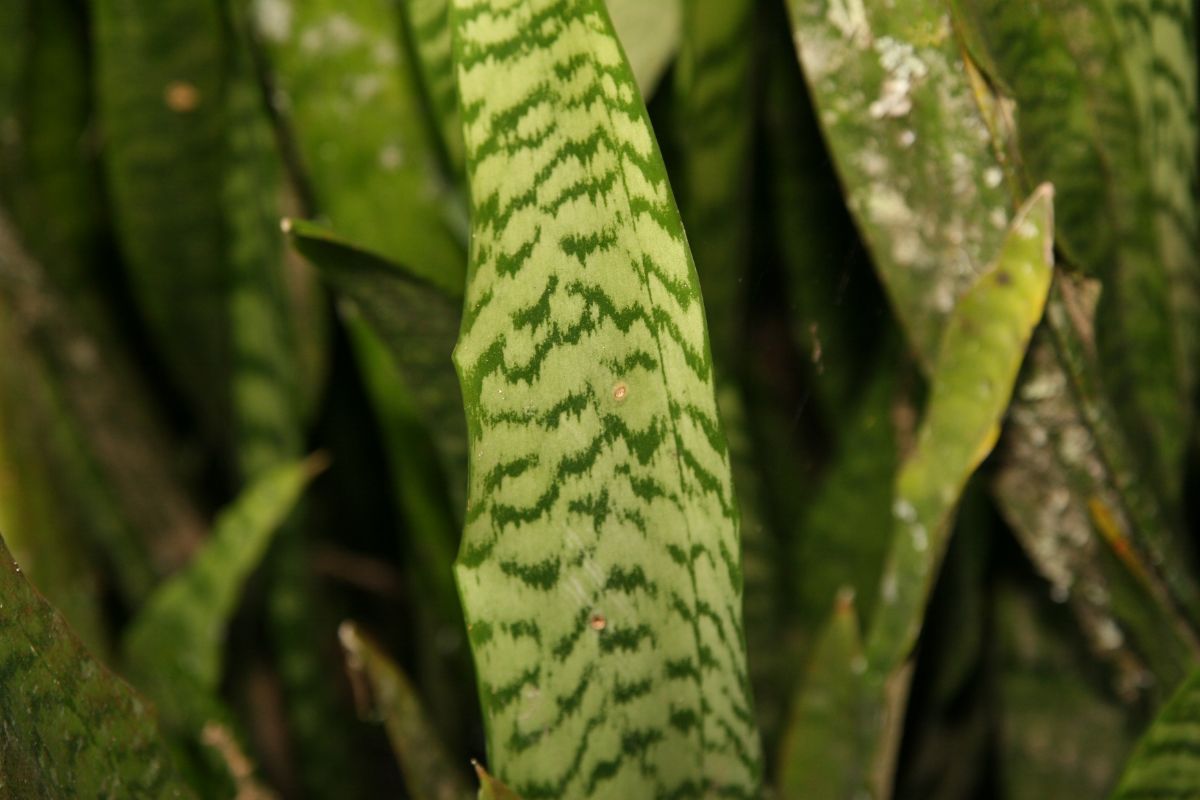
Physically, it is a plant composed of leaves that grows up to about 30 centimeters high. They usually grow in clusters of 8 to 15 leaves and are light green with dark green spots. These are rounded on the underside and on the top they have a kind of channel.
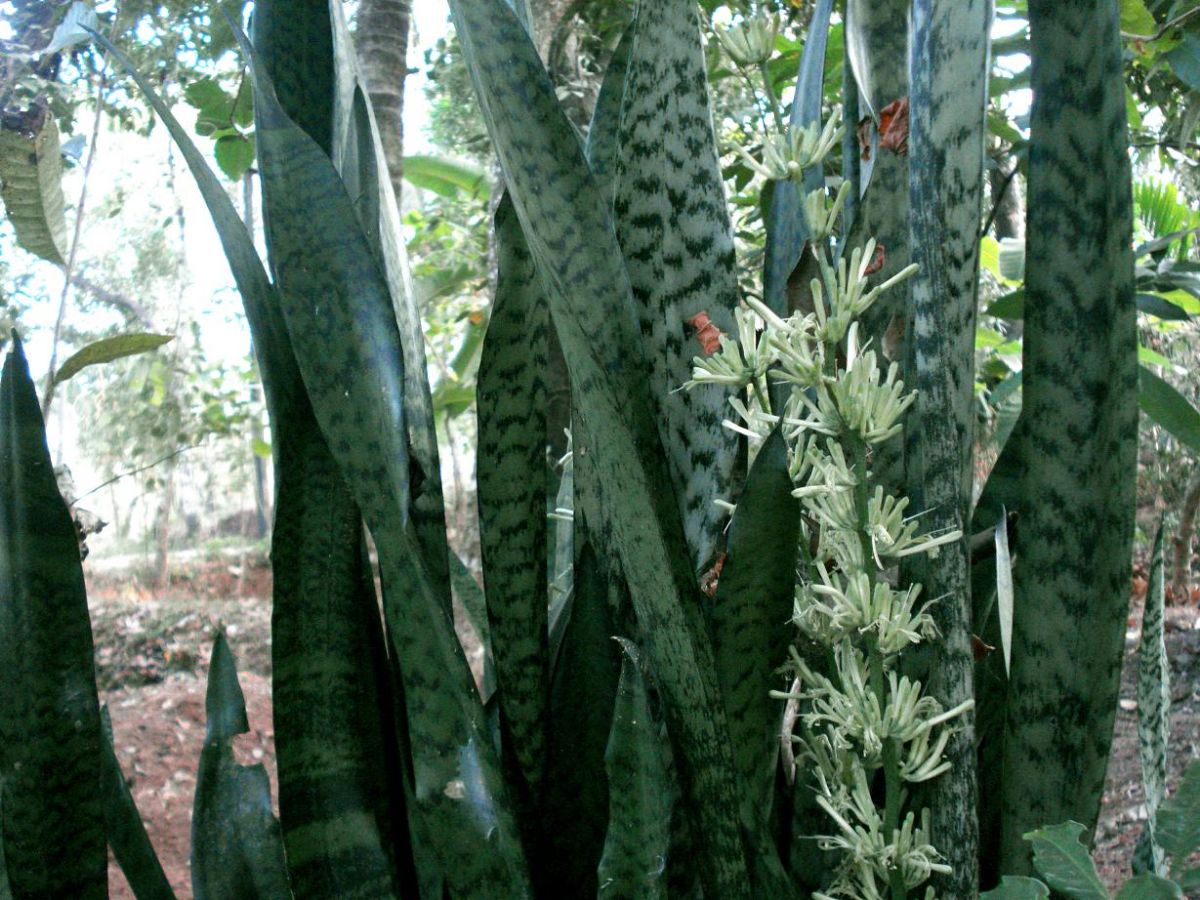
In addition to leaves, there are also flowers to consider. Because yes, it throws flowers. We usually speak of a stem can double the height of the leaves, that is, about 60 centimeters in which, as clusters, pale-colored (almost always white) flowers will emerge. If you manage to have them in your Sansevieria zeylanica, you will also enjoy a sweet smell emanating from it.
Sansevieria zeylanica treatment
Now that you know a little more about Sansevieria zeylanica, it’s time to focus on its general care, which can help your plant develop and grow.
Lighting and location
About the Sansevieria zeylanica, it is said to be able to adapt to any place, whether inside or outside the house. But in reality, it must be taken into account that ideally it would be a well-lit area. Same direct sun early or late in the morning and afternoon.
That said, the best location for this plant is a sunny spot that receives several hours of even direct light to grow better and maintain that color in its leaves.
Temperature
We are not going to tell you that he will endure everything, because it is not like that. Its ideal temperature would be between 16 and 21 ºC. But this does not mean that it does not tolerate the most extreme heat, nor intense cold.
In fact, it can resist frost, but it is soft. If they are very intense or last a long time, it is better to protect it so as not to lose it.
Substrate
As for the soil you will need, you should try to make it as drained as possible. That is, the roots are kept as oxygenated as possible to also avoid water accumulation.
Therefore, it is preferable that use cactus and succulent soil, to which you add perlite, akadama or any other that prevents this substrate from clumping.
Irrigation
As a good sansevieria, irrigation is one of the least important cares. And it is that the Sansevieria zeylanica It is watered very little and very occasionally.
The signal that your plant needs water is given by the leaves. When these are a little crumpled, it is necessary to water. To give you an idea, it may be that don’t need to water more than every 2-3 months.
Humidity
Many times we have pointed out that irrigation is not as important as humidity. In this case, the Sansevieria zeylanica also does not need humidity. In fact, it is better to have it in a dry ambient humidity than in medium or high humidity.
The reason we tell you this is that the leaves retain a lot of water, and if the humidity affects it as well, it can end up rotting them.
Plagues and diseases
Sansevieria zeylanica is quite resistant to pests and diseases. However, that doesn’t mean they don’t affect you.
When it comes to illnesses, the most common that can affect you are due to excess water. Symptoms that warn of this problem are that leaves will be limp, with brown spots (from rot) and droopy (when it is normal for them to be erect).
In the case of pests, the most common is the cottony mealybugwhich will need to be removed from the leaves so that they do not get sick.
Subscriber
The fertilizer you need to use for Sansevieria zeylanica is that of succulents and succulents. It is recommended to follow the instructions that come with the boat, but we recommend lowering it a little.
In addition, it is better to fertilize all year round than not to stop in winter. Of course, it should be with half the dose to avoid problems. This way, your plant will be much better nourished.
the reproduction
Finally, we are left with the reproduction or multiplication of Sansevieria zeylanica. In this case, the easiest way is to do it by division of rhizomes, that is, divide the plant by stems and carefully separate them.
Another way to do this that they use a lot is cut a leaf, as close as possible to the base, and put it in water. Within a few weeks it should start to take root and you can have a new plant within months.
How to get it to give flowers
As we have already told you, making this plant bloom is not easy to achieve. The truth is that very few have seen these flowers, especially if you have them indoors. But that doesn’t mean it’s impossible.
The best is to meet all the needs of the plant and if possible have it outdoors in a temperate climate so it adapts to the cycles. Maybe not the first year, but it is possible that the second or third year you can find this surprise.
Curiosities
One of the main curiosities of Sansevieria zeylanica is the fact that NASA itself noticed it. In fact, it was this one who claimed the plant was an air purifier.
What he does is eliminate both benzene and formaldehyde from the environment to make it cleaner. Therefore, in many houses this plant is present.
Do you know more about Sansevieria zeylanica? You can tell us about it in the comments.