

Among the types of monsteras that are on the market, the one that rivals the variegated species is the constellation Monstera thai. With white spots along the leaves, it is one of the rarest, and also the most appreciated, that can be found on the market.
But how is this monster? What care do you need? We tell you everything below. Check.
How is the Thai constellation Monstera
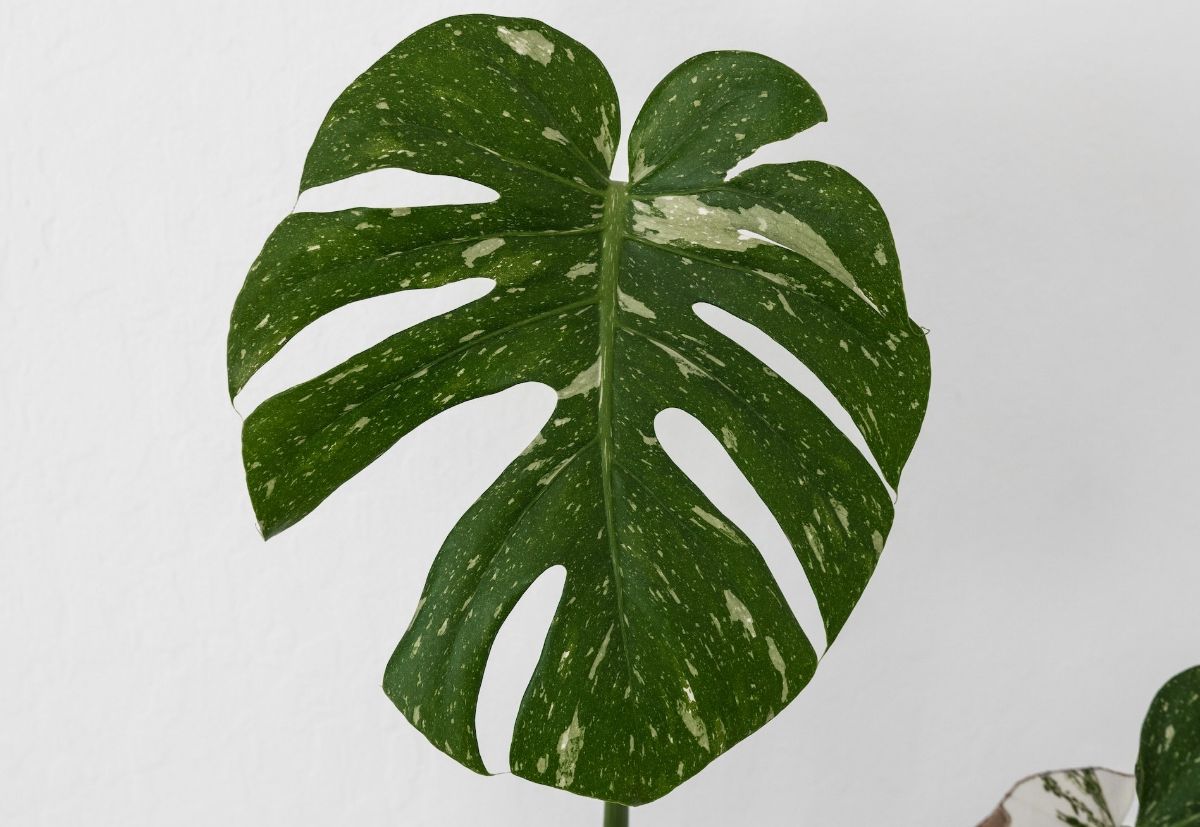
The constellation of Monstera thai is part of the collection of indoor plants that you can have in your home. It is an indoor plant that is characterized by its striking and original leaves.
Originally from Thailand, what you need to know about this is that It is not a “natural” plant, but was invented in the laboratory. In fact, the name it bears is due to this laboratory (it was created in one of the fabrics of Thailand).
To do this, they used Monstera deliciosa and mixed it with other cultivars to obtain the one that can now be found on the market (or at least those who have the money to pay for it, because it’s not cheap).
Another thing to keep in mind is that It is also called so because of its constellation-like pattern in the sky. Now we tell you.
How are the leaves
Do you remember the constellation in the sky? Well that’s because the constellation of Monstera thai has leaves with white spots scattered all over the leaf. Unlike the delicious variegated, or the variegated adansonii, which are plants that have spots on certain parts of the leaf, in this case it is on the whole leaf, so it is much more appreciated. Of course, remember that it comes from a mutation, so it is known, unlike variegated, that all leaves will come out variegated. Therefore, many appreciate it.
Is it toxic to animals?
Unfortunately, if you have cats, dogs, babies… you have to be very careful with this plant. because yes, it is toxic for them. In fact, for people and pets, so if you have them, we recommend that you place it in a place that is difficult for them to reach in order to avoid accidents.
Thai Monstera Constellation Care
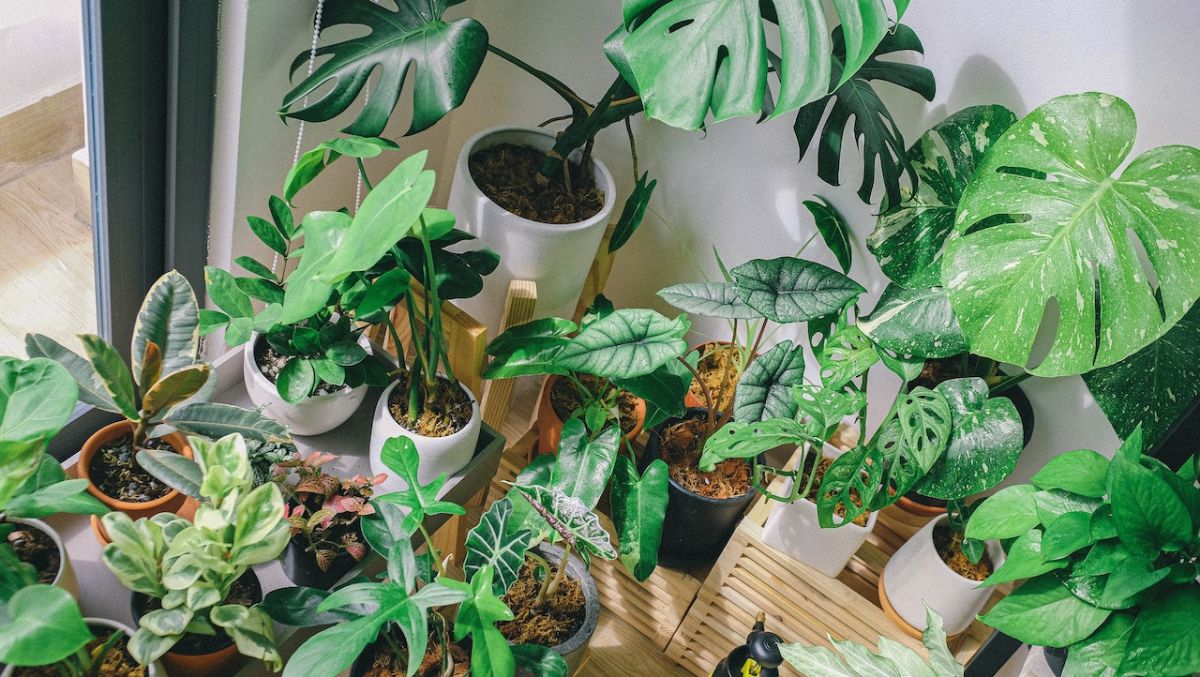
Do you want a Monstera Thai constellation? If you can afford it, or if you have one and want to give it the best care so it doesn’t die, then we’ll give you one. practical guide so you can have it for many years and also that you get leaves and grow quickly. Pay attention.
lighting and temperature
We start with the best location for your Monstera thai. You should know that it is a plant that needs much more light than other monsteras. You must provide at least 6 hours of sunshine, all those hours with direct sunshine (of course, be careful of the times you choose to put it on, because if it’s too sunny and very strong, you risk burning the leaves), so that it can photosynthesise well and also grow well. If you don’t get it, not only will the plant not grow, but the leaves will also turn yellow.
So if you notice that your plant is barely growing, new leaves are not growing, etc. may be due to this.
Now, inside or outside the house? Also, normally Monstera thai constellation is indoor plant, however, if you can provide him with all the care he needs, there will be no problem keeping him outside.
But this is temperature related. You must keep it at a constant temperature of 18 and 29 degrees, the ideal being 15 degrees minimum.
In fact, if it drops below this temperature, it is normal for it to suffer, which is why outdoors it is a little more difficult to maintain.
Substrate
Monstera thai constellation earth must be very light, since he doesn’t like everything that sticks to his skin. In addition, it must be rich in nutrients. We recommend using a universal substrate mixed with equal parts perlite. You can even add pieces of tree bark or sphagnum moss.
What we do not recommend is to use organic compost because it will only rot the root.
Keep in mind that The pH of the soil should be neutral or slightly acidic. If you keep it between 6.5 and 7, it will be perfect.
Irrigation
It is not recommended to overwater, as this will only rot the roots or cause fungus to appear. The best is to water it once a week but with rainwater or chlorine-free water.
If it is winter or very cold, it is best to water it once a month. Keep in mind that as long as the soil is kept moist, you should not water it.
Humidity
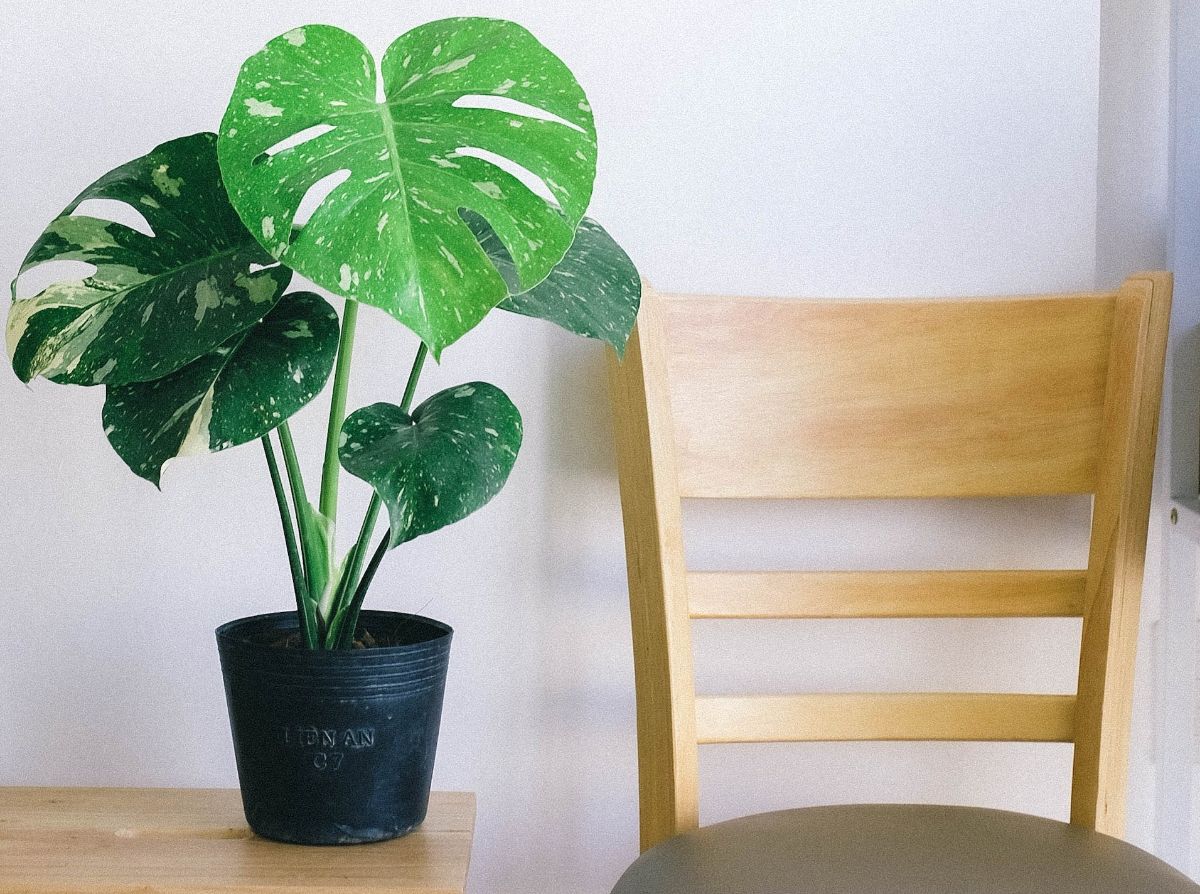
An important aspect to take into account, beyond irrigation, is the humidity of the plant. You need to make sure it’s between 60-80% for it to feel good. In case this cannot be achieved at home, the best thing to do is to place it next to a humidifier or spray water over it frequently (more in summer than in winter).
Make sure the water is lime and chlorine free to avoid health problems in the plant.
Plagues and diseases
This plant is somewhat delicate in terms of pests and diseases. Therefore, you must watch it so as not to have any problems with it.
In general, The pests that can affect the plant the most are red mites, thrips and scale insects..
As for diseases, the most serious and common in silver is usually that of rotten root that appears when there is excess water. You can also get sick if you have a slight deficit.
Multiplication
When it comes to propagating Monstera thai constellation, the best method is to use stem cuttings.. For this you will have to cut part of the trunk (with leaf) and at least one aerial root so that it multiplies.
Now that you know everything you need about the constellation of Monstera thai, would you dare to have one?