

Do you know what a hybrid is? A hybrid, in general, is a living being that has genes from two specimens so different that they belong to a different species. It can be natural, that is, it can occur in nature without human intervention, but it can also create one. In fact, right now that’s exactly what’s happening with plants: we’re hybridizing them to give them better genetics.
But how good are hybrid plants? I really think it’s not about them being good or bad; Throughout the evolution of all beings that inhabit the Earth today, there have been many hybridizations. It is a way for a species to continue to evolve, since its offspring can have very positive parts from two different species. Learn more.
Let’s talk about genera and species of plants
To understand what we are going to explain later, it is important that we first clarify some concepts, such as genus and species:
- Tribe: in biology, it is what comes after the Family and before the Genus. This is what is used to group together many different genera that share many genes. For example, Mentheae is the tribe of the genera Mentha, Calamintha, or Salvia, among others.
- botanical genus: a genus, in botany, is a group of species that have had a very similar evolution, to the point that they share characteristics and have a similar mode of life and survival. For example: a genus would be the Prunus, a few trees and shrubs including the almond tree (Prunus dulcis) or Japanese cherry (Prunus serrulata).
- Species: the species belongs to the genus, and is the specific name given to a certain group of living beings practically identical to each other. For example, continuing with the previous examples, Prunus dulcis Yes Prunus serrulata are two species of Prunus.
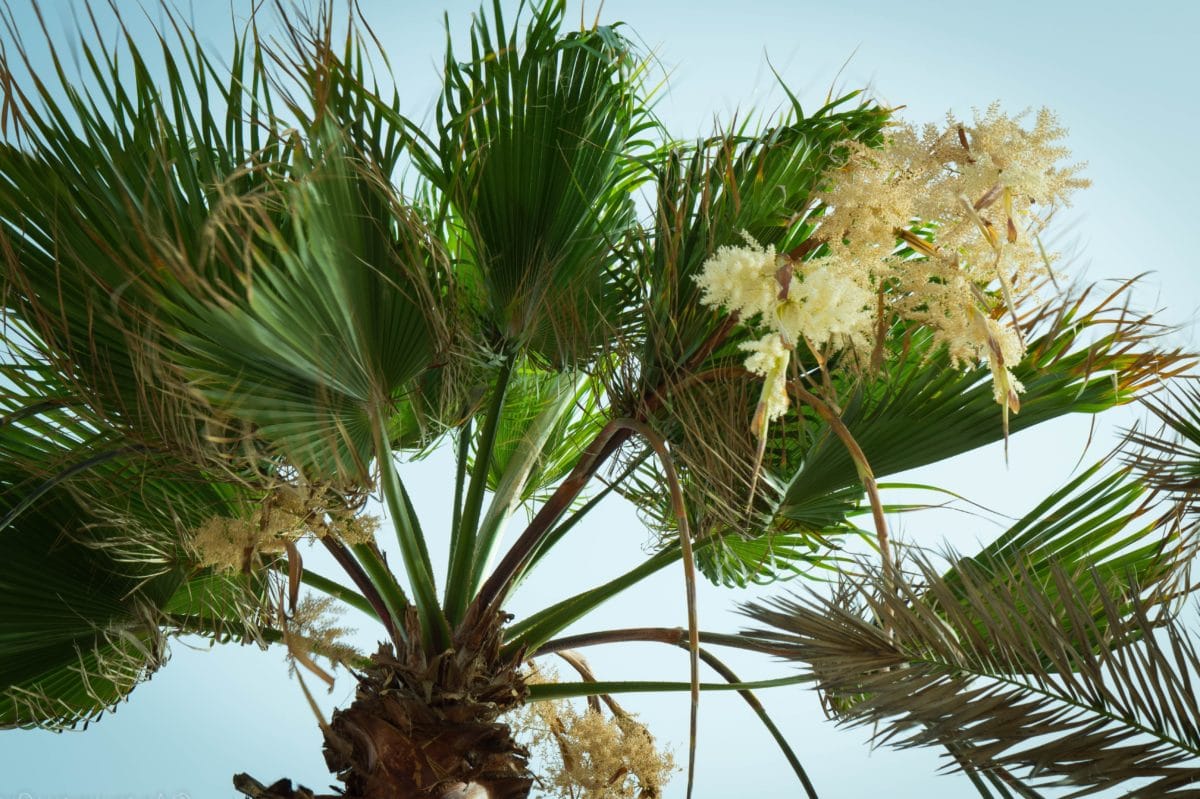
Next, what can be hybridized? Well, usually two different species belonging to the same genus. An example of a hybrid -and also natural- is that of the palm Washingtonia x buccaneer. This species is the result of a cross between the Filiferous Washingtonia and the Washingtonia robusa, and shares characteristics of each, such as the slender trunk of W. robusta, and having a greater number of leaf “hairs” or “threads” of W. filifera – although fewer than those of the latter species – . In addition, it is slightly more cold hardy than pure washingtonias.
Another important fact is that hybrids, in their name, must have an “x” after the genus. In this way we will be able to know, just by looking at the name, that it is a hybrid plant.
In some cases, plants of different genera are also hybridized, but belong to the same Tribe., like Butia and Syagrus, giving rise to Butyagrus; or Pachyveria (Pachyphytum and Echeveria), among others. Well, in these cases the “x” is placed before the genus: x Butyagrus, x Pachyveria, etc. But these are the work of the human being, since it is he who selects the specimens that interest him, and the one who is responsible for pollinating them.
What is a hybrid plant?

A hybrid plant is a plant that comes from two different species or genera belonging to the same tribe. The characteristics that the plant resulting from this cross obtains cannot be chosen, but what is clear is that it will have genes from each of its two parents.
therefore, in the hypothetical case -It doesn’t happen in nature and it’s not something humans do- If a cherry tree were hybridized with an almond tree, for example, what would we get? Here chance could give us, for example:
- A tree that has withstood drought as well as the almond tree, but with fleshy fruits like cherries.
- A tree that only grew on fertile soil -like the cherry tree-, but with nuts like almonds.
- An almond tree capable of resisting frost and snowfall without difficulty, just like the cherry tree.
- A cherry tree capable of withstanding the heat of the Mediterranean without -many- problems, just like the almond tree.
- Etc.
Examples of hybrid plants
Today, the difficulty is to find plants that are pure species. Here we show you some of them:
Leylabnd cypress (Cupressus x leylandii)

Image – Wikimedia/Pieter Delicaat
The Leyland cypress is a natural hybrid, resulting from the cross between Cupressus macrocarpa Yes Callitropsis nootkatensis. Reaches an approximate height of 20 metersand is an evergreen conifer widely used to create tall hedges in gardens.
Gerbera x hybrida

It is the cross between Gerbera jamesonii and the Gerbera viridifolia. It is a herbaceous plant which It reaches 30 centimeters in height and produces daisy-shaped flowers of a wide variety of colors.like orange, red, yellow or pink.
Fuchsia hybrid
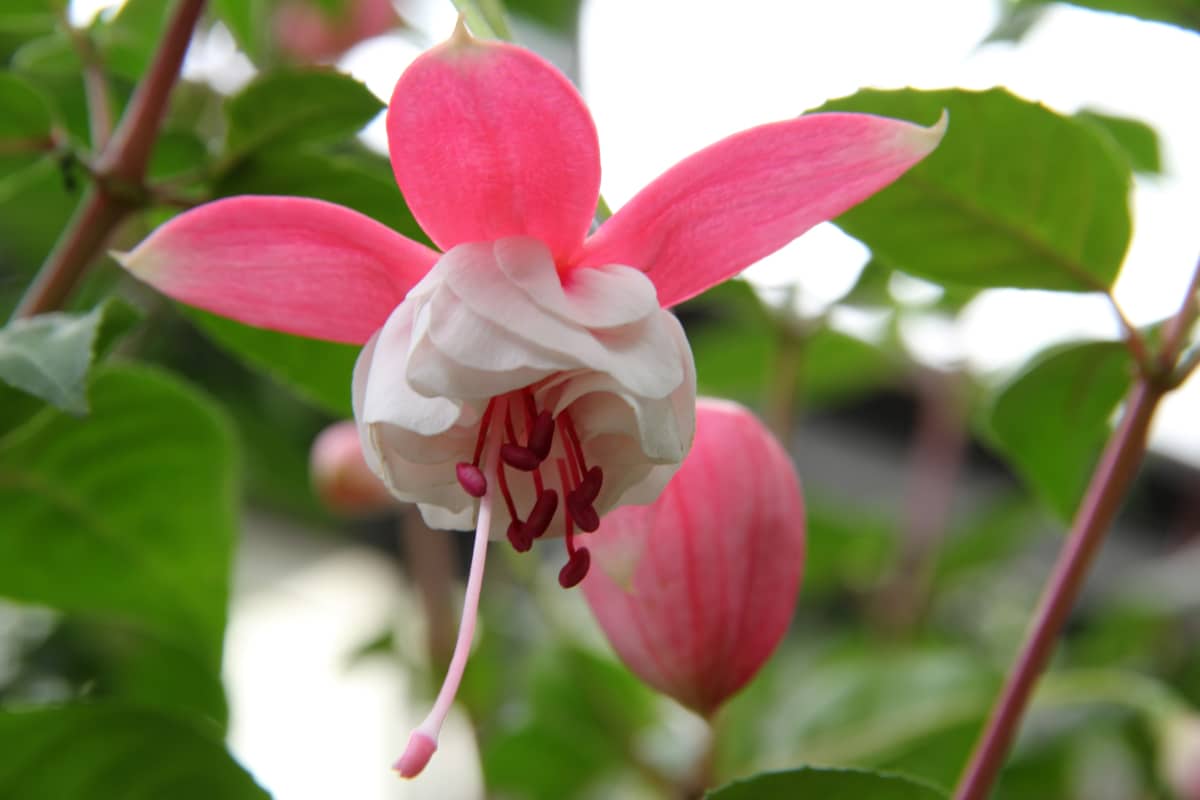
Image – Wikimedia/Fan Wen
The Fuchsia hybrid It is not clear which species of Fuchsia it comes from, but it is the one that is currently the most sold. It is a small evergreen shrub that reaches more or less 50 centimeters in height., and which has hanging flowers. These are bell-shaped and can be pink, white or lilac.
Shadow Plane (plane tree x hispanic)

Image – Wikimedia/Tiago Fioreze
The shade plane tree is a deciduous tree resulting from the cross between platanus orientalis Yes platanus occidentalis. It reaches 20 meters in height and has leaves similar to maple trees.that’s why it’s also called Sycamore x acerifolia (acerifolia = maple leaf).
Grapefruit (citrus x paradise)

Image – Wikimedia/Forest & Kim Starr
Grapefruit is a natural hybrid that occurs between sweet orange (Citrus x sinensis) and lemon (citrus maxima). It is native to India and reaches a height of 6 meters. The fruits look like oranges, in fact they are about the same size, but have reddish flesh..
What do you think of hybrid plants?