

The Calanda Peaches They are considered the best peaches in the world, with unique growing and harvesting characteristics. Moreover, it is produced in very specific months of the year and has a certain caliber. For this reason, many people wonder when Calanda’s peach season is.
In this article we are going to tell you about the Calanda peach season, what are their characteristics, harvests and prices.
Origin and growth
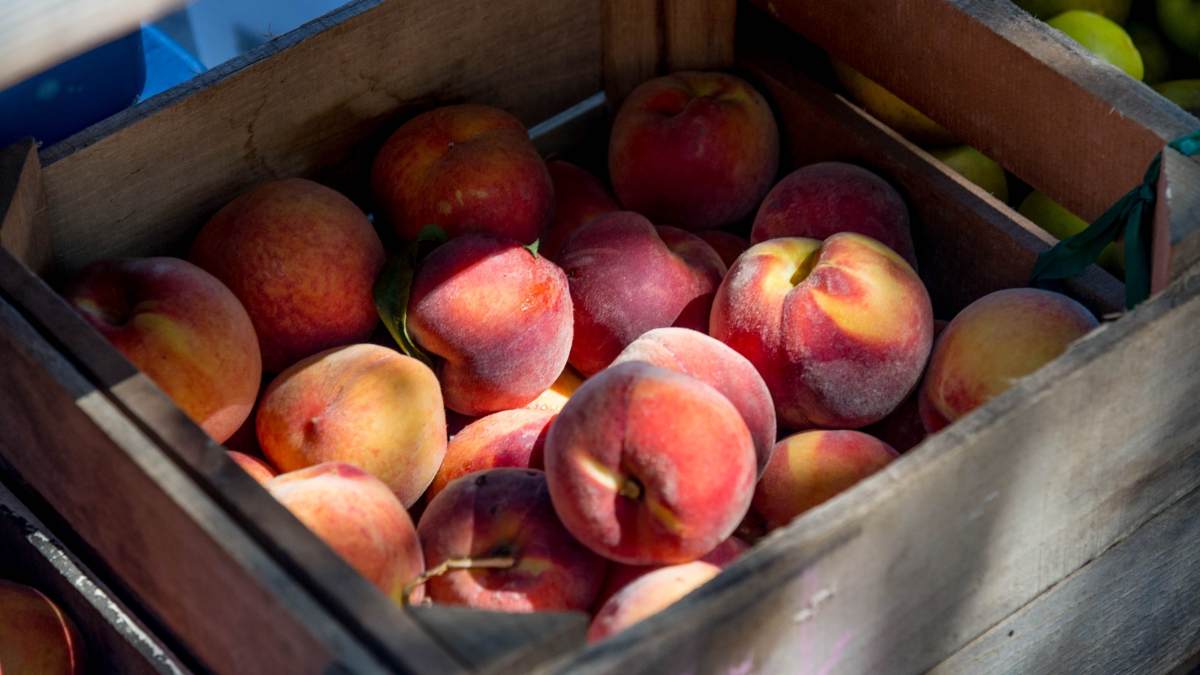
The only region where this premium fruit is produced is Bajo Aragón. The climatic and geographical conditions give it a unique flavor. It takes its name from the city of Calanda, but it is also produced in other cities. Puigmoreno, Valmuel, Mazaleón and Albalate del Arzobispo in the province of Teruel. While in the province of Zaragoza, the producing localities are Caspe, Mera, Chiprana, Fabara and Nonaspe.
Only 1 peach in 100 will pass the quality standards and receive DOP certification (Protected Designation of Origin).
Its culture is traditional, following two techniques transmitted from generation to generation:
- First andThe tree is thinned twice intensively until 70% of the fruit is removed. That is, many peaches are removed, leaving at least 20 cm between each peach. This ensures more volume and fleshy fruits of a certain caliber, establishing the Protected Designation of Origin.
- Then, in July, each peach is bagged individually by hand, nearly 250 million per harvest. They remain in bags until collected. In this way, Calanda peaches are protected from external factors and phytosanitary products, making them not only delicious, but also purer and healthier.
Unique characteristics
The peaches of the Calanda variety of the DO are Prunus Persica, of the indigenous variety “Late Yellow” and its selected clones Jesca, Evaisa and Calante. The color of the fruit varies from creamy yellow to straw yellow. Its organoleptic profile is reminiscent of the catch of a lifetime.
Extraordinary sweetness around 12 degrees Brix, the lowest level at which peaches develop their irresistible aroma. Peaches have a minimum diameter of 73 mm. They are large and fleshy fruits.
Thanks to the numbered black label with the AOP emblem attached to its high quality leather. This demonstrates that it has exceeded the strict quality standards set by the Regulatory Council, which require growers to inspect fields and cultivation techniques and check that uniformity, color, firmness and sugar levels of fruit correspond to your category.
The packing and packaging industry, which has received a certificate from the Regulatory Commission, sticks a black label on each fruit, labeling genuine Calanda peaches. As well as the individual containers and bags in which they sell the fruit.
What is the fishing season in Calanda
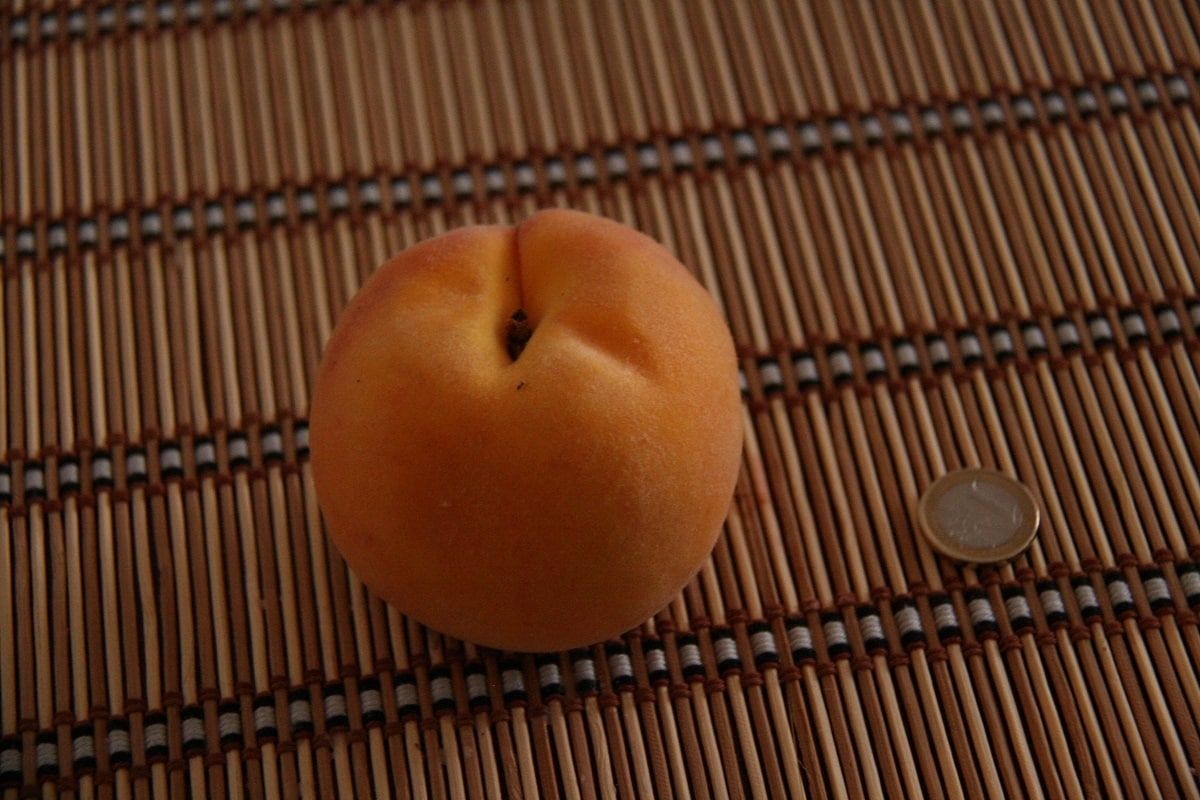
The authentic Calanda DO Merchandise is open from mid-September to the end of October, depending on the weather. You should stay tuned until then. Generally not authentic.
Production is usually closer to 2.5 million kilos. The product is mainly sold in Spain and only 20% is exported to European destinations: France, Italy, Germany and United Kingdom.
A very small portion reaches the United States and Asia. The Spanish regions with the most supplies are the Autonomous Communities of Madrid, Catalonia, the Basque Country, Cantabria and Valencia. The price of the Calanda peach is usually another indicator, as it is higher than that of other peaches. It is handmade by a small producer and the price reflects that.
Prices and uses of Calanda peaches

Prices are indicative and vary annually depending on their production and collection, but indicative and depending on the caliber of the work, prices may be close to these. A box with 20 small holes costs 13 euros and a box with 14 large holes costs 17 euros. The price per kilo is generally around 6 euros.
If raw it is already a real delicacy, the cooked Calanda Peach can enrich any dish in a remarkable way. You can serve it as a cold cream with crispy Iberian ham. As a meat garnish or with a cinnamon compote. Grilled with wine, cinnamon sticks and herbs.
In September and October, many preparations await you. You can also keep them plain or put them in syrup for longer servings. Candied fruits are a great way to enjoy them all year round.
Nutrition Information:
- Only 39 calories in 100 grams
- It is a fruit rich in minerals which brings us: calcium, potassium, phosphorus, iron and manganese. Contains provitamins A, B1, B2 and flavonoids
- rich in fiber. They are great allies during a diet
- It is a diuretic fruit that easily drains liquids.
- Rich in vitamin C, like kiwi
- Peaches are rich in vitamins and minerals. Wash and eat directly with the skin, very delicate and soft.
Middle Ages production method
The late yellow variety originates from the southeast region of the Ebro depression between Teruel and Zaragoza. In the 1950s, the plantation began to developbut the traditional cultivation method has been maintained.
The technique involves bagging the fruit before it ripens. In June and July, tree fruits are individually wrapped in waxed paper bags before harvest, protecting them from chemicals, pests and droppings.
Calanda peaches can be enjoyed all year round in canned syrup, dried apricots and wine, and it is one of the most popular recipes in Aragon. But to eat it fresh, the season begins in September and lasts a few days in October and November. This is when we can taste Spanish peaches.
As you can see, Calanda peaches are a delicacy in great demand throughout Spain. Although the prices may seem excessively high, they are linked to all the care taken in its cultivation, storage and transport.
I hope that with this information you can learn more about Calanda’s peach season and its characteristics.