
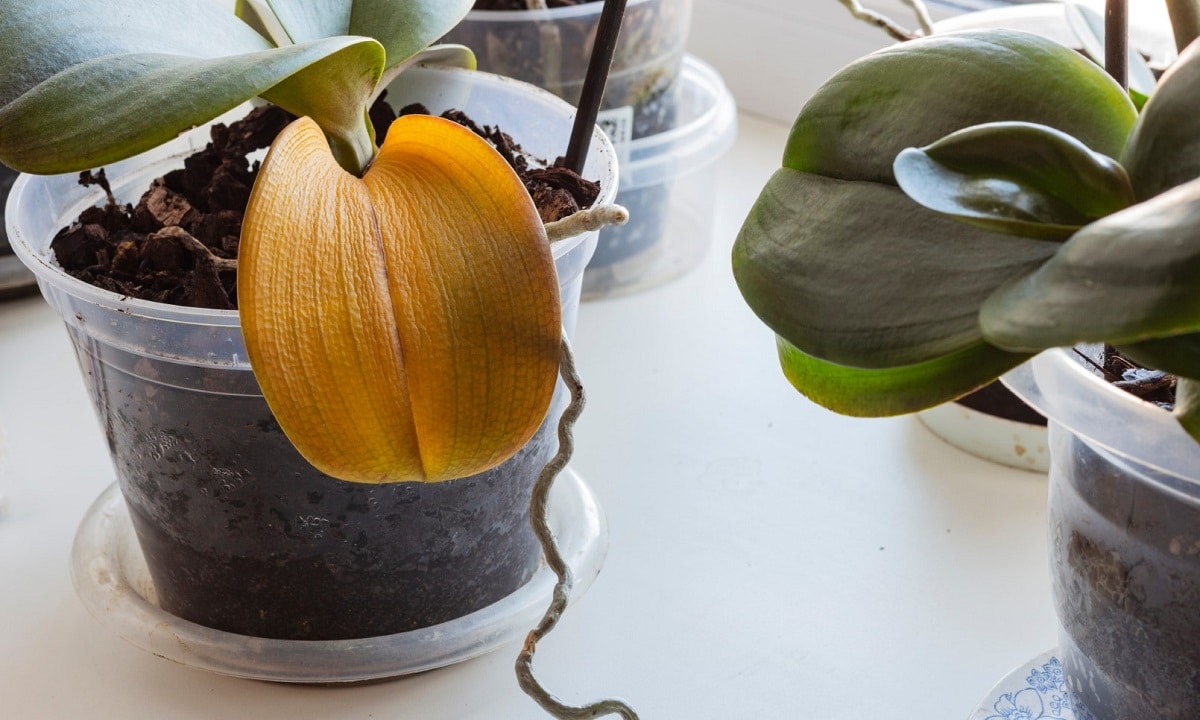
Orchids are widely used plants for interior and exterior decoration. Her beauty is usually her main strength. However, they are plants that do not escape the typical diseases that attack plants. In this case, the orchid diseases They can be easily identified and appropriate treatment prepared for it.
In this article we will tell you about the diseases of orchids, how to identify them and what treatments they have.
Common Orchid Diseases

One of the most unique aspects of orchid diseases is that they can come from the way we grow them. Orchid care involves the moist environment necessary for the growth of these wonderful plants. However, it is precisely humidity that causes many of the diseases that afflict them. The key is balance. To be able to provide our plants with what they need, but always with care to avoid collateral damage.
For this, registration is important. Although they are tropical, orchids do not need high temperatures. Plus, exposing them to the increased humidity they need is an ideal breeding ground for orchid diseases. To this must be added an aspect of poor root aeration and even poor irrigation practices. Nothing is more important than knowing the dangers of overwatering your orchid when growing this beautiful plant.
But nothing better than knowing the diseases of orchids to stop them as quickly as possible, as well as knowing what to pay attention to. Not only for the health of the plant, but also to prevent it from getting sick again.
Identification and treatment of orchid diseases

root rot
We start with what could be the main cause of death for these plants. Root rot is one of the most common diseases of orchids and, in addition, This is largely our responsibility. It usually appears when we do not water properly. And we don’t refer only to the amount of water, not to water them as in traditional pots, or even to put a low plate on them to retain water. We also mentioned an important detail: when to water.
A substrate that is good for aeration is key to avoiding orchid disease. Root rot is always fungal infected roots. Presented in a visually recognizable manner. Their main feature is that they acquire a brownish tint and lose their consistency. If we detect them in our factory, it is important to act as quickly as possible. To prevent its spread, you must:
- Remove rotten roots with pre-sterilized scissors and completely sterile
- If the fungal growth is heavy, use a fungicide on the roots.
- Transplant to new substrate and pot with adequate ventilation
- Temporarily control watering until roots lose moisture.
fungal disease
Orchids live and thrive in humidity-controlled environments. We are also prone to fungus. Although they appear on the roots under the above conditions, they can also appear on the leaves of orchids.
Curiously, when they appear, they have the same causes as the previous ones: heat, excess humidity or poor root aeration. When they manifest in leaves or flowers, they appear in different easily recognizable forms. They usually appear as more or less large black spots that dot the leaves or leave compact marks. Sometimes the leaves even begin to turn yellow until they turn brown or even black.
Depending on the type of fungus, plant transmission can be significant. So ideally:
- Treat the plants with a specific fungicide for orchids. Even, it does not hurt to use it for prophylaxis since the spring to avoid it
- Check the drainage of the pot to confirm that it drains water properly
bacterial diseases
Another awkward visitor to these wonderful plants. And there’s only one reason for that: higher than expected humidity. Its main characteristic is the way it manifests itself in the leaves. Bacterial stains have a watery appearance in their original state. Later, they may yellow the leaves around this easily identifiable starting point. If the leaves of our orchids turn yellow directly, extreme care should be taken. This is because water has collected in the neck of the plant and bacteria have reached the roots.
We are not trying to minimize it. A bacterial infection can lead to the death of the plant. The progression is usually rapid until the whole plant is colonized. And curiously chemotherapy usually doesn’t work very well. Cinnamon is antibacterial, antifungal and even insecticidal. And, in addition, it is completely natural. The condition of orchids is important, orchids do not tolerate chemicals very well.
Virus
If our plants are infected with a virus, we probably won’t be able to do much more than try. Although they are difficult to identify, there is a saying that defines them. And their leaf spots often respond to repeating patterns.
The presence of viruses in orchids is due to a variety of external factors. As it is insects or pests that deposit it on its leaves, we transmit it to them by treatment. To date, more than 30 viruses affecting orchids have been identified, but it is not known how to stop them. The only thing we can do is:
- Cut off affected leaves where the disease pattern is present. The ideal is to burn the cuts of the leaves with cinnamon
- Keep our pots away from other pots to isolate them as much as possible.
- If the pattern of the virus reappears, we will have no choice but to sacrifice our plants by burning them.
How to Prevent Orchid Diseases

Orchids do not need water like other plants. In general, most types of orchids should be watered by dipping and watering at regular intervals. For many plants, the best indicator of when to water again is their roots. Green roots are well-watered roots that do not need more water at this time. How do you know when is the perfect time? In most cases, when the roots acquire a silver tint.
Although orchids are plants that undergo frequent changes, transplantation is one of the essential tasks for their health. It is necessary to strike the moment and not always disturb it at the end of flowering.
But just as important as choosing the right substrate or the right time is ensuring that the planting area is free from external factors. This is essential if we are recycling old orchid pots or even diseased plants. If we don’t disinfect them thoroughly, we can spread disease to healthy plants.
Hopefully with this information you can learn more about orchid diseases and how to treat them.