
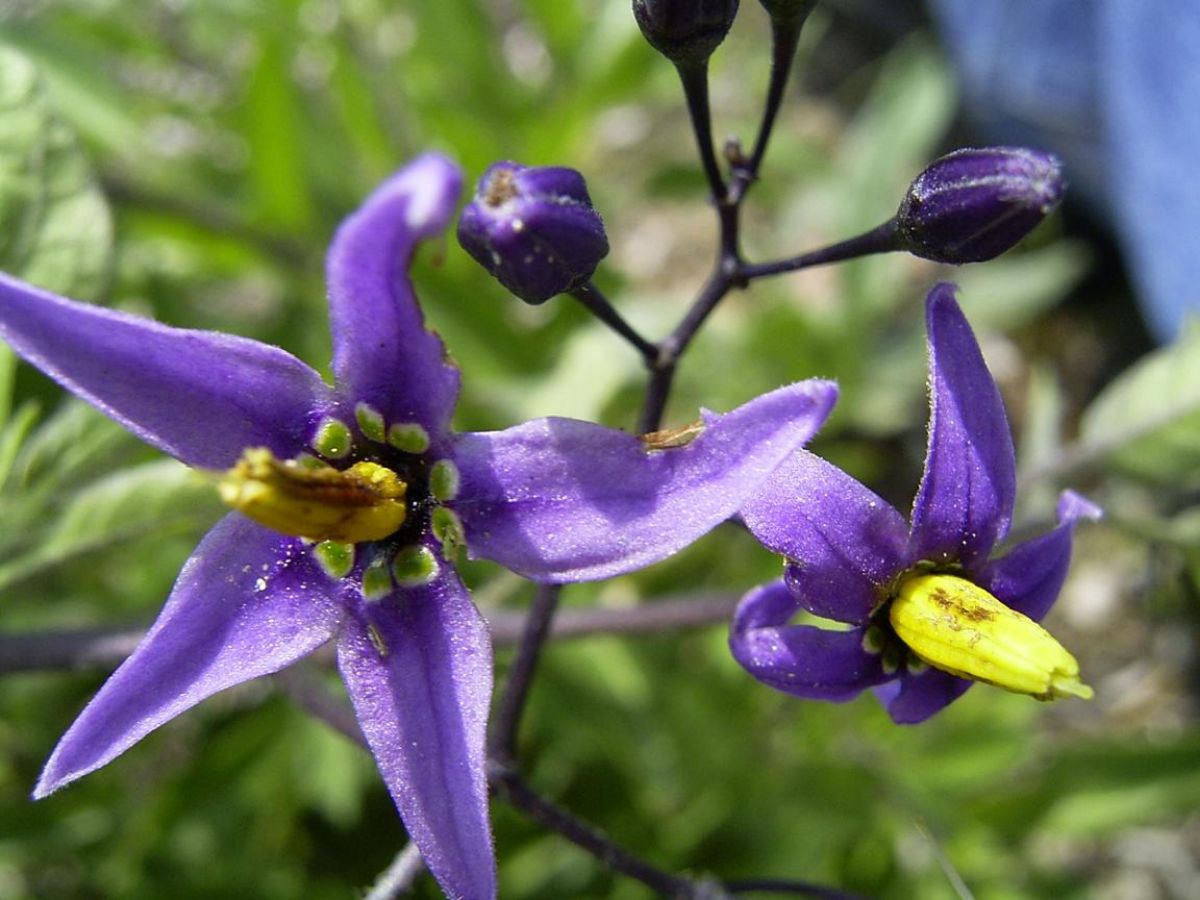
Have you ever heard of Solano? A plant also known as culamara, blue flowered nightshade or its scientific name, Solanum rantonnetti.
Its flowers are the most characteristic, but what type of plant is it? How is it supported? If it caught your eye, keep reading and you’ll find out everything you need to know about it.
How is the Solano factory

Source: YouTube Riomoros
The Solano plant is climbing. It is in fact a shrub, but with a climbing habit. He is originally from South America. In addition to this species there are many more Solanumbut when looking for solanos it is the most common and best known.
It is persistent, oval and very shiny green. But the most characteristic of this plant are, without a doubt, its flowers. They are bell-shaped, rough in appearance and blue in color. Moreover, they are long lasting as they can bloom in the summer and last until mid-autumn.
After that, we would have the fruits, which will be red berries that will be arranged in clusters.
It is usual to have it as a small tree in which the trunk remains clean until it reaches its top, quite leafy and flat with branches and leaves. In its blooming season it is filled with small flowerswhich gives it purple tones dotted with green.
Of course, you have to be careful because, sometimes it can have thorns. Its height will depend on whether you have it in a pot (with which it will not reach two meters), or on the ground, where it can easily reach 6-8 meters there.
Solano Plant Care

Now that you know this shrub a little better, would you like to take care of it? It goes without saying, but such care can be worth it for any solano plant. Except for a few minor quirks, you won’t have any issues with them.
Here we leave them:
location and temperature
The best location for the Solano plant will largely depend on the climate you have where you live. It is not the same to have it in a hot climate with very suffocating summers, than in a climate where the summer does not exceed 25ºC.
Therefore, depending on your place of residence, bet on an exhibition in full sun or partial shade, but making sure that it receives as much natural light as possible (direct and indirect).
Make sure it is not in an area where it receives drafts, because they don’t like anything. In fact, it can cause her leaves and flowers to fall off, leaving her bare.
Regarding the temperature, you will have an idea that she will not have a problem with the heat. But, concerning the cold, it does not tolerate temperatures below 10°C. Actually, Your ideal would be between 12 and 18ºC in winter, therefore, if it goes lower, it is possible that it loses the leaves (but it will recover them in the spring).
Substrate
Regarding the soil to use, we advise you to use one rich in organic matter, as well as very drained, so that it is well oxygenated. A good mix you can try is using compost with universal soil and perlite or similar.
You can also use a universal substrate with worm humus, sand and heather earth.
Both options will work great and provide you with the nutrients and base you need. In fact, you will have to transplant it as it grows and the roots come out of the pot (from the bottom).
Irrigation
The Solano plant needs good watering. In spring and summer, due to high temperatures and exposure to the sun, you will need to water it enough to keep the soil moist. This can be between 2 and 4 times a week (depending on where you are, temperature, sun, etc.).
On the other hand, in autumn and winter it is watered to a minimum, especially if there is high humidity, to prevent it from being affected by fungi or other diseases. At the beginning, with the youngest plants, you have to be very careful because they are more demanding than those that are already adapted to the climate.
Subscriber

herbarium_source
Being a flowering plant and also blooming heavily in spring and summer, you should have a fertilizer on hand to apply during these months. You can first fertilize with an organic fertilizer, such as manure or humus, then continue, monthly, adding a liquid chemical (to dissolve it with the irrigation water) until late summer.
Size
As the climbing shrub that it is, the Solano plant will grow during the busiest months (spring through fall) and this will cause it to lose its shape. So all year round yes it is convenient to cut enough to maintain the desired shape.
But, in addition, at the end of winter, it is a good idea to prune it to control that year’s growth and flowering. It is a way to clean the plant and at the same time stimulate it to grow.
Plagues and diseases
This plant is not too susceptible to pest attacks, but aphids can wreak havoc and cause problems for it. The solution in these cases is to use specific products, as well as prevention so that they can attack it.
As for diseases, most will be caused by fungi, such as Botrytis. However, the greatest dangers are related to over or under watering and too much or too little lighting.
Multiplication
Finally, when it comes to propagating the Solano plant, the best way to do it, and the most effective, may be through cuttings.
These should be harvested in late summer, and if possible by air layering.
Another way to reproduce it is with the seeds that are inside the red fruits that it drops. It’s a slower process, because you have to plant them in the spring and protect them from bad weather (greenhouses) so that they germinate and start growing.
The Solano plant is one of the prettiest you can have at home or in an apartment, and the prettiest thing is when it blooms with those purple flowers. Do you dare to have one?