The plows they are instruments of primary work, What they break up the soil to allow the establishment of a crop. to exist three groups: What invest the ground, What they mix it carefully, and the What they do not invert it, leaving traces of plant residue on the surface.
How are plows classified? Those who plow the soil and base their work on intensive tillage. Those that limit tillage to vertical work (chisel, subsoiler). Those who avoid tillage and only till superficially for weeding and incorporating surface trash.
When to use the moldboard plow? The moldboard plow It is suitable for accelerating the decomposition of stubble, reducing the multiplication of new weeds in the soil. Say he’s not the type to plow suitable for loose soils, as only the lateral displacement of the soil is achieved.
What is a moldboard plow? General description • Consisting of one or more bodies, each of them cutting up and turning over a strip of earth whose section is rectangular, of width equal to that of the excavation and of height equal to the depth of intervention .
What type of plow is best? The plow The disc type is also useful for tillage, but unlike the mouldboard, the disc type is better in hard and rocky soils or soils with large remains of roots, because it works according to its weight.
What is a plow and how many types of plows are there? – Related issues
What is the difference between plow and harrow?
The flirt It is an agricultural instrument that consists of a kind of grid with spikes at the bottom that serves to level the land after plowing. harrow. The plow It is a tillage tool used in agriculture to open furrows and remove soil before sowing seeds.
How long does it take to plow one hectare?
working speed I know is between 4 and 9 km/h, with which the pictured plow can plow about one hectare per hour. The force required depends on soil texture, soil moisture, working depth and speed.
What are the disadvantages of the plow?
These are the main plow disadvantages:
- Damage to the existing microflora in the soil is caused. …
- Creation of the plowing crust. …
- Increased number of tillage steps. …
- Greater energy and economic consumption.
When is the best time to plow the land?
The most suitable period, both for grazing and for crops, is generally between the months of November (the 1st tillage) and March and April (the 2nd tillage). Word work derives from the Latin laborāre, which had the generic meaning of working.
How are moldboards classified?
moldboard: cylindrical, helical, universal and slatted (rhomboid and square).
How many HP per plow disc?
Plow of discs It consists of 3 to 4 discs 24″ or 26″ X 1/4” thick disk, with a working depth of disk from 15 to 25 cm. Power requirement for equipment from 80 to 100 hp engine.
What is a tine harrow?
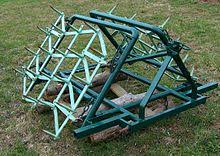
the grandstand or tooth harrow is a tool What It is used in agriculture to cover furrows, level land and break up clods or rubble in the ground. What remain on the surface after plowing, so What the earth is loose.
What is the function of the disc plow?
Function main Primary tillage with turning of the soil to produce swelling and aeration. Incorporation of crop residues to a lesser degree than with plow The soil is pulverized under conditions similar to what a cylindrical moldboard does.
What are the parts of a plow?

It is composed of the following elements rooms: mencera, belorto, corner, earmuffs, telera, bed or dental, grille, rudder and cabija.
How does plowing affect the soil?
The tillage of Usually I with traditional tools (plow disc or moldboard), is an agricultural practice that research shows as a possible cause of erosion, compaction, moisture loss and increased production costs when used excessively.
What are the results of good tillage?

Improved aeration and oxygenation Even though we have already mentioned it in other articles, turning the soil increases the number of macropores in the soil. These are responsible for storing gases, (What oxygen), which the roots of the plants need so that the problems do not appear.
What does CP mean on a tractor?
The center of power (zipper) from tractor is the technical name for the dynamic center of gravity (CG) of the tractorwhen performing traction work.
How is the land plowed?

Conventional or traditional tillage is tillage before planting with machines (ploughs) that partially cut the top 15 cm of soil. Floor I know loosens, aerates and mixes, facilitating water entry, spreading nutrients, reducing surface pests and weeds.
What is the size of the plow?
With a working width of 71 cm to 81 cm and a total height of 127 cm to 145 cm. Their bodies are separated by a distance of 76 cm to 86 cm depending on the model. The approximate weight of plows bisurco is between 395 kg and 497 kg.
How much does an hour of work with a tractor cost?
For tractor of 122 HP (90 kW), operating with an average load throughout the year, this consumption would be 13.5 L/h, which What equivalent to €10.13/h (€0.75/litre of diesel), and maintenance and repairs at €3.65/h, which What in total it reaches €13.77/h.
How much does it cost to plow land?
The price of clearing can vary between €0.25 and €5/m2, although the most common is that it costs between €0.90 and €3/m2.
How many hectares can a tractor work?
Professor-researcher in the Department of Mechanical Engineering at UACH. of these artefacts, which ensure that the adequate power/area ratio is 1 hp ha–1, these tractors It has a potential coverage for agricultural work of about 80 ha.
What are the advantages and disadvantages of the plow?
advantage use the plow in the field one of advantage it is What the soil is maintained in its best condition, eliminating imperfections or weeds. In addition, a better porosity is obtained, which What will help What the more oxygen there is to the plants and therefore they grow more vigorously.
Who was the inventor of the plow?
The first plow Built entirely of iron, it was made by the Englishman Robert Ransome in 1808.
What is the name of the implement for plowing the land?
Plow, for prepare well the ground He is a team designed for groove and level the ground thanks to the blades it has. There are several models depending on the need: mouldboard, disc, surface or underground.
What to do after plowing the land?
Often one has to resort to leaving the Earth with lumps after plowing Yes, after, perform additional work to break them up and leave the soil ready for planting. The temperature value is usually not established experimentally, rather intuitively.
How to turn the soil to sow?
How to prepare land to sow
- Identifies the type of land where you are going sow.
- Eliminate weeds from the ground.
- ventilate the Earth before sow.
- Smooth the ground after aeration.
- Fertilize and enrich land for leave it ready sow.
How is the land fertilized for sowing?

There are two types of subscribers:
- Buried: spread the compost on the ground for dig later Earth and let it be buried and mixed. …
- On the surface: Spread the fertilizer on the surface of the soil and nature itself (rainwater) will be the one carrying the nutrients to the roots.
What is the function of the plow?

With the word “plowmeans this process which removes horizontal clods from the surface of the soil. Then, these clods are stirred up and crushed to restore the soil to its initial state and favor the passage of organic matter, guaranteeing nutrition and space for the new crop.
What are the parts of a plow?
It is composed of the following elements rooms: mencera, belorto, corner, earmuffs, telera, bed or dental, grille, rudder and cabija.
How to level the plows on an agricultural tractor?
LEVELING. 1. After hanging the plow and on a flat, level place, adjust the right arm of the tractor until you get the plow is at the level of the rear axle of the tractoravoiding, during this adjustment, that the plow rest completely on the ground.
What is the function of disc plow?
The disk It is connected by four or five screws, which allows replacement in case of breakage or wear. about each disk a cleaner, or scraper, is placed, which is responsible for loosening the strip of earth that rises through the disk.