If you purchase an item through links on this page, we may earn a commission. Our editorial content is not influenced by commissions. Read full disclosure.
There are many diseases your plants could get that you need to deal with. Many of them are annoying and only require a little effort on your part to beat them. Your plant recovers and you move on.
Every once in a while, your plants contract a disease that is difficult to prevent and control, or one that can be confusing due to all the things that cause it. It’s easy to get overwhelmed when the disease has a generic name that encompasses many pathogens.
Basal stem rot is an umbrella term that refers to various fungal and oomycete infections. The commonality is that it can kill your plant. We’ll break it all down so you don’t have to lose your garden to basal stem rot.
What is basal stem rot?
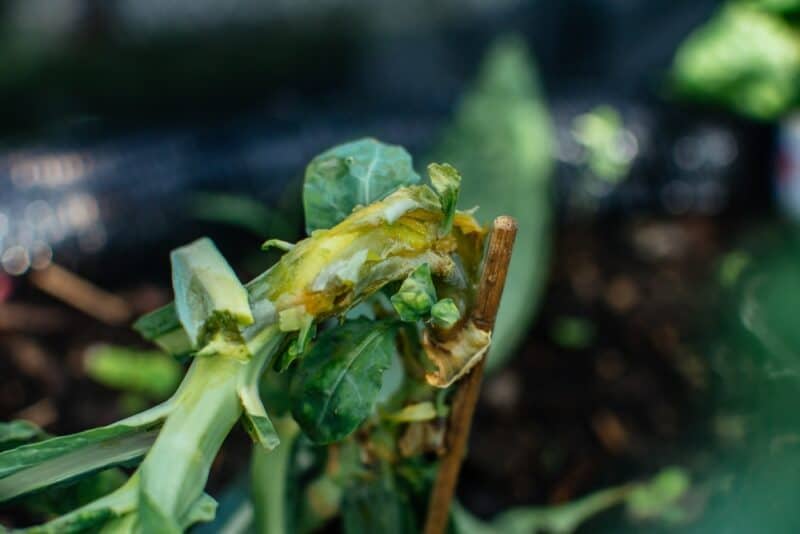
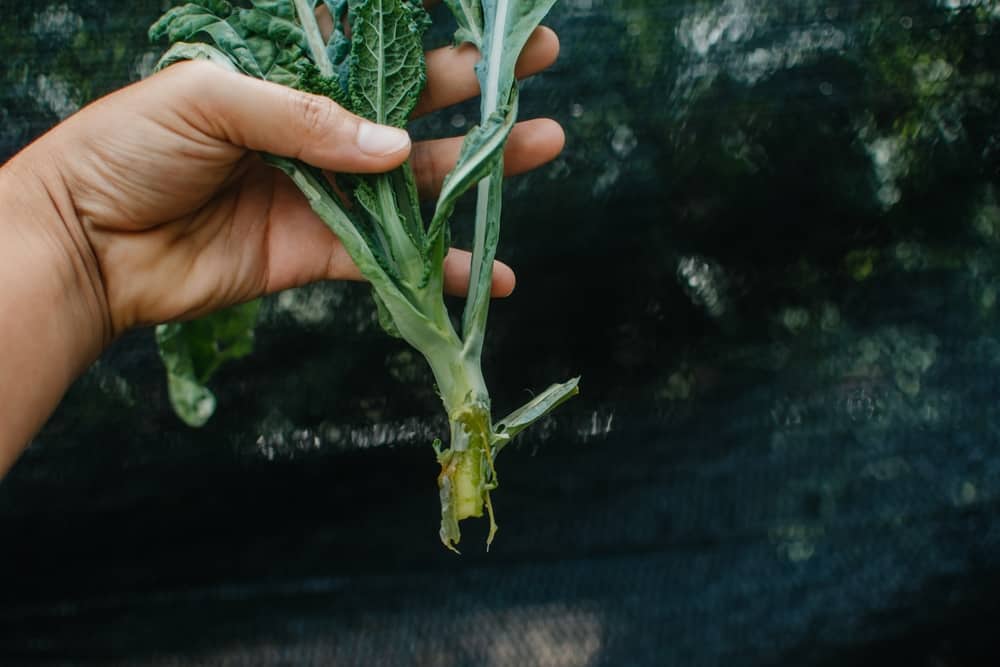
Basal stem rot is an umbrella term that describes fungal or oomycete-borne diseases that infect and weaken the lower stems and roots of certain plants. Various pathogens affect different plants.
Basal stem rot causes the plant it infects to wilt and die. In commercial environments, this can be devastating. In the vegetable garden, this can cause a lot of headaches and hard work.
Crop losses and a sharp reduction in yield are the result of basal stem rot, as well as the death of the plant.
Certain types of basal stalk rot are common worldwide, significantly affecting the palm oil industry.
Many of the plants affected by basal stem rot are found in home gardens as well as commercial farms, so it is useful to know what it is.
The good news is that regardless of the pathogen, treatments for basal stem rot are similar.
Here are some of the common causes of basal stem rot:
Fusarium rot
When it comes to plant diseases in the vegetable garden, you may have heard the word “Fusarium” before. Fusarium is a genus of soil fungi that can cause various plant diseases, including root rot, damping off and stem rot. Basal stem rot affects the roots and lower stems of plants.
It can be a bit confusing. Fusarium wilt of tomatoes is not a basal stem rot, although the unfortunate Fusarium gender is involved. Fusarium wilt directly affects the xylem, the water transport tissue of the plant. It then affects the foliage and the top of the stem.
Basal stem rot (from Fusarium genus) affects the roots and the lower part of the stem of the plant.
Fusarium basal rot is caused by several Fusarium species and affects plants such as:
Onions and garlic
This disease first affects the basal plate, which is the base of the onion or garlic. The infection, caused by F. oxysporum f.sp.cepaeprevents water and nutrients from being transported from the plant to the foliage.
The foliage turns yellow and the leaves die from the tips inward.
As the bulb rots, necrotic tissue moves up the bulb from the base. The roots under the basal plate turn black or sometimes pink. A white fungal growth can be seen around the bottom of the bulb at the same time.
Once Fusarium basal rot infects a bulb, the disease can continue after harvest. Mites will be attracted to decaying plant material.
Tomatoes and Peppers
Fusarium basal rot can also infect nightshades like tomatoes and peppers.
When Fusarium occurs in Solanaceae, the lower leaves turn yellow and fall first, or turn yellow and wilt but remain on the plant. You will see stem discoloration just above the soil line and trailing of the plant. The stem rots near the soil line and the plant will die quickly once this begins.
Beans
When bean plants are infected, you will see severely stunted bean vines and yellowing all over. The yield will be reduced in number and quality.
Cotton
Symptoms and results in cotton are the same as in beans. Often the disease is not identified until the plant has been dug up and inspected.
Phytophthora rot
Pathogens in the Phytophthora can cause all kinds of stem, crown and root rots. Although it affects dozens of species, the following plants more often suffer from basal stem rot when they Phytophthora pathogens are present:
Attorney
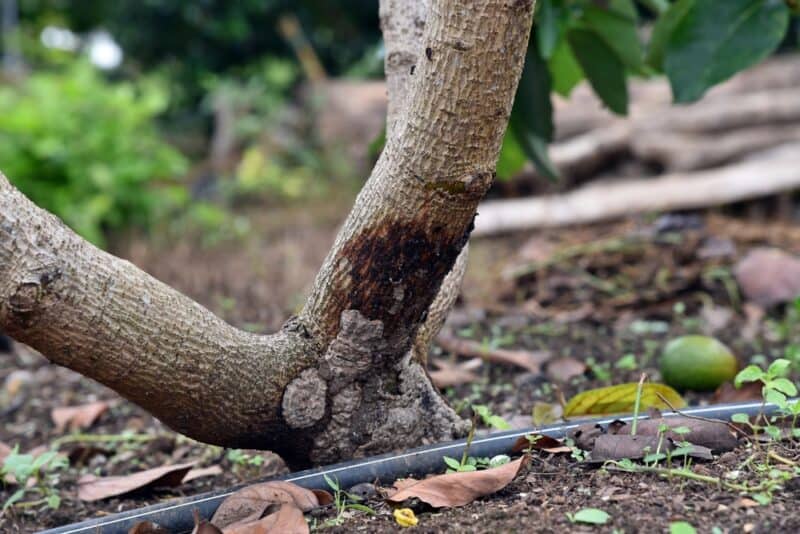
Basal stem rot can be a problem in avocado trees caused by soil oomycete Phytophthora cinnamomi. The pathogen can persist in the soil for a long time and is present in many host plants.
The disease affects the tree slowly, causing a gradual decline. Since there are no dramatic symptoms until it’s too late, you might miss the signs and be surprised when the tree falls.
If you’re really observant, there are a few things that can give you clues. The foliage will usually begin to wilt as the disease affects the roots and the lower stem or trunk of the tree.
In later stages, water and nutrients are prevented from reaching the upper tree and foliage. The roots begin to decay and the lower stem or trunk becomes spongy.
In my case, I lightly tapped my young avocado tree with the riding mower, and the whole tree fell, snapping at the trunk just above the soil line. Root and trunk inspection was the only way to diagnose the disease.
Some avocado trees will display what you think are symptoms of water stress or other diseases, which can be misleading.
Cocoa
Basal stem rot in cocoa is a serious problem in hot regions like Hawaii and southern Florida. The pathogen responsible for basal stem rot of cocoa trees is P. palmivorous. It is responsible for significant crop losses.
The roots are infected along with the lower stem of the plant. In cocoa, the infection often ends up encircling the stem or trunk.
Eventually, the condition causes the pods to black rot, especially in areas with high humidity and sudden rainfall.
Rhizoctonia solani
Rhizoctonia solani can cause all kinds of diseases, such as stem rot, basal rot, root rot and damping off. It affects dozens of species, including peas, grasses, potatoes, tomatoes, peppers, rice and corn.
Soybeans and cotton, in particular, suffer from basal rot when this fungal pathogen attacks.
Soy
This is another fungal pathogen that causes basal stem rot in soybean crops. In soybeans, basal stalk rot is rapid and devastating. The stem rots, causing the plant to wither and die.
Depending on when in the growing season the disease infects the plant, yield loss can be significant. This is especially troublesome in the vegetable garden with small patches of soybeans.
Basal stem rot is worse in soybean plants that are already struggling with drought conditions or those that are lacking in nutrients.
Symptoms of basal stalk rot on soybean plants show up at the stalk at ground level. A canker forms, which ends up encircling the plant. Water and nutrients can no longer reach the upper parts of the plant.
Cotton
R.solani can also cause basal stalk rot of cotton, although the symptoms differ slightly from those seen when cotton has basal stalk rot caused by Fusarium to rot.
When this fungus is present, the base of the stem is covered with reddish-brown lesions at ground level. A canker forms, preventing water and nutrients from feeding the plant above. But also makes the root mass small.
Yellowing, wilting and plant death ensue, or you will have a weak plant with a low yield.
Other Plants Affected by Basal Stem Rot
Other plants affected by basal stem rot include:
Palm (including oil palm and ornamental plants)

Palms can be infected with basal stem rot caused by a variety of pathogens depending on the palm cultivar. This includes Phytophthora sp., Fusarium spp., and Ganoderma zonatum.
Similar to symptoms caused by other plants, palms suffer from stunted growth and wilting.
When palms are affected by basal stem rot, you will often end up with obvious trunk or stem decay. Combined with a soft, spongy area near the soil line, the trunk of the palm tree may omit a foul odor.
Banana
Basal stem rot is a problem in banana plants and can be caused by the pathogens already mentioned, as well as by Oxysporum f.sp. cubense. Lower leaves wilt and turn yellow first as symptoms move up the crown of the plant.
At the same time, the base of the tree rots and breaks into pieces. The roots of the banana tree darken and eventually rot, causing the tree to die over time.
8 Steps to Treat and Manage Basal Stem Rot

Prevention is better than cure when it comes to basal stem rot.
Managing this disease in any type of plant can be a real challenge. Your answer will depend on the plant and the pathogen that caused the disease, but there are some general steps you can take.
- Plant in well-drained soil, unless your chosen plant likes moist or soggy soil. The pathogens that cause basal stem rot thrive in moist soil that does not drain well around the roots of the plant. If the soil structure has changed since you planted, add things like quality compost or well-rotted manure to improve it.
- Do not overwater the plants or the garden and water the soil. Different plants need different amounts of water and want it at different times. Learn what irrigation your plants need.
- Remove and destroy plant material that you suspect may be infected with a disease.
- Plant only disease-free specimens (hopefully certified). Don’t reuse soil if it doesn’t come from your garden and you don’t know its history.
- Use fungicides if you think your plants are susceptible to basal stem rot. Since they are of limited use, talk to your local nursery about which, if any, to use.
- Monitor your plants for health and signs of infections. Healthy plants are always better able to resist any disease if they are healthy.
- Practice crop rotation and do not plant from the same family in a location that suffers from plant disease for three or four seasons.
Was this article helpful?
Yes No ×
We appreciate your helpful feedback!
Your response will be used to improve our content. The more feedback you give us, the better our pages will be.
Facebook pinterest