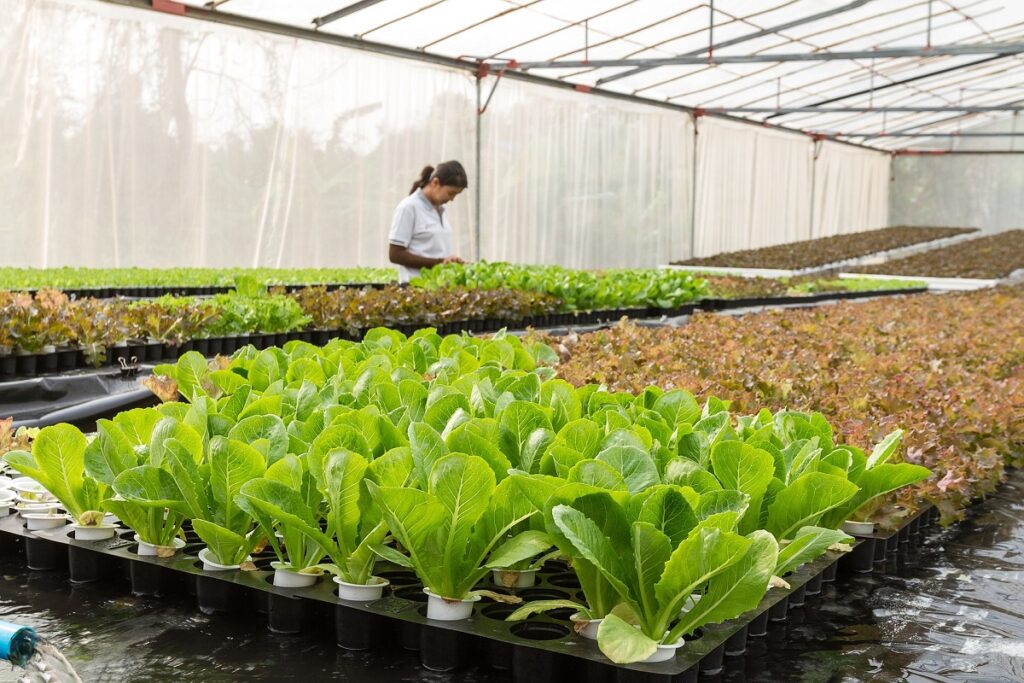
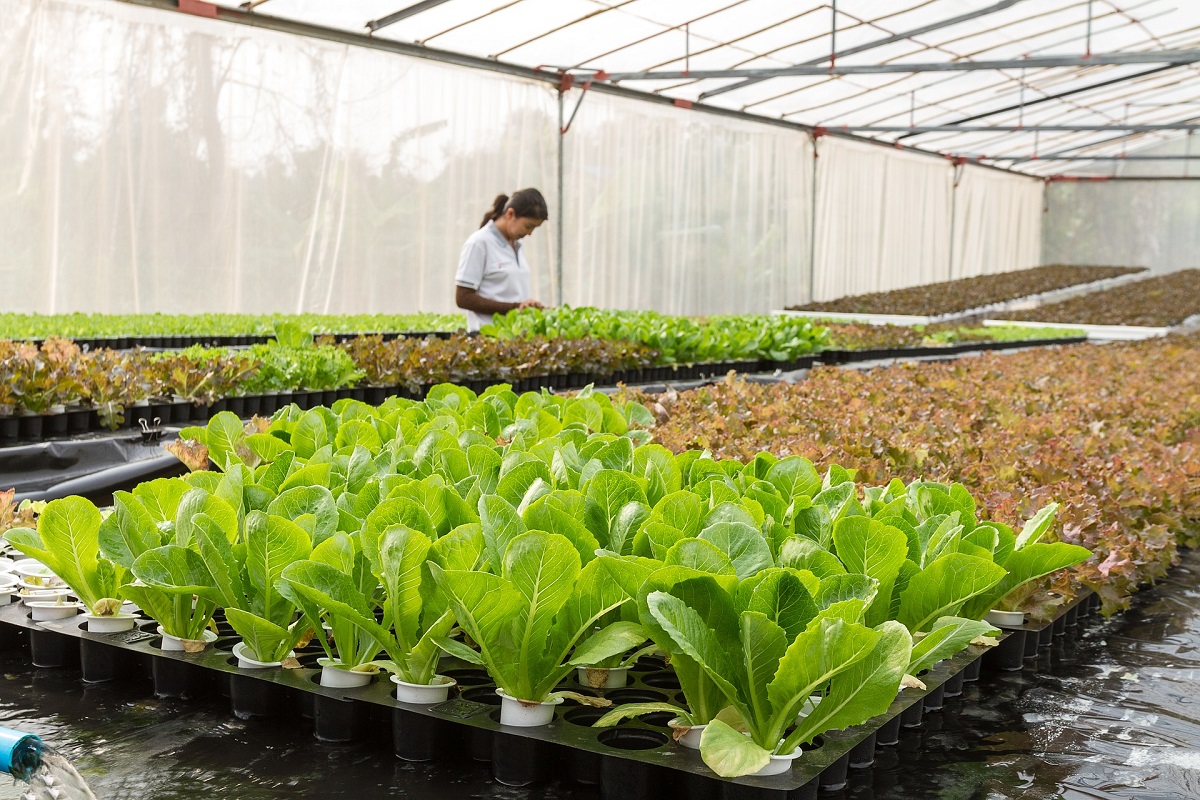
In agriculture, attempts have been made on many occasions to optimize growing conditions in order to improve both the land used and the raw materials and resources used. One of the most revolutionary systems is aquaponics. Many people do not know what is aquaponics or how to get the most out of it.
So we are going to dedicate this article to telling you what aquaponics is, its characteristics, advantages and disadvantages.
What is aquaponics
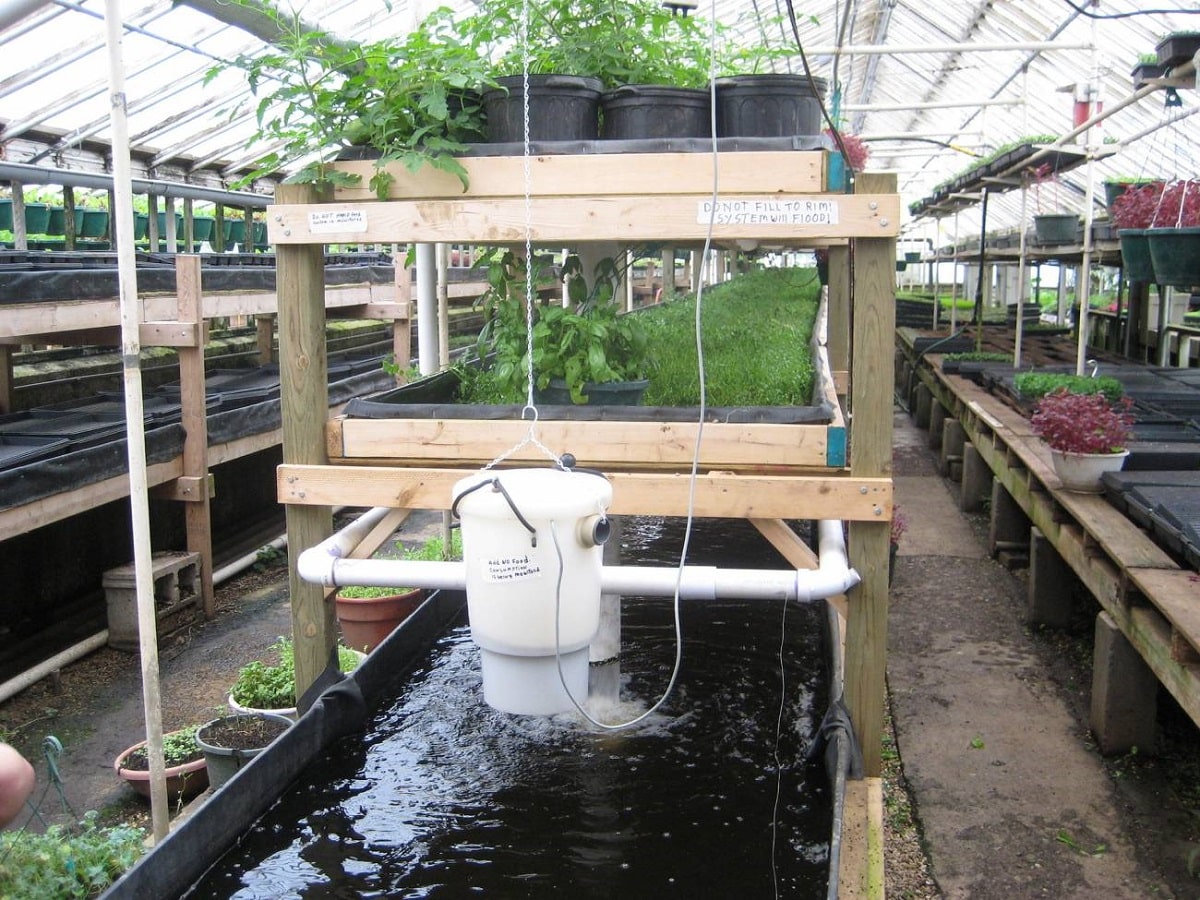
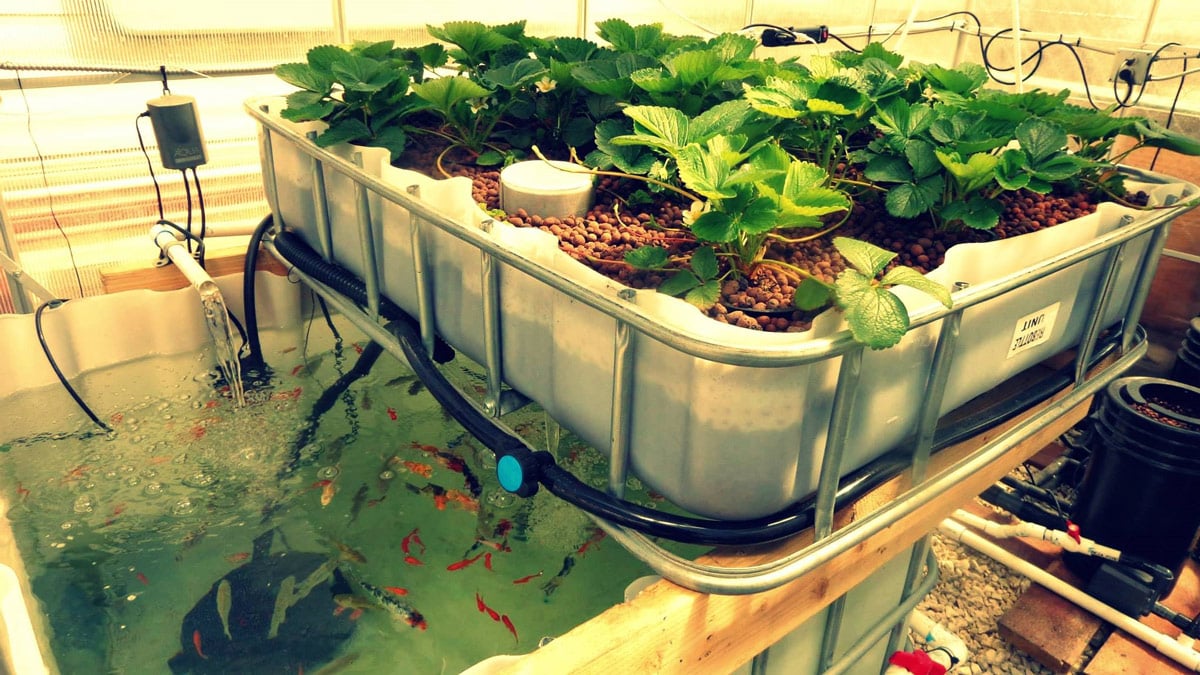
Aquaponics is a food production system that combines the cultivation of aquatic animals (aquaculture) with the cultivation of plants in water (hydroponics) through the continuous recirculation of water in two subsystems.
with this technology space, water and energy are saved and waste from the system to the environment is reduced or eliminated as everything is used. Healthier, livelier and tastier vegetable and fish products are obtained while respecting the environment.
Aquaponic systems can be designed on any scale, both for private and industrial use. Moreover, through this new mode of production, it is beneficial to create jobs, promote self-consumption and the local distribution of fresh and healthy products.
The principle of aquaponics is based on the fact that the waste produced by aquatic organisms (usually fish or shellfish) are transformed by the action of bacteria into nutrients necessary for plant growth.
Essential bacteria belonging to the genera Nitrosomonas and Nitrobacter are involved in this process called nitrification. Thanks to the nitrosomonas, the ammonium present in the feces and food of the fish is converted into nitrite, which in turn is converted into nitrate by nitrobacter. These nitrates are then taken up directly by the plants and act as biofilters in the system, purifying the water returned to the fish ponds.
How does aquaponics work

The system works like this: the fish produce compost, or manure, from the soil after excreting the nutrient-rich waste products of their food. In other words, people feed fish to feed people later.
Thus, the natural “fertilizer” excreted by the fish is pumped upwards, where it is taken up by the plants. At the same time, the roots purify the water by removing these nutrients, which return to where the fish were. This eliminates the need to introduce clean water every week.
The system saves up to 90% water compared to conventional cultivation and completely eliminates waste which can be generated because it is a closed system. Systems of this type are already used today both in domestic production and in production on an industrial scale. The home aquaponics system can be installed in an urban environment, in the free space of the house, on the balcony, receiving at least 5 hours of sunlight a day. Large commercial aquaponic systems are also easy to manage, as growers have little control over crop and fish production. Vegetables, such as lettuce, can be harvested after a short cycle of four to six weeks.
a little history
The practice of using fish droppings to fertilize plants has been around for thousands of years, with Asia and South America being the first civilizations to apply the method.
About 900 years ago, the Aztecs of Mexico cultivated the terraces of Lake Texcoco take advantage of the water and organic matter produced by the decomposition of fish waste and microalgae on the bottom of the lake.
In the late 1970s, scientific research began to emerge in North America and Europe showing that metabolites produced by fish could be extracted from water and used in growing vegetables.
Over the next several years, advances in technology led to improvements in areas of research such as the identification of feces, the biological filtration of waste, and the optimal conditions for creating closed systems.
Circa 2001, at the University of the Virgin Islands, Dr. James Rakocy developed the first commercial aquaponics system, laying the foundations for its operation. With the emergence of aquaponics-specific data, commercial production began to emerge, with a large number of companies.
Today, commercial systems continue to advance to increase their efficiency, and the main countries using these technologies are the United States, Canada, Australia and Mexico.
The importance and applicability of aquaponics
These issues are becoming increasingly important as the supply of potable water decreases around the world and the demand for food increases. In this context, aquaponic symbiosis is of great relevancebecause it is a method of food production that can be developed on poor and infertile land with limited water resources.
The variety of aquaponic models allows applications on a commercial, domestic or self-consumption scale. Another form used in aquaponic symbiosis is one developed for ornamental purposes, involving fish and aquatic plantswhich can generate considerable profits if managed commercially.
On the other hand, small-scale activities make it easy to teach sustainable production management, nutrient cycling, and other developmentally important technical topics to students in primary, secondary, and agricultural schools.
Pros and cons
advantage
- aquaponic systems They are an effective way to reduce and utilize waste that is normally dumped into the environment.
- Water exchange rates can be reduced, thereby reducing operating costs in arid climates where water is a major expense.
- Eliminate the use of chemicals such as pesticides and fertilizers by producing vegetables that can be considered “organic”.
- Reduce food production in the region, thereby optimizing labor resources, water resources, balanced fish nutrition and plant nutrients.
- Aquaponics can produce equal or better plants than hydroponic systems, while fish yields are higher and healthier than aquaculture.
- It can be implemented on a small or large scale.
- It is convenient to feed the fish.
- By using simple materials, building materials such as containers can be recycled, which is inexpensive.
- It is ideal for land with low agricultural qualification.
- It does not harm soil or water, so it is environmentally friendly.
- Earn two streams of income from growing plants and fish, which can contribute to the local economy if sold.
- The whole family can participate in its construction and maintenance.
Disadvantages of aquaponics
- Basic knowledge of plant physiology is required (vegetables) and animal (fish), including water quality parameters, since it is an integrated system of two crops.
- The system depends on electricity to run pumps and filters, putting the entire system at risk in the event of a power outage, as well as electrical energy costs.
- There are very few species of fish that can be used in aquaponic systems.
I hope with this information you can learn more about what aquaponics is and its characteristics.