

Having hydrangeas is something common in many homes as it is one of the most used plants in gardens and interiors and typical of Spain. However, you can often come across hydrangeas with burnt flowers. And it’s not pretty.
But, do you know why this happens? What are the reasons why you may find them like this and how to fix it? Next, we are going to give you the keys to understanding what could be going on and why your hydrangea ends up with flowers like this. And be careful, because it can also affect the leaves.
Reasons for Burnt Blossom Hydrangeas
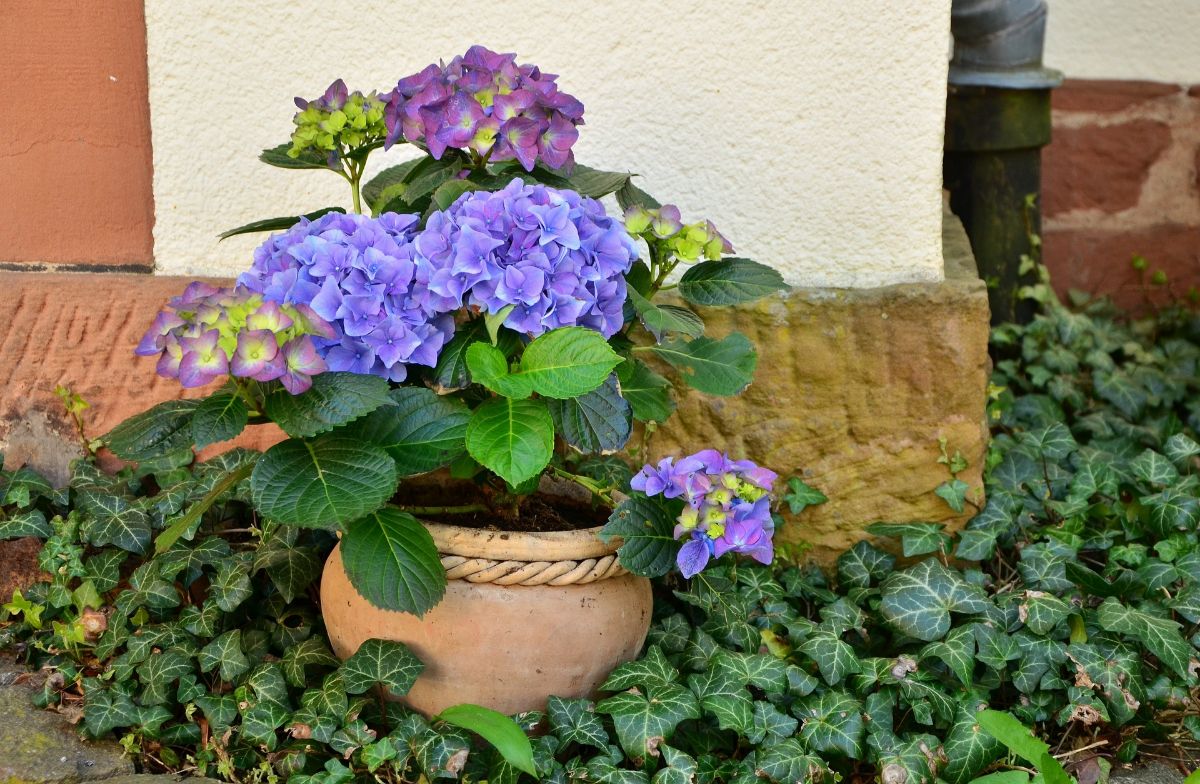
As you know, hydrangeas in general are not too difficult plants to maintain. But they have certain quirks to consider that can make your plant better or worse. And these are the ones that can cause you problems with them, such as the fact that burnt flowers appear.
What are the reasons? We tell you.
Excessive lighting
In case you don’t know, hydrangeas are plants that do not like the sun. At least no direct sun. Now, that’s not to say that if you have a hydrangea that’s been around for many years, you can’t have it in the garden with hours of sunlight (it all depends on the adaptation of the plant).
In general, hydrangeas are in shade or partial shade. They like light, but they can’t stand direct sun, even for a few minutes or hours. Much less if it is in the middle of summer and at times of greatest incidence.
When the sun affects them, one of the consequences it has is that burns appear. These occur mainly on the leaves and flowers and spoil the whole appearance of the plant.
The solution is simple you would just have to move it. That way it wouldn’t give it the sun but it would give it the light it needed to grow properly.
water mirror effect
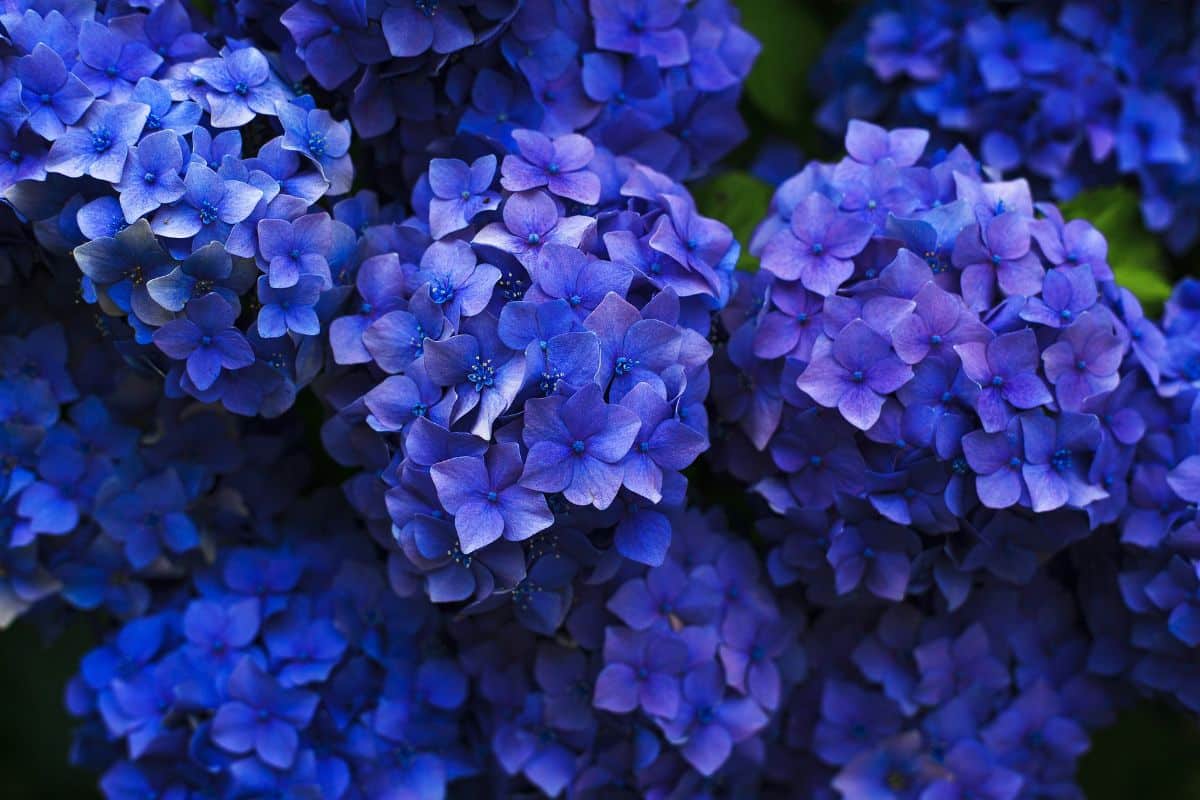
Another reason for your burnt blooming hydrangeas may be water. No, we don’t mean you water it more, which may be, but that drops, either irrigation water or morning dew, can create a magnifying or mirror effect with the sun and cause burns on flowers and leaves.
If this happens, you will first need to water only at night, rather than first thing in the morning; and second, be mindful of the dew to shake it off a bit so that the drops fall. Another option is to move it to another location where it is completely shaded, although depending on the hydrangea it will require more or less light.
Watch out for mushrooms
Sometimes hydrangea flower and leaf scorch can be the result of a fungus on the plant. It can be distinguished as small white spots located on the leaves (both on the face and on the underside). It affects especially in spring and summer, but the truth is that it depends on the weather. If it’s temperate-warm, it could affect you all year round.
Regarding the treatment, the best thing to do is to use a fungicide to treat. Another option can be to clean each of the leaves and flowers one by one with a damp cloth with alcohol or the like. It’s a lot of work, especially if your hydrangea is large, but you can kill those fungi this way.
If you see that they are also on the ground, a change of substrate can help, but be careful, because if the hydrangea is weak, the transplant can stress it and, with it, make it much sicker.
excess nutrients
Imagine that you have just transplanted your hydrangea. And in addition to having put in a new substrate, you decide to pay for it. This supposes a overexposure to nutrients. That is to say, it is as if you have paid too much and it causes leaf and flower burns of the hydrangeas.
Not only can it happen for this reason, but it It can also be given by exceeding the dose of fertilizer you are using, for paying too much on time, or for doing it too often.
The solution is to shut down the subscriber. We know that plants need to be healthy. But all in good measure. Not by paying more you will have more flowers and greater growth of the hydrangea.
When he is young and you have just bought him, it is better that you pay little, less than the manufacturer’s dose, until he gets used to his new home. When you see it starting to grow on its own, you’ll know it’s already adapted and that’s when you can start fertilizing ever less.
Excess water
Finally, excess water can also be detrimental to hydrangeas, and one of the reasons for burnt flowers. When overwatered, the plant suffers. The problem is that many associate the fact that the plant seems limp with the fact that it needs more water, and they end up drowning it when in reality they don’t need it.
In this case, when you go too far with water it can cause a proliferation of fungiand this negatively affects both the root ball and the plant itself.
If you catch it in time you can save it by doing an emergency transplant (remove all the sodden soil and put some dry substrate to try to stop the excess humidity). Of course, it can suffer a lot and you won’t succeed, but at least you will have tried.
Really, hydrangeas are not difficult to care for. There are those who have the best hand and who are struggling. But these are plants that almost take care of themselves as long as we meet their needs, especially in terms of irrigation and lighting. If these two factors are executed well, the plant will eventually grow properly. But when hydrangeas have burnt blooms, it’s a warning that something is wrong. And it is not enough to cut these flowers and hope that everything will be solved, because you have to know the reason. Can we help you with your particular case?