
snake plants (Sansevieria trifasciata) are known to be very hardy. That’s probably why they’re a familiar sight in many homes. But even the hardiest plants have their limits, and one of the signs of a problem is the presence of brown spots on the leaves of snakes.
Why does your snake plant have brown tips on the leaves? Brown spots on a snake plant are usually due to;
- Inconsistent or incorrect watering
- superchlorinated water
- Excessive direct sunlight and heat
- cold stress
- excess manure
- low humidity
- parasitic infection
These “indestructible” plants would be very easy to care for, but they won’t thrive or look their best if you don’t create the right conditions for them. Read on and I’ll tell you how to fix a snake plant with brown tips and how to prevent it.
How did your snake plant get brown tips?
You don’t need a green thumb to keep a snake plant healthy. But it is a living creature and there are limits to the amount of neglect a plant can tolerate.
While snake plants can handle the stress of imperfect growing conditions, there is a limit. Brown spotting on a snake plant is a common response to stress. The trick is to find out what’s causing the stress and fix it before your snake plant takes too much damage.
If your snake plant is showing other signs of damage, you can read my other article on common reasons your snake plant could be dying.
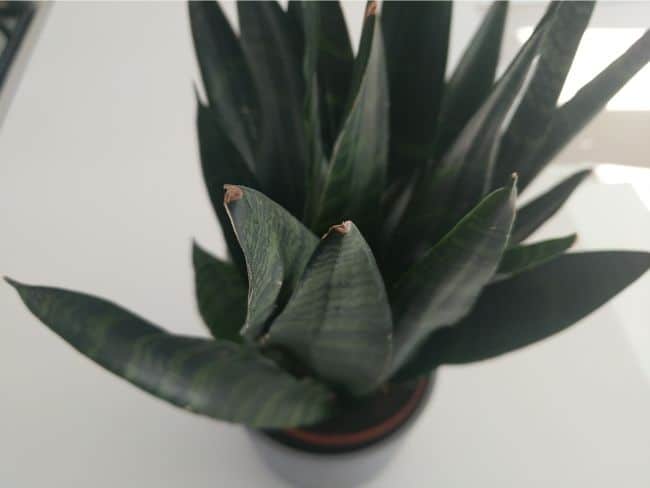
1. Watering issues causing brown tips on snake plants
Snake plants are not watered until the potting soil is completely dry. This is probably the most important thing you need to do to keep your snake plant healthy.
Its health can be affected and the appearance of the plant will deteriorate if it is poorly watered. The following issues can cause brown leaves and brown leaf tips on your snake plant.
Submarine
Although snake plants are great at conserving and storing water, there is a limit. When the plant becomes extremely dehydrated, you will first see it on the leaf tips.
This is a normal response to a flood and rarely means your snake plant will die. Once regular watering resumes, the plant will often produce a few new leaves from the rhizome as it takes advantage of the new abundance of water.
irregular watering
Most plants acclimate to their conditions to some degree. A submerged plant suddenly exposed to excess water can quickly show signs of stress, such as brown leaf tips. This often happens when I suddenly remember a plant that I neglected for a while and try to overcompensate for it.
It’s always good to have a routine to monitor your plants to see if they need water or have other developmental issues. I normally check my snake plants once a week to see if they need anything.
give too much water
Overwatering will keep the soil moist most of the time. This reduces aeration of roots and growing media, allowing anaerobic bacteria and fungi to thrive, which can lead to root rot.
Initially, overwatering will cause the plant to absorb too much water, causing signs of edema or even leaf blistering. This can lead to bacterial or fungal leaf diseases that show up as brown or black spots on the leaves.
Once the roots are affected by root rot, the plant can no longer absorb water and nutrients and you will see signs of nutrient and water deficiency on the leaves, such as discoloration and crusty brown tips on leaves.
My best advice is to smell the potting soil through the drainage holes in the bottom of the pot before watering. If the soil is moist, your snake plant will not need water.
Watering is one of the hardest skills to master when it comes to caring for houseplants. I wrote an article to teach you how to estimate when your houseplants need water in order to get it right every time.
2. Water that is too chlorinated can cause brown tips on snake plants.
I’m sure you already know this, but some indoor plants can be very sensitive to the type of water you use to water them. Most tap water contains chlorine and chloramine, which is very helpful in ensuring that our drinking water is safe for human consumption.
However, some plants are more sensitive to these chemicals and may show signs of stress if they are present. Reduce or eliminate chlorine by filtering the water you use or by leaving the water you plan to water your plant in the sun for a day before using it.
3. Excessive direct sunlight and heat
The amount of heat and sun a snake plant can tolerate largely depends on what it is used to. A snake plant can be grown very successfully in warm conditions with lots of direct sunlight, but only if that is what it is used to.
If your plant is used in low light conditions, it will show signs of stress if placed in full sun or warmer conditions. Your snake plant will develop brown tips if it cannot tolerate the intensity of the light.
That doesn’t mean you can’t move your snake plant once it’s been used in the same spot. But try to adjust light and heat levels more gradually so the plant can acclimate. It’s a lot like how we acclimate to warmer conditions over a period of weeks.
4. Cold Stress
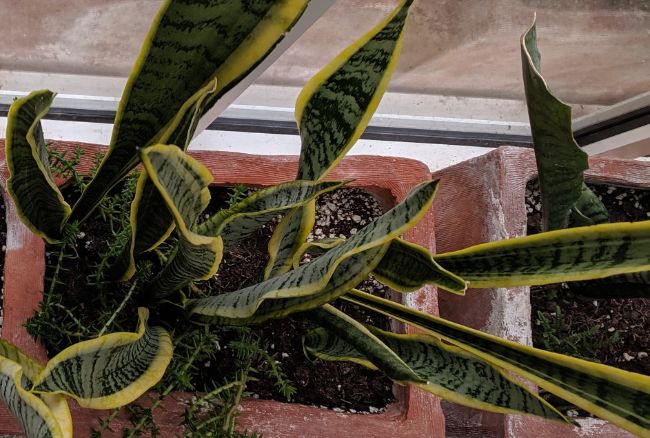
Snakes are not hardy and should generally not be exposed to temperatures below 10°C. Anything below this and the plant can become stressed and you will soon see your snake plant having brown tips.
For those growing snake plants indoors, it shouldn’t be too difficult to avoid such low temperatures, but if you keep your snake plants outside in the summer, be sure to bring them indoors. before the cooler temperatures of fall and winter. .
5. Too much fertilizer can cause brown tips on snake plants.
Snake plants are hardy succulents and have evolved the ability to survive in nutrient poor soil. As a result, their nutritional requirements are low.
Feeding your snake plant too often or using too strong a fertilizer can damage foliage or roots. This can often cause brown leaf tips, significantly affecting the appearance of your plant.
I fertilize my snake plants once a month during the growing season. I use this fertilizer and make up for it in half. Snake plants certainly thrive on a little food, but be careful not to overdo it.
If you’ve been a little fertilized with your snake plant, stop for a few months. Rinse the potting soil with plenty of water. This will help remove excess nutrients from the soil. Once your plant looks happy again, you can and should feed it again. Simply prefer too little to too much.
6. Low humidity
Many indoor spaces are drier than houseplants. Dry air causes excessive water loss from leaves and is a common cause of brown tips on snake plants.
Although snake plants don’t need high humidity to thrive, you should aim for at least 40% humidity. I use a digital hygrometer to periodically check the humidity around my houseplants.
7. Provoke
Spider plants can be susceptible to scale insects, spider mites and fungus gnats. Of these three, spider mites and scale insects can cause brown spots on your snake’s leaves. Both insects are sap suckers, which can damage snake leaves and cause leaf dehydration.
The dehydration caused by these insects stresses the plant, resulting in brown leaf tips. Pests are also a common cause of leaf curl in snake plants. I wrote in another post about identifying and fixing leaf curl in snake plants.
If your plant has brown tips, it’s always a good idea to inspect the foliage for signs of pests. Beware of fine webs of mites and oval bodies or fluffy masses of scale insects
There are many good ways to get rid of these errors, and you should definitely do it as soon as possible. It’s also a good idea to quarantine any affected plants as pest problems spread quickly.
I generally use natural pest control methods before resorting to chemical control. I wrote an article on the best natural methods to get rid of common houseplant insects.

How to Fix Brown Tips on Snake Plants?
The best solution for brown tips on snake plants is to identify the problem and improve growing conditions to prevent it.
Unfortunately, the damage to existing leaves and the cosmetic impact this has on your plant is permanent. Even if the plant is well cared for, leaf damage will not go away.
But don’t worry, if you give your snake the care it needs it will grow much healthier leaves and the impact of brown tips will be less noticeable.
Alternatively, you may choose to prune the affected leaves.
If the damage is minimal, you can cut off the brown part of the tip. The tip will not regrow, so be sure to prune your plant in a way that works for you. If the damage is extensive, cut off the entire leaf at ground level. The root structure of the rhizome will soon produce new shoots.
Last word
As you can see, most causes of brown spots on snake plants are closely related to aspects of proper snake plant care. If you want to learn more about how to get the most out of your snake plant, read my article on snake plant care.
You can also read the following related articles.
- Why is my snake plant dying?
- How to get rid of houseplant insects naturally.
- How to care for a snake plant (sansevieria trifasciata).
- 8 ways to tell when houseplants need water
- 10 ways to increase indoor plant humidity.
- 29 best houseplants for beginners that look great.