
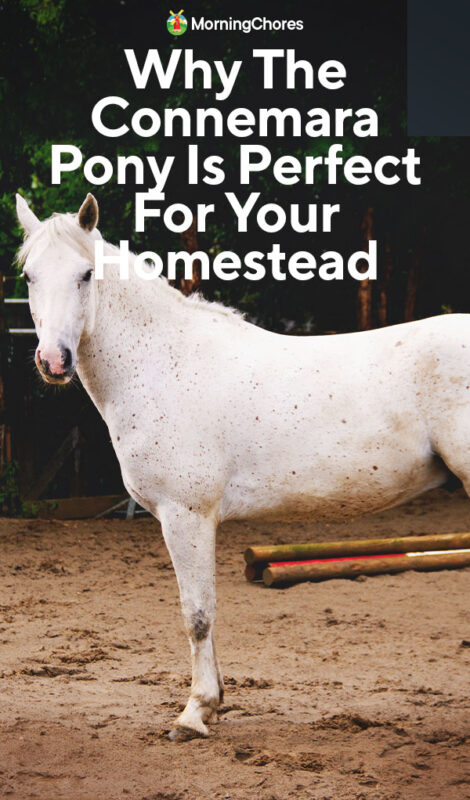
Connemara ponies are known to be some of the friendliest and smartest horses. Their easy-to-tame nature and incredible versatility make their presence on your property a delight.
Connemaras were originally bred by poor Irish farmers who could not afford to have several different horses for the different tasks on the farm. So they created an adaptable breed that could do anything!
These wonderful ponies continue to be versatile, competing in show jumping, dressage, eventing and driving. But they’re just as practical as ever on the farm if competition isn’t your thing.
History of Connemara ponies
Ireland is known for its stormy skies and beautiful landscapes, but did you know Connemara ponies originated in Ireland?
Their name refers to the region of Ireland known as Connemara, which is part of the greater Galway region, although their precise origin is unclear. This breed came to America in 1951 when the American Connemara Pony Society was formed.
Connemaras are tough and weather resistant. These ponies are used to harsh weather conditions and cold temperatures. They are ideal for working on farms pulling carts with heavy loads, as a means of transport, as companions and for plowing.
Characteristics of Connemara ponies

Connemara ponies are agile and thrive on rocky terrain with steep slopes. No wonder, since they come from an environment of jagged cliffs and harsh, rocky landscapes.
They can also run fast and reach impressive jumping heights despite difficult terrain, making them a great choice if you’re competing in equestrian competitions like cross-country or hunting.
These ponies stand between 54 and 60 inches or between 13.2 and 15 hands. They are considered ponies, not horses, although we will refer to them both in this guide.
These ponies exist in grey, black, brown and sometimes chestnut. Connemara ponies are calm, easy to train, friendly and generally bombproof, making them suitable for young children learning to ride for the first time.
How to Use a Connemara Pony on Your Property
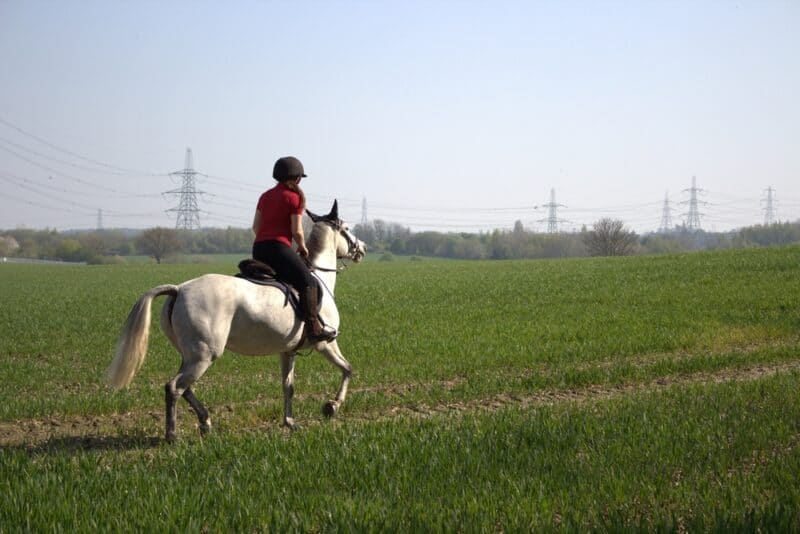
Besides riding, there are other practical reasons for keeping a Connemara pony. Sure, you can enjoy a ride around your property, but you can also efficiently transport materials from one area to another.
Connemara ponies are strong enough to pull a loaded cart. This means you can use your horse to pick up chopped wood and bring it home. Or to move the fodder in the fields.
Despite their small size, they can pull up to 1,000 pounds.
But they are not only reliable workers. Although not all homesteaders like to compete, you can ride your ponies for fun, have them help around the farm, and compete!
Caring for your Connemara pony
Deciding to bring home a Connemara pony is just the first step. You also need to make sure they have a happy and healthy life by taking care of them properly.
To help you get started, here are the essential tips for raising a Connemara pony:
- Provide additional hay, grass, grain and supplements as needed
- Always give them access to fresh water
- Provide room to run and shelter to hide under
- Make sure they get enough exercise
- Take care of their hooves, teeth and skin
- Provide dewormers and vaccines
- Camaraderie
Here is a little more information on these needs:
1. Food
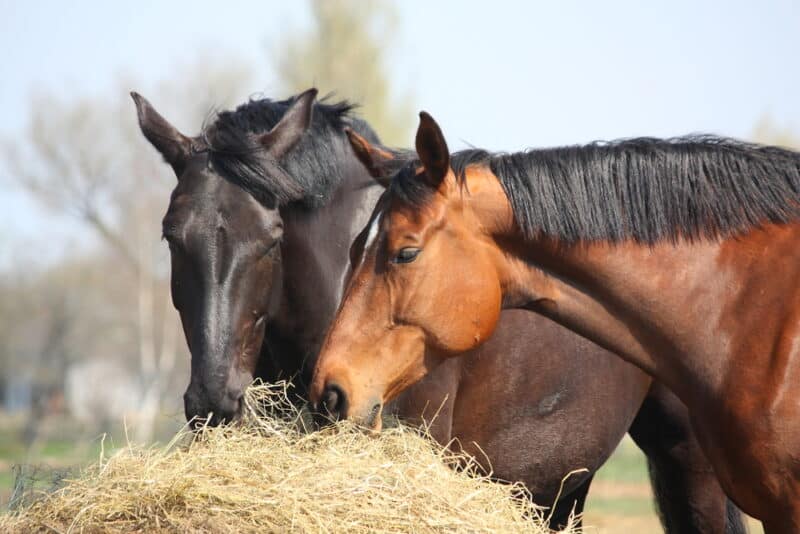
Horses in the wild spend most of their day grazing and eating. But humans often ask them to live indoors most of the time or on small lots that don’t provide access to much grazing.
On average, your Connemara will eat 1-2% of their body weight daily. Think of it this way; a horse that weighs 1,000 pounds will need 10 to 20 pounds of feed.
Giving your horse enough ground to explore and graze is ideal, but if you can’t, provide hay several times a day. Depending on how much work your pony is doing, you can also provide her with grains, vitamins, supplements, and treats.
Cereals should be given in small doses, as grass or hay should form the bulk of your horse’s diet. As some grains contain added sugars, this can cause your horse to gain weight and lead to obesity, as well as problems like laminitis.
Supplements come in powder, block, or paste form. Speak with your veterinarian to discuss which supplements are best for your horse.
2. Water
Another crucial part of the care routine for Connemara ponies is providing water. Animals and humans need water to survive. Make sure a fresh supply is available for your pony around the clock.
Each horse will need different amounts of water, ranging from 5 to 10 gallons per day. Try to keep the water cool and out of direct sunlight. Fresh water is more vital during the summer as you want to encourage your pony to drink often.
A pony that does not drink regularly can not only become dehydrated, but also have colic.
3. Provide shelter and protection
Most homesteaders dream of having horses but don’t realize that it takes a lot of land to care for these animals. For Connemara ponies, at least two acres is the minimum if you want your pony to be able to graze full time.
Of course, the size of the space will also be determined by the other farm animals living on your property. You must ensure that all animals have the right space to graze.
If you provide hay, you can get away with a much smaller area. A barn with a 12×12 foot stall with access to a run of around 150 square feet is a good minimum, but you will need to be sure to exercise your horse daily. Or a 50×50 pasture with shelter is fine.
Once you have decided where your horse will live, you need to install a fence. Some people use four-plank fences, which can support your horse’s weight and are less likely to break over time. Many people opt for an electric fence, although you should train your pony to respect the wires before letting them go.
You will also need to provide shelter for your horse in winter. A three-sided barn or shed is suitable in most areas. Whatever you use, watch the temperatures and keep the space cozy for your pony in the colder months with a hay bedding.
Provide waterproof cover in very cold or wet weather.
Shelter is also vital for the summer when temperatures rise. Again, a three-sided shelter is a great option.
4. Companionship
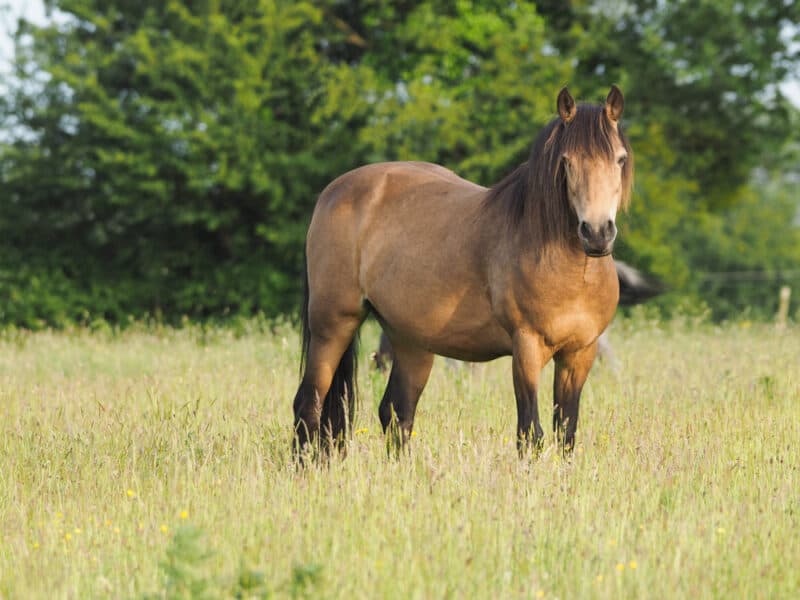
Horses are herd animals and they are miserable on their own. They need friends, although that doesn’t necessarily mean you need multiple horses. There are many other animals that can make good friends. Our guide has all the details.
Health issues to watch out for
Overall, Connemara ponies are in good health and do not suffer too much from disease. However, there are a few issues to consider when caring for these beautiful animals:
- laminitis
- melanomas
- Separation of the hoof wall
- Colic
Most of the time, laminitis is caused by overeating and inflammation. This disease targets the inner tissue of the hooves. This can be excruciating for your horse, so getting it checked out as soon as possible is essential.
Melanomas tend to affect older horses more than young ponies, but it is always something to be aware of when caring for these animals. You can spot melanoma early because it appears as tiny black dots that grow in size and spread if left untreated.
The separation of the hoof wall is not unique to Connemara ponies. It sounds like it sounds; hooves crack and break. This breed of pony suffers from hoof wall separation more frequently due to its ability to withstand heavy weights.
If your pony has a hoof wall separation, you should minimize the weight load on the cart or temporarily stop riding. This may solve the problem, although your vet may offer other treatment options if needed.
Advantages of Connemara Ponies
Connemaras are wonderfully versatile and friendly ponies that make a special addition to your property. They are easy to tame and will eat out of your hand in no time. You can make a friend for life with these animals!
Plus, they’re safe for children and people of all ages.
Here are some other benefits of Connemara ponies:
- Agile
- Long life expectancy
- Strong
- High endurance
- weather resistant
- Impressive jumping ability
There are many ways to find one of your own. One way is to find your pony through word of mouth. Ask friends or trainers, or go to a local show and ask around. If you are new to the horse world, you can research and choose a respected seller online.
Be sure to use the resources on the Connemara Pony Society page.
If possible, it is a good idea to meet the horse before bringing it home. This way you can see how friendly and approachable they are and imagine how they will fit into your family.
Was this article helpful?
Yes No ×
We appreciate your helpful feedback!
Your response will be used to improve our content. The more feedback you give us, the better our pages will be.
Facebook pinterest