

You may have seen a white calla in a garden or on a neighbour’s balcony, but although this variety is the most widespread, there are others that can also be grown without problems, both in a pretty pot than in the ground. One of them is the Zantedeschia rehmanniiknown as pink calla or pink-flowered calla.
Its leaves are quite different from those of the common or white calla lily, which undoubtedly attracts so much attention that one might even imagine that one is a real calla lily and the other is not. But the truth is that both are; It’s more, when it comes to taking care of them, they will give us a lot of joybecause everyone can benefit from it, whether or not they have had plants for a long time.
What is the origin of Zantedeschia rehmannii?
The Zantedeschia rehmannii It is native to tropical Africa., and as its flower is pink, it is known as the pink calla. However, it seems important to me to say that this species should not be confused with cultivars which also produce flowers of this color, such as the Zantedeschia aethiopica ‘Flamingo’. This one, for example, has slightly lighter pink flowers.
Returning to the subject treated, Z. rehmannii it has leaves that look like ribbons; that is, they are long and not very wide. These are about 30 centimeters long by 2 centimeters wide and are green in color. The flowers, like all those of the creeks, are in fact an inflorescence which takes on the appearance of a bell when its development is completed. When do they appear? Usually in spring and summer, but in frost-free climates they can bloom year-round.
Calla Rose Care
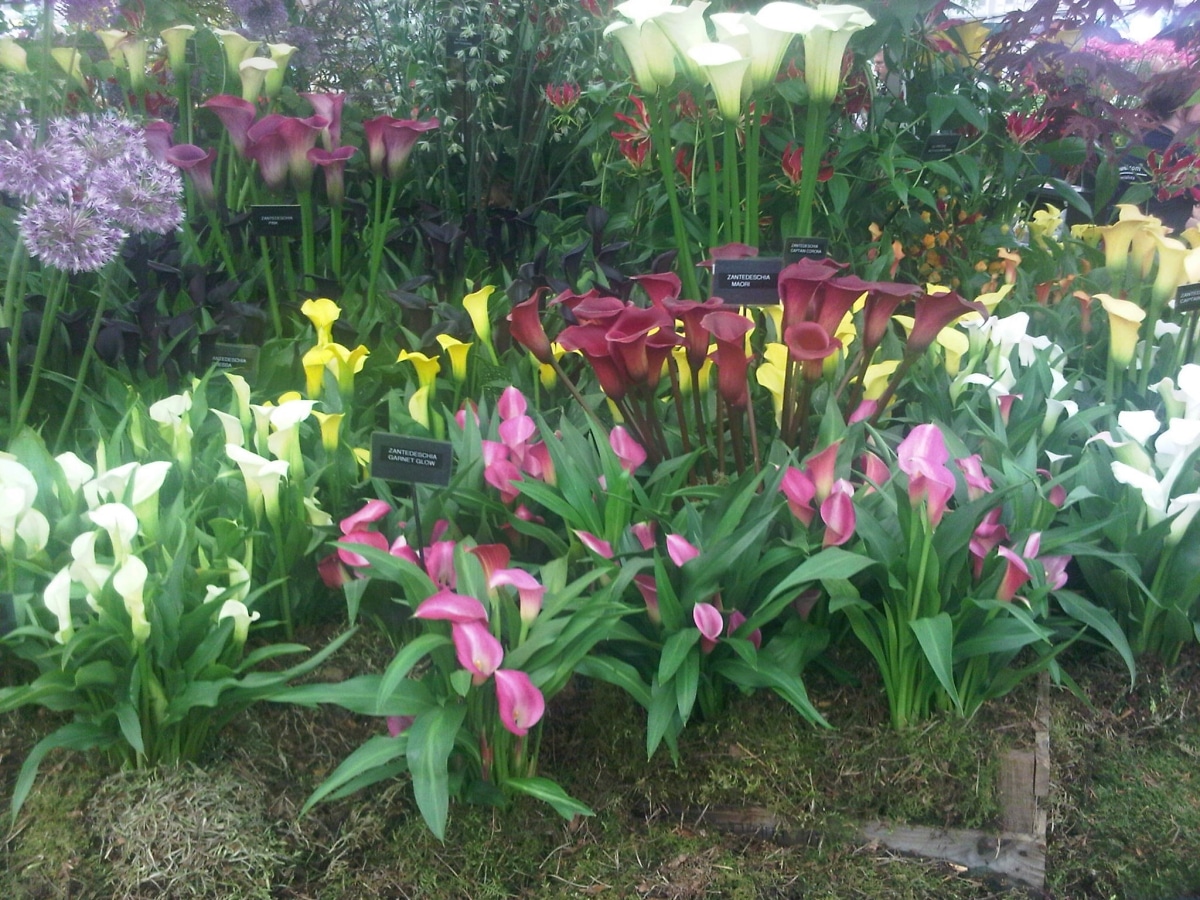
Image – Flickr/Alwyn Ladell
Ours is a protagonist that needs little to live, and also to live well, namely: sun, heat and humidity (both in the environment and on the ground). But if you have just acquired one, it is normal that you do not know very well where you should put it, or how many times a week it should be watered so that it does not have a bad time. So let’s talk about it:
What do you need: direct or filtered sun?
These are plants that they need a lot of light, but be careful because if you leave them in a place where there is direct sun they will burn: overnight the leaves began to have brown spots, and it did not bloom. So the best we can do is place it in an area with filtered sunlight.
If we are going to have it inside the house, we must place it a little far from the window, so that the sun’s rays do not burn it when passing through the glass.
What type of soil can it grow in?
It must be planted in quality, light and fertile soil.. Thus, we will avoid, or at least reduce the risk of this happening, that its roots are flooded longer than necessary. For this reason, I recommend using the universal substrate from brands such as BioBuzz and Westland if you want to plant it in a pot; and if, on the contrary, you want to have it in the garden and the soil you have is very hard and compact, make a large hole and then fill it with some of the substrate that we have just mentioned.
When is it watered?
Irrigation is something should be done frequently: in summer we will water every 2 days, and the rest of the year when it is cooler or colder we will slow down. It is important that the soil is always moist so that the roots do not suffer, so if it does not rain for a long time and/or you see that it is dry, do not hesitate to give it a good watering.
In effect, you have to pour a lot of water, until you see it wet. If it’s in a pot, one way to tell is to pick it up as soon as you’ve watered, and again after a few days. Thus, you will see that freshly watered soil weighs more than when it is dry. In case it is planted in the garden, we must give it plenty of water.
When is the best time to pay it?
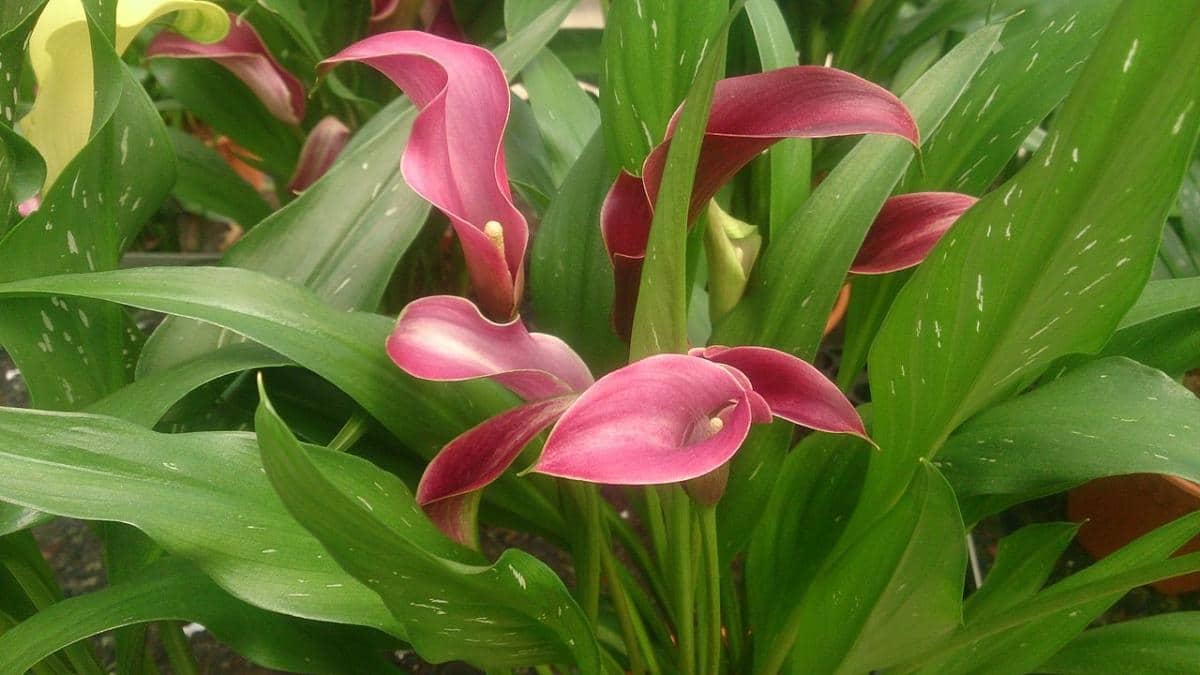
Image – Wikimedia/Mokkie
It is important to fertilize the plants so that they can grow without missing anything, and also flourish. So that we recommend fertilizing the pink cala from spring to early autumn, with an organic liquid fertilizer. For example, the guano you can buy here or the earthworm humus are very good, and I know better if they are used correctly, that is, following the instructions for use.
When can you change pots or plants in the garden?
The best time is in spring, but when the frosts – if there were any – have passed. The pot should have holes in its base and be about 10 or 13 centimeters in diameter, this way it can grow without problems.
Does it resist the cold?
Not a lot. When the temperature drops below 5 ° C, it must be brought into the house so that it does not spoil.
The pink calla, or Zantedeschia rehmanniiIt’s a very pretty plant, don’t you think?