
Image – Wikimedia/Jacqui Barker
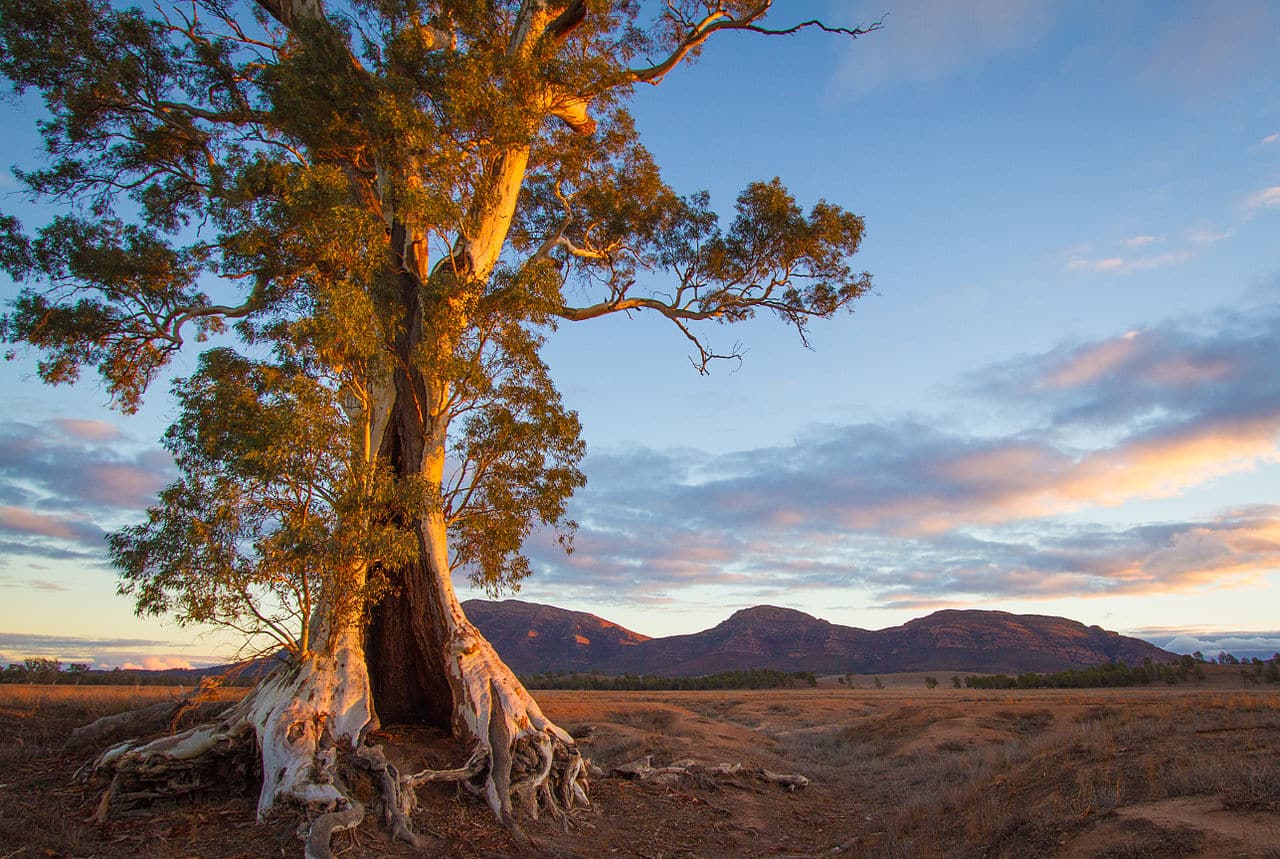
How many tree species are native to Australia? Knowing that most of the continent is an arid or semi-arid zone, you may find it hard to believe that there are not more or less than 22,000 species of plants, of which a significant percentage are trees. . We cannot tell you how many types of tree plants there are in this country, but to give you an idea, it is estimated that there are around 600 varieties of eucalyptus trees alone. In fact, eucalyptus forests occupy about 55 million hectares.
Next, If you want to know the names of Australian trees, here I will tell you some of them. Some are better known than others, but undoubtedly all these plants are curious to say the least.
Acacia dealbata
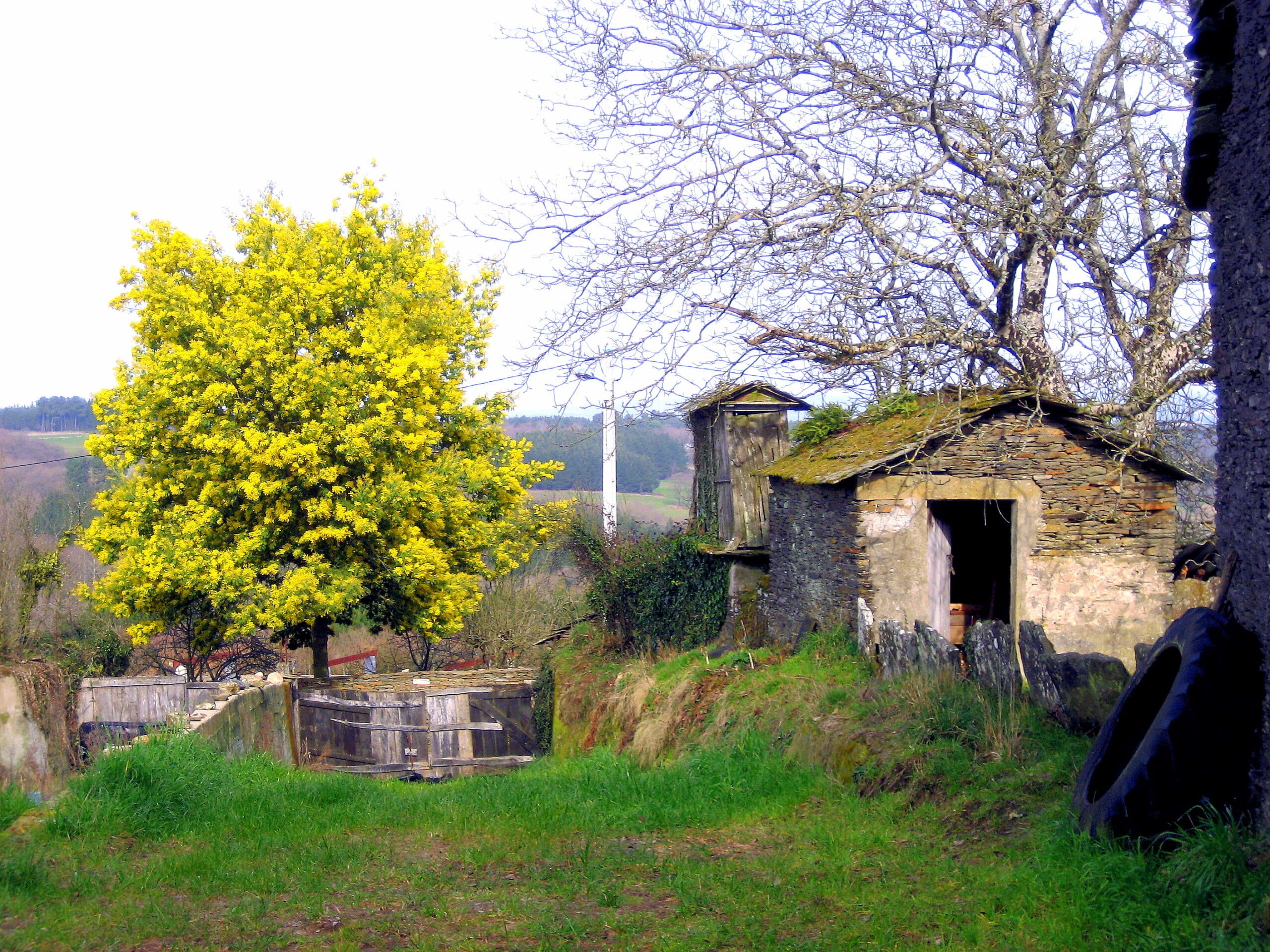
Image – Wikimedia/Certo Xornal
The Acacia dealbata It is a species known as mimosa or Australian acacia. It is an evergreen tree that grows both on the south-southeast coast and in the south-west of the country. It also grows in neighboring Tasmania. Reaches 12 meters in height, and flowers very early: normally from the second year of life. The flowers appear at the end of winter, and are yellow.
Being a plant of great ornamental value that is also resistant to drought, it has been widely cultivated in Spain. The problem is that he has adapted so well in certain areas that he it has become invasive to the point of being banned in the Iberian Peninsula -not in the two archipelagos, which to me personally seems absurd given the behavior of other acacias in the Mediterranean region- (here is the link to the Spanish catalog of invasive species).
Coccinated banksia

Image – Wikimedia/John Jennings
Scarlet bankia is an evergreen tree that It reaches 8 meters high. It is native to Western Australia, and has flowers grouped in spike-like inflorescences, and scarlet red.
For this reason, it is a plant that looks great both in large pots and in gardens of all kinds, including small ones, since not only does it have non-invasive roots, but also when it flowers it is quite a spectacle. And if that wasn’t enough, It is a plant capable of withstanding mild frosts.
Brachychiton acerifolius

Image – Wikimedia/Sheba_Also
the Brachychiton acerifolius it is one of the native species of Brachychiton in this country, and certainly the most spectacular when it flowers. It grows on the east coast, especially in areas with a subtropical climate, so it does not like the cold very much, although withstands occasional frosts down to -3°C. It can reach about 15 meters high and develops a crown about 4 to 5 meters wide. The flowers appear in spring and are a fiery red color that is a powerful eye-catcher.
It is perfect for planting in Mediterranean gardens, for example, because, in addition, although it is not as resistant to drought as to Brachychiton populneus or the Brachychiton rupestrisa species also native to Australia, is also not one of those that needs water frequently.
Corymbia ficifolia

Image – Wikimedia/Bidgee
The Corymbia ficifolia It is the tree known as red eucalyptus or red flowering eucalyptus despite the fact that it does not belong to the genus Eucalyptus, but Corymbia. It is native to the south coast of Western Australia, and reaches an approximate height of 50 meters in its natural habitat (in cultivation it is difficult for it to exceed 10 meters).
It is an evergreen tree that is not demanding at all, as it grows in a wide variety of soils -including infertile ones-, and also, tolerates frosts as long as they are not severe because if it falls below -3°C, it will suffer serious damage.
Grand Eucalyptus

Image – Flickr/Harry Rose
the Grand Eucalyptus It is one of hundreds of eucalyptus species that grow in Australia. This is particularly part of the coastal forests of the east of the continent. It can reach up to 50 meters in height., with a trunk up to 2 meters in diameter at its base. Its bark is almost whitish in color, except in the lower part which is brown.
It resists well to cold, as well as frost down to -5ºC.. In any case, it is important to clarify that it grows best if the climate is warm, frost-free or very weak.
ficus rubiginous

Image – Wikimedia/John Robert McPherson
the ficus rubiginous It is an evergreen tree native to eastern Australia. In popular parlance it is known as the Port Jackson fig or the moldy fig (because of the appearance of its leaves) and it is a plant that reaches a height of 10-15 meters when cultivated. Of course, its crown is very wide, reaching 6-7 meters in the most mature specimens. The wreath therefore casts plenty of shade, which is definitely appreciated when the sun is shining.
It is a plant which, due to its size, must be planted in the ground if the garden is large and the climate is tropical or subtropical. It is not frost resistant.
Lophostemon confertus

Image – Wikimedia/JMK
the Lophostemon confertus is an evergreen tree known as scrub boxwood that grows on the east coast of Australia. It can reach a maximum height of 40 meters originally, but in cultivation it does not exceed 12 meters. The crown is dense, and quite large, since it is about 4-5 meters wide. Its flowers are white and appear in spring.
It can live in tropical, subtropical and warm temperate climates. Withstands mild frosts down to -4ºC.
Polyscia murrayi

Image – Flickr/Tatters ✾
the Polyscia murrayi It is a tree known as the pencil cedar, probably because it has a cylindrical trunk with smooth bark. It grows in the tropical forests of the east of the country, and It can reach a height of about 25 meters.
It is an evergreen plant that can withstand light frostsbut only if they are punctual and of very short duration.
Rhodosphaera rhodanthema

Image – Flickr/Tatters ✾
The Rhodosphaera rhodanthema It is a species native to Queensland, Australia. Reaches a height of 20 meters, and develops fairly large leaves, up to 30 centimeters long by about 10 cm wide. Its flowers are pink and occur in panicle-like inflorescences, which are about 20 centimeters long at most.
In cultivation, it behaves like a plant that withstands drought of any duration and light frosts.
wolemia nobilis

Image – Wikimedia/Fritz Geller-Grimm
The wolemia nobilis It is a conifer considered a living fossil, and it is also critically endangered. It grows in the temperate forests of New South Wales, Australia. It is persistent and It reaches an approximate height of 20 to 40 meters.
It can withstand frosts down to -5ºCbut it doesn’t like extreme heat too much (35ºC or more).
What do you think of these Australian trees?