If you have an African Violet (Saintpaulia) plant that is not flowering or has flowered and is no longer flowering, fear not! It is very likely that you will be able to get your African violet to bloom again. First, we’ll look at what’s normal, then we’ll dive into how to get your African violet to bloom.

How often do African violets bloom?
One of the reasons African violets are so popular is that they can bloom almost year-round with proper care.
Each healthy flower will last two to three weeks. A happy plant can continue to produce new flowers regularly for 10-12 months of the year.
Although they have a reputation for being a little temperamental, African violets are low maintenance when the conditions are right.
Learning more about care will help you set your plant up for success and keep your African violet blooming for most of the year.
Why did my African violet stop blooming?

Your plant has dropped its flowers and has not produced any new ones. What happened? Although African violets are not very demanding, they will stop flowering if even one of their basic needs is not met.
Luckily, most of the things that prevent your plant from flowering are fairly easy to fix. Read on to find out what the most common culprits are and how you can get your African violet to bloom.
- inadequate lighting
- low humidity
- insufficient fertilizer
- Extreme temperatures
- unsuitable ground
- Plagues and diseases
- Wrong pot size
- Overgrowth at the top
10 ways to make the African violet bloom again
If your plant has stopped flowering or is struggling to produce healthy blooms, check out this checklist to see if you need to make any changes to your routine.
1. Let there be light
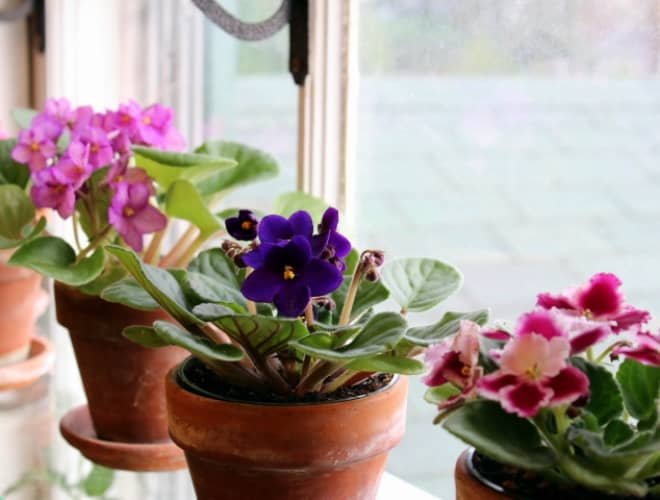
Inefficient lighting is one of the main reasons why African violets stop blooming.
These African natives love bright light; but they are sensitive to heat. In the summer, place your plant in a window or in a place where it will receive light, but away from the harshest rays of the midday sun.
In winter, a window facing east or west brings all the light to the plant without the risk of sunburn.
Pro tip for houseplants: A quarter turn once a week helps give your African violet an even crown.
2. Increase humidity
These tropical plants need a lot of humidity in the air to reach their full potential.
Grouping plants increases humidity; simply prevent the leaves from touching each other too much to prevent the spread of pests and diseases.
Placing the pot on a plate of pebbles and water (or a humidity tray) can also help.
Also, if you prefer, you can spray water on the leaves to give them more humidity, just try to do it in the afternoon, when the sun is not very strong, because it can burn the leaves by making the magnifying effect with the drops of water.
3. Take care of irrigation

How Often Should You Water African Violets? This is perhaps the most posed dilemma for African violets.
The best way to know when to water is to feel the top of the soil: if it feels dry to the touch, it’s time to water.
African violets should be allowed to dry out between each watering for best results. Overwatering can kill the plant.
The fine roots of an African violet need air, which cannot penetrate a soggy, moist mass of soil. Once you’ve mastered how to water African violets, half your job is done.
4. Replenish Essential Nutrients
Just like you, your plant needs food to function. You won’t be able to get your African violet to bloom again if it has depleted all the nutrients in its soil.
We recommend using a mild formula of fertilizer every time you water for a consistent boost that’s gentle on sensitive roots.
You can also add homemade compost to the soil each spring and then in the fall, this will give it the nutrients it needs to grow and flourish.
5. Choose the right soil
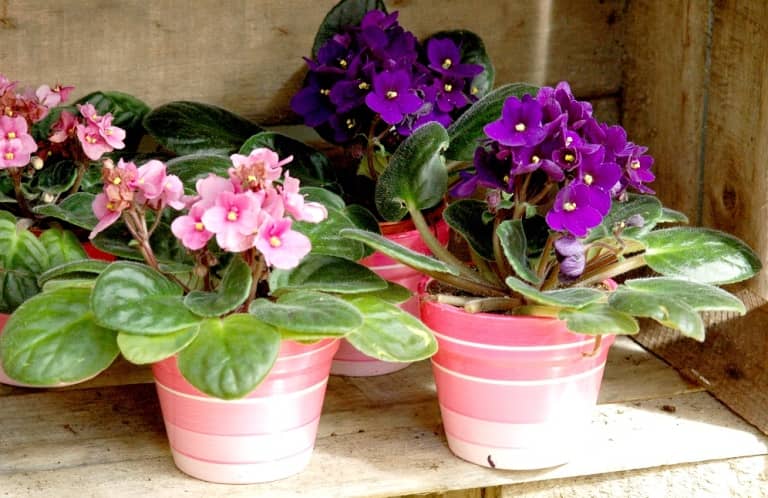
Your African violet will have problems if the soil is too dense. Indeed, its delicate root system is best suited to a spongy, well-drained mix.
Whether you don’t want to buy special soil for every type of plant or you like to get your hands dirty, the following mixture for African violets is easy to make yourself.
You can opt for a mix without soil or with soil; your plant will be happy anyway:
Above-ground mixture:
- 2 1/4 pints peat moss
- 1 1/4 liter vermiculite
- 1 1/4 liters of perlite
- 2 1/2 tablespoons limestone
- 1 1/4 teaspoons superphosphate
Mix with soil:
- 1 part peat moss, humus, or leaf mulch
- 1 part garden soil
- 1 part perlite, vermiculite or sand
6. Keep the temperature comfortable
African violets thrive around 21 degrees Celsius. If your plant is too hot or too cold, it will stop using energy to flower.
The solution is simple. A drafty window? Move the plant to a warmer location. Is the plant taking a beating from the sun? Take it out and cool it in the shade.
7. Protect from pests and diseases
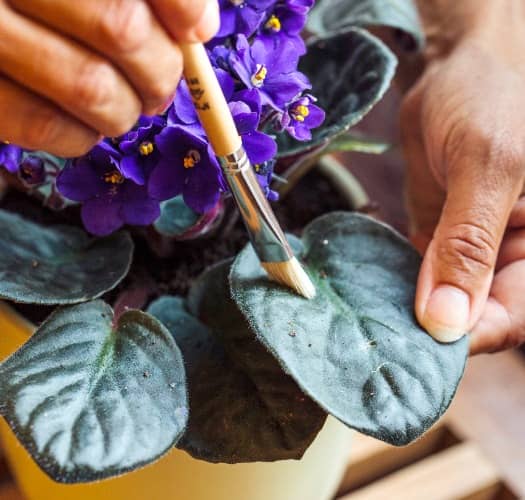
Your African violet will not have the energy to produce new flowers if it fights outside intruders.
It is generally affected by aphids or whiteflies and ants, so once the leaves are affected, it is necessary to act quickly.
You can opt for commercial solutions against pests, but the easiest way is to make a homemade preparation; In 1 liter of water, put a teaspoon of detergent or liquid soap, mix well and spray the affected part of the plant once a day until the pests disappear.
8. Limit the roots
If you recently transplanted your plant, it may be overwhelmed with excess space.
African violets are happiest growing when lightly constrained by the roots. The diameter of your plant’s pot should be about ⅓ of the diameter of its leaves.
9. Crowded growth at the top
African violets have a habit of growing randomly. You may notice extra crowns, suckers, or random clusters of leaves from the main plant.
These satellite growths consume energy that your plant could use to flower and need to be pruned.
Advice: Cut leaves can grow into new plants. See our guide to African violet propagation to learn how to do this.
10. Cut dead flowers from African violets

If your African violet blooms year-round, it will regularly have dry, withered petals. Your plant will continue to send energy to old and dying leaves and petals, so stripping preserves valuable energy for new blooms.
Cut off all those faded flowers, to make room for new flowers and to be able to make the African violet bloom, in addition to giving the plant a prettier look.
Share it on the networks: