
Bacterial leaf spot is a problem you don’t want to find on the leaves of your lovely philodendron. Appears as small brown or black water-soaked spots surrounded by yellow halos. These spots can grow and coalesce, eventually causing yellowing, wilting, and leaf drop.
Isolate your infected philodendron, remove affected leaves, and address maintenance issues before treating your plant.
Spray your philodendron with neem oil, copper-based fungicide, or baking soda solution to coat the entire plant. Reapply every 7-14 days to kill pathogenic bacteria and prevent them from spreading.
Philodendron Bacterial Spot Symptoms
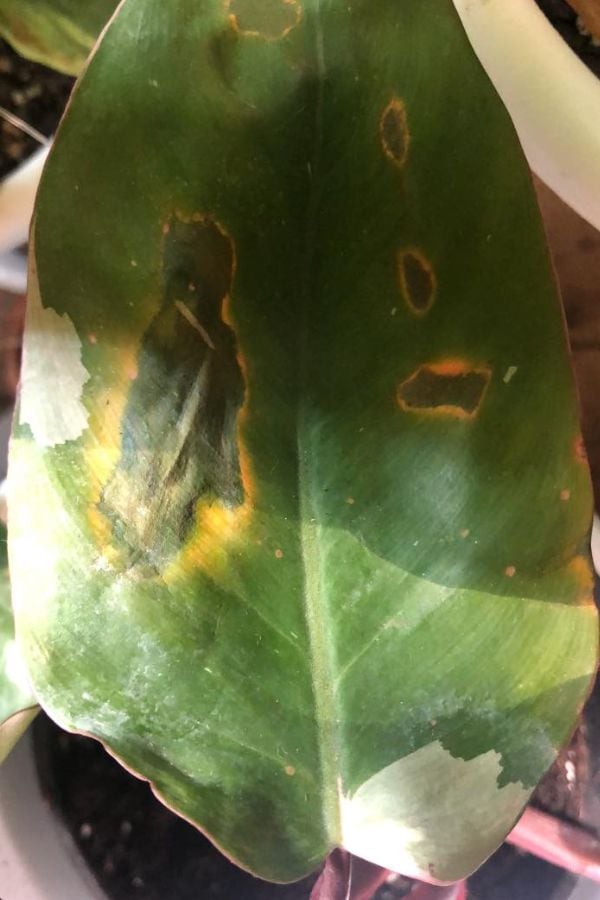
The bacterium Xanthomonas campestris commonly causes bacterial philodendron spot. Often shipped with infected plants from nurseries.
Bacterial pathogens are often spread through contaminated soil, water, gardening tools and pests.
Small water-soaked spots with a yellow halo on the leaf margins of your plant usually indicate the arrival of philodendron bacteria. They often appear translucent at first before turning reddish brown.
These spots can grow and coalesce, eventually causing yellowing, wilting, and premature leaf drop.
The bacteria can also spread to stems, flowers and fruits. In severe cases, the infection can lead to the death of the philodendron.
Other symptoms of bacterial spot on philodendrons can include:
- A yellow or light brown halo around the leaf spots.
- Dark, sunken spots on the leaves.
- Black or brown lesions on stems and flowers.
- Stunted growth or wilting of the plant.
Read my in-depth guide on how to identify and treat brown spot on philodendrons to keep your plant healthy and thriving.
How to Treat Philodendron Bacterial Leaf Spot Disease
1- Use a copper fungicide
Treating bacterial philodendron leaf spot can be difficult, but copper-based fungicides are generally safe and effective in controlling the disease.
They work by disrupting the cell membranes of bacteria, killing them and preventing them from spreading.
Copper fungicides are versatile, long-lasting, and compatible with many other control methods, making them a valuable tool in the fight against bacterial and fungal infections.
Follow these steps to use a copper fungicide on your philodendron:
- Gather the necessary items: protective eyewear, gloves, long-sleeved clothing, pruning shears, sprayer or garden sprayer.
- Remove infected parts: Cut off any leaves, stems, flowers or other plant parts showing visible signs of bacterial leaf spot before applying the fungicide. Clean your pruner after each use by scrubbing it with isopropyl alcohol or a solution of 9 parts water to 1 part bleach.
- Read the instructions: When using a ready-to-use copper fungicide (Amazon link), always read the label and make sure it is safe for your philodendron.
- Mix the fungicide: If you purchased Liquid Copper Concentrate (Amazon link), mix according to label directions. This usually involves mixing copper fungicide with water in a spray bottle or garden sprayer.
- Application: Spray the philodendron with the fungicide, covering the entire plant, including leaves, stems and flowers. Be careful not to apply the fungicide to new growth or other houseplants, as it may damage them.
- Repeat application: Re-spray your philodendron every 7-14 days according to the manufacturer’s instructions. This will help kill bacteria and prevent them from spreading.
- Watch the plant carefully and remove infected leaves as soon as they appear. This can help prevent the spread of infection.
It is essential to use copper fungicides only as directed and not to use them more frequently than recommended. Excessive use of fungicides can be detrimental to the plant and the environment.
2- Apply a baking soda solution
Baking soda (baking soda) has impressive antifungal and antibacterial properties. The chemical disrupts the balance of ions in pathogen cells, causing them to collapse and die.
A baking soda solution works best if used at the first sign of the bacterial philodendron spot problem.
Follow these steps to use a baking soda solution on a philodendron:
- Mix one tablespoon of baking soda with one gallon of water in a large spray bottle. Add 1/2 tablespoon of Castile soap (Amazon link) and 2.5 to 5 tablespoons of mild horticultural oil (Amazon link) per gallon to improve coverage on stems and leaves.
- Spray the solution on the leaves of the philodendron, covering the entire plant, including stems and flowers.
- Apply the solution every 7 to 14 days as needed. This will help prevent bacterial infections and keep your philodendron healthy.
- Remember to monitor your philodendron closely and remove infected leaves as soon as they appear.
Moderate use of sodium bicarbonate solution is essential, especially at high concentrations. Too much baking soda can cause leaf burn, which shows up as yellow or brown spots on the tips and edges of the leaves.
3- Neem oil
Neem oil is a truly versatile tool for any gardener. Eliminate annoying insects from your philodendron and control and prevent bacterial leaf spot.
What do you need:
- clean and hot water
- A large vaporizer
- Pure neem oil (Amazon link)
- Liquid dish soap (preferably castile soap, must not contain perfume or dye)
Follow these steps to use neem oil on your philodendron:
- Mix 1 to 2 teaspoons of neem oil, 1 quart of warm water, and 1/4 teaspoon of liquid dish soap in a spray bottle.
- Shake the solution well to mix the ingredients.
- Spray the solution on the leaves of the philodendron, covering the entire plant, including stems and flowers. Spray early in the morning when the sun has not fully risen to avoid leaf scorch.
- Apply the solution every 7 to 14 days as needed. This will help prevent the recurrence of bacterial infections and keep your philodendron healthy.
- Watch your philodendron closely and cut off infected leaves as they appear.
Watch the plant carefully and remove infected leaves as soon as they appear. This can help prevent the spread of infection and keep the plant healthy.
4- Try pyrethrins
Like liquid copper, pyrethrins are fast-acting fungicides that can control bacterial infections. Here’s how to use it on your philodendron:
- Read the label and make sure the pyrethrin product is safe for your philodendron.
- Mix the fungicide according to the directions on the label. Mix 3-5 tablespoons of pyrethrin concentrate (Amazon link) in a large spray bottle with a gallon of water.
- Shake the mixture well.
- Spray the fungicide on your philodendron, covering the entire plant, including flowers, stems and leaves.
- Repeat the spray every 12 weeks until the spots are gone.
Please note that your philodendron should be well watered before application. Pyrethrins lose their potency in strong sunlight and high temperatures. Never use when the temperature is above 30°C (86°F).
Conditions that favor bacterial infection

Several conditions can promote the development and spread of bacterial philodendron leaf spot, including:
- Hot, humid conditions – Bacterial leaf spot disease thrives in warm, humid environments. Disease-causing bacteria usually grow and reproduce rapidly under these conditions.
- Poor air circulation – Philodendrons that are crowded or grown in poorly ventilated areas are more likely to develop bacterial leaf spot. This is because bacteria can spread faster under these conditions.
- Overwatering: Overwatering plants can create a moist environment for bacterial leaf spot growth.
- Injured or stressed plants: Plants injured or stressed by environmental conditions or pests are more susceptible to bacterial leaf spot. Your immune system may be compromised, making it easier for bacteria to infect the plant.
- Contaminated soil or tools: The bacterial spot can spread through infected soil or tools. If you grow your philodendron in contaminated soil or prune it with contaminated tools, it will become infected with bacteria.
- Irregular watering – Overwatering followed by a prolonged dry spell puts stress on your philodendron and makes your plant susceptible to bacterial leaf spot.
- Low light: pathogenic bacteria tend to infect your philodendron in winter when light duration and intensity are reduced.
How to Prevent Philodendron Bacterial Leaf Spots
The development and spread of bacterial philodendron leaf spot on plants can be prevented by avoiding the above conditions and practicing good sanitation. Follow these steps to prevent this disease:
- Provide your philodendron with proper care and growing conditions. These include providing your philodendron with plenty of water and light, avoiding overcrowding, and ensuring good air circulation.
- Avoid excess water. Overwatering can create a moist environment for bacterial leaf spot growth. Watering the plant at the base of the stem is essential, taking care not to wet the leaves.
- Avoid stressing the plant. Philodendrons injured or stressed by environmental conditions or pests are more susceptible to bacterial leaf spot. Be sure to give the plant the care it needs to stay healthy and avoid exposing it to conditions that can cause stress.
- Practice good hygiene. Bacterial spot can be spread through contaminated soil, water and tools. Be sure to use clean, sterilized tools when working with the plant, and avoid touching other plants with the tools you used on the philodendron.
- Apply a copper-based fungicide as a preventative spray in early spring.
By following these steps, you can help prevent bacterial leaf spots on your philodendron and keep your plant healthy and beautiful.
Sharing is caring!