After years of successfully planting various varieties in my home, I realized I was running out of space. But I didn’t want to stop adding more plants.
So I opted for climbing plants and air plants. How could I go wrong with epiphytic plants that I could mount on the walls?
These beauties didn’t even need potting mixes, which gave me the flexibility I needed since my space was now limited.
I haven’t had any problems with air plants so far, but I do know that if an air plant isn’t watered optimally, exposed to strong sun, or has poor circulation, it can turn brown.
There are many other reasons why your air plants may turn brown, all of which I have included in this guide. And they’re all under your control, and that was all the encouragement I needed when I brought home my first tillandsia (air plant):
Why is my air plant turning brown?
Most people equate tanning with death. And you’re not wrong about that.
This is often a sign that your plant has reached its final stage, whether it is out of its natural life cycle or lacking in vital nutrients. I’ll cover all the probable causes below:
1) Aging
 Plants can no more escape aging than humans. Once your plant has produced flowers, you will begin to notice changes in its appearance.
The more mature the flowers, the more brown the surrounding leaves appear, especially around the edges.
On the positive side, this often precedes the production of young, so once the old flowers and leaves die off, new ones take their place.
what to do to grow old
I tried to delay aging in some cases. But I realized that no matter how much water or fertilizer you give a plant, you can’t stop the inevitable.
If you give your plant too much of anything, it can still be damaged, as I will explain later.
So as long as you give the plant sufficient necessary, all you can do is wait for the aging process to pass. New puppies pave the way for new plants. And you can still enjoy the beauty of your tillandsia.
You may also be interested in: 8 Air Plant Problems and How to Fix Them
2) Irrigation imbalances
What do most water-related problems boil down to? – Above water and underwater. And in that case, you could both be the cause of your air power plant going dark.
Flood the air factory
Air plants get their moisture from their environment. And it makes people believe that they can survive long periods without water.
However, this is only true if the air plant is grown outdoors, where the elements are readily available. Indoors this is not the case as the conditions are quite controlled.
Unfortunately, this only robs the plant of moisture, resulting in Submarine. We all know that without water, plants cannot produce enough food to sustain their growth.
So eventually the air plant begins to turn brown as the leaves begin to die. So if you’ve noticed a sudden change in tone, consider this.
You can do it?
Underwatering is often easy to fix if the plant isn’t dead (yes, it can happen to your tillandsia). All your plant needs is water to support cellular activities.
So take rainwater or filtered water and pour it into a container. Then leave the air plant in the water for an hour and allow it to absorb the moisture.
Please do not leave it for more than two hours as it may cause over water problem. When the time is up, shake the excess water from the plant and let it dry out before hanging it up.
Overwater the Air Plant
The other extreme to consider is overwatering. While your plant doesn’t want to grow without access to adequate water, it doesn’t want to drown in it either.
And you might think that just because you moisten or mist your plant, the humidity won’t harm your plant.
But too much spraying or soaking damages the plant’s roots, making it harder for the plant to absorb moisture and nutrients.
And without these, it cannot produce food, which leads to browning. Keep in mind that damaged roots are a much bigger problem than dehydration. It is always better to flood your plant than to overwater.
An overwatered plant shows more than browning. Other symptoms include:
- fungi on the surface of the plant,
- A musty smell from the plant, and
- Wetness/softness in the leaves and stems of the plant.
If you notice such signs, know that all is not well. And if you take too long to react to the apparent symptoms of overwatering, the plant may die.
You can do it?
 I would like to say that dissolving too much water is always an easy task. But that would be a lie. Excessive watering can damage the roots of the plant to such an extent that it is not possible to save the plant.
So the first thing to do is to examine the plant for signs of rot or mold. If the damage affects more than 80% of the roots of the plant, it is better to start again by planting another aerial plant.
The chances of survival are negligible (but not impossible). If the damage is less than 80%, or if you want to take a chance on a severely damaged air plant, do the following:
- Cut off the damaged parts of the plant with a sharp, sterilized tool,
- Spray an anti-mold treatment on what remains to prevent the spread of mold,
- Let the plant dry out in a sunny spot where it can receive direct sunlight for about 6 hours a day. Leave it there for two days to allow it to dry properly.
- Put it back in its usual place,
- Change the plant’s watering regime and only water/soak once a week.
Increase watering frequency only if the plant shows signs of being under water or if the weather is too hot.
You may also be interested in: How Big Can an Aerial Plant Get?
3) Direct exposure to sunlight
Sun exposure is essential when too much water dissolves in an air plant. But that’s probably the only time your air powerhouse will need such exposure.
Because? There are more than 500 species of tillandsia. And most of them thrive in direct sunlight, similar to the dappled light they receive in their natural habitat.
So an air plant will begin to turn brown if you leave it in direct sunlight, such as against a south-facing window.
This exposure deprives them of water, dries them out and damages their leaves. This is when you start to notice the browning on the edges of the leaves as it spreads to cover the entire leaf.
How much light does your plant need?
Your air plant needs bright, indirect light. Even a few hours of direct exposure can damage the leaves.
And unfortunately, leaf browning is not reversible, making it difficult for the plant to produce enough food to keep growing. To revive and protect your plant, you must:
- Place it near (not against) an east or west facing window. These spotlights receive bright, indirect light for most of the day. And although they may receive a few hours of direct sunlight each day, placing the plant near windows will protect it from the rays.
- Do not place the plant in a north-facing room or other poorly lit rooms.
South-facing rooms are also ideal. But since they receive bright light for most of the day, add sheer curtains to the windows to protect the plant.
You may also be interested in: 4 Reasons Why Your Aeration Plant Is Turning Yellow
4) Insufficient air circulation
What happens if a plant has insufficient air circulation? I will paint a picture. Without adequate air currents around the plant, humid air tends to accumulate around the plant.
Then the plant begins to absorb more and more moisture, just like with too much water. It soon begins to rot.
So you might think a plant is getting too much water, but the real problem is air circulation.
Even if you reduce the frequency of watering and cut off damaged areas, unless you fix the circulation problem, the plant will continue to rot.
How to deal with poor air circulation
The easiest way to manage traffic is to make sure your plant is in an airy area. I installed mine in the dining room, which has a large window that lets in air and light.
But if you can’t put your plants together, you can put them in open containers. Make sure the vents are large enough to let in enough air.
And if you place your plants in a container, always make sure to dry them after watering/soaking before placing them in the container.
Also, do not spray the plant while it is in the container. It only increases the humiditywhich aggravates the problem.
5) Malnutrition
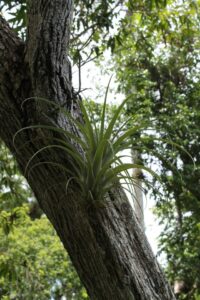 Could your plant be indicating that it needs more fertilizer? This problem is like going underwater.
The bottom line is that air plants can sustain themselves by absorbing nutrients from the air. And while this is true, it applies externally but not internally.
So if you leave your plant to fend for itself, it won’t be able to absorb enough nutrients to sustain its growth. The air plant first begins to turn brown before slowly dying back. And you have to act fast to save him.
How to feed your plant?
The first suggestion would be to leave him outside where he can access all the nutrients he likes. But that would rob you of its beauty.
So the other idea is to get one. air plant fertilizer and follow the instructions on the package.
final thoughts
Keeping an air plant is easy (get it?). If you can get the proper water, light, and nutrition, your plant will last a long time. Happy gardening!
Before you go, here are some other related articles that I encourage you to read below to solve more of your gardening problems:
How to care for an air plant in winter