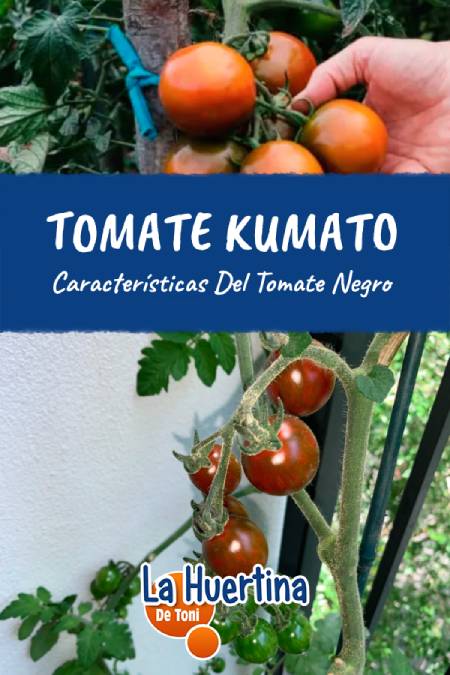
Kumato tomato, also called black tomato, is a tomato variety developed by Syngenta Seeds. All production of Kumato tomatoes comes from Europe, including France, Portugal and the United Kingdom. The “advantage” of this variety of tomato in the stems larger than average, with rounded olive-green leaves. The flesh is dark yellow to dark brown in color; the seeds are usually smooth, but sometimes silky hairy.
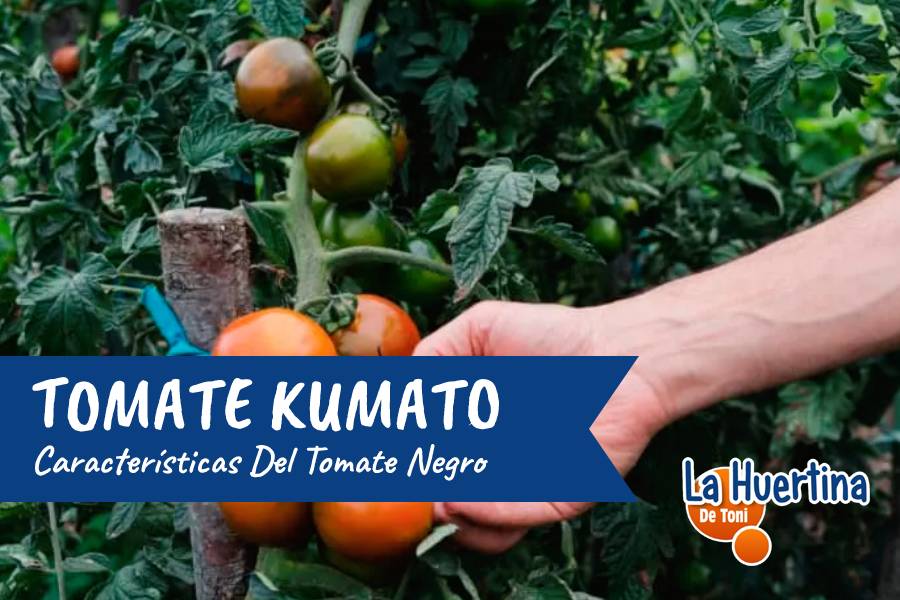

In Europe, it is marketed by the Swiss company Syngenta (one of the main suppliers of GMOs in Europe). According to the company, Kumato tomatoes are not transgenic vegetablesalthough there is controversy in this regard as there are sources that confirm that they are indeed genetically modified organisms (GMOs).
History of Kumato Tomato
The origin of this tomato is unclear, since the company that develops it provides unclear data in this regard. Some sources cite its origin in the Galapagos Islands, while other sources indicate its origin in the 1970s in Almería, Spain.
In 2003 it was introduced to the UK market where it was so well received and the following year it began to be marketed in other European countries such as Spain, France, Germany, Switzerland and it is also beginning to be cultivated on the other side. Atlantic, United States.
Features
The color of Kumato ranges from dark reddish brown to greenish yellow. It has a firmer texture than other tomatoes like the plum tomato. As for the taste, it is generally milder, with a slight acidity. This color and flavor is due to the higher Brix 2 or fructose content.
Another property of this tomato is that it ripens on the inside, so it remains crisper on the outside, even when ripe, making it ideal for thin slices or larger salads. .

The ideal ripening point is when they are reddish brown and green around the stem. It can be eaten simply seasoned with oil and salt, in a salad or as a substitute for any other of the tomato varieties in any type of recipe, such as gazpacho or Stuffed tomatoes. They can also be broiled or broiled for a smoky flavor and smooth texture. If you feel like trying something different, you can try Kumato tomato sauce, which offers a unique and delicious flavor.
Cultivated
The Kumato tomato is relatively tolerant of temperature variations, its ideal temperature being between 20°C and 30°C during the day. It is also drought tolerant and can be grown in poor soil as long as it is well drained.
To distinguish Kumato tomatoes from other types of tomatoes, look at their shape, color and flavor. Kumato tomatoes are round to somewhat oval in shape and are usually dark reddish brown in color. Its flavor is sweet, with a hint of acidity, and its texture is creamy.
As for whether or not we recommend its cultivation, the truth is that, as readers of La Huertina know, we we prefer non-transgenic seeds, and therefore we are not going to plant it in the Huertina. The company that markets it insists that it is a natural cross and not a genetic modification, but since we don’t know for certain its true origin, we’re not going to recommend it either.

Marmande Tomato RAF – ECO
- The MARMANDE RAF tomato is a multilocular, ribbed tomato with a green collar and a slightly flattened shape. Its weight is 180-200 grams. The habit of the plant is semi-determinate and it is resistant to Fusarium
- It has an excellent flavor and a traditional tomato smell. It can be grown both outdoors and in greenhouses.
- The quality is better in the Autumn-Winter-Spring crop cycles (sowing from August) giving a more ribbed tomato, a greener neck and a better flavor
- January-February-March sowing (traditional in continental areas) gives production in summer, producing fruits less ribbed, little green-necked, redder, sweeter and with less flavor
Alternatives
at the time of plant tomatoes In the garden we have many varieties that we can choose as blue tomato, which is quite similar to the Kumato black tomato. There are also other interesting varieties, particularly to be eaten raw or in salads, such as tomato three cornersAndhe beefsteak tomato Heyhe Raf tomatoanother variety of salad widely used, especially in Spain.
What do you think? Did the article help you? Leave me your opinion in the Forum and if it works for you, you can still support the channel with a donation or help me spread it by sharing it on social media. If you want to follow me, here are some of the social networks I use Facebook, instagram, pinterest either subscribe to my youtube channel
HERE I LEAVE YOU A POSTER IN CASE YOU WANT TO SAVE IT ON PINTEREST