

Last year was a year of extreme drought around the world. From North America to Europe and beyond Africa to Asia, few countries have escaped the arid lands, fires and record high temperatures that marked 2022.
Many home gardens have suffered from the pressure and although we have averted the catastrophic fires that have affected much of France, where we live, the dead trees around our town remain proof of the drought and the restrictions of water that have stranded us for months.
Luckily, we didn’t suffer any major losses at home, thanks in large part to mature trees and shrubs that developed deep roots during previous droughts.
Our drought resistant plants, especially my grasses, also survived the extreme summer.
Preparing for the future
In recent years, it has become impossible to ignore the longer heat waves and dry summers here, especially since we have no air conditioning in my house!
It was easy to see that we were headed for a future with more extreme weather, and I decided to fight back by modifying my garden.
I first focused my attention on trees and plants that can tolerate dry conditions. As an example from my childhood in the southern United States, I started growing drought-tolerant crops in my garden every summer.
Using Italy as an example, my husband and I replaced our easy-care border trees with Italian cypresses. We then install rainwater tanks to ensure that enough water is available for our garden.
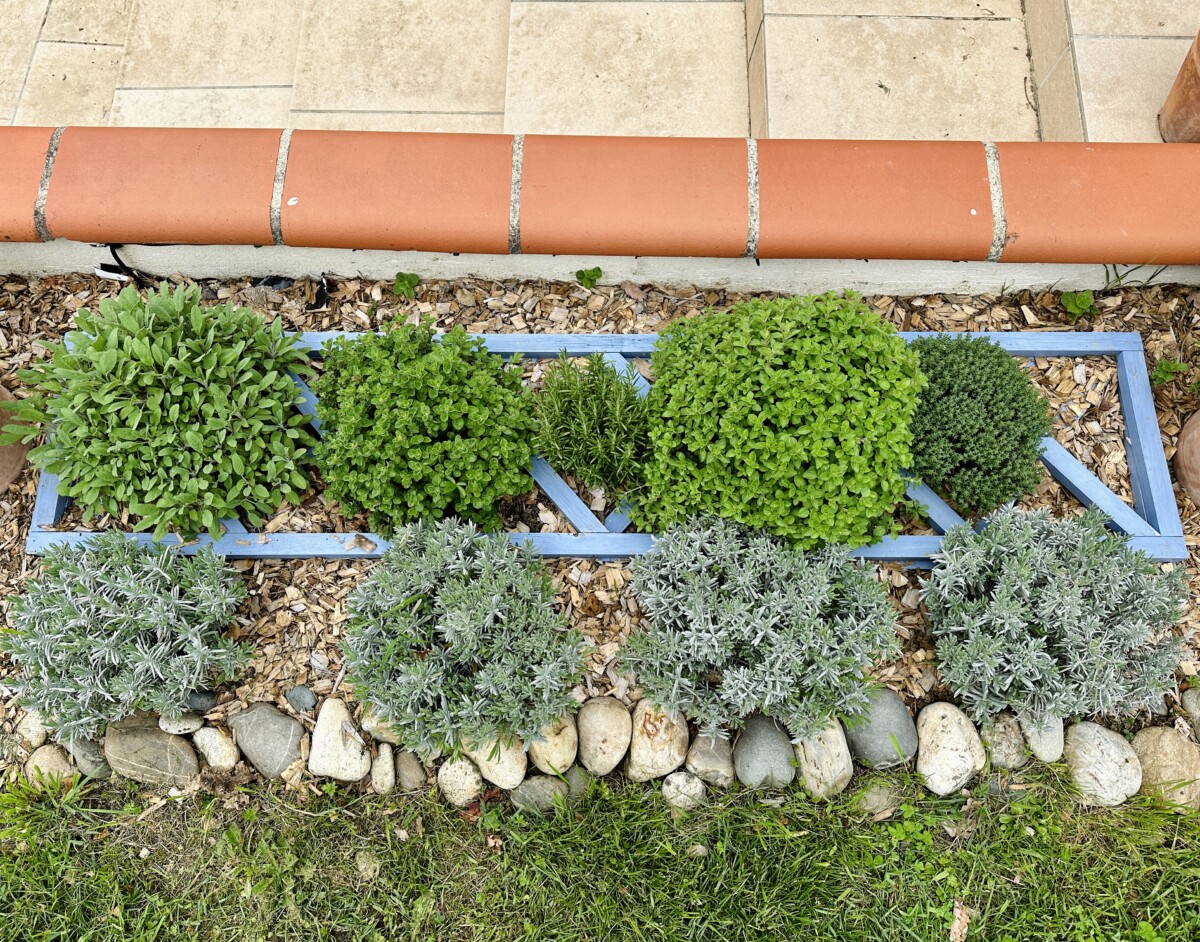
Finally, I took inspiration from our neighboring region of Provence, France, and planted an herb garden that doesn’t need to be watered all summer.
To the Good Stuff – Herbs!
Once established, the grasses I have chosen require little maintenance other than pruning and can survive harsh conditions including extreme heat and drought. Here are the six herbs that are the stars of my herb garden today:
1. Oregano (common oregano)

Oregano is a Mediterranean herb that is an important part of the Provençal spice blend and various Italian spice blends.
It grows best in full sun and well-drained soil. That being said, it is undemanding and mine grows happily in lightly amended heavy clay soil with garden potting soil.
Oregano is extremely drought tolerant and produces abundantly even during dry seasons. Dried oregano is a joy to see hanging in the kitchen year-round, and it’s incredibly satisfying to add my garden herbs to dishes.
Oregano plants should be planted 8 inches apart. They can grow up to two feet long if left alone.
Since I don’t have a lot of space in my herb garden, I prune oregano when it starts to look messy and starts pushing through nearby weeds. I like to keep the shape of a small ball and cut the flowers before they set seeds.
Oregano is a perennial in USDA zones 5-10. Alternatively, it can be grown as an annual or in a pot and overwintered indoors, preferably with a grow light.
2. Marjoram (oregano majorana)
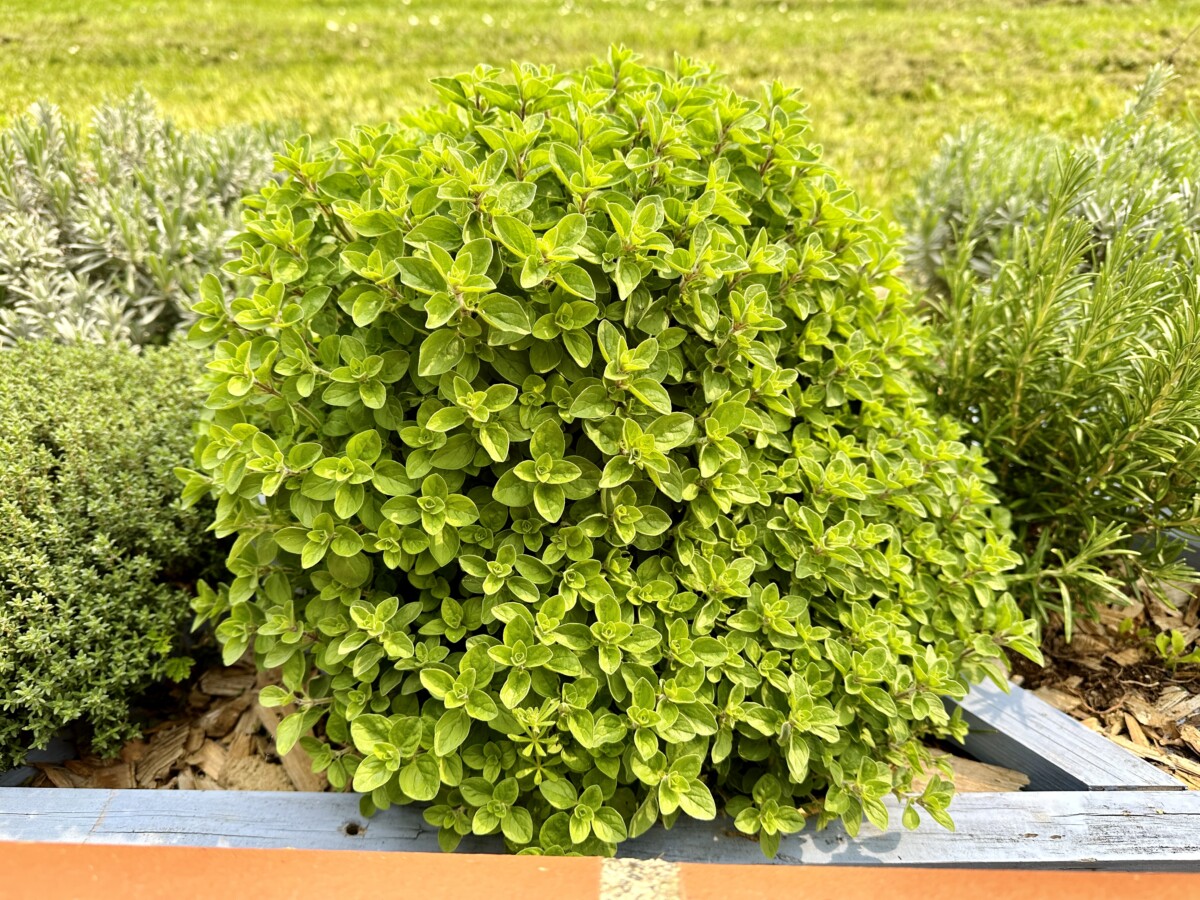
Marjoram, also known as sweet marjoram, is another native Mediterranean plant. It is a mild alternative to oregano and is often substituted in recipes that call for oregano.
 Oregano (left) Marjolein (right)
Marjoram is also often confused with oregano. Although marjoram has smaller leaves, the leaves have the same shape and texture as oregano.
Marjoram is best planted in the spring to allow good root development before the onset of summer droughts, and it is hardy in USDA zones 9-10.
Fertilization is not necessary, but it is best to wait three months after planting before your first harvest.
3. Thyme (vulgar scam)
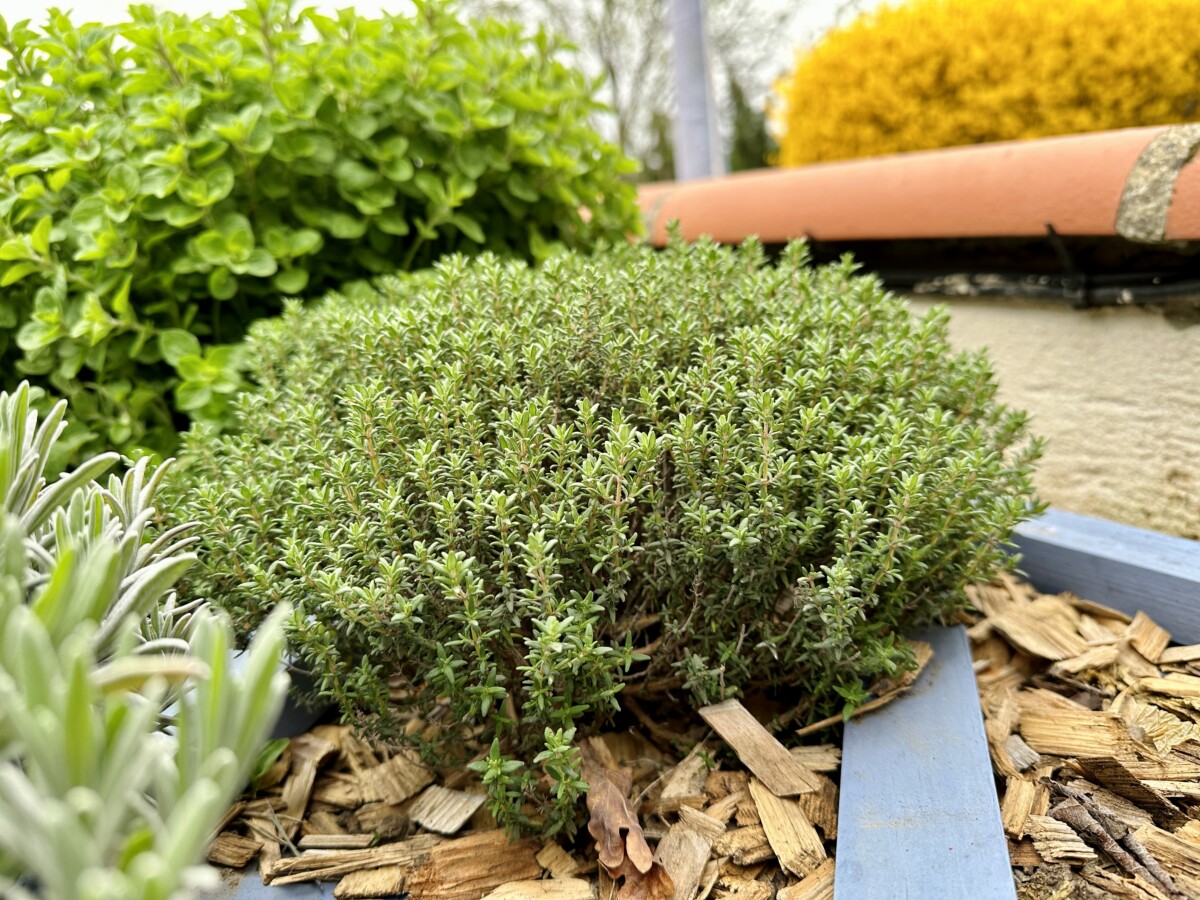
Thyme is perhaps my favorite herb to grow. It is virtually impossible to kill and requires little maintenance. In my current herb garden, I keep it in a small ball shape like I do oregano and marjoram plants. However, I have also used it before in landscaping as an edging along a partially shaded driveway.
I watered it several times the first year, but never again. I even left the country for several years and survived. Ideally, you should prune your thyme before it becomes woody and spreads, but if you don’t mind looking messier, the thyme won’t mind either.
 unpruned thyme
I grow common thyme, a plant native to the Mediterranean and another key ingredient in the Provençal spice blend. It is extremely drought tolerant and hardy to zone 5. English thyme, on the other hand, is said to be more cold tolerant if that is a problem where you live.
4. Rosemary (Salvia rosmarinus)

Who doesn’t love rosemary? Rosemary is an important ingredient in many dishes and also essential for your Provençal spice blend. Rosemary does not tolerate cold and can only be grown as a perennial in zones 8-9, unless you choose a variety like Arp, Hill Hardy or Alcade, which can survive in slightly cooler zones (6 -7).
Rosemary is temperamental and slow growing the first year, but once established it can live for 30 years and can even be pruned to become a hedge.
Rosemary needs full sun and will die quickly if overwatered. When planted in the ground it is drought tolerant, although I have found it prefers occasional watering (once a week) when temperatures are above 95°F (35°C).
5. Clever (common sage)

Unlike rosemary, sage is incredibly easy to grow and produces in abundance. I love the color and detail of the leaves and think it makes a wonderful landscape plant in addition to its culinary and medicinal uses.
It is hardy in zones 4 to 11 and prefers well-drained soils. Again, all of my herbs are planted in lightly amended clay soil, and the sage thrives there even despite our wet winters. As for abundant production, I have more dried sage than I can use, which means I can give it to neighbors and friends.
If left unpruned, sage can reach a height of 30 inches or 76 centimeters. On the other hand, pruning is quick and easy, and the smell of freshly cut sage is worth the effort!
6. Lavender (lavender angustifolia)

Lavender thrives in dry climates and most varieties are hardy in zones 5 to 9.
Personally, I love everything about lavender: the smell, the flowers, the silvery leaves and the taste. My herb garden is planted near the steps that lead to our pool, and the scent of blooming lavender on a hot July day is something I enjoy.

Lavender prefers full sun, but also tolerates partial sun fairly well. It requires annual pruning to maintain an attractive shape. If left unpruned, the plant will spread out and develop tall, woody stems.
Lavender is extremely drought tolerant after the first year of establishment. I have used lavender before in home farming and never watered it more than the first year.

As the world continues to warm and droughts become more frequent, plants that can withstand heat and drought will be the future. Why not start a drought-tolerant herb garden today? Not only will you enjoy fresh herbs, but you’ll also enjoy one less plant to water!