The Scylla, also called Wood Hyacinth is a plant that you can easily grow indoors or in the garden. If you want an eye-catching, colorful plant that’s easy to grow and stays compact, here’s all about how to grow Scylla and how to care for it.

Basic information
Botanical name: Ledebouria socialis
Common names: Silver squill, bluebell, leopard lily, squill or giraffe
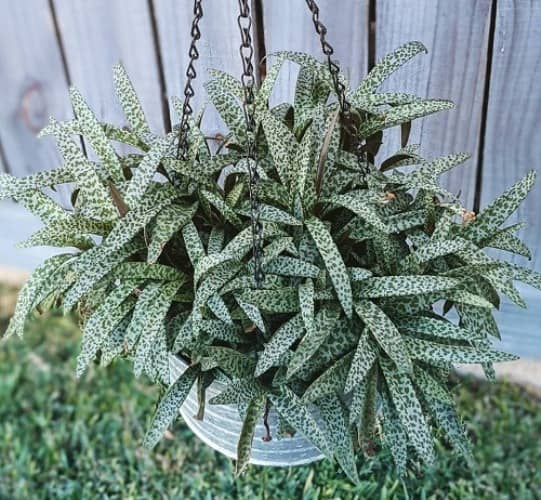
With silver lance-shaped leaves and green leopard spots, this plant looks amazing with purple undersides and silver spots.
The teardrop-shaped bulbs that form at maturity make this plant more unique.
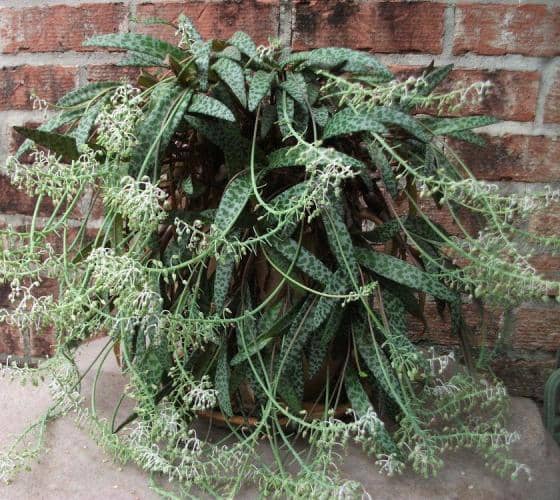
The Scylla displays tiny green flowers on pink stems and rosette-like foliage. It can reach 15 to 25 cm in height and is best suited to places where space is limited.
How to propagate Scylla
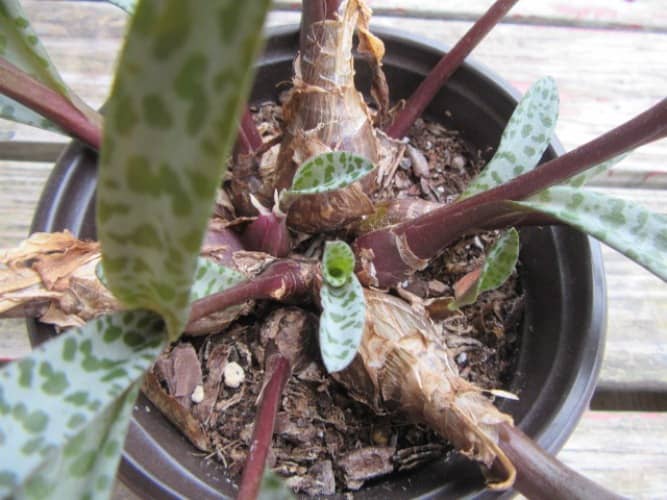
It is possible to grow Scylla from seed, but the germination rate and process can be extremely slow and inconsistent. Therefore, it is best to propagate the plant by means of bulbs.
Once the plant has matured, it will produce “bulb pups” around the base, and you will soon find your pot full of them. At this stage, it will be a good idea to replant them in different pots to have new plants.
After the flowers fade, usually in the fall, carefully remove the plant from its pot or border.
Using your fingers, carefully separate the bulbs into individual sections and replant each part in the garden or in a new pot.
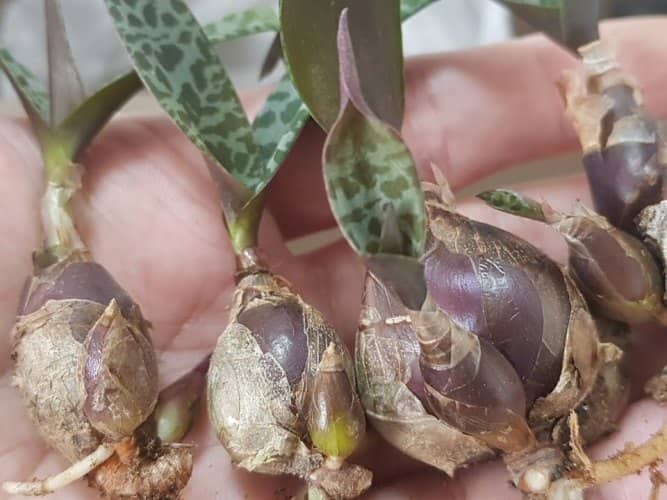
If growing in a pot, plant a maximum of two bulbs in a 10-15cm wide pot.
Water well and make sure the soil is still moist but not flooded.
Place the pot in a place where it receives sunlight but not directly, this until you see new growth, then you can give it the care that we teach you below.
Ideal conditions for growing Scylla
Light
This perennial needs bright but indirect sunlight for at least 3-4 hours a day, especially in summer, but more sun is good in winter.
In its natural habitat, it usually grows in partially shaded closed evergreen forests.
Water
Once established, the Scylla needs minimal watering, as it is considered a drought-tolerant succulent. Be sure to let the top layer of soil dry out before watering again.
In summer you may need to water it every two or three days, but in the cold season you can leave it for more than a week without watering it.
Usually I
Scylla grows best on humus-rich sandy soils with a pH between 6 and 8. It can also grow on rocky, well-drained soils.
Ideally, use potting mixes designed for cacti and succulents. But you can do it yourself by mixing in equal parts; river sand, pebbles or small stones and garden soil.
temperature and humidity
If you want to grow Scylla indoors, room temperature usually works well. When growing this plant outdoors, it is best to provide temperatures of 15-23°C. This plant can tolerate temperatures down to -1°C in winter.
It likes low average humidity, around 30-45%. Store the pot on a tray filled with pebbles and water if your home is too air-dry.
Scylla Care
Pass
Apply a balanced 20-20-20 liquid fertilizer, diluted halfway, once every 5 to 7 weeks during the summer and spring. Avoid feeding the plant during colder months.
Cut
Little pruning is needed for Scylla other than getting rid of dead or yellow leaves. Cut off damaged, diseased or rotting parts and remove debris from the plant to keep it healthy.
It is also good to cut off all the flowers once they have faded, this helps the plant a lot to bloom more vigorously.
Plagues and diseases
In general, the plant is not heavily attacked by pests, but mealybugs, spider mites, thrips, aphids and scale insects can cause damage. Keep them at bay with an insecticidal soap solution or Neem oil.
The most common diseases are leaf spots, powdery mildew, root rot, botrytis and rust. Avoid overwatering and make sure it gets plenty of diffused light throughout the day.
Hibernation
Keep the pot in a location that receives bright but indirect sunlight for at least 4-5 hours a day. Water it minimally so that the soil only partially dries out.
In places where winter temperatures drop below -1°C, bring the plant indoors before the dangers of frost arrive.
Share it on the networks: