
If the leaves of your snake plant are splitting despite all the demands, something is wrong.
In fact, it can survive many harsh conditions and even thrive in unsuitable growing environments. It doesn’t need much attention and can certainly survive for a long time. Let’s take a look at what causes your snake’s leaves to split.
Splitting or cracking of snake plant leaves is caused by a combination of factors, including low humidity and physical injury. Lack of boron causes brittle leaves and cracks over time. Moreover, factors such as extreme temperatures and the presence of pests are also responsible for this problem.
Read on, I’ll discuss the causes and how easily you can prevent your snake plant’s leaves from splitting or splitting.
Causes of Snake Plant Leaf Splitting and How to Fix It
The leaves of the snake plant are the main attraction. I know it’s a huge disheartening when you see your snake plants sprouting damaged leaves.
Splitting would break up the variegated look and make the plant look ugly. But hey, no need to panic.
There are ways to fix them. Let’s see how to find solutions to this problem.
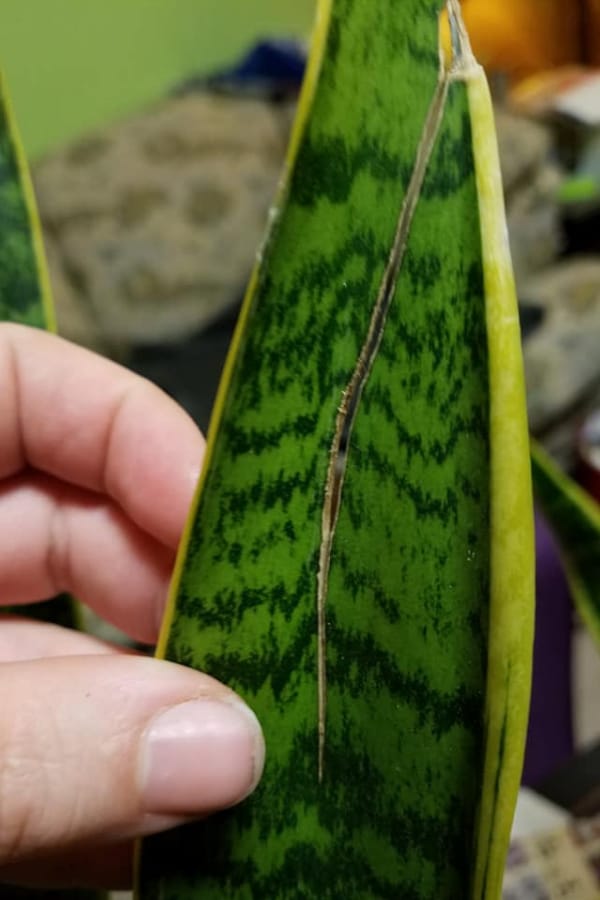 Snake plant leaves split or crack
low humidity
Low humidity is one of the main causes of leaf cracking or splitting on snakes.
Due to the low humidity, the leaves lose more water and dry out. Consequently, the low moisture content of the leaves causes them to split or crack.
What should we do?
Here’s what you can do:
- Mist the leaves daily.
- You can use a humidifier.
- The DIY pebble tray method works great for increasing the humidity around your snake plant. (Just put some pebbles on a tray and pour some water, then hold the snake pot on it)
Boron deficiency
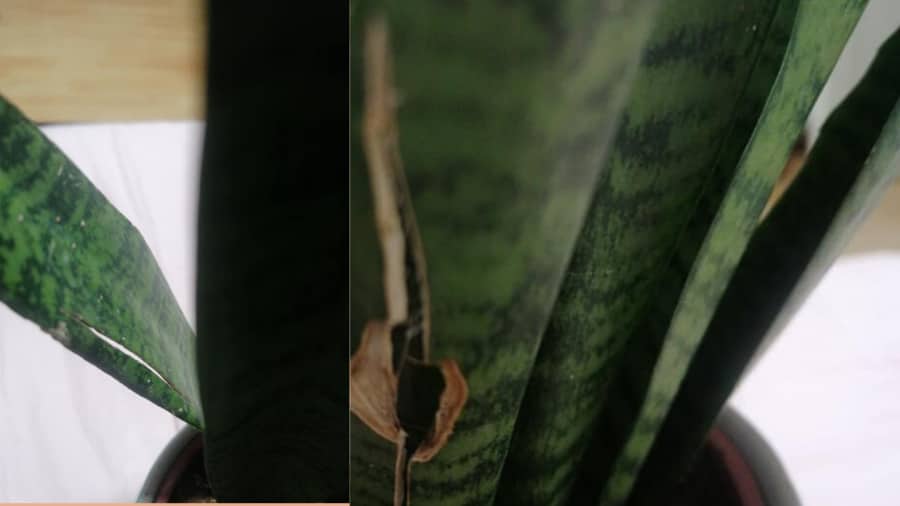
Boron is a micronutrient needed by snake plants for cell wall formation, stability and maintenance of structural membranes. Once the snake plant is deficient, it will have a weaker overall structure, including the leaves. Consequently, the sheets are brittle and vulnerable to splitting or cracking.
What should we do?
- Control the pH of your soil. A soil that is too acidic or too alkaline inhibits the availability of boron.
- Add more organic matter to the soil to improve the availability of essential nutrients.
mechanical or physical damage
stray animals
Although I hate to mention that your cute dogs or cats could be the suspects, and yes, they probably caused the breakup.
Pets are certainly one of the enemies of indoor plants. They love to play with it without realizing they are messing it up.
Plants have a cooling effect and that’s why they like hanging around.
What should we do?
- Place the plant in a safe place where your stray pets cannot reach it. Also keep in mind that snake plants are mildly toxic to pets, so it’s best to keep them away.
- Surround them with a barricade-like structure or a makeshift indoor fence for protection.
- Use large pots and/or plant stands that lift the plant off the ground.
- Train your pets not to play with your other “babies”.
Don’t be frustrated when you notice your pets damaging your plants. You will definitely learn balance by taking care of both. Keep trying!
Wrong use
Moving around your snake plants and not being careful enough will cause them physical damage. So make a plan before trying to rearrange them and move them from place to place.
Your goal is to minimize movement to avoid scratches, tears or spills.
What should we do?
- Make a mental note of the arrangement you want to have.
- Remove all the plants, from the smallest to the largest, and place them outside the room.
- Rearrange your interior and carefully place the plants back into the new place one by one.
- Avoid crowding around your snake plant, especially if you have lots of other plants inside (I understand the obsession, but be very careful).
There are good ways and techniques to manage your plants. You learn them by moving with your plant rage.
high traffic location
When your snake factory location has a lot of traffic, chances are it will split. High traffic areas include doorways and stairwells, which are often places where people pass.
They may have unknowingly touched the leaves with their feet when entering or exiting. Their bags would probably have rammed him. There are a lot of options, aren’t there?
What should we do?
- Place them somewhere in the house where there is less movement (eg corners, windowsills, tables).
- Set up a designated cabinet screen for your snake plant so that there is plenty of room for it.
- Let your parents know how important your plants are to you. Encourage them to treat their plants with care and respect.
- Minimize the number of plants if your indoor space is limited.
I know we can get too excited when we show off our plants. But make sure that its location is also conducive to its growth. You don’t want your plants to be in bad shape, do you?
You may also be interested in: Troubleshooting Root Rot in Snake Plants (Step by Step)
extreme temperature
Although I have already mentioned that snakes are very tolerant, any excess would be harmful. Extreme temperatures can often stress plants.
Ideally, snake plants tolerate a temperature of 60-80 degrees Fahrenheit (15-27°C). If the temperature is extremely low or high, they will have scars.
Snake plants especially dislike very cold environments, below 15°C (50 Fahrenheit). This care becomes crucial during winter periods, so keep a closer eye on your plant.
What should we do?
- Never leave them in a place where they will be exposed to extremely low and high temperatures for a long time, such as heaters or air conditioners.
- Place a blind as insulation if the plants are on the windowsill
- Move them if necessary, especially if it is too cold or too hot.
Fluctuations in temperature can ruin your plants in an instant, but if you’re on your guard, you can protect them from potential damage. Make a habit of consulting them from time to time.
too much water
Snake plants are not satisfied with so much water. If you water too much, that’s probably why the leaves split. Remember that your plant is a succulent that likes a dry environment.
Too much water uptake causes the leaves to expand rapidly. When the temperature rises and the evaporation rate is high, the water is depleted and the leaves shrink.
This article takes a closer look at how to save an overwatered snake plant. and explains some of the best ways to revive the plant and avoid watering mistakes.
The sudden change of swelling and shrinking can damage the snake’s plant cells. So there is division.
What should we do?
- Do not water your snake plant daily. Twice a month is enough.
- Repot and use a more suitable potting soil with good drainage.
- Leave it in a place with a dry environment.
You can also enjoy: How Much Water Do Snake Plants Need? complete guide
Presence of pests
Snake plants have tough leaves, but believe it or not, they also suffer from pests like scale insects and spider mites.
They tend to suck sap from the leaves and leave small marks on the surface which can later worsen into large scars and cracks.
What should we do?
- Check your plants regularly and watch for pests.
- Manually remove any foreign organisms you see on the plants.
- Cut off severely infected plant parts and dispose of them properly.
Pests may occasionally reappear, depending on the season. So you need to be on the lookout to spot them before they cause too much damage. It is difficult to restore a seriously affected plant.
You can also enjoy: Curling snake leaves (11 causes and solutions)
How to Prevent Snake Plant Leaves from Splitting
Now let’s talk about how to keep your snake’s leaves from splitting. Proper care and care for the requirements of the snake plant will prevent this problem.
good soil
Your soil will play an important role in the success of your planting. Make sure it’s rich in organic matter, well-drained, mold-free, and has an ideal pH (5 to 6.5).
Make an effort to mix in the right amount of soil conditioner before planting.
Good location
Create an environment with favorable conditions for your snake plants. Choose the spot that is partially shaded.
Also make sure it is not crowded and the plant is stable to avoid mechanical damage. Choose a dry environment.
Less frequent watering schedule
Hours vary by season. If the season is dry, do it twice a week. If it is winter and cold, even once a month is enough.
Always let the soil dry out before watering again.
constant control
Remember that you are caring for living organisms that need attention. Being practical with your plants is always essential.
Observe its behavior and reactions to changes in the environment. It is better to diagnose a problem early to avoid further accidents in the future.
always do your research
You will be surprised at the amount of knowledge you will pick up once you start learning the ins and outs of planting snake plants.
Get used to getting to know your plant better. There are many resources you can turn to, and most of them offer solutions. (Source: University of Arkansas System)
Are Snake Plants Worth Trying Again?
Yeah! It is normal to feel anxious when you are in the garden. Do not abandon. By now, you’ve probably figured out the reasons why your snake’s leaves are splitting.
Now you can release that breath of relief, because most causes of such damage are actually easy to control and prevent.
Follow the tips above and see how the issue is resolved. Are you ready to try again?
Sharing is caring!